

You type your password. You click "Send." Behind that simple action lies a complex mathematical handshake that decides if you keep your money or lose it forever. In the world of crypto, this handshake is called ECDSA, which stands for Elliptic Curve Digital Signature Algorithm. It is the invisible lock on every Bitcoin and Ethereum transaction. Without it, anyone could forge your identity and drain your wallet. With it, you have absolute control over your assets. But here is the twist: while both networks use the same core math, they implement it differently. These differences matter more than you might think, especially when things go wrong.
We are going to break down how ECDSA works under the hood. We will look at why Bitcoin and Ethereum chose different paths. We will also explore the real-world risks that can steal your funds if you ignore the basics of digital signatures. This isn't just theory; it's the difference between sleeping well at night and losing everything to a software bug.
The Core Math: Why Both Chains Use secp256k1
At its heart, ECDSA relies on elliptic curve cryptography. Think of an elliptic curve as a specific shape defined by a mathematical equation. For both Bitcoin and Ethereum, that shape is the secp256k1 curve. This specific curve was chosen because it offers a massive amount of security with relatively small key sizes. A 256-bit key in ECDSA provides roughly the same security level as a 3072-bit key in older RSA encryption. That efficiency is crucial for decentralized networks where storage and processing power are limited.
The equation for secp256k1 is y² = x³ + 7 over a finite field. It sounds abstract, but it creates a one-way function. It is easy to multiply numbers together to get a result, but nearly impossible to reverse that process to find the original numbers without the private key. This asymmetry is what secures your wallet. When you generate a wallet address, you are essentially creating a public point on this curve derived from your secret private key. The network can verify that the signature matches the public key without ever knowing the private key itself.
Both networks stick to this standard. They share the same base point G and the same curve order n. This common ground allows developers to build tools that work across both chains. However, sharing the curve doesn't mean the implementation is identical. The devil is in the details, specifically in how the data is prepared before signing.
Bitcoin’s Approach: Double SHA-256
Bitcoin takes a conservative approach. Before any signature is created, the transaction data must be hashed. Bitcoin uses SHA-256 (Secure Hash Algorithm). More specifically, it applies SHA-256 twice. This double-hashing adds an extra layer of protection against certain types of cryptographic attacks, such as length extension attacks, which threaten algorithms based on the Merkle-Damgård construction.
The process looks like this:
- The transaction data is serialized into a specific byte format.
- The system runs SHA-256 on that data.
- The system runs SHA-256 again on the result.
- The final 256-bit hash is signed using ECDSA.
This method has been battle-tested since January 2009. Over 14 years of continuous operation have produced no cryptographic compromises of the algorithm itself. The maturity of SHA-256 gives Bitcoin users confidence. If something breaks, it will likely be an implementation error in a wallet, not a flaw in the math. Bitcoin’s simplicity means fewer places for bugs to hide.
Ethereum’s Approach: Keccak-256
Ethereum chose a different path. Instead of SHA-256, it uses Keccak-256. Keccak is actually the winner of the NIST competition that eventually became SHA-3, but Ethereum uses a slight variant. The main difference lies in the internal structure. Keccak uses a sponge construction rather than the Merkle-Damgård construction used by SHA-256.
Why did Ethereum make this switch? Performance and security properties. Benchmarks show Keccak-256 processes data about 15.7% faster than SHA-256 on standard hardware. For a network that handles smart contracts and complex state changes, that speed matters. Additionally, the sponge construction is inherently resistant to length extension attacks, so Ethereum doesn't need to double-hash the data. It hashes once, then signs.
However, Ethereum’s complexity introduces new challenges. The way Ethereum prepares the message for signing has changed over time. During the 'Spurious Dragon' upgrade in late 2016, the format shifted to prevent replay attacks via EIP-155. Later updates continued to tweak how transactions are encoded. This means developers building wallets for Ethereum must be extremely careful to use the correct encoding standards, or their signatures will fail validation.
| Feature | Bitcoin | Ethereum |
|---|---|---|
| Elliptic Curve | secp256k1 | secp256k1 |
| Hash Function | Double SHA-256 | Keccak-256 |
| Construction Type | Merkle-Damgård | Sponge |
| Primary Risk | Signature Malleability | Encoding Inconsistencies |
| Performance | Standard | ~15% Faster |

The Nonce Problem: Where Security Breaks
Here is the most critical part of ECDSA that users rarely understand. Every signature requires a random number, called a nonce (often denoted as k). This nonce must be unique and unpredictable for every single transaction. If you reuse the same nonce for two different transactions with the same private key, your private key can be mathematically calculated by anyone watching the blockchain.
This isn't theoretical. In 2010, Sony engineers reused nonces in their PlayStation 3 firmware signatures, allowing hackers to sign unauthorized games. In the crypto world, poor randomness has led to direct thefts. Early mobile wallets sometimes generated predictable nonces due to weak random number generators. In 2012, Android’s SecureRandom implementation failed, compromising hundreds of Bitcoin wallets.
To fix this, modern implementations use RFC 6979. This standard makes the nonce generation deterministic. Instead of relying on a random seed, the nonce is derived from the private key and the message hash. This ensures that the same transaction always produces the same nonce, eliminating the risk of accidental reuse. While this solves the immediate problem, it introduces a new vulnerability: if your private key is exposed, the attacker can predict your future nonces. This is why keeping your private key offline is non-negotiable.
Real-World Vulnerabilities and Attacks
Even with RFC 6979, ECDSA is not immune to attacks. Researchers at Kudelski Security published a report in May 2023 titled 'Polynonce.' They discovered that some wallets had subtle bugs in their nonce generation that created patterns across consecutive transactions. By analyzing these patterns, they were able to recover private keys from 127 Bitcoin addresses, stealing approximately 27.3 BTC.
Ethereum faces similar risks but with added complexity. Because Ethereum supports smart contracts, the attack surface is larger. A bug in a contract’s signature verification logic can allow attackers to forge approvals. Furthermore, inconsistencies between different Ethereum clients (like Geth and Parity) have caused headaches for developers. Different interpretations of EIP-155 have led to signatures validating correctly on one node but failing on another.
Hardware wallets like Ledger and Trezor mitigate many of these risks by generating nonces within secure elements. These dedicated chips are designed to resist side-channel attacks, where an attacker tries to extract information by measuring power consumption or electromagnetic leaks. Using a hardware wallet is currently the best defense against implementation flaws in software wallets.
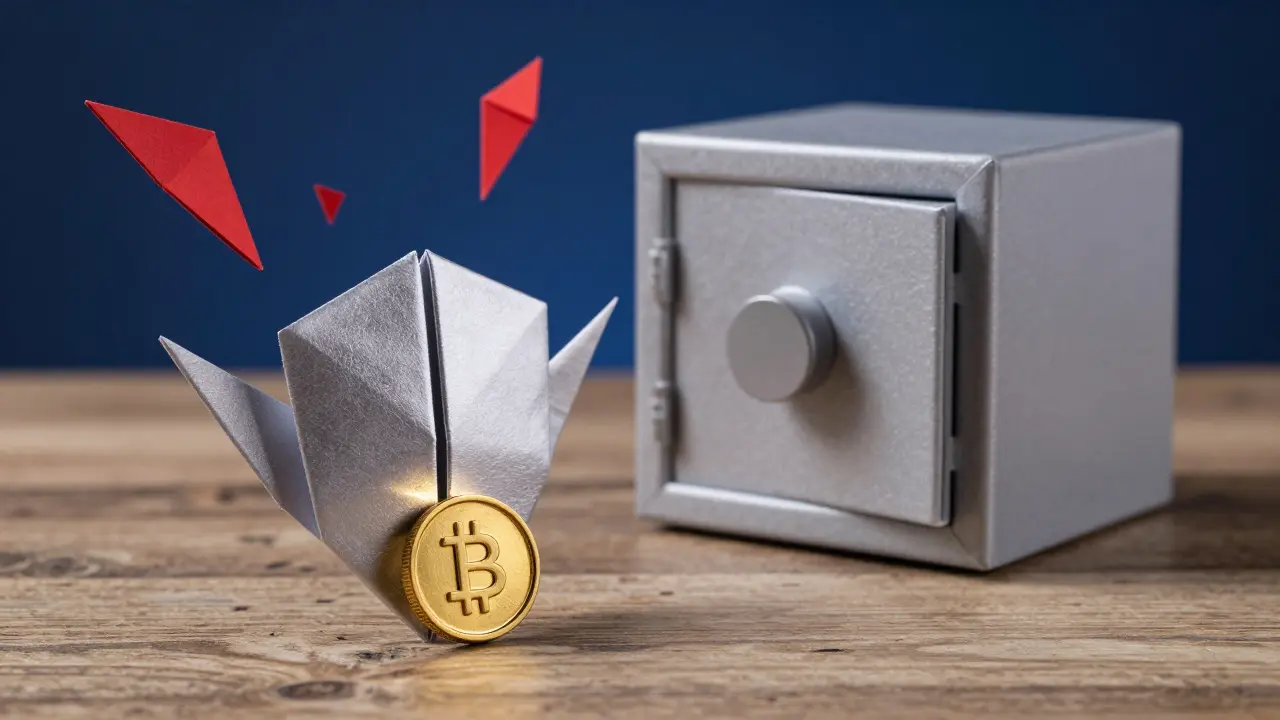
The Quantum Threat Horizon
ECDSA is secure today, but it may not be tomorrow. The looming threat is quantum computing. Shor’s algorithm, running on a sufficiently powerful quantum computer, can solve the discrete logarithm problem that underpins ECDSA. This would allow an attacker to derive a private key from a public key.
How soon is this a reality? Estimates vary. NIST suggests practical quantum computers capable of breaking 256-bit ECDSA are 15 to 20 years away. Ethereum Foundation researchers estimate a machine with 10,000 error-corrected logical qubits would be needed. Bitcoin developer Pieter Wuille estimates around 1,500 logical qubits for Bitcoin. Regardless of the exact number, the threat is real enough that preparation has begun.
NIST recently selected CRYSTALS-Dilithium as its primary post-quantum signature standard. Blockchain projects are already researching how to integrate these new algorithms. Bitcoin’s Taproot upgrade introduced Schnorr signatures, which offer better multi-signature efficiency and pave the way for future upgrades. Ethereum is exploring BLS signatures for consensus. The transition won't happen overnight, but the industry is aware. For now, ECDSA remains robust, but users should be mindful that long-term holdings require vigilance regarding future protocol upgrades.
Practical Tips for Users
You don’t need to be a cryptographer to stay safe, but you do need to follow basic hygiene. First, always use reputable wallets. Avoid early-stage mobile wallets that haven’t adopted RFC 6979. Second, prefer hardware wallets for storing significant amounts. Third, keep your software updated. Wallet updates often patch subtle signature handling bugs. Finally, never share your private key or seed phrase. No legitimate service will ever ask for it. If someone claims they can "verify" your wallet by asking for your key, they are trying to steal it.
Is ECDSA still considered secure?
Yes, ECDSA is currently secure for all practical purposes. The secp256k1 curve has withstood over a decade of cryptanalytic scrutiny. As long as high-quality random number generation is used (via RFC 6979), there are no known classical computing vulnerabilities that compromise the algorithm itself.
Why does Bitcoin use SHA-256 while Ethereum uses Keccak?
Bitcoin prioritizes maturity and battle-testing, choosing SHA-256 which has been extensively analyzed since 2001. Ethereum prioritized performance and resistance to length extension attacks, choosing Keccak-256 which is faster and uses a more modern sponge construction.
What happens if I reuse a nonce?
If you reuse a nonce for two different transactions with the same private key, an attacker can mathematically calculate your private key from the public blockchain data. This would give them full control over your funds. Modern wallets prevent this by using deterministic nonce generation (RFC 6979).
Will quantum computers break my Bitcoin or Ethereum?
Eventually, yes. Quantum computers running Shor's algorithm could break ECDSA. However, experts estimate this is 15-20 years away. Blockchain protocols are actively researching post-quantum cryptography standards like CRYSTALS-Dilithium to prepare for this transition.
Should I use a hardware wallet?
For any significant amount of crypto, yes. Hardware wallets generate signatures inside a secure element, protecting your private key from malware and reducing the risk of software-based nonce generation errors found in some mobile apps.