
Remember the wild days of 2021? That was when "GameFi" wasn't just a buzzword; it was the main event on Binance Smart Chain. If you are looking for details on the Faraland x BSC GameFi Event airdrop, you are likely digging into one of the most significant moments in early blockchain gaming history. This wasn't just a random token drop. It was part of a massive, coordinated push by Binance to legitimize play-to-earn (P2E) gaming.
For many retroactive researchers or new entrants trying to understand the lineage of the FARA token, this specific event serves as a critical case study. The Faraland airdrop didn't happen in isolation. It was woven into the fabric of the BSC GameFi Expo, a five-day marathon that changed how projects launched their communities. Here is exactly what happened, why it mattered, and what you need to know about those mechanics today.
The BSC GameFi Expo Context
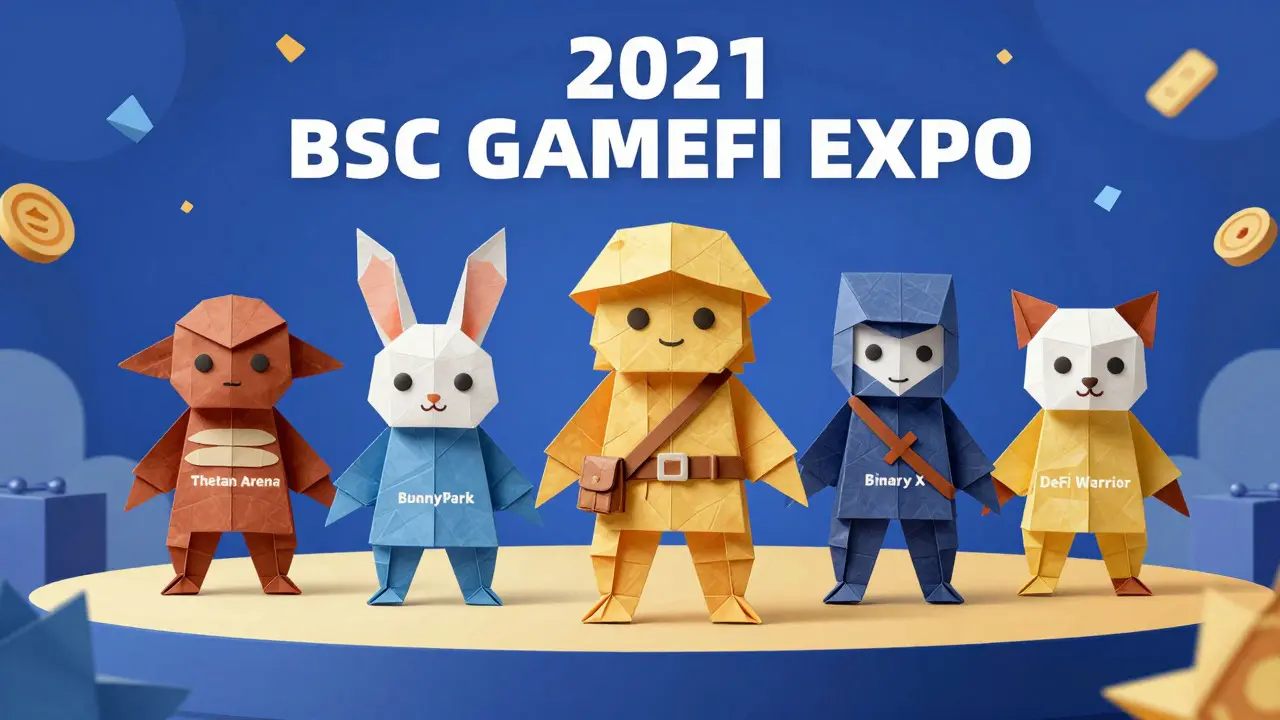
To understand the Faraland airdrop, you first have to look at the stage it was performed on. From September 20 to September 25, 2021, the Binance Smart Chain (BSC) hosted its inaugural GameFi Expo. This wasn't a small marketing stunt. It was a strategic move to showcase the viability of low-cost, high-speed transactions for gaming assets.
The organizers selected five heavyweight projects to anchor the week. Alongside Thetan Arena, Binary X, DeFi Warrior, and BunnyPark, Faraland took its spot. Each project got its own dedicated day for live streaming and token distribution. This structure meant that attention wasn't diluted across all five games simultaneously. Instead, each title had a spotlight moment to convert viewers into holders.
| Date | Featured Project | Focus Area |
|---|---|---|
| September 20, 2021 | Thetan Arena | MOBA Gameplay |
| September 21, 2021 | BunnyPark | Casual/Pet NFTs |
| September 22, 2021 | Binary X | Action RPG |
| September 23, 2021 | DeFi Warrior | Tower Defense |
| September 24, 2021 | Faraland | Adventure/RPG |
How the Faraland Airdrop Mechanics Worked
The actual distribution mechanism for the Faraland portion of the event relied heavily on engagement rather than simple wallet holdings. On September 24, 2021, the team executed a dual-language live stream via Binance Live. This platform choice was crucial. It forced users to be inside the Binance ecosystem, ensuring that the audience consisted largely of active crypto traders who already understood the basics of wallets and gas fees.
Here is how the participation usually unfolded during these expo events:
- Live Stream Attendance: Participants had to tune in to the official Binance Live channel. The streams were split into English and Chinese segments to capture the global audience, particularly targeting the large Asian gaming market.
- Interactive Tasks: During the broadcast, hosts would prompt viewers to perform specific actions. These often included liking the stream, sharing links to social media platforms like Twitter or Telegram, and commenting with specific keywords.
- Token Distribution: The airdrop tokens were distributed directly through CoinMarketCap's integration or direct wallet transfers linked to the live stream interface. Over $100,000 worth of tokens were distributed across the entire five-day expo, making the per-project value substantial.
This method served two purposes. First, it rewarded genuine interest. Second, it built an initial community base that was actively watching and listening to the developers explain the game's vision. For Faraland, this meant thousands of potential players learned about the land-based economy and hero mechanics before they even bought an NFT.

Why Faraland Was Selected for the Expo
You might wonder why Faraland stood out among the dozens of P2E projects launching in 2021. The answer lies in its unique approach to asset ownership. While many games treated NFTs as mere keys to enter the server, Faraland focused on land utility.
In the Faraland ecosystem, owning land wasn't just about prestige. It generated resources. Players could build structures, harvest crops, and engage in battles using heroes that were also NFTs. This economic loop mirrored real-world property investment but accelerated by blockchain transparency. When Binance looked for projects to feature, they wanted ones that demonstrated sustainable economies, not just speculative hype. Faraland's detailed roadmap and functional alpha version showed that the tech stack was ready for mass adoption.
The inclusion alongside giants like Thetan Arena signaled to the market that Faraland was a serious contender. It validated the project's technology and gave it instant credibility. For investors watching the BSC network, seeing Faraland's name in the same breath as other top-tier projects reduced the perceived risk of entering the ecosystem.
Subsequent Events and Community Growth
The success of the initial BSC GameFi Expo proved the model worked. Organizers quickly realized they could replicate the format. By October 2021, a continuation event featured new titles like Radio Caca and ZOO Crypto World, distributing another $60,000 in tokens. This momentum helped sustain interest in the broader GameFi sector throughout late 2021 and into 2022.
Faraland continued to leverage airdrops as a community-building tool beyond the initial expo. For instance, on October 28, 2022, the team hosted another targeted event encouraging users to assist a character named Thomas Do in-game for a chance to win rewards. These later events were more niche, focusing on retaining existing players rather than acquiring new ones. They required deeper engagement with the game mechanics, signaling that the project had moved past the initial growth phase into a retention phase.
Current Status of FARA Token
If you are holding FARA from that era or considering buying in now, context matters. The landscape has shifted dramatically since 2021. The "gold rush" mentality of early GameFi has cooled, replaced by a demand for better gameplay and sustainable tokenomics.
Looking at market projections for 2025 and 2026, analysts suggest moderate volatility for the FARA token. Predictions indicate a trading range between $1,172 and $1,420, with potential peaks nearing $1,250 depending on broader market conditions. However, these numbers should be taken with caution. The GameFi sector is highly sensitive to user activity metrics. Unlike pure DeFi protocols where yield is mathematically guaranteed, GameFi tokens rely on human attention. If players stop logging in, the demand for the governance and utility token drops.
Today, Faraland remains a notable name in the BSC ecosystem, but it competes in a much crowded field. Newer projects offer higher fidelity graphics and more complex narratives. The legacy of the BSC GameFi Expo airdrop lives on as a testament to the project's early promise, but current value is driven by present-day development updates and active player counts.
Lessons from the 2021 Airdrop Model
What can we learn from the Faraland x BSC event for future participants? The primary lesson is that airdrops are no longer free money. In 2021, showing up to a live stream was enough. Today, bots dominate these spaces. To succeed in modern airdrops, you need:
- Authentic Engagement: Generic comments get filtered out. Projects track meaningful interactions.
- Early Adoption: The biggest rewards go to those who join before the mainnet launch, not after the hype cycle begins.
- Ecosystem Loyalty: Holding related tokens or NFTs within the same ecosystem often boosts eligibility for secondary distributions.
The Faraland airdrop was a masterclass in community acquisition. It used the power of a major exchange (Binance) to validate a new narrative (GameFi). For anyone studying the history of crypto gaming, this event marks the transition from experimental prototypes to mainstream financial instruments.
When did the Faraland BSC GameFi Expo airdrop take place?
The specific Faraland segment of the BSC GameFi Expo occurred on September 24, 2021. It was part of a larger five-day event running from September 20 to September 25, 2021.
How could users participate in the original Faraland airdrop?
Users participated by tuning into the live stream on Binance Live. They were required to engage with the content by liking, sharing, and commenting during the broadcast. Tokens were distributed via CoinMarketCap integration or direct wallet transfers linked to the stream.
What other projects were featured in the BSC GameFi Expo alongside Faraland?
The other four projects featured in the initial expo were Thetan Arena, BunnyPark, Binary X, and DeFi Warrior. Each project had its own dedicated day for promotion and airdrop distribution.
Is the Faraland airdrop still active in 2026?
The original BSC GameFi Expo airdrop ended in 2021. While Faraland may conduct smaller promotional events or community rewards, the massive centralized airdrop associated with the Binance partnership is a historical event. Always check official channels for current promotions.
What is the significance of the FARA token in the GameFi sector?
FARA serves as the utility and governance token for the Faraland ecosystem. It allows users to purchase land, heroes, and in-game items. Its performance is tied to the active player base and the sustainability of the play-to-earn economic model.


Sus Sawyer
holy smokes, this is like digging up a time capsule from the wild west of crypto. i remember when gas fees were actually low enough to matter for gaming. faraland was one of those projects that felt like it had real bones, not just a whitepaper and a discord full of bots. the bsc expo was huge back then. everyone was trying to be the next thetan arena but with better graphics.
i think people forget how much effort went into those live streams. you had to actually sit there and watch them explain land mechanics while clicking buttons. it wasn't passive income, it was active duty. now we have click-to-earn scams everywhere. this article brings back memories of when we actually believed in play-to-earn as a viable career path instead of just a pump-and-dump scheme.
Aryan MISHRA
The tokenomics were fundamentally flawed from inception. Hyperinflationary models without robust sink mechanisms are destined for failure. The FARA utility was overstated. Mere engagement metrics do not equate to sustainable value accrual. It was a classic case of narrative-driven speculation rather than fundamental adoption. The BSC ecosystem suffered from severe congestion during these events, leading to high slippage on distributions. Rational actors should have exited earlier.
Ryan Robinson
hey man, i dont think its all bad tho. sure, the price crashed hard, but i still have some nfts from that era sitting in my wallet. they might not be worth much now, but they were fun to look at. i remember farming resources every day before work. it was like a second job but with pixels. maybe if they update the game again, something will happen. who knows right? the market is weird sometimes.
Earl Kott65
Oh wow! 😱 Talk about a blast from the past! 🚀 I remember staying up late for that stream! The energy was absolutely electric! ⚡ Faraland really tried to bring the RPG experience to blockchain, which was super ambitious for 2021. 💎 Although, let's be honest, the gameplay loop was a bit grindy after week two. 🙄 But hey, we were all young and naive back then! Who else remembers the Thomas Do event? That was hilarious! 😂 Keep holding your bags, friends! The diamond hands never die! 💪🔥
Ethan Yuwono
it is interesting to see how the landscape has shifted. the focus on land utility was ahead of its time in many ways. most projects today still struggle with meaningful asset ownership. faraland attempted to create a circular economy where assets generated yield. whether it succeeded or failed is debatable but the attempt itself was significant. we often judge past projects by current standards which is unfair. context matters greatly here.
Jack Delasquez
man i miss those days. everything was so simple. just connect wallet and boom tokens. now you need to bridge swap stake lock and pray. faraland was cool because it looked like a real game. not just a clicker app. i hope they bring it back or make a sequel. would love to play again even if the rewards are small. nostalgia is a powerful thing huh?
Harman Singh
why did noone tell me about this sooner. i feel like i missed out on so much money. my life could have been different if i knew about the bsc expo. now i am just stuck watching others profit while i work 9 to 5. it is so unfair. why does crypto always punish the latecomers. i hate this system. it feels rigged against normal people like me. i want my free tokens back please.
Qolbina Islami
Absolutely pathetic!! The entire BSC ecosystem was a joke from day one!! Centralized exchanges manipulating narratives to pump their own bags!! Faraland was nothing more than a marketing stunt designed to lure retail investors into a liquidity trap!! Wake up sheeple!! They sold you a dream while they cashed out!! Typical American greed disguised as innovation!! We need true decentralization not this corporate puppet show!! Burn it all down!! 🔥🇺🇸
SUBHAM CHOUDHURY
Great read. It is good to look back and learn. Faraland showed us what was possible. Even though the token price dropped, the technology stack improved. Many developers learned from these early mistakes. The community built during that time was strong. Let us support new projects that build on these lessons. Keep grinding and stay positive. The future is bright for those who prepare.
Joy Kwant
I just feel so drained reading about all this hype. Everyone chasing the next big thing without any substance. It is exhausting. People talk about 'community' but it is just a mob mentality. I wish people would focus on real value instead of these fleeting trends. It makes me sad that we lost sight of what crypto was supposed to be. Just noise and greed. I am tired of it all.
amy miranda
This is precisely why I distrust the entire GameFi sector. It reeks of desperation and poor planning. The authors of this piece seem to gloss over the blatant manipulation involved in these 'airdrops.' They weren't gifts; they were marketing costs passed onto users through inflated expectations. Furthermore, the environmental impact of running these networks, even on BSC, is often ignored. We are celebrating digital waste as if it were progress. Truly disheartening.
Pernelia Wahkan
Let us dissect the mechanics a bit further. The integration with CoinMarketCap was a clever move to bypass some of the friction usually associated with claiming tokens. However, the reliance on Binance Live created a single point of failure for user acquisition. If you were not in the Binance ecosystem, you were effectively locked out. This highlights the centralization paradox of many so-called decentralized games. The colorful visuals masked a rather rigid underlying structure.
Subhash Kashyap Dm
its all a setup. binance wanted to control the narrative. faraland was just a pawn. they used the airdrop to gather data on wallets. now they know exactly who holds what. the deep state needs to track crypto transactions. dont fall for the p2e scam. it is about surveillance capitalism. wake up. the land you bought is not yours. it is rented from the banksters. typical psyop.
Billy Cunningham
lol. nice summary. i forgot how complicated it got. emojis everywhere. 🤷♂️ just glad i sold early. profit is profit. rest in peace faraland. 💀
Ed Wallace
One must consider the philosophical implications of digital land ownership. Does owning a pixelated plot of land grant one any real-world rights? Probably not. Yet, the psychological attachment formed during those early days was genuine. Faraland tapped into our desire for creation and stewardship. It was a sandbox for our imaginations. The fact that it had monetary value added a layer of anxiety, but also excitement. A fascinating experiment in human behavior.
Joshua Hofford
Hey folks! 👋 Just wanted to say that looking back at 2021 reminds me how fast this space moves. Faraland was a pioneer in many ways. They brought culture and art into the mix. Not just numbers going up and down. I think we can learn a lot from their approach to community building. Let us keep supporting innovative projects that try to blend gaming and blockchain. The journey continues! 🌟
Marcia Albert
I just sat back and watched the whole thing unfold. It was like a soap opera. One day you are rich, the next you are broke. Faraland had some pretty cool art style though. Reminded me of old school rpgs. I guess that is why I kept coming back. It was comforting in a chaotic world. Now I just watch from the sidelines. Less stress that way.
Emma Smith
let me ask you this. what is the ontological status of a farmland nft. is it real or is it just code. if the server shuts down does the land cease to exist. this existential dread is what drives the market volatility. we are projecting meaning onto voids. jargon aside the emotional toll is real. why do we care so much about digital dirt. perhaps it is a metaphor for our own disposability in the modern economy.
Ed Mitchell
It is evident that the mainstream media ignored the sinister undercurrents of the BSC GameFi Expo. While the public was distracted by shiny NFTs, the architects of this financial pyramid were consolidating power. Faraland was merely the tip of the iceberg. A Trojan horse for mass adoption of centralized control. The airdrop was a bribe. Take heed. The matrix is tightening its grip. Resist.
Michael Mostyn
From an analytical perspective, the distribution mechanism served as a effective user acquisition funnel. By requiring active participation, Faraland filtered out passive holders. This likely resulted in a more engaged initial user base. However, retention rates post-airdrop are the critical metric. Data suggests that engagement dropped significantly after the novelty wore off. This pattern is consistent with other P2E projects of that era.
Erica Johnson
Well, obviously the price predictions mentioned in the article are total garbage. No one can predict crypto prices. Anyone telling you otherwise is selling something. I have been in this space since Bitcoin was $10. I have seen it all. Faraland was a decent project but ultimately doomed by market conditions. Don't trust the analysts. Trust the charts. And even then, be skeptical. 📉
Ken G
the elites always get theirs first. the airdrop was for the insiders. we peasants got the leftovers. simple truth. they use words like 'ecosystem' and 'utility' to confuse the masses. it is just greed wrapped in fancy language. i bet the founders sold half their stash while we were busy liking tweets. typical. never change. stay woke.
Lorraine Surringer
oh honey, you guys are missing the point. it wasnt about the money. it was about the vibes. the community. the shared experience. sure the token tanked but the memories remain. i made so many friends in that discord. we laughed we cried we traded heroes. that connection is priceless. stop being so cynical. embrace the chaos. life is short enjoy the ride even if it crashes.
Alex Di Mango
It is great to see such diverse opinions here. Some see failure, others see lessons. Both are valid. Faraland paved the way for better projects. We should appreciate the pioneers even if they stumbled. The key takeaway is that sustainability matters more than hype. Let us encourage projects that prioritize long-term health over quick gains. Peace and love to all the diamond hands out there.
Amor Jordan
I understand the frustration some of you feel. Losing money hurts. But beating yourself up won't bring it back. Faraland was a learning experience for many of us. It taught us to DYOR (Do Your Own Research). It taught us that not every shiny object is gold. Be kind to yourselves. We are all in this together. The community is stronger when we support each other through the ups and downs.
Nick Darring
You all are sleeping on the real story here. The real reason Faraland failed was because the graphics were too good. It scared the casual gamers who only wanted clickers. Also, the land mechanics were too complex for the average crypto bro who thinks trading is playing. I bet if they made it simpler and uglier, it would have pumped harder. Complexity is the enemy of mass adoption. Think about it. Really think about it. The simplicity of Thetan Arena was its secret weapon. Faraland tried to be a AAA game on a mobile network. Hubris. Pure hubris. And don't get me started on the hero stats. Way too granular. Nobody cared about mana regeneration rates. They wanted instant gratification. Faraland demanded patience. In 2021, nobody had patience. We all wanted to be millionaires by Tuesday. So yes, it failed. But it failed nobly. Or something like that.