
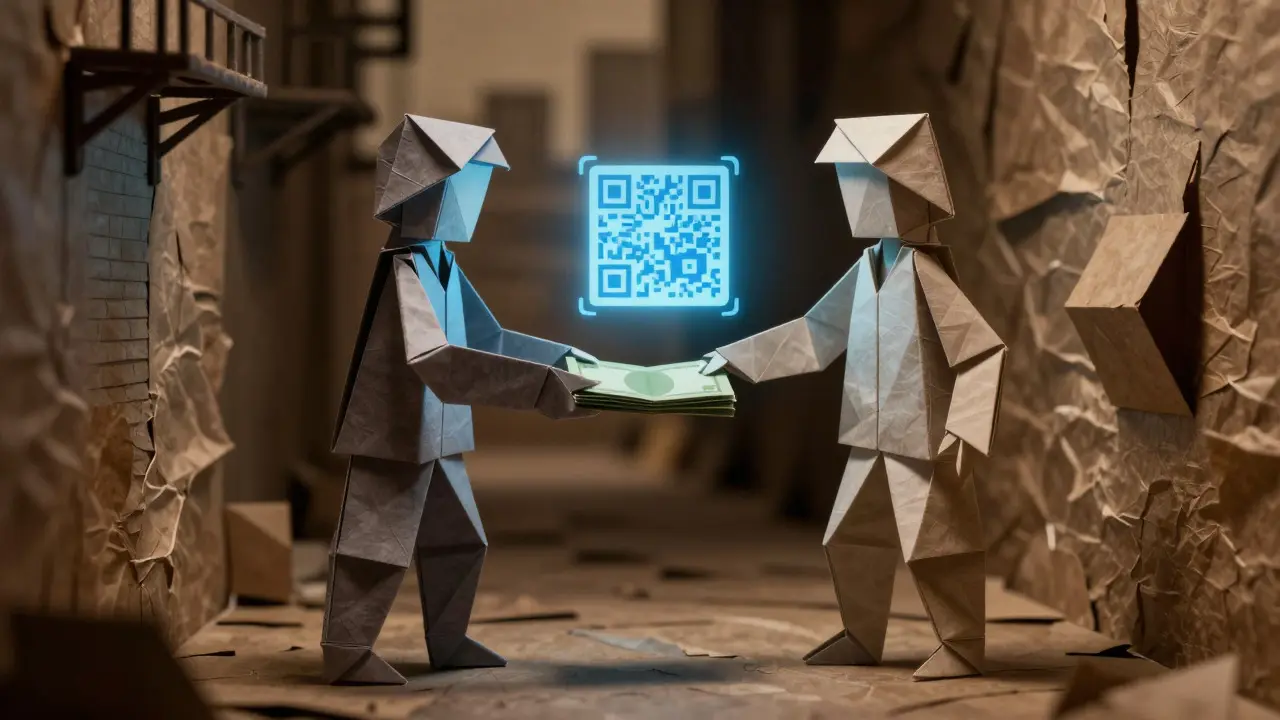
Imagine trying to buy something as simple as a coffee, but the payment method you use is technically a crime. In Myanmar, that is the daily reality for thousands of people navigating the underground crypto market. While governments in neighboring countries like Thailand and Laos are building frameworks to welcome digital assets, Myanmar has chosen a different path: a total blackout.
The Central Bank of Myanmar (CBM) declared cryptocurrency transactions illegal in 2020. This wasn't just a warning; it was a comprehensive ban backed by the Foreign Exchange Management Law. As of mid-2026, this prohibition remains fully enforced. The military-led regime views financial freedom as a threat to its control, treating every Bitcoin transaction or USDT transfer as a violation of currency laws. Yet, despite the risk of frozen bank accounts and criminal charges, the market hasn't disappeared. It has simply gone deeper underground.
The Infrastructure of Shadows
You won't find a licensed exchange on any street corner in Yangon or Mandalay. There are no official apps on the local app stores. So, how does the trade happen? It relies on a fragile, trust-based infrastructure built entirely outside the legal system.
The backbone of this ecosystem is peer-to-peer (P2P) networking. Traders primarily use social media platforms-specifically Facebook, Telegram, and increasingly TikTok-to find one another. These groups act as informal bulletin boards where buyers and sellers post rates and negotiate terms. But the actual money movement rarely happens through these apps directly due to surveillance fears.
Instead, the market depends on "cash dealers." These are trusted individuals who hold physical cash and crypto wallets. A buyer might meet a dealer in person, hand over Kyat, and receive a QR code to scan for Bitcoin or Tether (USDT). This creates a system with extremely thin liquidity. Because there are no institutional players providing deep order books, prices can swing wildly based on small trades. If someone needs to move a large amount of capital quickly, they often face significant slippage or have to split the transaction across multiple dealers to avoid drawing attention.
To access international platforms like Binance, users must rely on Virtual Private Networks (VPNs). The government actively blocks direct access to major exchanges. This adds a layer of technical friction: if your VPN fails during a transaction, you could be left holding assets you cannot sell or fiat currency you cannot convert without exposing yourself to authorities.
Community as the Only Regulator
In a vacuum of regulation, community becomes law. The most prominent example of this is the Myan Crypto Masters Community (MCM). Founded by an individual known as Feliz, MCM has grown to over 23,000 members. It serves not just as a trading hub, but as the primary educational institution for Burmese speakers interested in blockchain technology.
MCM operates weekly workshops and digital courses, breaking down complex concepts like wallet security, gas fees, and network effects into digestible Burmese content. This education is critical because the barrier to entry isn't just legal-it's technical. Newcomers often fall prey to scams because they don't understand how private keys work. Veterans in the community share hard-earned lessons, creating a self-policing environment. However, this protection is limited. When deals go bad, there are no courts to appeal to. There are no regulators to file complaints with. You are on your own.
This lack of recourse was starkly highlighted by the collapse of high-profile crypto schemes in 2022, which left thousands of investors in financial ruin. Without insurance funds or legal oversight, victims had nowhere to turn. The community response has been to emphasize extreme caution, favoring established reputations over promises of high returns.

Why People Risk It All
If the risks include prison time and total loss of funds, why do people participate? The answer lies in necessity. Myanmar faces severe economic instability, hyperinflation of the local Kyat, and limited access to traditional banking services. For many, cryptocurrency is not an investment strategy; it is a survival tool.
Stablecoins, particularly USDT, play a massive role here. They allow citizens to preserve value against inflation and facilitate cross-border remittances. Families separated by conflict or migration use these channels to send money home, bypassing expensive and slow traditional wire transfers. Additionally, the political landscape has given rise to resistance finance. The Spring Development Bank of the National Unity Government (NUG), operating on the Polygon blockchain, offers gold-backed savings and USDT rails to support communities opposing the military regime. For these users, crypto is an act of political resistance as much as financial management.
The Mining Blackout
While trading persists, mining has become nearly impossible. The CBM prohibits both mining and trading. Energy shortages plague the country, making the power-hungry process of Proof-of-Work mining economically unviable even if it were legal. Authorities actively confiscate equipment, and entrepreneurs who attempt clandestine operations face severe penalties.
This has led to a brain drain and hardware exodus. Many miners have relocated to neighboring countries with more favorable regulations and stable energy grids. This migration affects the global hash rate distribution and shifts energy demand away from Myanmar. Those who remain operate at a micro-scale, hiding rigs in residential areas and relying on erratic power supplies, constantly looking over their shoulders.
| Country | Legal Status of Crypto | Exchange Access | Mining Regulations |
|---|---|---|---|
| Myanmar | Illegal (Total Ban) | Blocked (VPN required) | Prohibited / Confiscation |
| Thailand | Regulated | Licensed Exchanges Available | Permitted with Licensing |
| Laos | Evolving Framework | Restricted but accessible | Unclear / Limited |
| China | Trading Banned / Mining Banned | Domestic Exchanges Closed | Prohibited |

Risks and Realities for Users
Navigating this market requires a specific set of skills and a high tolerance for risk. Here is what participants face:
- Counterparty Risk: Since transactions are often OTC (Over-The-Counter) with individuals, the biggest fear is being scammed. A dealer might take your cash and disappear, or send you fake tokens.
- Bank Account Freezes: The CBM monitors unusual transaction patterns. If your bank account shows frequent transfers linked to suspected crypto activity, it can be frozen instantly. Unfreezing it requires navigating a bureaucratic nightmare with little guarantee of success.
- Price Volatility: Due to low liquidity, buying $1,000 worth of Bitcoin might cost significantly more than the global market price, while selling might fetch less. Spreads are wide.
- Technical Barriers: Understanding seed phrases, hardware wallets, and network fees is mandatory. Mistakes are irreversible.
Experts note that while the underground ecosystem provides crucial financial services, it operates without regulatory protection. Anonymous exchange operators admit, "We know we're taking a risk, but for many people, we're the only option. We try to operate as transparently as possible, but without regulation, it's a constant challenge." This transparency is limited to reputation within closed groups, not public audit trails.
The Future Outlook
As of 2026, there are no signs of regulatory relaxation under the current military administration. The dichotomy remains sharp: an official blanket ban versus an expanding underground scene using stablecoins for survival. Any shift toward legalization would require a fundamental change in the political structure, likely involving a civilian government willing to embrace financial liberalization.
Until then, the market will continue to evolve tactically rather than strategically. Expect more reliance on decentralized finance (DeFi) protocols that don't require Know Your Customer (KYC) checks, further migration of tech-savvy users abroad, and continued innovation in concealment methods. For the average citizen, crypto remains a double-edged sword: a lifeline in a broken economy, but a target for a restrictive state.
Is cryptocurrency completely illegal in Myanmar?
Yes. The Central Bank of Myanmar banned all cryptocurrency transactions in 2020. Both trading and mining are considered illegal under foreign exchange laws. Penalties can include fines, asset seizure, and imprisonment.
How do people trade crypto if exchanges are blocked?
Traders use Peer-to-Peer (P2P) networks via Telegram and Facebook groups. They connect with trusted cash dealers for off-record transactions. To access global platforms like Binance, users employ VPNs to bypass internet censorship.
What is the Myan Crypto Masters Community (MCM)?
MCM is a large online community founded by 'Feliz' that provides education on cryptocurrency in the Burmese language. With over 23,000 members, it hosts workshops and forums to help users navigate technical and safety challenges in the absence of formal regulation.
Are there any legitimate ways to use crypto in Myanmar?
There are no legally recognized domestic exchanges or banks offering crypto services. However, some resistance groups and diaspora communities use blockchain-based systems (like those on the Polygon network) for remittances and savings, operating in a legal grey area or directly opposing state bans.
Can my bank account be frozen for crypto trading?
Yes. The Central Bank of Myanmar monitors financial institutions for suspicious activities. If your account shows patterns consistent with crypto conversion, authorities can freeze your funds and initiate criminal investigations.
Why is mining so difficult in Myanmar?
Mining is prohibited and heavily penalized. Additionally, chronic energy shortages make running power-intensive mining rigs economically unfeasible. Authorities actively raid locations and confiscate equipment, forcing most miners to relocate to neighboring countries.


Namrata Mapgaonkar
its kinda crazy how people just use telegram for everything now, even illegal stuff lol. reminds me of how we used to trade in india before the regulations got tight :)
Matt Kay
typical govt overreach. they ban it so they can control the money supply. classic.
Carl Michaud
The narrative here is heavily skewed towards 'freedom' but ignores the systemic rot that crypto enables in these jurisdictions. The 'underground market' isn't a hero's journey; it's a symptom of state failure and capital flight by elites who want to hide assets from their own citizens. The liquidity traps mentioned are not accidental; they are features designed to extract value from the desperate. The P2P networks are essentially modern-day protection rackets where the 'trust' is enforced by social ostracization or worse. We see this pattern everywhere: when the state loses legitimacy, shadow economies emerge, but they rarely benefit the common person. They benefit the middlemen-the 'cash dealers' who skim off the top with zero oversight. It’s a parasitic ecosystem disguised as liberation.
Eden Tadesse
i think its sad that people have to risk prison just to save their savings. the kyat is worthless anyway so why fight it? hope things get better soon tho
Phil Babb
This is absolutely outrageous!!! How can a government treat its own citizens like criminals for trying to preserve their wealth?! The military junta needs to step down immediately!!! The use of USDT for remittances is brilliant innovation under pressure!!! Keep fighting for your financial freedom!!! 💪🔥
Matthew Smith
moral hazard is high here but the alternative is starvation so i guess the ends justify the means. no regulation means no safety net though. scary world we live in
Kat Bennett
I've been following the situation in Southeast Asia for years and it's fascinating how technology outpaces legislation every single time. You can ban the software but you can't ban the math behind it. It makes me wonder if central banks are actually trying to protect us or just protect themselves from irrelevance. The fact that the Myan Crypto Masters Community has grown to 23,000 members shows that there is a hunger for knowledge that the state cannot suppress. It really highlights the resilience of human ingenuity when backed into a corner. I hope more countries look at this as a lesson in what happens when you try to outlaw basic economic participation rather than regulate it responsibly.
Lance Jantz
Ah, the beautiful chaos of the black market! It’s not just economics, my friends, it’s theater! 🎭 The 'cash dealers' meeting in shadows, the QR codes scanned like secret handshakes-it’s straight out of a noir film. But let’s be honest, without the state’s heavy hand, would it be half as exciting? The tension between the oppressor and the oppressed creates a dynamic energy that regulated markets simply lack. It’s raw, unfiltered capitalism dancing on the edge of a cliff. Bravo to the miners hiding their rigs in living rooms! Truly avant-garde entrepreneurship!
Prudence Flemming
the paradigm shift is evident. fiat is dead long live the chain. decentralization wins again despite the boot stamping on a human face forever. interesting times.
Dominic Greco
They’re watching 👀. Every transaction is tracked. The VPNs are backdoored. Don’t believe the hype about anonymity. It’s all a trap set by the deep state to identify dissidents. #StayAlert 🚨👁️
Dave Kjendal
most of these guys are just gambling. they dont know what they are doing. typical.
Eric Zehr
It is truly inspiring to see how communities come together to support each other in such difficult circumstances. The educational aspect of the Myan Crypto Masters Community is particularly noteworthy because it empowers individuals with knowledge, which is the most valuable currency in any economy. Despite the risks, the spirit of resilience shines through. Let’s continue to support financial inclusion globally.
Candice Cornett
everyone says its for survival but lets be real its mostly speculation. they want easy money. dont fall for the victim narrative
Don Fizy
Hey folks, just wanted to say that using hardware wallets is a must if you are dealing with large amounts. Trust no one, verify everything. Stay safe out there! :)
Sus Sawyer
Yo, this is wild. The slippage on those trades must be insane. Imagine trying to sell $10k worth of BTC and getting hit with a 10% spread because some dude in Yangon is holding all the cards. That’s not investing, that’s extortion. But hey, gotta respect the hustle. If you’re gonna play the underground game, make sure you’ve got your seed phrase tattooed on your brain or something. Good luck to everyone navigating this minefield.
Aryan MISHRA
Liquidity fragmentation is key!! High volatility expected!! Risk management essential!!
Ryan Robinson
pretty cool how they use tiktok for it too. thought it was just teens dancing. guess not. hope they stay safe man
Earl Kott65
Oh wow, another country joining the club of 'banning tech because we don't understand it.' 🙄 Classic move. Can't wait to see them try to ban gravity next. 😂
Jack Delasquez
miners moving to laos is smart. power is cheap there. good move.
Harman Singh
why does everyone always focus on the bad stuff? my life is hard enough reading this. makes me wanna cry. :(
Qolbina Islami
This is a direct attack on national sovereignty!!! Foreign powers are using crypto to destabilize our region!!! Wake up people!!! The CBM is protecting us from globalist agendas!!! Stop listening to western propaganda!!! 🇲🇲🇺🇸
SUBHAM CHOUDHURY
Keep going! You can do it! Believe in yourself! The community is strong! Together we rise! 🌟
Rita Dutta
oh the irony of 'financial freedom' being bought with cash in hand while the state watches like a hawk. it’s a dance of shadows, darlings. the kyat crumbles like dry bread but the blockchain remains eternal, cold and unfeeling. we are all just nodes in a vast network of desperation and hope. deliciously tragic really. who needs banks when you have trust issues?
Paul Smith
Really appreciate the detailed breakdown here! 🙏 It’s amazing how resilient people are. Hope to see more peace and prosperity in Myanmar soon! ✨🌍
Rodmun Tarnowski
Indeed! The regulatory landscape is complex! However, the persistence of the underground market demonstrates the inherent demand for alternative financial systems! One must consider the historical precedents of currency bans! They rarely succeed in the long term! Innovation finds a way!
Sean Rowland
Let us delve deeper into the ontological implications of decentralized finance in authoritarian regimes. Is the act of transacting via blockchain a performative assertion of individual agency against the monolithic state apparatus? Or merely a commodification of dissent? The user, in seeking liquidity, inadvertently becomes a node in a global surveillance network, regardless of encryption. This paradox of visibility-in-invisibility warrants rigorous academic scrutiny.