
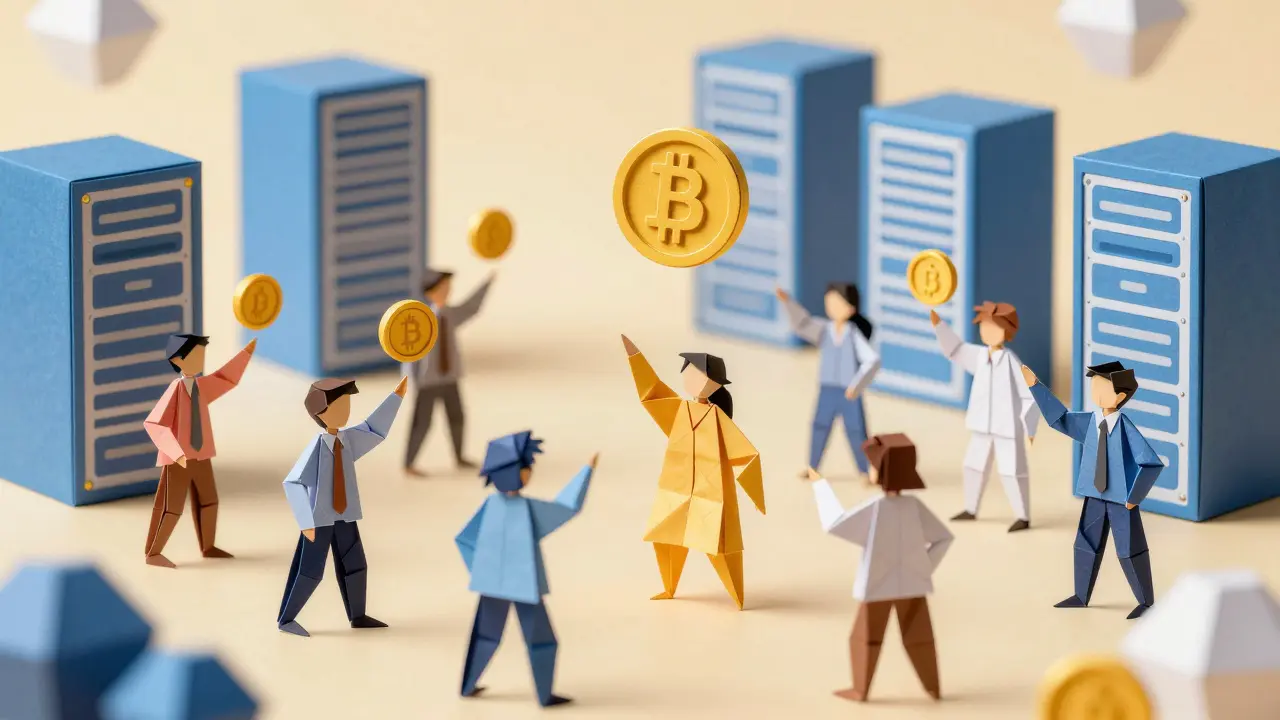
Remember the days when claiming an airdrop felt like finding money on the sidewalk? For a brief window in late 2021, JF from Jswap.Finance, a decentralized exchange protocol launched on OKExchain that offered swap mining and high-yield liquidity pools, was exactly that. Users flocked to it, chasing triple-digit Annual Percentage Yields (APYs) and free tokens distributed through major exchanges like MEXC.
Fast forward to June 2026. The hype has faded, the trading volume has evaporated, and the token price sits at $0 across major tracking platforms. If you are looking into the JF airdrop today, you aren't just looking for free crypto; you are looking into a cautionary tale of DeFi volatility. This guide breaks down what happened, how the distribution worked, and why you need to be extremely careful before interacting with any remaining contracts or claims.
The Rise and Fall of Jswap.Finance
To understand the current state of the JF token, we have to look at where it started. Jswap.Finance launched as a comprehensive DeFi ecosystem on OKExchain, a blockchain network developed by the OKX exchange designed to support smart contracts and decentralized applications. The promise was ambitious: one-stop DeFi services including swap mining, liquidity mining, single-token vaults, and DAO dividends.
In its early days, the numbers were staggering. The platform claimed nearly 100,000 users and over $60 million in Total Value Locked (TVL). They advertised APYs as high as 1,476% for JF/USDT pairs. These kinds of returns act like magnets in the crypto world. Naturally, attention turned to their governance token, JF, which had a maximum supply of 100 million tokens.
However, DeFi projects live and die by liquidity and user activity. Without consistent trading volume, even the best-designed tokenomics fail. Today, CoinMarketCap shows zero 24-hour trading volume and a market cap of $0. The disconnect between the initial hype and the current silence is stark. When you see a token with a fully diluted valuation but no active trades, it usually means the community has moved on, or worse, the project has stalled.
How the JF Airdrop Actually Worked
You might be wondering if there is still a way to get those free tokens. To answer that, we need to look at how the distribution actually happened. There wasn't just one "click-to-claim" button. The JF airdrop was primarily driven by exchange partnerships and promotional campaigns.
The most significant distribution event occurred in November 2021 through MEXC, a cryptocurrency exchange known for listing new and small-cap tokens, often featuring a Kickstarter program for new listings's Kickstarter program. Here is how it played out:
- Voting Mechanism: Users contributed MX tokens (MEXC's native token) to vote for the JF listing.
- Total Participation: Approximately 23.6 million MX tokens were contributed by the community.
- Reward Distribution: Successful participants received a total of 35,200 JF tokens as rewards.
This wasn't a universal giveaway. You had to actively participate in the voting process. Additionally, platforms like Bitget mentioned ongoing opportunities where users could receive Jswap.Finance airdrops by joining challenges. However, these were time-sensitive promotions tied to specific marketing pushes.
If you are reading this in 2026, those specific windows have long closed. Any website currently claiming to offer a "new" JF airdrop should be treated with extreme skepticism. In the crypto space, old airdrop names are frequently reused by scammers to harvest private keys or steal funds.

Current Market Status: Why the Price is Current Market Status: Why the Price is $0
Let's talk about the elephant in the room: the price. As of mid-2026, data from Binance and CoinMarketCap lists JF at $0 USD. But what does that actually mean?
It doesn't necessarily mean the token is worthless in a philosophical sense-it means there is no market for it. Here is the breakdown of the current metrics:
| Metric | Value | Implication |
|---|---|---|
| Current Price | $0.00 | No recent trades to establish a price |
| 24h Volume | $40.24 | Extremely low liquidity; hard to sell large amounts |
| Circulating Supply | 0 (reported) | Data discrepancy or tokens locked/burned |
| Max Supply | 100,000,000 | Total tokens ever created |
| All-Time High | NaN | Tracking issues or lack of historical data integrity |
The fact that the All-Time High is listed as "NaN" (Not a Number) is a red flag for data integrity. It suggests that reliable price feeds may have been disconnected years ago. When a token has zero volume, you cannot easily convert it back to stablecoins or fiat. If you somehow hold JF tokens today, selling them might require finding a direct counterparty off-exchange, which carries its own risks.
Tokenomics: The Deflationary Promise vs. Reality
Jswap.Finance originally touted a deflationary model. The idea was simple: all platform profits would be used to repurchase and destroy JF tokens. In theory, less supply + steady demand = higher price. This is a common strategy in DeFi to incentivize long-term holding.
However, this mechanism relies entirely on revenue generation. With 24-hour trading volumes dropping to roughly $40, the platform isn't generating meaningful fees. Without fees, there is no capital to buy back tokens. Without buybacks, the deflationary pressure disappears. The smart contract address associated with the protocol (starting with 0x5fAc...) remains on the blockchain, but without active development or liquidity provision, the code is effectively dormant.
This highlights a critical lesson in DeFi: tokenomics are only as good as the underlying product usage. A beautiful chart on a whitepaper means nothing if nobody is swapping tokens on the platform.
Safety First: Avoiding Scams and Dead Ends
If you are searching for "JF airdrop claim," you are entering a high-risk zone. Because the legitimate airdrop events ended years ago, any current site asking you to connect your wallet to "claim" JF tokens is likely a phishing attempt.
Here is how to protect yourself:
- Never Connect to Unverified Sites: Do not click links from social media posts promising free JF tokens. Scammers use expired project names to lure victims.
- Check Official Channels: Look for announcements on verified Twitter accounts or official Discord servers. Note that many older DeFi projects abandon these channels, so silence can also be a signal.
- Verify Contract Addresses: If you already hold JF tokens, check the contract address against reputable explorers like Etherscan or the OKExchain explorer. Ensure it matches the original deployment.
- Ignore "Kickstarter" Claims: The MEXC Kickstarter campaign is over. Any site replicating that interface is fake.
Bitget and other exchanges previously allowed conversion of rewards into JF tokens, but given the current market status, converting other assets into JF is financially ill-advised. You would be exchanging liquid assets for an illiquid token with no clear exit strategy.
What Should You Do Now?
If you held JF tokens from the 2021 era, you face a difficult decision. The tokens are essentially stuck. Moving them around costs gas fees on OKExchain, and selling them yields little to no value due to the lack of liquidity. For most holders, the pragmatic choice is to accept the loss and learn from the experience. Chasing a dead token by spending more money on gas fees or falling for scam recovery services will only deepen the hole.
If you are a new investor looking for airdrops, use Jswap.Finance as a case study. Look for projects with:
- Active Development: Regular GitHub commits and updated documentation.
- Liquidity Depth: Significant TVL that hasn't drained rapidly.
- Transparent Teams: Doxxed founders or reputable venture capital backing.
- Real Utility: Products people actually use, not just yield farming schemes.
The DeFi landscape in 2026 is much more mature than in 2021. Projects that survive do so by providing genuine value, not just speculative yields. Be patient, do your research, and never invest based solely on the promise of a free token drop.
Is the JF airdrop still active in 2026?
No, the primary JF airdrop distributions occurred in late 2021 through partners like MEXC and Bitget. Any current offers claiming to provide free JF tokens are likely scams. Always verify information through official, archived project channels.
Why is the JF token price listed as $0?
The price is listed as $0 because there is virtually no trading volume. Without buyers and sellers actively trading the token on exchanges, price aggregators cannot calculate a valid market price. This indicates a lack of liquidity and market interest.
Can I still claim JF tokens from MEXC?
No, the MEXC Kickstarter campaign for JF ended in November 2021. Eligible users received their rewards at that time. MEXC does not offer retroactive claims for this specific event years later.
Is Jswap.Finance safe to use now?
Given the near-zero trading volume and lack of recent updates, using Jswap.Finance carries significant risk. The platform appears inactive, meaning your funds could be stuck or vulnerable to exploits if security patches are not maintained. Exercise extreme caution.
What happened to the high APYs promised by Jswap?
High APYs in DeFi are often unsustainable. They rely on continuous new investment to pay earlier users. As user growth slowed and liquidity drained, the yields collapsed. This is a common pattern in yield farming protocols that prioritize token incentives over organic utility.


Terry Hyland
these crypto scams are evil. people lose their life savings because they are greedy and stupid. it is the fault of the creators who lie to us. i hope they all go to jail for ruining lives.
Monica Pathammavong
i actually looked into the contract code and its a mess lol. you guys dont know what youre talking about. the liquidity was never real, just wash trading bots. typical de-fi rug pull pattern seen in 2021. stop pretending its complicated when its just theft.
Tim Lefebvre
hey there! good point about the wash trading. i remember seeing weird volume spikes that made no sense. if anyone wants to check the okexchain explorer for the specific tx hashes from back then i can help you find them. its pretty easy once you know where to look but yeah definitely shady stuff going on
Nick Rice
You must understand that this is a critical lesson in financial literacy. The market does not care about your feelings or your narrative. It cares about liquidity and utility. If you do not have these, you are nothing. Wake up and learn how the system works before you try to play in it again.
Amit Thakur
The tokenomics were fundamentally flawed from inception. The APYs were unsustainable Ponzi mechanics designed to attract retail liquidity for an exit scam. The smart contract lacked proper governance safeguards, allowing insiders to drain the pool. This is a classic case of asymmetric information exploitation by malicious actors against uninformed participants.
Eric Scheinberg
It is imperative to recognize the structural deficiencies in such protocols. The absence of transparent audit trails and the reliance on opaque vesting schedules created a fertile environment for fraud. One must approach decentralized finance with extreme skepticism and rigorous due diligence.
pankaj chawla
I agree completely. We need better regulation and stricter auditing standards for all DeFi projects. It is unacceptable that users are left holding worthless bags while developers walk away with millions. Let's push for accountability in this space.
Jessica Lane
This analysis provides a comprehensive overview of the situation. It is essential to consider the broader implications for investor protection and regulatory frameworks. How might we prevent similar occurrences in emerging blockchain ecosystems?
Charles Pawlikowski
typical foreign scam targeting americans :( should be illegal to even run these things here. we deserve better than this garbage. make america great again by banning crypto scams! :)
Andrea Burd
boring post. everyone knows jf is dead. why are you still writing about it? waste of time. i couldnt be bothered to read all that fluff. next.
Akeem Whittaker
You need to take responsibility for your own actions. No one forced you to invest. You chose to put your money into a high-risk asset without doing your research. Blaming others will not get your money back. Learn from this mistake and move forward.
Mauricio Contreras Loredo
oh wow another day another rug pull. shocking. i mean really. who would have thought that promising 1000% returns would end badly? ground breaking insight here folks. maybe next time try buying stocks instead of gambling on random tokens.
sreeja boora
This project failed because it lacked proper infrastructure and support from established institutions. Western investors often overlook the importance of robust technical foundations. We must prioritize security and stability over speculative gains.
Grace Newman
It is evident that this entire ecosystem is part of a larger surveillance state experiment. They want you to connect your wallet so they can track every transaction. The zero price is a signal to abandon ship before the real crackdown begins. Trust no one.
Annemarie Fitzgerald
the existential dread of watching your portfolio vanish is profound. it reflects the absurdity of modern value systems. we assign worth to digital numbers that have no physical backing. truly tragic. i feel for everyone involved but also kind of amused by the whole circus lol