
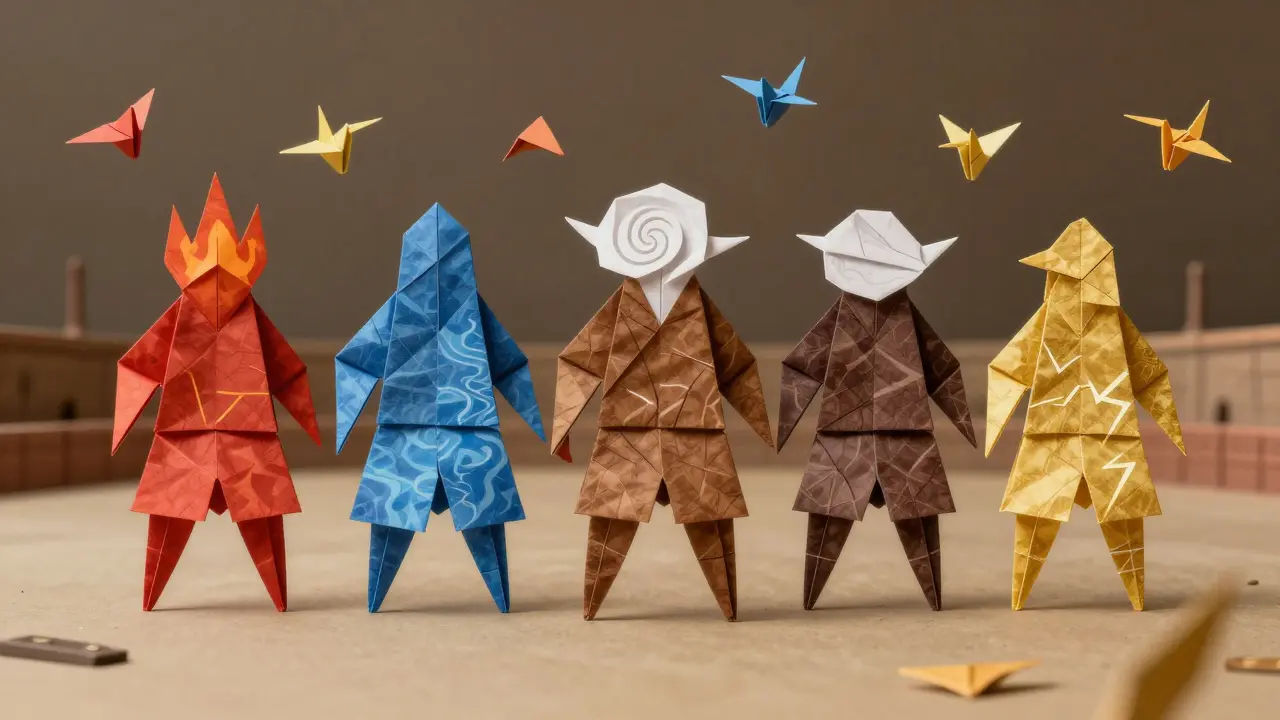
Pocoland (POCO) was never meant to be just another crypto coin. It was built as the fuel for a play-to-earn gaming world where players lead teams of five warrior characters, each with unique elemental powers, to battle enemies and earn rewards. At launch, it looked like a promising idea: a blockchain game with NFTs, running on Binance Smart Chain and compatible with Polygon. But today, its story is one of dramatic rise and near-total collapse.
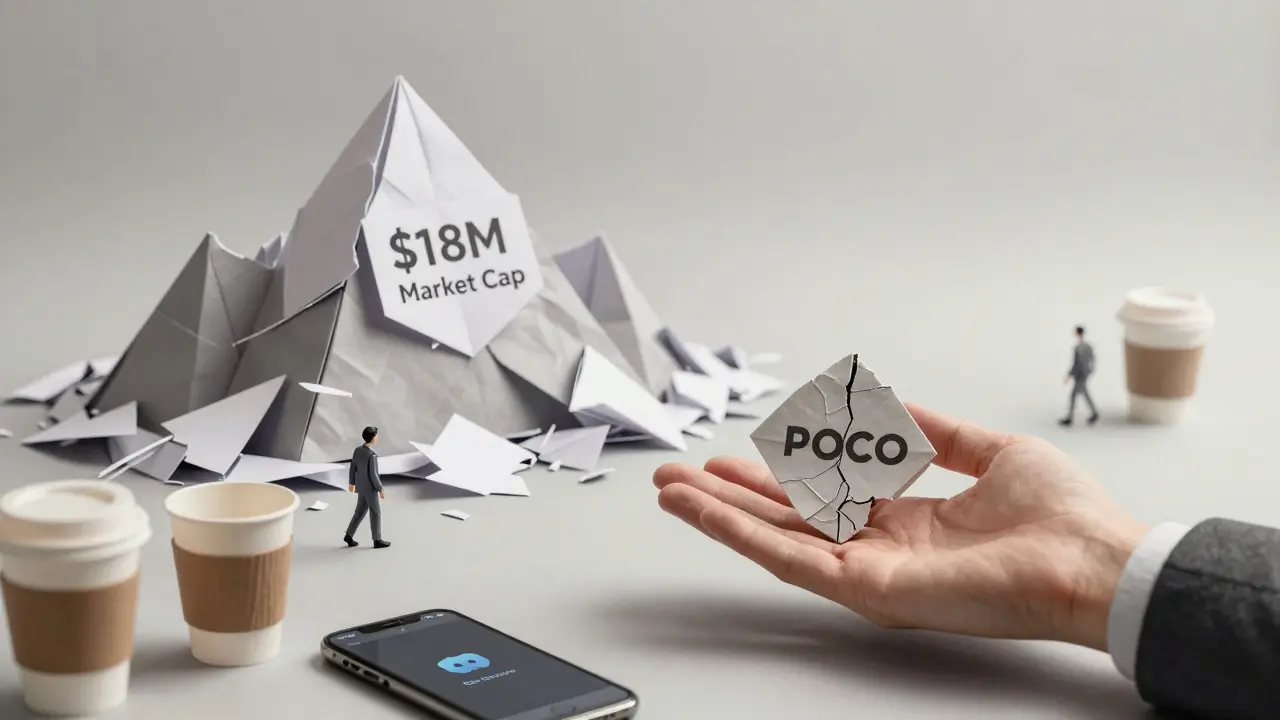
The token launched with a clear plan. Two funding rounds raised a total of $2.7 million at a $18 million valuation. Both private and public investors bought POCO at $0.10 per token. The total supply was set at 180 million tokens. At launch, the market cap hit $853,000, and the fully diluted market cap - meaning all tokens were counted as if already in circulation - stood at $18 million. That was the peak.
For a short time, things looked bright. The price soared to an all-time high of $1.29. That’s a 1,0794% jump from the original $0.10 price. People who bought early made massive gains. Some even turned $100 into over $10,000. But that high didn’t last. By early 2026, the price had crashed to between $0.0001053 and $0.0001195. That’s a drop of more than 99.99% from its peak. If you bought at launch, your $100 investment is now worth less than 13 cents.
Why did it crash so hard? The answer lies in what happened after the hype faded. The Pocoland game never gained traction. Players didn’t stick around. Without active users, there’s no demand for POCO tokens. No players means no need to earn, spend, or trade the coin. The entire economy built around it - battles, loot drops, NFT upgrades - became empty. The game didn’t evolve. Updates stopped. Community chatter vanished. And when a crypto project’s utility disappears, the price follows.
Today, the numbers tell a bleak story. The market cap has collapsed to just $21,500. That’s 97.5% lower than its launch value and 99.88% below its original fully diluted value. Trading volume? Roughly $4.50 per day. That’s less than the cost of a coffee. Most of that trading happens on PancakeSwap, specifically the POCO/WBNB pair. There’s no real liquidity. You can’t buy large amounts without moving the price wildly. And if you try to sell, you might not find a buyer at all.
The token contract address on Binance Smart Chain is 0x394bba8f309f3462b31238b3fd04b83f71a98848. You can add it manually to MetaMask, or use CoinGecko’s browser extension. But here’s the problem: even if you can add it, there’s almost no reason to. The game isn’t live. The NFTs aren’t being used. The developers haven’t posted updates in months. There’s no roadmap. No team announcements. No new features. Just silence.
Some might say, "But the price went up 3.2% last week." That’s true. But it’s not a recovery. It’s noise. A few small trades moving the needle slightly. The broader crypto market rose 0.4% in the same period. POCO barely outperformed it. That’s not growth. That’s a flicker. Without real user activity, any price movement is likely just speculation from a handful of people holding onto hope - or trying to dump their bags.
What about the tokenomics? The total supply is 180 million, but the circulating supply isn’t listed on CoinGecko or CoinMarketCap. That’s unusual. Most projects report this clearly. The lack of data suggests either the team isn’t updating metrics, or they don’t have reliable numbers anymore. Without knowing how many tokens are actually in play, you can’t judge demand. Is the price low because everyone sold? Or because no one ever bought? The answer is probably both.
There’s no official website anymore that works. Social media accounts are quiet. The last Discord message was over six months ago. The whitepaper is still online, but it’s a relic. It describes a world that never materialized. The promise of five elemental warriors, team-based battles, and daily rewards? None of it’s functional. The game engine is broken. The backend is offline. The NFTs exist on-chain, but they’re just digital images with no use.
Is Pocoland dead? Not officially. But it’s effectively inactive. No new development. No community growth. No exchange listings beyond one. No partnerships. No marketing. The project is in a state of abandonment. For investors, it’s a lesson in how quickly hype can turn to dust. For players, it’s a reminder that play-to-earn isn’t just about earning - it’s about playing. And if the game isn’t fun, no amount of tokens will keep you coming back.
If you’re considering buying POCO now, understand this: you’re not investing in a game. You’re betting on a resurrection that has no signs of happening. The odds are stacked against it. The token has lost 99.99% of its value. The ecosystem is hollow. The team is silent. And the trading volume is barely visible. There’s no technical, financial, or community reason to believe this will turn around.
There are hundreds of crypto gaming projects. A few have survived by keeping their games fun, updating regularly, and listening to players. Pocoland didn’t do any of that. It built a token first, and a game second - and the game never came alive.
How Pocoland (POCO) was supposed to work
Pocoland’s core idea was simple: play, earn, repeat. Users would create or buy NFTs of Poco warriors - each with different elemental traits like fire, water, earth, wind, or lightning. Teams of five would enter battle arenas against AI or other players. Winning battles would reward players with POCO tokens. The more you played, the more you earned. Some tokens could be used to upgrade your warriors. Others could be traded or staked.
The game was designed to run on Binance Smart Chain for low fees and fast transactions. Polygon support was added to allow cross-chain asset transfers. This made sense technically - BSC is popular for gaming, and Polygon helps scale. But the execution failed. The game had poor graphics, repetitive gameplay, and no real progression system. Players quickly realized they were grinding for pennies. The rewards didn’t justify the time. And without a strong story, visuals, or competitive mode, retention dropped fast.
Current state of POCO trading
As of February 2026, POCO trades on only one exchange: PancakeSwap (v2). The POCO/WBNB pair handles almost all volume. The 24-hour trading range is between $4.37 and $4.92. That’s not a typo. It’s less than $5 per day. For comparison, even obscure tokens with no real use case often trade $10,000 or more daily. POCO’s liquidity is so thin that a single large trade could move the price 20% or more.
There’s no listing on centralized exchanges like Binance, KuCoin, or OKX. No fiat on-ramps. No wallets or apps built by the team. No mobile version. The only way to interact with POCO is through a Web3 wallet like MetaMask, manually adding the contract address. That’s not user-friendly. It’s for experts only - and even experts have little reason to use it.

Why Pocoland failed
Most failed crypto projects die for one of three reasons: bad tech, no users, or no team. Pocoland failed because of all three.
- Bad tech: The game was clunky. Laggy animations. Glitchy NFT rendering. Poor UI. Players left because it wasn’t fun to use.
- No users: Even with a strong marketing push at launch, the game didn’t retain players. The reward system was too slow. The battles were too simple. There was no social hook - no guilds, no tournaments, no leaderboards.
- No team: The developers disappeared. No updates. No responses to questions. No transparency. The last blog post was in August 2024. Since then, radio silence.
It’s a textbook case of a project that raised money based on a pitch, not a product. The team raised $2.7 million, but never delivered a working, engaging game. They built a token, not a community.
What to do if you own POCO
If you bought POCO at $0.10 and still hold it, you’re holding a digital artifact - not an investment. The chances of it ever returning to $0.10 are near zero. The market doesn’t care. The game doesn’t exist. The team is gone.
Here’s what you can do:
- Check your wallet balance. If you have less than $1 worth, consider it a learning cost and move on.
- If you have more, you can try selling on PancakeSwap. But be warned: the bid price might be 10x lower than you expect. You may need to wait weeks for a buyer.
- Do not buy more. Do not average down. This isn’t a recovery play. It’s a graveyard.
What Pocoland teaches us
Pocoland’s story isn’t unique. It’s one of hundreds. Every year, dozens of crypto gaming projects launch with flashy websites, celebrity endorsements, and big promises. Most vanish within a year. The ones that survive? They focus on gameplay first, tokens second.
Games like Axie Infinity, The Sandbox, and Gods Unchained kept players because they were fun to play - not because they promised quick riches. Pocoland did the opposite. It promised riches and delivered a broken game.
The lesson? Never invest in a crypto project based on tokenomics alone. Always ask: "Is this fun to use? Do people actually play it? Is the team active?" If the answer to any of those is no - walk away.
Is Pocoland (POCO) still active?
As of February 2026, Pocoland is not active. The game is non-functional, the development team has not released updates in over six months, and community channels are silent. There are no new features, no marketing, and no user growth. The project is effectively abandoned.
Can I still trade POCO tokens?
Yes, but only on PancakeSwap (v2) using the POCO/WBNB pair. Trading volume is extremely low - around $4.50 per day - so liquidity is nearly nonexistent. You may struggle to sell large amounts without significantly dropping the price.
What is the current price of POCO?
As of February 2026, POCO trades between $0.0001053 and $0.0001195 USD. This is a 99.99% drop from its all-time high of $1.29. The price is highly unstable due to minimal trading volume and lack of market interest.
Is Pocoland a good investment now?
No. Pocoland is not a good investment. The game is inactive, the team has disappeared, and trading volume is negligible. The token has lost over 99.8% of its value since launch. Buying POCO now is speculative gambling, not investing.
Where can I find the POCO token contract?
The POCO token contract on Binance Smart Chain is 0x394bba8f309f3462b31238b3fd04b83f71a98848. You can add this manually to MetaMask or use CoinGecko’s browser extension to import it.
Why did POCO’s price crash so hard?
POCO’s price crashed because the underlying game failed to attract or retain players. Without active users, demand for the token vanished. The team stopped updating the project, community engagement died, and the token became worthless as a utility. The price collapse reflects the complete breakdown of its economic model.
Was Pocoland a scam?
It’s not officially labeled a scam, but it fits the pattern of a rug pull in practice. The team raised $2.7 million, launched a poorly built game, and then disappeared without delivering on promises. There was no transparency, no communication, and no effort to fix issues. For most investors, it was a loss of capital with no recourse.
What comes next for Pocoland?
The future of Pocoland is blank. There’s no official announcement, no new team, no revival plan. If the original developers ever return, they’d need to rebuild the entire game from scratch - and convince people who lost money to trust them again. That’s nearly impossible.
There’s a small chance someone could fork the code and restart the game under a new name. But without the original team, the brand, or the community, even that would be an uphill battle. And in crypto, forks rarely succeed unless they bring real innovation - not just recycled assets.
For now, Pocoland stands as a warning. Not all crypto projects are scams. But many are built on promises, not products. And when the product fails, the token dies - fast, quietly, and without a trace.

monique mannino
Wow, this is such a classic case of "build the token first, worry about the game later." I’ve seen this so many times. It’s like buying a fancy car with no engine and then wondering why it won’t move. 😔
Ekaterina Sergeevna
Let’s be real - this isn’t a failure of game design, it’s a failure of epistemology. They mistook tokenomics for ontology. You can’t bootstrap a metaphysical economy on a broken UI and zero UX. The very notion of "play-to-earn" as a standalone value proposition is a neoliberal delusion wrapped in blockchain glitter. 🤡
Elizabeth Choe
Y’all remember when we all thought crypto gaming was gonna be the next big thing? 😅 Pocoland was like that one friend who promised to throw a party, bought the snacks, but forgot to invite anyone. Now the snacks are moldy and the playlist is just static. Don’t give up on gaming - just don’t trust the hype.
Grace Mugambi
It’s sad, really. People pour their hope into these projects like they’re seeds. But if the soil’s poisoned - no amount of sunlight or water helps. The real tragedy isn’t the lost money. It’s the lost trust. That’s harder to rebuild than any smart contract.
Crystal McCoun
I’m so glad someone laid this out so clearly. The numbers don’t lie. $4.50/day? That’s not trading - that’s a single person testing if their wallet still works. And the silence? Deafening. Please, if you’re holding POCO - stop checking the price. It’s not going to save you. Only time will.
Elijah Young
The token contract address is correct. I verified it on BscScan. The liquidity pool has 0.07 WBNB and 678,000 POCO - that’s less than $20 total. This isn’t a market. It’s a graveyard with a ticker.
Benjamin Andrew
Let me break this down with precision: 180 million tokens issued. $2.7 million raised. $18 million FDV. Then? Zero community engagement. Zero product iteration. Zero transparency. This isn’t incompetence - it’s predatory design. The team knew the game was garbage from day one. They took the money and vanished. This is a rug pull. Period. End of discussion.
Donna Patters
Oh, the irony. A project named "Pocoland" - a place of joy - became a mausoleum of greed. The whitepaper read like a children’s fairy tale. The reality? A Kafkaesque bureaucracy of empty wallets and silent Discord channels. How dare they sell dreams on a broken foundation?
Michelle Cochran
What if the team didn’t disappear? What if they’re trapped? What if the code was stolen? What if the servers were seized? What if…? No. Stop. This isn’t a mystery. It’s a crime. And pretending otherwise is just self-deception dressed up as curiosity.
Peggi shabaaz
I still have a few POCO tokens. Not because I think they’ll bounce. But because I like the NFT art. It’s kinda cute. Like a dusty postcard from a trip I never took. I’ll keep it as a reminder: if it feels too good to be true… it probably is.
Desiree Foo
Anyone who still owns POCO is either delusional or a masochist. You’re not an investor - you’re a museum curator of failed crypto dreams. And museums don’t pay dividends. They charge admission.
Robbi Hess
This is why I don’t touch anything with "play-to-earn" in the title. It’s like a pyramid scheme with better graphics. The only thing being earned here is regret. And maybe a few NFTs that look like clipart from 2012.
Keturah Hudson
I’ve seen this pattern across cultures. In Japan, they call it "mottainai" - waste. In Nigeria, "abeg, we dey suffer for nothing." In the U.S.? "I thought this was gonna be my ticket out." The language changes. The pain? Always the same.
Ace Crystal
Don’t give up on blockchain gaming! There are GOOD projects out there - Axie, Guild of Guardians, even Illuvium. They didn’t just throw a token at a half-baked game. They built worlds. They listened. They iterated. Pocoland? It was a PowerPoint deck with a wallet attached. Keep going. The future’s still bright.
Brittany Meadows
What if the whole thing was a honeypot? What if the devs sold their tokens before launch and just needed a few suckers to keep the price stable until the chain forked? What if the "NFTs" were just metadata pointing to dead URLs? What if… the whole thing was an AI-generated scam? 🤖👀
krista muzer
i mean… i get it. the game was kinda boring. but like… the art was kinda cute? and i had this one fire warrior named bobby. he was my favorite. now he just sits there in my wallet like a forgotten birthday card. i still check on him sometimes. just to say hi. 🥺
Claire Sannen
There’s something profoundly human about holding onto something that’s gone. Even when logic says to let go, the heart remembers the hope. Pocoland wasn’t a project. It was a feeling. And feelings don’t die just because the market does.
Christopher Wardle
The collapse of Pocoland is a microcosm of late-stage capitalism. Value is detached from utility. Attention becomes currency. Trust is commodified. And when the algorithm can’t sustain the illusion - the lights go out. The token was never meant to last. It was meant to be traded. And then discarded.
blake blackner
bro i still have 200k poco and i just checked… it’s worth like 22 cents. but hey at least i got the nft of my dragon with the purple wings 😎 i’m not mad. just… disappointed. like i spent 3 hours grinding in a game that didn’t even load right. lmao
Andrea Atzori
As an Australian, I’ve seen this happen before - with dot-coms, with mining rigs, with solar tokens. The allure of "easy wealth" always blinds people to the fundamentals. Pocoland didn’t fail because of tech. It failed because it ignored the most important component: human joy. No algorithm can replicate that.
Joe Osowski
This is why America’s crypto scene is a joke. You build a game with no gameplay, raise millions, then vanish? That’s not innovation - that’s theft with a whitepaper. And don’t tell me "it’s decentralized" - the devs still had the keys. They still had the power. They still had the cash. And they ran. This isn’t blockchain. It’s con-tract.
Gaurav Mathur
no team no update no future. just a contract address and empty promises. you bought it? you lost. no drama. no blame. just facts. move on. better projects exist.
Jeremy Lim
I’m just… so tired. I checked POCO every day for a year. Every. Single. Day. Hoping. Praying. Waiting. I even joined the Discord. It was dead. I cried once. Then I deleted the wallet. I’m not angry. Just… empty.