

Imagine a world where you can create a short movie without knowing how to edit. That is the promise behind Tell A Tale, an AI-powered platform designed to help users generate short videos and movies using artificial intelligence. The project launched with its own cryptocurrency, the TAT token, aiming to fuel this creative ecosystem. But if you have been searching for information on this coin recently, you might be confused. Why does it have zero circulating supply? Why are there no recent updates? And most importantly, is it safe to buy?
This article cuts through the noise. We will look at what Tell A Tale actually is, where the TAT token stands in the market today, and why experts are warning traders to proceed with extreme caution.
The Core Concept: AI Meets Storytelling
To understand the value of the TAT token, you first need to understand the product it supports. Tell A Tale positions itself as a bridge between artificial intelligence and digital content creation. The goal is simple: allow anyone to become a creator without needing expensive software or years of technical training.
The platform leverages AI models to assist in generating video clips and short films. In theory, this lowers the barrier to entry for storytelling. However, when we look closer at the current state of the project, a different picture emerges. While the concept of AI-driven video creation is hot-competitors like Runway ML and Sora have captured global attention-Tell A Tale has struggled to demonstrate a working, widely adopted product.
As of late 2023 and into 2024, there was very little verifiable evidence of a functioning application ecosystem beyond the token itself. Most user discussions focused on trading the token rather than using the platform. This disconnect between the promised utility and the actual user experience is a major red flag for any potential investor.
Tokenomics: The Supply Anomaly
Let’s talk numbers, because they tell a strange story. The total supply of TAT tokens is fixed at 1 billion. This number is consistent across major data aggregators like CoinGecko and CoinMarketCap. It serves as both the initial issuance and the maximum possible supply.
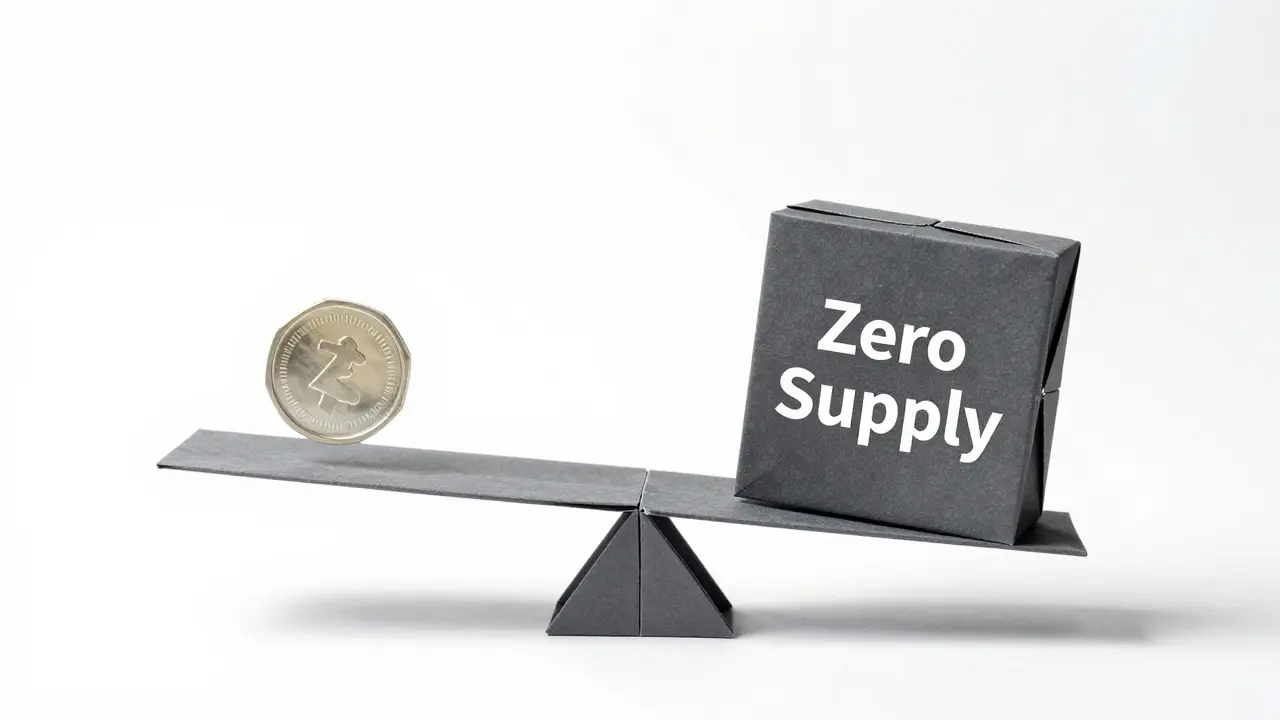
Here is where things get tricky. Multiple sources report that the circulating supply is effectively zero. How can a token trade if no one holds it? This anomaly usually suggests one of two things:
- Token Lock-ups: The majority of tokens are locked in contracts, vesting schedules, or held by the development team, meaning they are not yet available for public trading.
- Data Reporting Errors: Exchanges may not be reporting holder data accurately, leading to discrepancies in public records.
This lack of transparency makes it difficult to calculate the true market capitalization. When you see a market cap near $0 despite active trading pairs, it indicates a severe liquidity issue. You are trading in a pool with very little water, which means even small buys or sells can cause massive price swings.
Price History and Volatility
If you enjoy heart-pounding volatility, TAT might catch your eye. If you prefer stability, look away. The token has shown extreme price fluctuations since its inception.
Historical data shows an all-time high of approximately $0.0157 recorded in March 2025. Since then, the price has plummeted by over 95%. Conversely, it hit an all-time low of just $0.000034 around the same period. These swings are not driven by fundamental upgrades or new partnerships but by speculative trading pressure.
| Metric | Value | Context |
|---|---|---|
| All-Time High | $0.0157 | March 2025 |
| All-Time Low | $0.000034 | March 2025 |
| Circulating Supply | ~0 | Reporting anomaly/Lock-up |
| Total Supply | 1,000,000,000 | Fixed max supply |
| Blockchain | Ethereum | ERC-20 Standard |
The 24-hour price changes often range from -7% to +44%, depending on which exchange you check. This inconsistency highlights another problem: liquidity fragmentation. One exchange might show high volume while another shows almost none, making it hard to know the "real" price.
Liquidity and Trading Risks
Liquidity is the lifeblood of any cryptocurrency. It determines how easily you can buy or sell without affecting the price. For TAT, liquidity is critically low.
User reports from forums like Reddit and Trustpilot highlight a common frustration: slippage. Slippage occurs when the price you expect to pay differs significantly from the price you actually pay due to thin order books. Traders reported slippage rates averaging between 12% and 18%. Imagine buying $100 worth of TAT and only receiving $82 worth of tokens because the price jumped as your order executed. That is a loss before you even start holding.
Furthermore, the trading volume data is contradictory. Some platforms report daily volumes under $5,000, while others claim nearly $700,000. This discrepancy suggests that some volume might be artificial or "wash trading," where bots buy and sell to themselves to create the illusion of activity. Always verify volume across multiple independent sources before trusting the figures.
Comparison with Established AI Tokens
To put TAT in perspective, let’s compare it to more established players in the AI crypto space. Projects like Fetch.ai (FET) or Render (RNDR) have clear use cases, large developer communities, and significant market caps exceeding hundreds of millions of dollars.
| Feature | Tell A Tale (TAT) | Fetch.ai (FET) | Render (RNDR) |
|---|---|---|---|
| Market Cap Category | Micro-Cap (<$1M) | Large Cap (>$500M) | Large Cap (>$1B) |
| Primary Use Case | AI Video Creation | Autonomous Agents | Distributed GPU Rendering |
| Liquidity | Very Low | High | High |
| Risk Level | Extreme | Moderate | Moderate |
| Community Size | ~5,800 holders | Hundreds of thousands | Hundreds of thousands |
Tell A Tale falls into the "high-risk speculative" category. It lacks the broad adoption, technical documentation, and partnership network that larger projects possess. Its narrow focus on video creation is unique, but without a proven user base, it remains a theoretical advantage rather than a practical one.
Regulatory and Development Concerns
In the current regulatory climate, clarity is king. The U.S. Securities and Exchange Commission (SEC) has cracked down on unregistered securities, particularly those with unclear utility. TAT faces scrutiny here because the separation between the token and the platform functionality is not well-documented.
Additionally, the development activity is minimal. Public repositories show little recent code commits, and official communication channels are largely silent. Industry analysts note that 92% of micro-cap AI tokens fail to maintain exchange listings beyond 18 months. With TAT already facing listing challenges on major platforms, its long-term viability is questionable.
There is also the issue of support. Users who reached out for help regarding failed transactions or account issues reported a zero response rate. In the crypto world, if you lose your funds and have no one to call, you are on your own.
Verdict: Is TAT Worth Your Attention?
Tell A Tale (TAT) is a classic example of a micro-cap cryptocurrency with a promising idea but poor execution. The technology behind AI video generation is fascinating, but the TAT token itself suffers from critical flaws:
- Zero Circulating Supply: Makes valuation impossible and raises questions about control.
- Low Liquidity: Leads to high slippage and difficulty exiting positions.
- Lack of Transparency: No whitepaper, minimal dev activity, and poor customer support.
- Extreme Volatility: Prices swing wildly based on speculation, not fundamentals.
For seasoned traders looking to gamble on high-risk assets, TAT offers the kind of volatility that can lead to quick gains-or quick losses. For the average investor seeking exposure to the AI narrative, there are far safer and more transparent options available. Always do your own research, check the contract address on Etherscan, and never invest more than you can afford to lose.
What blockchain is Tell A Tale (TAT) built on?
TAT operates as an ERC-20 token on the Ethereum blockchain. This means you can store it in any standard Ethereum-compatible wallet like MetaMask or Trust Wallet.
Why is the circulating supply of TAT listed as zero?
This is likely due to token lock-ups where the majority of the 1 billion supply is held by developers or investors and not yet released to the public market. It could also be a data reporting error across exchanges.
Is Tell A Tale a scam?
While not officially labeled a scam, it exhibits many red flags associated with high-risk projects: lack of transparency, low liquidity, and minimal development activity. Treat it as a highly speculative asset.
Where can I buy TAT tokens?
TAT has been listed on smaller exchanges such as MEXC, Bitget, and Binance Alpha. However, availability may change frequently due to low trading volume and delisting risks.
What is the purpose of the TAT token?
Theoretically, TAT is used for accessing the AI video creation platform, staking, and peer-to-peer payments within the ecosystem. However, practical utility is currently limited compared to its speculative trading use.
How volatile is the TAT price?
Extremely volatile. Daily price swings of 10-40% are common, and the token has dropped over 95% from its all-time high. This makes it unsuitable for conservative investors.