Remember when you could mine Bitcoin with a standard laptop? That era is long gone, crushed under the weight of massive industrial mining farms. But what if there was a way to keep mining accessible to regular people with gaming PCs? Enter Vertcoin, a cryptocurrency that refuses to let big hardware companies take over.
If you've been wondering what is Vertcoin (VTC) crypto coin and why it still matters in 2026, you're asking the right question. It's not just another altcoin; it's a philosophical stance on who should control the blockchain. This article breaks down exactly how Vertcoin works, why its tech is different, and whether it fits into your crypto portfolio or mining setup.
The Core Idea: Mining for the People
Most cryptocurrencies today are dominated by Application-Specific Integrated Circuits, or ASICs. These are specialized machines designed to do one thing: mine a specific coin incredibly fast. While this makes networks secure, it also centralizes power. If you want to mine Bitcoin or Litecoin, you need expensive gear from a handful of manufacturers. You can't just fire up your old graphics card and hope for the best.
Vertcoin flips this script. Launched in January 2014, it was built with a single mission: remain ASIC-resistant. The goal was to ensure that anyone with a decent consumer-grade computer-like the PC you use for gaming or video editing-could participate in securing the network. By preventing specialized hardware from dominating, Vertcoin aims to keep mining profits distributed among thousands of individuals rather than concentrated in a few large pools.
| Feature | Vertcoin (VTC) | Bitcoin (BTC) | Litecoin (LTC) |
|---|---|---|---|
| Mining Hardware | GPU/CPU (Consumer grade) | ASIC (Specialized) | ASIC (Specialized) |
| Block Time | 2.5 minutes | 10 minutes | 2.5 minutes |
| Total Supply | 84 Million | 21 Million | 84 Million |
| Funding Model | Donations & Community | Pre-mine / ICO | Pre-mine |
How the Tech Stays Ahead of ASICs
Keeping ASICs out isn't easy. As soon as a new algorithm proves profitable, engineers rush to build custom chips for it. Vertcoin has had to evolve constantly to stay ahead. Initially, it used Scrypt-N, but that wasn't enough. The team implemented hard forks to change the mining algorithm whenever ASIC threats emerged.
Currently, Vertcoin uses an algorithm called Verthash. This choice is deliberate. Verthash is memory-hard, meaning it requires significant RAM bandwidth and capacity to mine efficiently. Graphics cards (GPUs) have plenty of high-speed memory, making them perfect for this task. ASICs, however, struggle to match this performance without becoming prohibitively expensive and inefficient. This cat-and-mouse game ensures that the network remains decentralized. If a new ASIC does appear, the community is ready to fork again, keeping the playing field level.
The network also uses a difficulty adjustment mechanism called the Kimoto Gravity Well. Unlike Bitcoin, which adjusts difficulty every two weeks, Vertcoin adjusts every block. This allows the network to react instantly to changes in mining power. If a lot of miners jump on Vertcoin because the price spikes, difficulty rises immediately, preventing a sudden flood of coins from crashing the market.

Economics: A Fairer Distribution
One of the biggest complaints about modern crypto projects is the pre-mine. Founders often grab a huge chunk of the supply before the public can even buy in. Vertcoin rejects this model entirely. There was no Initial Coin Offering (ICO), no pre-mine, and no venture capital funding. Every single VTC coin in circulation was mined by someone using their own hardware.
This creates a more equitable distribution. Since there are no early investors looking to dump their holdings on retail buyers, the price action tends to be less manipulated by insider selling. The total supply is capped at 84 million coins, exactly four times Bitcoin's cap. With a halving event occurring roughly every four years, the inflation rate drops predictably, mirroring Bitcoin's deflationary schedule but starting from a broader base.
As of late 2026, approximately 53% of all VTC coins have been mined. This means the network is well into its lifecycle, yet still has decades of issuance left. For miners, this offers a long-term horizon. You aren't chasing a project that will run out of coins next year; you're participating in a system designed to last.
Getting Started: Mining Vertcoin at Home
So, how do you actually get involved? Vertcoin makes it surprisingly simple for non-techies. They offer a tool called the "1-Click Miner." You don't need to fiddle with command-line interfaces or configure complex pool settings. You download the software, select your GPU, and start earning.
Here’s what you need to know before you plug in:
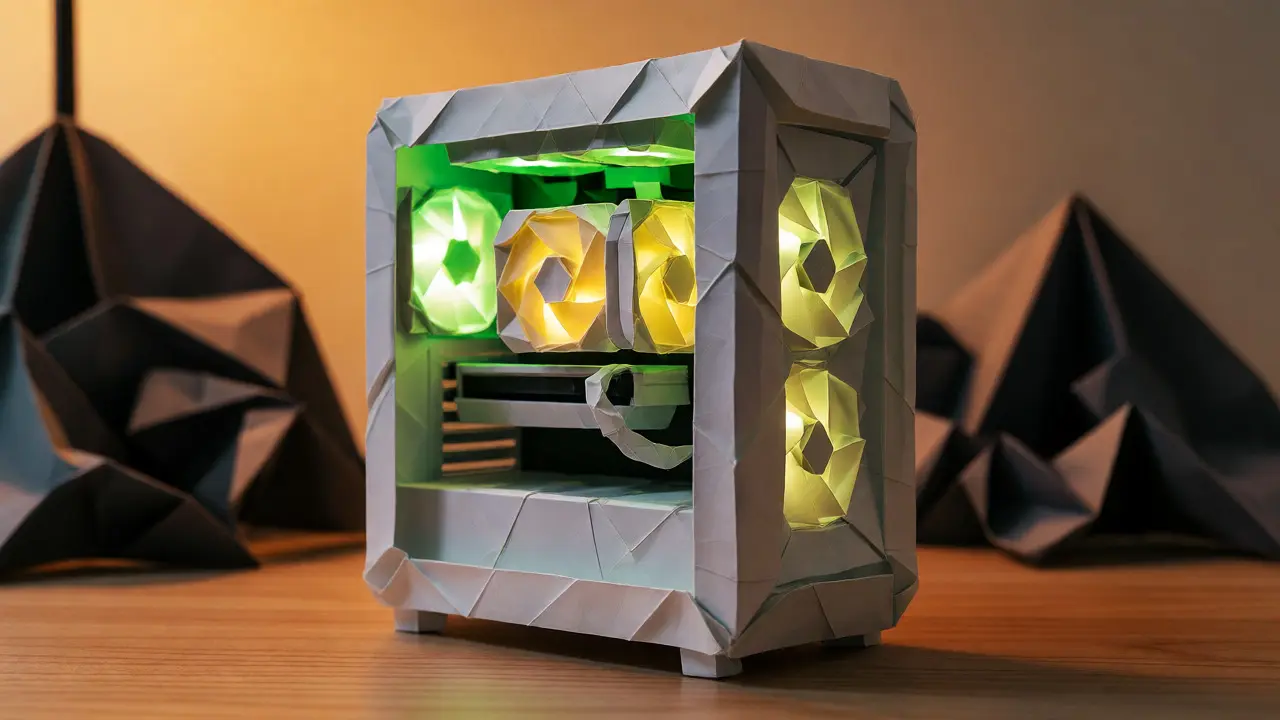
- Hardware Requirements: Any modern NVIDIA or AMD graphics card will work. Even mid-range cards like the RTX 3060 or RX 6700 XT perform well. CPUs can mine too, but they are significantly slower and less efficient.
- Profitability: Check current profitability calculators. Because VTC is a smaller market cap coin, rewards fluctuate. Sometimes it pays better than Ethereum Classic or Ravencoin; other times, electricity costs might eat your profit.
- Wallet Security: Always move your mined coins to a secure wallet. The official Vertcoin Wallet supports Stealth Addresses, which add a layer of privacy by hiding your transaction history from casual observers on the blockchain.
For those who prefer not to mine, buying VTC is straightforward. It's listed on major exchanges like Binance, KuCoin, and Kraken. However, due to lower trading volumes compared to top-tier coins, be mindful of slippage if you're moving large amounts. Atomic swaps are also available for traders who want to exchange VTC directly for other cryptocurrencies without trusting an exchange.

Community Governance and Future Development
Who runs Vertcoin? No CEO. No board of directors. It’s run by volunteers. This sounds idealistic, but it works because the incentives align. Developers contribute code because they believe in the vision and because they hold VTC themselves. Funding comes strictly from donations. If the community doesn't like a direction, they can vote with their hash power or fork the chain.
Current development efforts focus on scaling. The team is working on integrating Vertcoin with the Lightning Network. Imagine sending micro-transactions for coffee instantly, with fees near zero, while still maintaining the security of the main chain. This multicoin Lightning wallet would allow users to swap between BTC, LTC, and VTC seamlessly, enhancing utility beyond just speculation.
Critics argue that volunteer-driven projects can stall. Without paid employees, progress depends on free time. However, supporters counter that corporate-funded projects often prioritize investor returns over user needs. Vertcoin’s lack of central authority means it moves slowly but deliberately, avoiding the hype cycles that burn out many other altcoins.
Is Vertcoin Right for You?
Vertcoin isn't trying to replace Bitcoin or become the world's settlement layer. It serves a niche: the home miner who wants decentralization. If you value financial sovereignty and want to participate in consensus without renting cloud hash power, VTC is a strong candidate.
However, it comes with risks. Lower liquidity means prices can swing wildly. The constant threat of ASICs means future hard forks are possible, which can disrupt exchanges and wallets temporarily. And as a smaller project, it lacks the massive marketing budgets of newer tokens. But for those who remember the early days of crypto, Vertcoin feels like a return to roots-a system where your computer, not a warehouse full of machines, validates the ledger.
Can I mine Vertcoin with my CPU?
Yes, you can mine Vertcoin with a CPU, but it is generally not recommended for serious mining. GPUs are significantly more efficient and profitable for the Verthash algorithm. CPU mining is mostly useful for testing or very low-power setups.
Why is Vertcoin ASIC-resistant?
Vertcoin uses algorithms like Verthash that are memory-hard. This design favors the architecture of consumer GPUs, which have high-bandwidth memory, over ASICs, which would require expensive and inefficient memory configurations to compete. The community also performs hard forks to break existing ASICs if necessary.
Where can I buy Vertcoin?
Vertcoin is available on several major cryptocurrency exchanges, including Binance, KuCoin, Kraken, and Gate.io. You can also trade it peer-to-peer using atomic swaps for trustless transactions.
Does Vertcoin have a pre-mine?
No, Vertcoin had no pre-mine, no ICO, and no initial distribution to founders. All coins were generated through mining after the launch, ensuring a fair distribution among early adopters and miners.
What is the total supply of Vertcoin?
The maximum total supply of Vertcoin is 84 million coins. This is four times the maximum supply of Bitcoin. New coins are issued until this cap is reached, with halving events reducing the reward rate periodically.