The Short Answer: What Is Victoria VR?
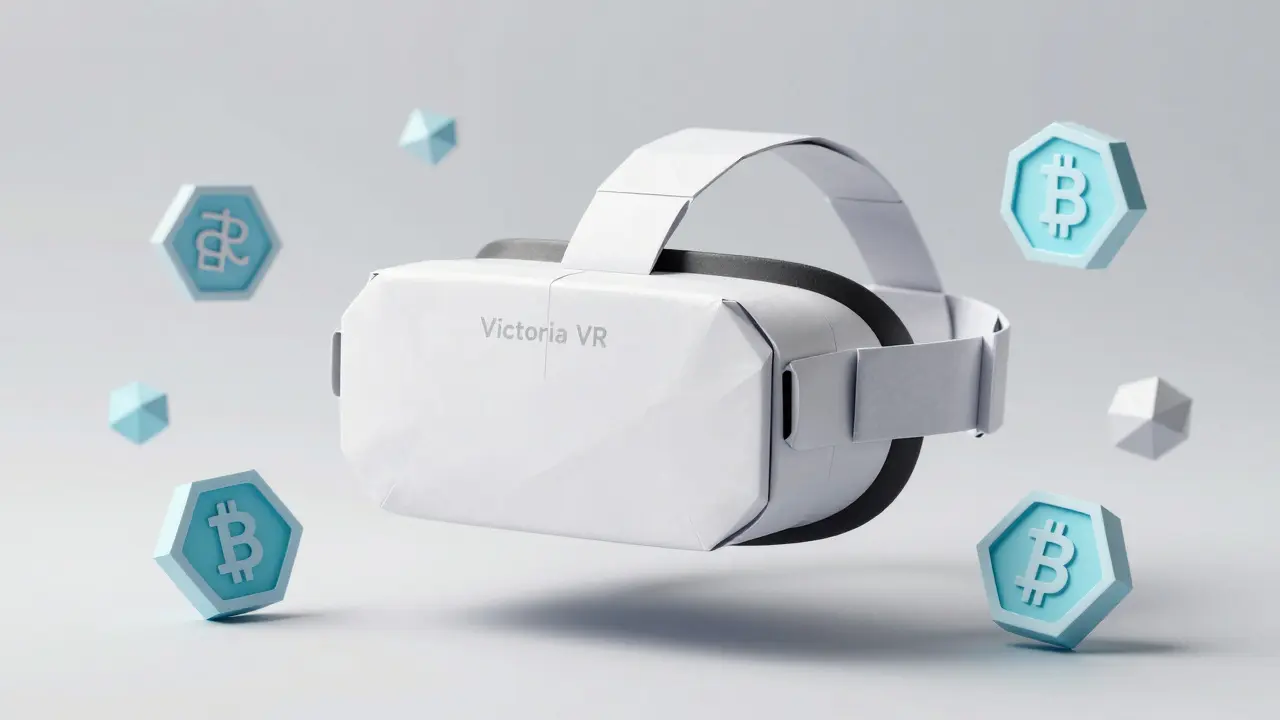
Victoria VR (VR) is an ERC-20 utility and governance token built on the Ethereum blockchain. It serves as the native currency for the Victoria VR platform, which markets itself as a virtual reality mass multiplayer online role-playing game (MMORPG). Unlike standard video games where you pay with fiat money or credit cards, this ecosystem requires the VR token to buy in-game items, stake assets, advertise within the world, and vote on community decisions.
In simple terms, if you want to play, build, or trade inside this specific virtual universe, you need VR tokens. The platform aims to create a "three-dimensional internet" where users can experience travel, quests, and social interactions using photorealistic graphics powered by Unreal Engine. However, understanding what the token is also means understanding the heavy hardware requirements and the competitive landscape it faces against giants like Decentraland and The Sandbox.
Core Utility: How the VR Token Works
To understand the value of any crypto coin, you have to look at what it actually does. Victoria VR isn't just a speculative asset; it has defined functions within its ecosystem. Here is how the token moves through the platform:
- In-Game Transactions: You use VR tokens to purchase virtual real estate, avatars, clothing, and other digital goods within the game world.
- Governance: Holding the token gives you a voice. Users can participate in voting on platform updates, feature additions, and community rules.
- Staking: Users can lock up their VR tokens to earn rewards or secure network operations, similar to proof-of-stake mechanisms in other blockchains.
- Advertising: Brands and users can spend VR tokens to promote content or events within the virtual space.
- Asset Leasing: If you own high-value virtual items but don't want to use them, you can lease them out to other players for a fee paid in VR tokens.
The token operates as an ERC-20 standard, meaning it lives on the Ethereum network. This allows you to store it in popular wallets like MetaMask or exchange it on major platforms like Coinbase and LBank. However, because it relies on Ethereum, transaction speeds and gas fees can impact your experience during peak network congestion.
Technical Specs and Supply Dynamics
When evaluating a cryptocurrency, supply mechanics are critical. Here are the hard numbers for Victoria VR based on available data from 2023 and early 2024 contexts:
| Attribute | Value |
|---|---|
| Blockchain Standard | ERC-20 (Ethereum) |
| Total Max Supply | 16,800,000,000 (16.8 Billion) VR |
| Circulating Supply | ~6.35 Billion to 8.1 Billion (varies by source) |
| All-Time High Price | $0.71 (Recorded December 2, 2021) |
| Primary Use Case | VR MMORPG Gaming & Metaverse Governance |
Note that circulating supply figures often differ between tracking platforms like CoinGecko and Coinbase. This discrepancy usually comes down to different methods for calculating locked tokens, team vesting schedules, or burned assets. As of recent data, approximately 38% of the total supply was in circulation, leaving a significant portion still allocated for future development, partnerships, or community incentives.
The Hardware Barrier: Why It’s Not Just a Click-and-Play Game
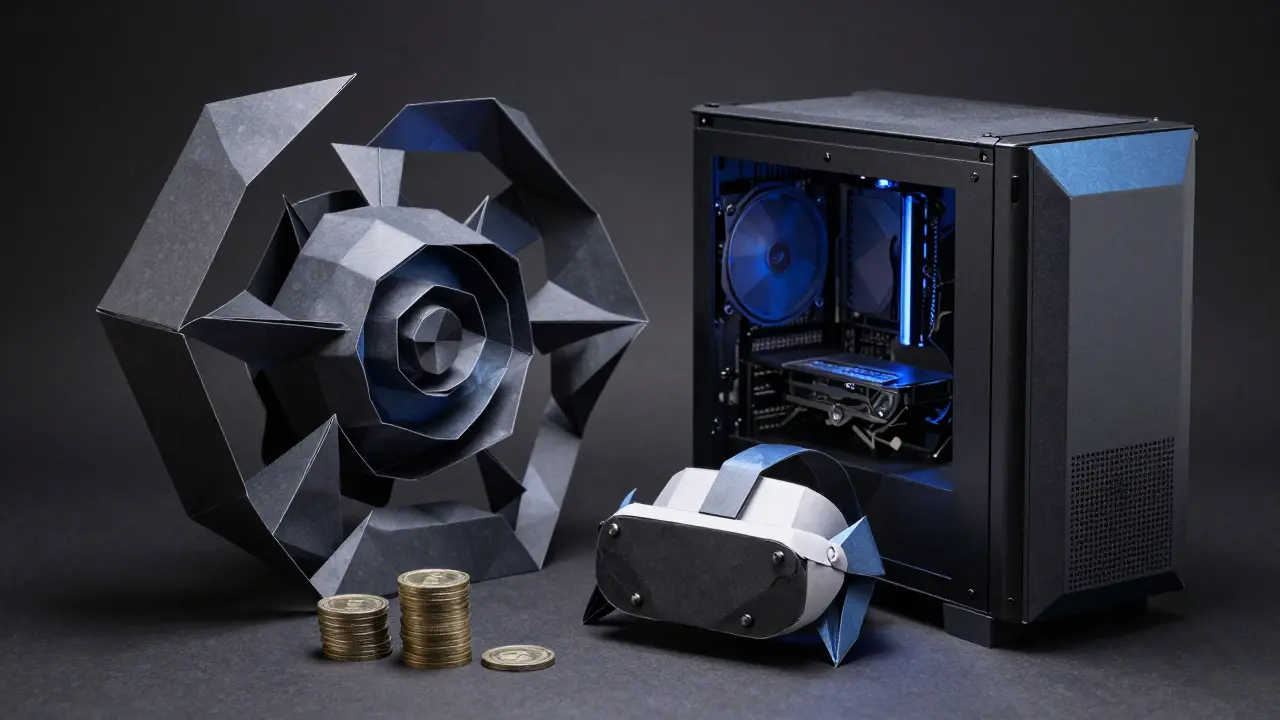
This is where Victoria VR separates itself from casual mobile crypto games. You cannot play this on a phone or a basic laptop. The platform leverages Unreal Engine, a powerful software used for creating high-fidelity graphics in AAA titles. While this results in stunning visuals, it creates a massive barrier to entry.
To participate, you need dedicated VR hardware. Compatible headsets include the Oculus Rift, HTC Vive, or Valve Index. These devices require a robust PC with a high-end graphics card and processor. According to user feedback from Reddit communities, setting up the environment can take hours. One user reported spending eight hours just configuring the wallet connection, VR drivers, and game client before accessing the basic world.
This technical friction limits the potential user base. In a market where convenience drives adoption, requiring expensive hardware and complex setup procedures keeps Victoria VR niche. It appeals to tech enthusiasts and hardcore gamers, but it struggles to attract the mainstream audience needed for exponential growth.
Market Performance and Price History
Like many metaverse projects launched during the 2021 hype cycle, Victoria VR experienced extreme volatility. Let's look at the price action objectively.
The token hit its all-time high of $0.71 in December 2021, fueled by the broader boom in NFTs and virtual land speculation. Since then, it has faced a steep decline. By late 2023, prices hovered between $0.003 and $0.005, representing a drop of over 99% from its peak. This depreciation mirrors the broader cooling off of the metaverse sector, where investor interest shifted away from speculative virtual real estate toward more practical blockchain applications.
Market capitalization figures also vary wildly depending on the source. Some trackers listed the market cap around $20 million, while others showed figures closer to $80 million. This variance highlights the low liquidity and fragmented trading volume across exchanges. For context, competitors like Decentraland (MANA) and The Sandbox (SAND) maintain significantly higher rankings and trading volumes, indicating stronger market confidence.

Competitive Landscape: How Does It Stack Up?
You can't evaluate Victoria VR in isolation. It competes directly with established metaverse platforms. Here is how it compares to the leaders:
| Feature | Victoria VR (VR) | Decentraland (MANA) | The Sandbox (SAND) |
|---|---|---|---|
| Primary Focus | VR-native MMORPG | Virtual Real Estate & Social | User-generated Content & Games |
| Graphics Engine | Unreal Engine (High Fidelity) | Web-based (Lower Barrier) | Custom Engine (Accessible) |
| Hardware Requirement | High-end VR Headset + PC | Browser/Mobile Friendly | PC/Mobile Friendly |
| Market Position | Niche / Lower Cap | Top Tier / Established | Top Tier / Established |
| Community Size | Small (~3k Discord) | Large (350k+ Discord) | Large (Massive Social Presence) |
The key differentiator for Victoria VR is its commitment to true VR immersion. Decentraland and The Sandbox run in web browsers or lightweight apps, making them accessible to anyone with an internet connection. Victoria VR demands serious hardware investment. While this offers a superior visual experience, it drastically reduces the addressable market. Without a large active user base, the economy inside the game struggles to thrive.
Risks and Challenges for Investors
If you are considering holding or buying VR tokens, you must weigh the risks carefully. The project faces several headwinds:
- Low Adoption Rates: With only an estimated 12,500 monthly active users compared to thousands of daily users on competitors, the network effect is weak.
- Regulatory Uncertainty: As a utility and governance token, it falls under increasing scrutiny from regulators like the SEC regarding whether such tokens constitute securities.
- Development Stagnation: Recent updates have been sparse. The lack of major corporate partnerships (unlike Atari for The Sandbox or Samsung for Decentraland) suggests limited enterprise adoption.
- Hype Dependency: The token's initial success was driven by the 2021 metaverse hype. Without sustained innovation, maintaining relevance is difficult.
Analysts from Chainalysis and other firms have categorized the project as "high risk" due to declining engagement metrics and insufficient funding visibility for long-term development. While some optimistic models predict long-term growth, these often lack concrete methodology and contradict current market trends.
Who Is This For?
Victoria VR is not for everyone. It is specifically tailored for:
- Hardcore VR Enthusiasts: People who already own high-end VR gear and crave immersive, blockchain-integrated gaming experiences.
- Early Metaverse Adopters: Investors willing to take high risks on niche projects with the hope of capturing upside if VR gaming becomes mainstream.
- Content Creators: Developers interested in building within the Unreal Engine ecosystem and monetizing their creations via NFTs.
For casual gamers or investors looking for stability, established platforms with larger communities and lower barriers to entry are likely safer bets.
Is Victoria VR a good investment in 2026?
Investing in Victoria VR carries high risk. The token has lost over 99% of its value since its 2021 peak, and user adoption remains low compared to competitors like Decentraland. While the technology is impressive, the lack of major partnerships and steady development updates makes it a speculative hold rather than a stable investment. Always do your own research and consider the high volatility of metaverse tokens.
Can I play Victoria VR without a VR headset?
No. Victoria VR is designed exclusively for virtual reality hardware. You will need a compatible headset like an Oculus Rift, HTC Vive, or Valve Index, along with a powerful PC capable of running Unreal Engine at high fidelity. There is no browser-based or mobile version currently available.
Where can I buy VR tokens?
You can purchase VR tokens on cryptocurrency exchanges that support ERC-20 tokens, such as Coinbase, LBank, and potentially others depending on your region. Once purchased, you should transfer them to a secure wallet like MetaMask to interact with the Victoria VR platform.