
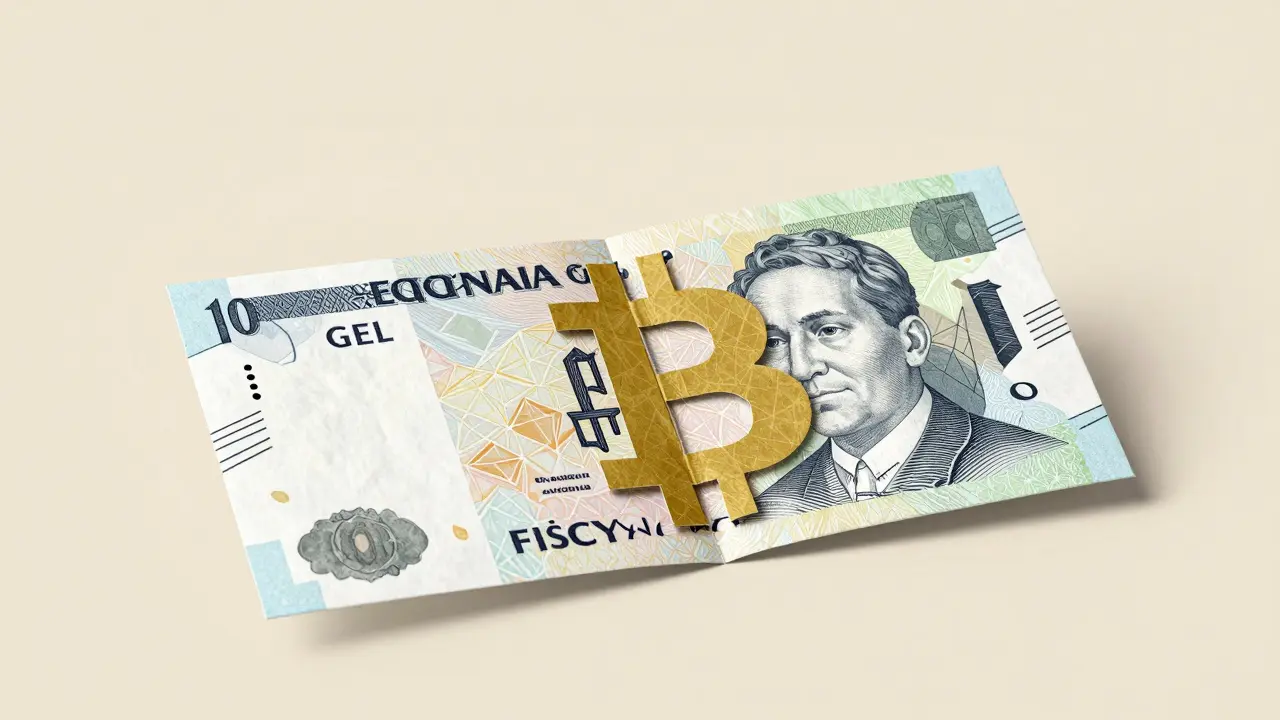
When you're looking for a crypto exchange, you want something that works for your situation. Not the biggest platform with the most coins, but one that actually fits your life. For users in Georgia, BitBegin isn't just another exchange - it's one of the few that lets you trade crypto using your local currency, the Georgian Lari (GEL). But if you're outside Georgia, or if you trade Bitcoin and Ethereum daily, BitBegin might leave you frustrated. Let’s cut through the noise and see what this exchange really offers - and who it’s actually for.
What Is BitBegin?
BitBegin is a centralized cryptocurrency exchange registered in Georgia. Unlike global giants like Binance or Coinbase, it doesn’t try to be everything to everyone. Instead, it focuses on one thing: serving Georgian users. That means it supports deposits and withdrawals in Georgian Lari (GEL), plus USD and EUR, all through bank transfers. No credit cards. No PayPal. Just direct bank links. This isn’t a coincidence - it’s by design. BitBegin operates under Georgian financial regulations and is officially registered with the government. That gives it a level of legitimacy you don’t always get from offshore exchanges.
It’s not just a trading platform. BitBegin also offers staking, derivatives trading, and an NFT marketplace. Its native token, BRIT, is a 10 billion-token cryptocurrency built on an open-source, MIT-licensed blockchain with DAO governance. According to its documentation, BRIT complies with FATF’s AML/CFT rules - meaning it follows international anti-money laundering standards. But here’s the catch: there’s no independent audit to verify these claims. The token’s entire supply is listed as circulating, which is unusual and raises questions about its actual liquidity.
Trading Fees and Costs
BitBegin’s fee structure is one of its few clear strengths. The base trading fee is 0.1% for both makers and takers. That’s competitive with major exchanges like Kraken and Bitstamp. There’s no hidden fee layer, no tiered pricing based on volume, and no confusing rebate system. You pay 0.1%, and that’s it. Deposits are free - whether you’re sending BTC, ETH, or GEL via bank transfer.
But withdrawals? That’s where things get sticky. Here’s what you’ll actually pay:
- Bitcoin (BTC): 0.0015 BTC per withdrawal
- USDT (TRC20): 5 USDT per withdrawal
- Other tokens: Varying fees, often higher than global averages
For example, withdrawing 1 BTC from BitBegin costs you roughly $60-$70 in fees alone. On Binance, it’s around 0.0005 BTC - less than half. If you’re moving funds frequently, those fees add up fast. And there’s no way to avoid them. No loyalty program. No fee discounts. Just a flat rate that’s higher than most competitors.
Cryptocurrency Selection: Limited but Focused
BitBegin supports around 32-50 cryptocurrencies. That includes major coins like BTC, ETH, SOL, LTC, TRX, and ADA. It also lists newer tokens like NEVA and ADON, which aren’t widely available elsewhere. But compared to Binance (350+ coins) or Coinbase (200+), this is tiny. If you’re into altcoins, DeFi tokens, or memecoins, you’ll likely find them missing. This isn’t an exchange for traders chasing the next 100x moonshot. It’s for people who want to trade the basics - and maybe stake them.
Its selection reflects its purpose: serve Georgian users who want to convert GEL into mainstream crypto, not speculate on obscure tokens. If you’re a casual user or beginner, this limited list might actually help. Fewer choices mean less confusion. But if you’re serious about trading, you’ll hit a wall quickly.

How Do You Deposit and Withdraw?
BitBegin only accepts fiat via bank transfer. No credit cards. No debit cards. No Apple Pay. No PayPal. If you live in Georgia and have a local bank account, this isn’t a big deal. You can deposit GEL directly. But if you’re outside Georgia - or even if you’re inside and prefer faster methods - this is a major pain point.
Withdrawals follow the same path: bank transfer for fiat, blockchain for crypto. There’s no instant cash-out option. If you sell your ETH for GEL and need the money tomorrow, you’re stuck waiting for the bank to process it. That can take 1-3 business days. On exchanges like Kraken or Revolut, you can cash out to a card in minutes.
For Georgian users, this is a feature. For everyone else? It’s a barrier.
Security and Compliance
BitBegin requires full KYC - you must submit ID and proof of address. That’s standard for regulated exchanges. It also claims to follow AML/CFT protocols aligned with FATF guidelines. Again, this is good for a Georgia-based platform. It means they’re not operating in the gray zone. But there’s no public record of third-party security audits. No bug bounty program. No proof of reserves published. You’re trusting their word.
It’s worth noting: BitBegin blocks users from sanctioned countries like Sudan and North Korea. That’s not unusual. But it also means they’re actively monitoring user locations. That’s a sign they’re serious about compliance - but it also means they’re not trying to be global. They’re focused on one country.

Who Is BitBegin For?
BitBegin isn’t for everyone. Here’s who it works for:
- Georgian residents who want to buy crypto with GEL and sell it back without currency conversion headaches.
- Beginners who want a simple interface with a small, manageable list of coins.
- Stakers looking to earn passive income on BTC, ETH, or BRIT without complex DeFi protocols.
And here’s who should avoid it:
- Active traders who need 100+ coins, low withdrawal fees, and fast fiat access.
- International users outside Georgia - you can’t deposit fiat easily, and the coin list is too small.
- Users who rely on credit cards or instant cash-outs. BitBegin doesn’t offer those.
How Does It Compare?
Let’s put BitBegin next to two other exchanges:
| Feature | BitBegin | Binance | Kraken |
|---|---|---|---|
| Fiat On-Ramp (GEL) | Yes | No | No |
| Trading Pairs | 38 | Over 1,000 | Over 300 |
| Trading Fee (Maker/Taker) | 0.1% | 0.1% (lower with BNB) | 0.16% / 0.26% |
| Withdrawal Fee (BTC) | 0.0015 BTC | 0.0005 BTC | 0.0005 BTC |
| Fiat Currencies Supported | GEL, USD, EUR | USD, EUR, CAD, AUD, JPY | USD, EUR, CAD, GBP |
| Card Deposits | No | Yes | Yes |
| Regulation | Georgian government | Multiple global jurisdictions | U.S. (FinCEN), EU |
BitBegin wins on one thing: GEL support. That’s huge for locals. But everywhere else, it loses. Binance and Kraken have better fees, more coins, card deposits, and global trust. BitBegin’s edge is regional - not global.
The Bottom Line
BitBegin is a niche tool. It’s not a replacement for Binance or Coinbase. It’s a bridge - for Georgians who want to move between their bank account and crypto without currency hassles. If you live in Georgia and want to buy Bitcoin or Ethereum with Lari, this might be your best option. The interface is simple, the fees are transparent, and the regulatory backing gives you some peace of mind.
But if you’re outside Georgia, or if you trade often, you’ll hit limits fast. High withdrawal fees. A tiny coin list. No card options. No global reach. It’s not broken - it’s just not built for you.
For Georgian users: try it. For everyone else: keep looking.
Is BitBegin safe to use?
BitBegin is registered with the Georgian government and follows AML/CFT rules, which adds a layer of legitimacy. It requires KYC, which means your identity is verified. But there’s no public proof of security audits, bug bounty programs, or proof of reserves. It’s safer than unregulated exchanges, but not as transparent as Binance or Kraken. Use it for small to medium amounts, not life savings.
Can I use BitBegin if I’m not from Georgia?
Technically, yes - if you can deposit fiat via bank transfer in USD or EUR. But you won’t get the main benefit: GEL support. Withdrawal fees are high, the coin selection is limited, and customer support may not be optimized for non-Georgian users. For international users, other exchanges offer better value.
Does BitBegin support credit card deposits?
No. BitBegin only accepts fiat deposits via bank transfer. You cannot use credit cards, debit cards, PayPal, or any instant payment method. This is a major limitation for users who want to buy crypto quickly.
What is the BRIT token, and is it worth staking?
BRIT is BitBegin’s native token with a total supply of 10 billion. It’s claimed to be open-source, MIT-licensed, and governed by a DAO. Staking BRIT is available on the platform, but returns aren’t clearly disclosed. There’s no independent data on its liquidity or real-world use. Staking it might earn you rewards, but it’s speculative. Don’t invest more than you’re willing to lose.
Are there better alternatives to BitBegin for Georgian users?
Global exchanges like Binance or Kraken don’t support GEL, so they’re not direct alternatives. Within Georgia, there are no other exchanges with official government registration and GEL integration. BitBegin is currently the only regulated option for locals. If you need card deposits or lower fees, you’ll need to use a global exchange and convert GEL to USD/EUR separately - which adds cost and complexity.



Ekaterina Sergeevna
Let’s be real - BitBegin is just a glorified GEL on-ramp with a DAO token that probably exists only on a Notion doc. 0.1% trading fees? Cute. But withdraw 1 BTC and you’re paying $70 in fees like you’re mailing a letter via Pony Express. Meanwhile, Binance lets you do it for $15 and you can use a credit card. This isn’t a ‘niche tool’ - it’s a regional artifact. If you’re not in Georgia, why are you even here? 😴
Desiree Foo
I appreciate the effort to support local economies, but let’s not pretend this is a secure or scalable solution. No proof of reserves? No third-party audit? And they’re blocking sanctioned countries? That’s not compliance - that’s performative regulation. If you’re going to claim FATF alignment, publish the audit. Otherwise, you’re just another crypto startup with a fancy PDF and zero accountability. 🤷♀️
SAKTHIVEL A
While I commend the attempt to localize crypto infrastructure in Georgia, the structural deficiencies of BitBegin are glaring. The absence of a transparent liquidity framework for BRIT, coupled with exorbitant withdrawal fees, renders the platform economically nonviable for any serious trader. Furthermore, the regulatory veneer is undermined by the lack of operational transparency. One cannot rely on governmental registration alone when the underlying financial architecture lacks independent verification. This is not innovation - it is institutionalized opacity wrapped in bureaucratic legitimacy.
Elizabeth Choe
Okay but real talk - if you're in Georgia and you just want to buy BTC with your Lari without jumping through 17 hoops? This might actually be your best friend. 🥹 No credit card? Fine. Slow bank transfer? Okay. But at least you're not getting scammed by some offshore sketchy exchange. I’ve seen way too many Georgians lose money on shady platforms. BitBegin is boring? Maybe. But boring is safe. And safe is winning right now. 💪
monique mannino
Yesss 🙌 I’m Georgian and I’ve been waiting for something like this! Finally, I can buy crypto without converting to USD first. The fees suck, but at least I don’t lose 5% in currency conversion. BRIT staking? Still sketchy, but I’m keeping 5% of my portfolio there for fun. If you’re local - give it a shot. If you’re not? Stick with Binance. Simple as that. ❤️
Peggi shabaaz
kinda wild how this exchange exists just for one country but still tries to sound like a global player. the BRIT token feels like a vibe check more than a real asset. but hey, if it helps people in georgia get into crypto without getting ripped off, i’m not mad. maybe it’s not perfect but it’s something. 🤷♀️
Robbi Hess
BitBegin is a textbook example of how not to build a crypto exchange. You have a 10 billion token supply labeled as 'circulating' with zero liquidity data - that’s not innovation, that’s a red flag painted neon pink. And you charge 0.0015 BTC to withdraw Bitcoin? On Binance, that’s less than a dollar. This isn’t regional - it’s predatory. If you’re not auditing your claims, you’re not trustworthy. Period.
Lindsey Elliott
BRIT token? 10 billion circulating? Bro. That’s not a token, that’s a meme with a whitepaper. 😂 And the withdrawal fees? I’ve seen better rates on a crypto ATM in Tbilisi. If you’re not from Georgia, why are you even reading this? This isn’t a platform - it’s a geo-targeted convenience store for Lari users. And honestly? That’s kinda cool. But don’t pretend it’s competitive.
John Doyle
Look - I get it. Most exchanges ignore countries like Georgia. BitBegin actually tries. Yeah, the fees are high. Yeah, BRIT is sketchy. But for someone who just wants to turn their salary into Bitcoin without losing half to forex? This might be the only thing that works. Don’t hate it because it’s not Binance. Celebrate it because it exists. 🙏
kelvin joseph-kanyin
BITBEGIN IS A LIFELINE FOR GEORGIA 🚀✨ I’ve been using it for 6 months. No card? No problem. Bank transfer? Takes 2 days - but I get GEL in, BTC out. BRIT staking gives me 8% APY. Is it risky? Yes. But so is life. I’d rather have a regulated local platform than some offshore bot with 0 customer service. Georgia deserves this. Keep going, BitBegin! 💥
Beth Trittschuh
There’s something poetic about an exchange built for one country, one currency, one need. The world keeps trying to make crypto universal - but maybe the real breakthrough is localization. BitBegin doesn’t need to beat Binance. It just needs to serve the people who’ve been left behind. The BRIT token? Maybe it’s a gamble. But so was Bitcoin in 2010. Sometimes, the quietest platforms are the ones that change the most.
Benjamin Andrew
Let’s dissect this objectively. The platform’s regulatory status under Georgian law is a red herring if it lacks proof of reserves, audit trails, or transparent governance. The BRIT token’s 10 billion circulating supply violates fundamental economic principles of tokenomics - it suggests either a rug pull or gross incompetence. Withdrawal fees are not just high - they’re exploitative. This isn’t a service. It’s a compliance theater with a liquidity crisis disguised as innovation.
Donna Patters
Oh, so we’re celebrating a platform that charges 0.0015 BTC to withdraw Bitcoin? And calls it ‘competitive’? Please. This isn’t ‘niche’ - it’s predatory. And BRIT? A 10 billion token supply with no audit? That’s not a DAO - it’s a Ponzi with a Georgian flag. If you’re not from Georgia, you’re being scammed. If you are? You’re being patronized. Either way - walk away.
Michelle Cochran
It’s funny how people call this ‘regional innovation’ when it’s really just regulatory arbitrage. They’re not helping Georgians - they’re using them as a testing ground for a token nobody wants. And the fact that they block sanctioned countries? That’s not ethics - it’s fear. They’re scared of being flagged, so they hide behind bureaucracy instead of building real trust. This isn’t empowerment. It’s exclusion dressed up as inclusion.
Sakshi Arora
georgia only? cool i guess. but why is the brt token even a thing? 10billion circulating? that dont make sense. fees are crazy. but at least its not some offshore scam. maybe its ok for small buys. i dont know. just saying