
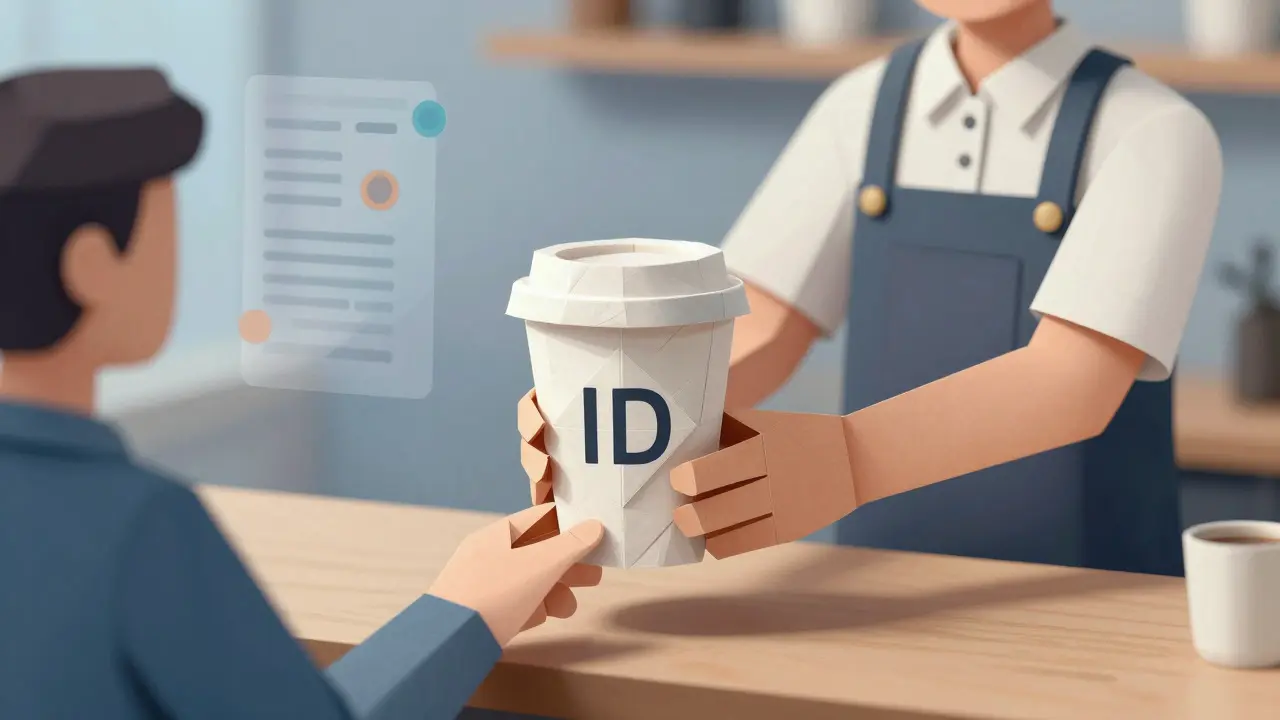
Imagine trying to buy a coffee with cash, but the barista demands your ID number before handing you the cup. That is essentially what is happening to privacy coins, which are cryptocurrencies designed to obscure transaction details like sender, receiver, and amount using advanced cryptography. If you have been holding Monero (XMR), Zcash (ZEC), or Dash (DASH), you might have noticed they are vanishing from your favorite exchanges. This isn't a glitch. It is a coordinated global purge.
In 2025, the wave hit hard. According to data from CoinLaw, 73 cryptocurrency exchanges worldwide pulled the plug on these assets. That is a 43% jump from the 51 exchanges that did the same in 2023. By August 2026, the landscape has shifted dramatically. Major platforms are no longer just "considering" removal; they have executed it. The question for traders and privacy advocates alike is simple: where do we go from here?
The Regulatory Hammer: Why Exchanges Are Scared
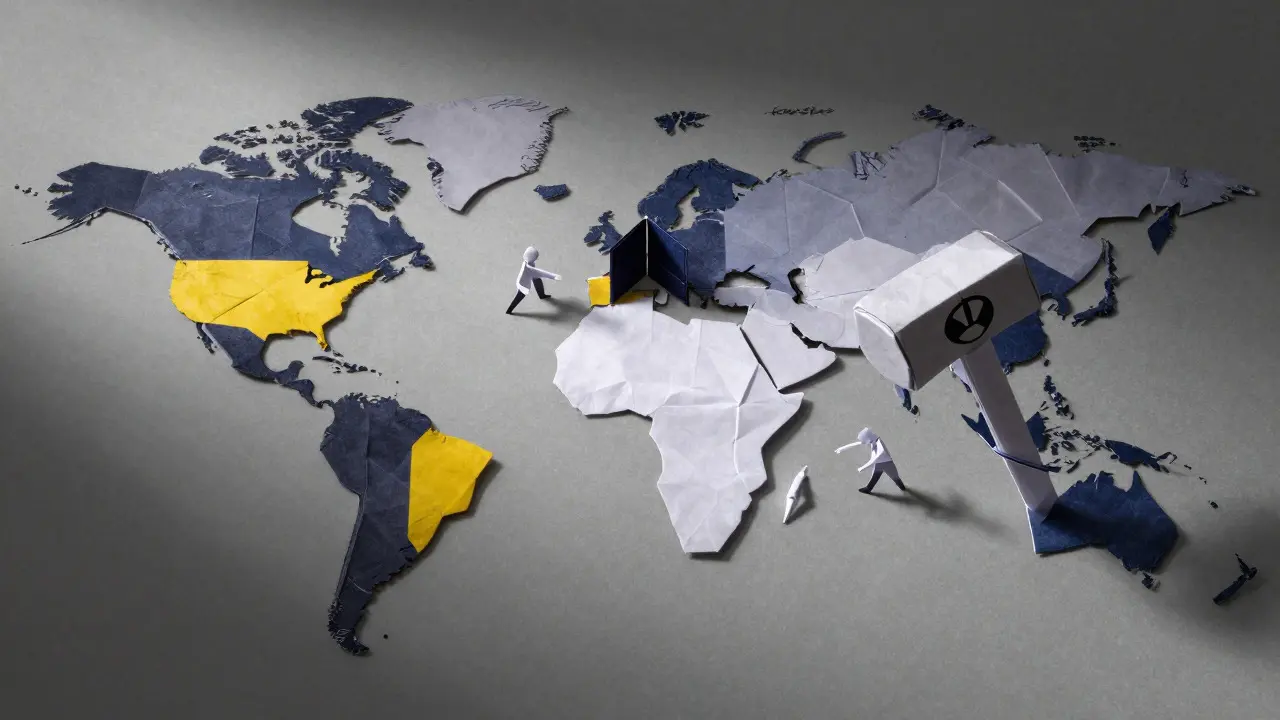
To understand why giants like Binance and Kraken are dropping these coins, you have to look at the rules of the game. The primary driver is the Financial Action Task Force (FATF). In June 2024, the FATF issued guidance that effectively made it impossible for centralized exchanges to host privacy coins without risking massive fines.
The core issue is the Travel Rule. This regulation requires exchanges to share customer information for transactions above certain thresholds. Think about it: if I send Bitcoin to you, the blockchain shows my address, your address, and the amount. It is transparent. But with Monero, that data is hidden. How can an exchange report hidden data to regulators? They can't. So, they remove the asset entirely.
This pressure intensified in 2025. The European Union's Markets in Crypto-Assets (MiCA) regulation added another layer of complexity, demanding transparency that privacy tech simply doesn't provide. Consequently, 97 countries implemented stricter compliance frameworks, leading to a 34% surge in regulatory actions against privacy coins since 2024. For an exchange, the math is easy: keep the coin and risk a $10 million fine, or delist it and lose some trading volume. Most chose the latter.
Who Got Hit? The Timeline of Removals
The delistings didn't happen overnight. They were systematic. Let's look at how this unfolded across major markets, because understanding the timeline helps predict what comes next.
- February 2025: Binance, the world's largest exchange, announced the delisting of XMR, ZEC, and DASH across its European and US platforms. This single move impacted an estimated $600 million in trading volume.
- March 2025: Kraken removed privacy coins from its Canadian platform, citing non-compliance with updated FINTRAC regulations.
- April 2025: Poloniex delisted Monero globally after direct concerns were raised by the US Treasury Department. This showed that governments are actively pressuring specific platforms.
- Q1 2025 (South Korea): Top exchanges like Upbit and Bithumb removed privacy coins. Upbit specifically delisted six tokens in September following a FATF notice.
- Ongoing: Japan maintains its complete ban from 2018, meaning registered exchanges there never supported them fully.
If you are trading in South Korea or Europe, the door is mostly closed. In the US, it is heavily restricted. This creates a fragmented market where access depends entirely on your geography.
The Tech Behind the Ban: Ring Signatures vs. Public Ledgers
Why do regulators hate these coins so much? It comes down to technology. Standard cryptocurrencies like Bitcoin and Ethereum use public ledgers. Every transaction is visible. Privacy coins use cryptographic tricks to break this visibility.
| Feature | Bitcoin / Ethereum | Monero / Zcash / Dash |
|---|---|---|
| Sender Identity | Visible (Public Address) | Hidden (Ring Signatures / Stealth Addresses) |
| Receiver Identity | Visible (Public Address) | Hidden (Stealth Addresses) |
| Transaction Amount | Visible | Hidden (Confidential Transactions) |
| Regulatory Compliance | High (Traceable) | Low (Opaque to AML checks) |
| Key Technology | UTXO Model / Account Model | Zero-Knowledge Proofs (zk-SNARKs), RingCT |
Monero uses ring signatures, which blend your transaction with others, making it nearly impossible to identify the real sender. Zcash uses zero-knowledge proofs (specifically zk-SNARKs) to verify a transaction is valid without revealing the underlying data. To a regulator looking for money laundering trails, this looks like a black box. And regulators don't like black boxes.
The Paradox: Prices Surge Despite Bans
Here is the twist that confuses many new investors: when exchanges delist privacy coins, the prices often go up. In 2025, privacy cryptocurrencies gained 71.6%, outperforming Bitcoin. How does that make sense?
It is basic supply and demand. When Binance and Kraken pull listings, the available supply on centralized exchanges shrinks drastically. However, the demand remains strong. People still want financial privacy. Whether it is protecting business secrets, shielding personal wealth from inflation, or maintaining anonymity in authoritarian regimes, the need is real.
Additionally, the delistings push users toward decentralized alternatives. Platforms like LocalMonero saw a 19% uptick in activity after centralized delistings. Users are migrating to peer-to-peer (P2P) trading and decentralized exchanges (DEXs). While this reduces ease of access, it increases the perceived value of the remaining coins as "digital gold" that cannot be easily confiscated or tracked.
However, not all metrics are positive. Zcash saw an 8% decline in shielded addresses due to strict KYC measures on remaining compliant platforms. This suggests that while hardcore holders stay, casual users might be leaving because the hassle factor is too high.

Where Can You Still Trade? The Geographic Split
The world is splitting into two camps regarding privacy coins. On one side, you have the "Ban Zone." On the other, the "Sandbox Zone." The Ban Zone:
- Japan: Complete ban since 2018. No registered exchange supports them.
- South Korea: Prohibited on major exchanges like Upbit and Bithumb.
- Dubai: Joined the prohibition group in 2023.
- European Union: A comprehensive ban on privacy coins and anonymous accounts starts July 2027 under the new Anti-Money Laundering Regulation. This affects all 27 member states.
- Switzerland & Liechtenstein: Exchanges here continue offering limited services under strict Know Your Customer (KYC) and Anti-Money Laundering (AML) frameworks. They operate in regulatory sandboxes.
- Singapore: Maintains a regulated approach, allowing privacy coins but with enhanced monitoring.
- Australia: Restricted access, but not a total ban. Independent Digital Assets Exchange (IDAX) found that 78% of institutional clients supported removal, yet retail access persists through niche brokers.
If you live in Auckland, New Zealand, you are in a gray area. While Australia restricts access, NZ has not implemented a total ban, but local exchanges are cautious. You will likely need to use offshore platforms or P2P methods.
The Future: Hybrid Solutions and Atomic Swaps
Is the end of privacy coins near? Not necessarily. The industry is adapting. Developers are working on hybrid solutions that balance privacy with compliance. The goal is to create systems where transactions are private by default but can reveal data to authorized auditors if needed. This is often called "selective transparency." Technologies like atomic swaps are becoming crucial. These allow you to swap Bitcoin for Monero directly, without an intermediary exchange. This bypasses the need for centralized platforms entirely. As DeFi matures, expect more tools that let you trade privacy coins without ever touching a KYC-heavy exchange. However, the challenge is huge. 74% of privacy coin developers cite FATF rules as their biggest hurdle. The future winner will be the project that can prove to regulators: "We are private, but we are not criminal."
Will privacy coins become illegal everywhere?
Not necessarily everywhere, but the trend is moving toward heavy restriction. The EU plans a full ban by 2027, and countries like Japan and South Korea already prohibit them on major exchanges. However, regions like Switzerland and Singapore maintain regulated access. Complete global illegality is unlikely due to the technical difficulty of enforcing bans on decentralized networks, but centralized access will remain scarce.
How can I buy Monero or Zcash if exchanges delisted them?
You can use peer-to-peer (P2P) platforms like LocalMonero (or its successors), decentralized exchanges (DEXs), or atomic swap services. These methods do not require central exchange custody. Be aware that P2P trading carries higher risks of fraud, so always use escrow services when available. Additionally, some offshore exchanges may still list these coins, though they may require stricter verification.
Why did privacy coin prices rise during the delisting wave?
The price increase is driven by supply shock and sustained demand. When major exchanges remove listings, the liquid supply drops significantly. Meanwhile, demand remains strong among users seeking financial privacy. This imbalance drives prices up. Additionally, the narrative of "scarcity" and resistance to regulation attracts speculative interest, similar to how banned goods often see price spikes.
What is the FATF Travel Rule and how does it affect privacy coins?
The FATF Travel Rule requires financial institutions to share sender and receiver information for transactions above a certain threshold. Privacy coins technically prevent this sharing by obscuring transaction details. Since centralized exchanges must comply to avoid fines, they delist assets that make compliance impossible. This makes the Travel Rule the primary catalyst for the current delisting wave.
Are privacy coins only used for illegal activities?
No. While they can be used for illicit purposes, many legitimate users rely on them for financial privacy. This includes protecting business trade secrets, shielding personal wealth from hyperinflation, or maintaining anonymity in authoritarian regimes where financial tracking leads to persecution. The technology itself is neutral; its usage varies by user intent.