
Imagine trying to find a needle in a haystack, but the needle is a cryptocurrency with a daily trading volume of less than $30. That’s the reality for MiaSwap, a decentralized exchange and its native token MIA that operates within the niche ONUS Chain ecosystem. If you’ve stumbled upon this ticker while browsing data aggregators like CoinMarketCap or Coinbase, you might be confused by its low profile and extreme volatility. Is it a hidden gem? A dead project? Or just a victim of name confusion?
This article cuts through the noise. We’ll explain exactly what MiaSwap is, how it functions as an Automated Market Maker (AMM) on the ONUS Chain, and why distinguishing it from other tokens named "MIA" is critical for your wallet’s safety. By the end, you’ll know whether this micro-cap asset fits your risk tolerance or if it’s better left to local Vietnamese investors using the ONUS app.
The Core Identity: What Exactly Is MiaSwap?
MiaSwap is the first automated market maker (AMM) decentralized exchange (DEX) launched within the ONUS Chain ecosystem. Launched in 2022, it serves as a platform for swapping tokens, providing liquidity, and earning rewards through yield farming. Unlike centralized exchanges where you trade against other users via an order book, MiaSwap uses smart contracts to facilitate trades between users and liquidity pools.
The native utility token, MIA, plays two main roles:
- Incentive Token: It rewards users who provide liquidity to the platform’s pools.
- Governance/Staking Asset: Users can stake MIA to participate in mining pools and earn additional assets.
Think of it as a smaller, localized version of Uniswap or PancakeSwap, but tailored specifically for the ONUS community. The ONUS application, which is particularly popular in Vietnam, integrates MiaSwap to allow users to swap assets like VNDC (a Vietnamese Dong stablecoin) and ONUS tokens directly on-chain.
Tokenomics: Supply, Price, and Volatility
Understanding the numbers behind MiaSwap reveals why it’s considered a high-risk, micro-cap asset. Data from major aggregators shows significant discrepancies, likely due to self-reported metrics and low trading activity.
| Metric | Data Point | Context |
|---|---|---|
| Total Supply | ~12.43 Million MIA | Consistently reported across Bitget and CoinMarketCap. |
| All-Time High (ATH) | $0.1192 USD | Reached on August 26, 2024. |
| All-Time Low (ATL) | $0.002806 USD | Recorded on February 3, 2025. |
| Recent Price Range | $0.007 - $0.012 USD | Highly volatile; often trades at fractions of a cent. |
| Daily Volume | <$30 USD | Extremely low liquidity; slippage risk is very high. |
The price history tells a dramatic story. After peaking at nearly $0.12 in late 2024, MIA plummeted by over 93% to hit its all-time low in early 2025. While it has seen some recovery, the token remains deeply speculative. With a fully diluted market cap hovering around $150,000, MiaSwap sits firmly in the "micro-cap fringe" of the DeFi world. This means large trades are virtually impossible without crashing the price further.
The Name Confusion Trap: Not All MIA Tokens Are Created Equal
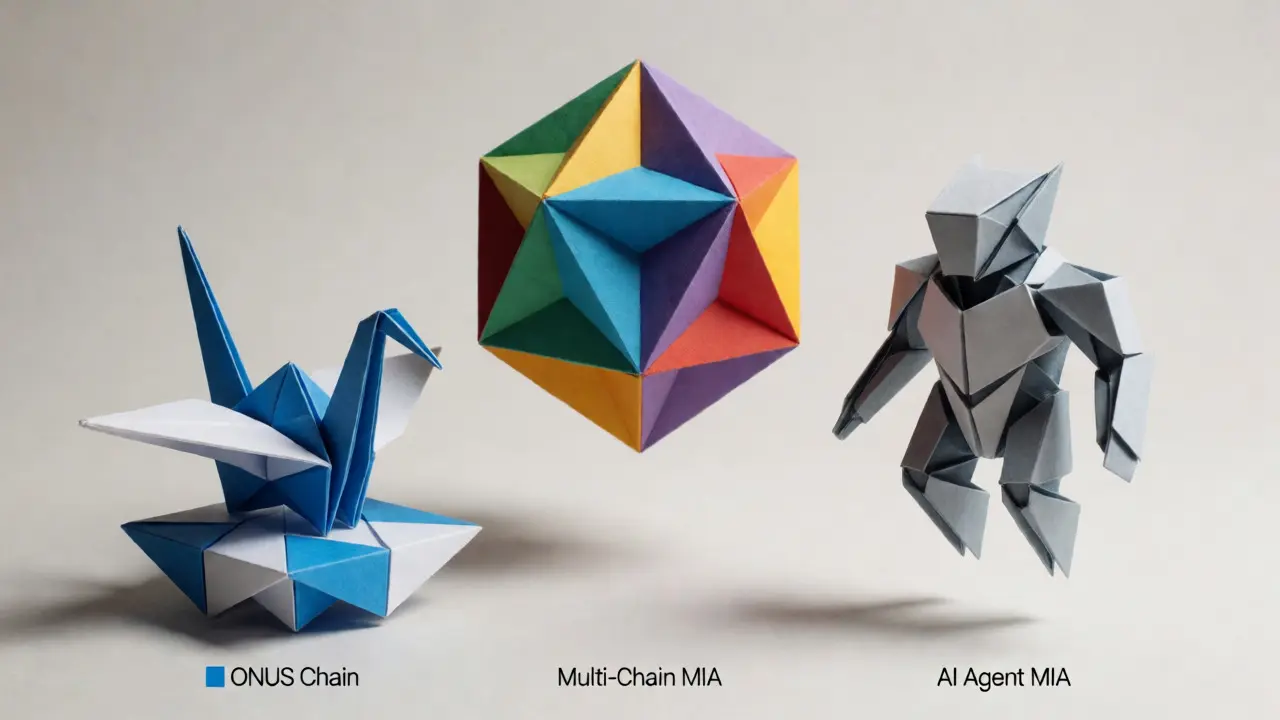
Here is the biggest pitfall for new investors: **Ticker Collision**. There are at least three distinct cryptocurrencies using the symbol "MIA," and they have nothing to do with each other.
- MiaSwap (MIA): The ONUS Chain token discussed here. Small supply (~12M), low volume, used for DeFi swaps in Vietnam.
- MIA (Multi-Chain): A larger token found on BNB Smart Chain and Base networks. It has a total supply of 1 billion and trades on PancakeSwap and Aerodrome with significantly higher volume.
- MIA (AI Agent): A newer token associated with AI platforms, recently listed on Binance Alpha. It focuses on autonomous marketing and operations.
If you search for "MIA" on a centralized exchange, you might buy the wrong asset. Always verify the contract address and the blockchain network. MiaSwap lives exclusively on ONUS Chain, an EVM-compatible chain. If your wallet shows MIA on Ethereum or Solana, it is not MiaSwap.
How MiaSwap Works: Swaps, Farms, and Pools
MiaSwap operates on standard AMM principles. When you want to swap Token A for Token B, you aren't matching with another person. Instead, you interact with a liquidity pool containing both tokens. The price is determined algorithmically based on the ratio of assets in the pool.
Yield Farming and Mining
To attract liquidity providers, MiaSwap offers two main reward mechanisms:
- Yield Farm: You deposit assets into a liquidity pool (e.g., MIA/VNDC). In return, you receive LP (Liquidity Provider) tokens. Staking these LP tokens earns you more MIA.
- Mining Pools: You stake existing MIA tokens to mine other assets. This creates a circular economy where MIA acts as both the reward and the entry ticket.
While the platform advertises "attractive APRs," specific rates fluctuate wildly due to the low TVL (Total Value Locked). Because the daily volume is so low-often under $30-the actual yield you receive may be negligible compared to the gas fees or the opportunity cost of locking up capital.
Risks and Red Flags: Why Liquidity Matters
Investing in MiaSwap isn't just about betting on the price going up. It’s about navigating severe structural risks inherent to micro-cap DeFi projects.
Liquidity Crisis
With only four trading pairs and three coins supported, MiaSwap is incredibly thin. Coingecko reports depth of only ~$25 on either side of the current price. This means if you try to sell $100 worth of MIA, you might incur massive slippage, receiving far less value than the quoted price suggests.
Website and Development Activity
A concerning signal for any crypto project is the status of its official web presence. As of September 2026, the primary domain `miaswap.io` resolves to a parking page, indicating the registration has expired. While the GitHub repository and Twitter account still exist, the lack of an active, maintained website suggests reduced development momentum or a shift in focus toward the broader ONUS ecosystem rather than standalone MiaSwap promotion.
Circulating Supply Ambiguity
Data sources disagree on how many MIA tokens are actually circulating. Bitget lists circulating supply as 0, while CoinMarketCap reports 12.43 million. This discrepancy usually happens when tokens are locked in vesting contracts, treasury wallets, or simply not being traded actively enough for oracles to track them accurately. Until this is clarified, market cap calculations remain theoretical.

Who Should Consider MiaSwap?
MiaSwap is not for everyone. It is a specialized tool for a specific user base.
Is MiaSwap safe to use?
MiaSwap is a functional DeFi protocol, but "safe" is relative. It carries smart contract risks typical of all AMMs. However, its biggest risk is financial: extreme illiquidity. You might struggle to exit a position without taking a significant loss due to slippage. Additionally, the expiration of the official website raises questions about long-term maintenance.
Where can I buy MiaSwap (MIA)?
You cannot easily buy MiaSwap on major centralized exchanges like Binance or Coinbase. It is primarily traded on the MiaSwap DEX itself and potentially within the ONUS application. You will need to acquire ONUS Chain assets (like VNDC or USDT) and bridge or swap them into MIA on the decentralized platform.
Why is the volume so low?
MiaSwap targets a niche audience, primarily users of the ONUS app in Vietnam and parts of Asia. It does not compete globally with giants like Uniswap. Consequently, daily trading volumes often drop below $30, making it one of the least liquid tokens tracked by major aggregators.
Is MIA the same as the AI token on Binance Alpha?
No. They share the same ticker but are completely different projects. The AI token is part of the ai.ac ecosystem and trades on different chains. MiaSwap (MIA) is strictly an ONUS Chain DeFi token. Always check the contract address before investing.
Can I stake MIA for passive income?
Yes, through Yield Farms and Mining Pools. You can stake LP tokens or MIA itself to earn rewards. However, given the low liquidity and potential for impermanent loss, calculate your net profit carefully after accounting for transaction fees and price volatility.
Final Verdict: Niche Utility or Dead End?
MiaSwap represents the wild west of decentralized finance. It is a legitimate, functioning AMM that serves the ONUS ecosystem, but it lacks the scale, liquidity, and visibility of mainstream DeFi protocols. The expiration of its official website and the confusion surrounding its ticker add layers of complexity for international investors.
If you are already deep in the ONUS ecosystem and understand the mechanics of AMMs, MiaSwap offers a way to earn yield on local assets. For the average crypto investor looking for growth or stability, the risks-particularly the inability to exit positions quickly-likely outweigh the potential rewards. Treat MIA as a speculative experiment rather than a core portfolio holding.