

You might have stumbled upon the ticker AUR on a deep-dive into old altcoins or while researching Iceland’s digital currency experiments. Auroracoin isn’t Bitcoin, and it certainly isn’t Ethereum. It is a niche, legacy cryptocurrency with a very specific origin story: it was built to replace the Icelandic króna.
Launched in early 2014, Auroracoin (AUR) aimed to give Icelanders an inflation-resistant alternative to their national fiat currency. The idea sounded revolutionary at the time-a decentralized coin for a specific nation. But nearly a decade later, the reality is quite different. Today, AUR sits as a low-cap asset with minimal trading volume, serving more as a historical footnote in crypto history than a mainstream payment method.
If you are holding AUR, considering buying it, or just curious about this unique experiment, here is everything you need to know about its technology, its failed mass adoption, and where it stands in mid-2026.
The Origin Story: A Coin for Iceland
To understand Auroracoin, you have to look at why it was created. In 2008, Iceland faced a severe financial crisis that shattered trust in its banking system and currency. Fast forward to 2014, and the buzz around Bitcoin was growing. An anonymous developer, operating under the pseudonym Baldur Friggjar Óðinsson, saw an opportunity. He didn't want to create another global casino coin; he wanted to build a stable, decentralized alternative specifically for Iceland.
The launch strategy was bold, perhaps too bold for the time. Instead of mining all coins from scratch like Bitcoin, the team pre-mined 50% of the total supply. That’s 10.5 million out of the 21 million maximum coins. These weren't hoarded by developers for profit. They were reserved for an airdrop.
On March 25, 2014, Auroracoin executed one of the first national-scale airdrops in history. Every single resident of Iceland-approximately 330,000 people-was eligible to receive free AUR tokens. To claim them, users had to verify their Icelandic identity. This was a massive logistical undertaking and a unique attempt to distribute wealth evenly across a population rather than rewarding those with expensive mining rigs.
Who created Auroracoin?
The primary creator operated under the pseudonym Baldur Friggjar Óðinsson. Later reports credit three individuals with the technical development: Myckel Habets, Mikael Hannes, and Martin Jansen. However, the project remains largely community-maintained today, with no clear active leadership team driving major updates.
Technical Specifications: Faster Than Bitcoin
Technically, Auroracoin started as a clone of Litecoin, which itself is a fork of Bitcoin. But it wasn't meant to stay identical. The core promise of AUR was speed and security suitable for daily transactions, not just long-term savings.
Here is how the tech stack compares to the giants:
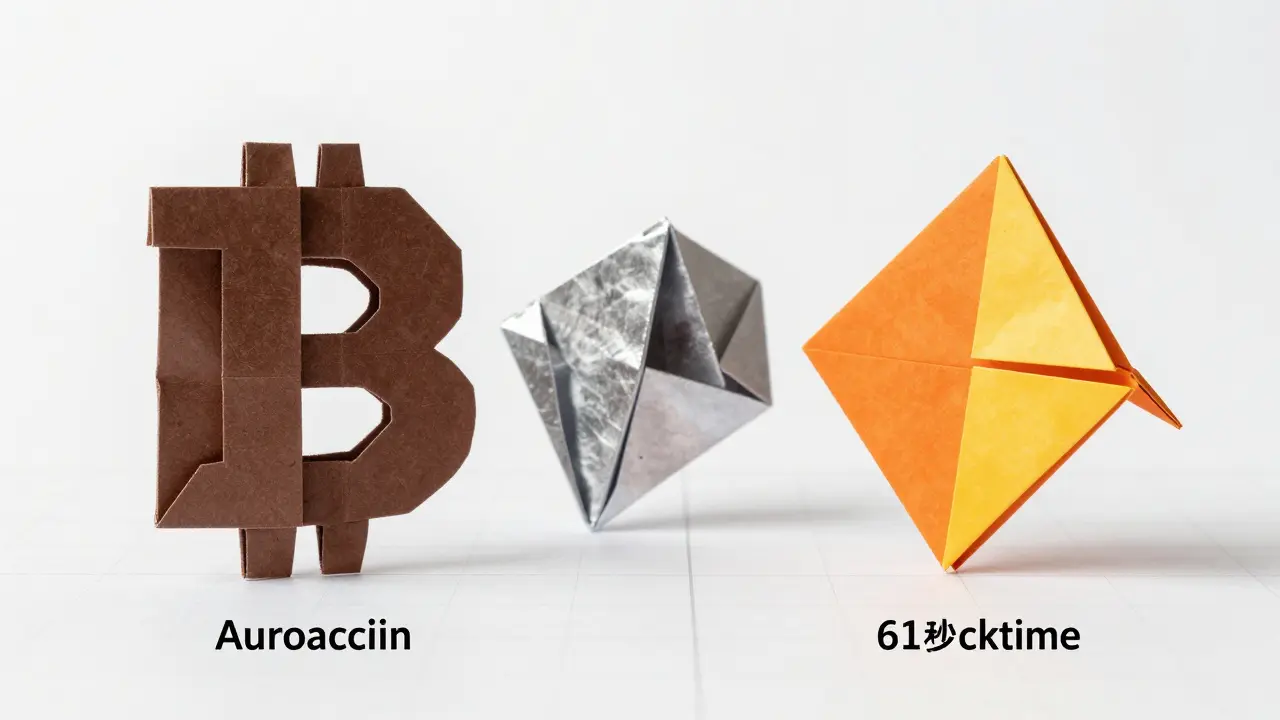
- Block Time: Bitcoin takes 10 minutes to confirm a block. Litecoin takes 2.5 minutes. Auroracoin aims for a block time of roughly 61 seconds. This makes it theoretically faster for point-of-sale payments.
- Consensus Mechanism: Originally Proof-of-Work (PoW) using the Scrypt algorithm (like Litecoin). In 2016, a hard fork introduced multi-algorithm PoW to improve decentralization and resist ASIC mining dominance.
- Total Supply: Capped at 21 million coins. This fixed supply is designed to prevent inflation, unlike fiat currencies that central banks can print endlessly.
- Security: The blockchain uses standard cryptographic hashing. Proponents claimed its structure offered better resistance to 51% attacks compared to smaller cap coins, though with such low hash rate today, security relies heavily on the integrity of the remaining miners.
The wallet infrastructure relies on Auroracoin Core, allowing users to run full nodes. This means anyone can download the entire blockchain history and validate transactions locally, keeping the network truly decentralized. No central server controls your funds.
Market Performance: From $97 to Pennies
If you bought Auroracoin at its peak, you are likely looking at significant losses. The market data tells a story of initial hype followed by a long, slow decline.
In March 2014, just weeks after launch, AUR hit an all-time high of USD$97.84 per coin. At that moment, it was one of the most valuable altcoins in existence. Why? Because of the scarcity narrative and the excitement of the Icelandic airdrop. People thought they held a piece of the future of Nordic finance.
Fast forward to June 2026. The price has collapsed to approximately $0.03-$0.05 USD range. This represents a drop of over 99%. Here is a snapshot of the current market reality:
| Metric | Value |
|---|---|
| All-Time High (ATH) | $97.84 (March 2014) |
| Current Price (Approx.) | $0.031 - $0.047 USD |
| Market Cap Rank | #4160+ (CoinGecko) |
| 24h Volume | ~$0.23 - $520 USD (Extremely Low) |
| Circulating Supply | ~20 Million AUR |
| Max Supply | 21 Million AUR |
The trading volume is virtually non-existent. On some exchanges, less than $1 trades in a day. This illiquidity means you cannot easily buy or sell large amounts without crashing the price. Most trading happens on obscure platforms like Freiexchange or via small pairs on larger exchanges like Coinbase (if still listed), but liquidity is thin.
Why Did Auroracoin Fail to Take Off?
Auroracoin had a great idea: a national cryptocurrency. So why did it fade into obscurity? Several factors converged to kill its momentum.
1. Lack of Merchant Adoption While early reports claimed some Icelandic businesses accepted AUR, there was never widespread integration. You couldn't use it to buy coffee or groceries reliably. Without utility, a currency loses value. The Icelandic króna remained dominant because it was trusted, regulated, and universally accepted.
2. The "Dutch Auction" Effect When the airdrop happened, many recipients treated AUR as free money to cash out immediately. They sold their coins on exchanges, creating massive selling pressure. Since the demand side was weak, prices plummeted.
3. Better Alternatives Emerged In 2014, Bitcoin and Litecoin were the kings. By 2017, Ethereum and smart contracts changed the game. By 2020, stablecoins (USDT, USDC) offered the stability AUR promised but with actual liquidity. AUR was stuck in the middle-too volatile to be a stable store of value, too obscure to be a speculative moonshot.
4. Development Stagnation The original team disappeared or went silent. While the blockchain still runs, there are no major upgrades, no marketing campaigns, and no new partnerships. Crypto projects live or die by their communities and developers. AUR’s community has aged out.
Is Auroracoin Safe to Use in 2026?
Safety depends on what you mean. Is the code secure? Generally, yes. The blockchain is operational, and transactions are processed. However, "safe" also implies liquidity and regulatory protection.
Liquidity Risk: If you deposit AUR into an exchange, you might find it difficult to withdraw or sell. With such low volume, slippage will eat your profits. You could try to sell $10 worth of AUR and only get $5 due to lack of buyers.
Regulatory Uncertainty: Iceland has not banned cryptocurrencies, but neither has it embraced AUR. There is no legal framework protecting AUR holders if an exchange fails. You are on your own.
Wallet Security: Always use a reputable hardware wallet or the official Auroracoin Core software. Avoid web wallets for any significant amount, as the low profile of the coin makes it a less targeted but still vulnerable space for phishing scams.
How to Buy or Store Auroracoin
If you are determined to acquire AUR, here is the practical path. Note that this is for educational purposes and carries high risk.
- Find an Exchange: Major exchanges like Binance or Kraken do not list AUR. You may find it on smaller platforms like Freiexchange or potentially through legacy pairs on Coinbase (check current listings). P2P markets are also an option but carry higher scam risks.
- Set Up a Wallet: Download the Auroracoin Core wallet from the official GitHub repository. Verify the checksums to ensure it hasn't been tampered with. Syncing the wallet will take time as it downloads the full blockchain.
- Transfer Funds: Send your purchased AUR to your personal wallet address. Never leave assets on an exchange for long-term storage, especially for low-cap coins where exchange delisting is a real threat.
The Verdict: A Historical Artifact
Auroracoin was a fascinating experiment. It proved that a cryptocurrency could be distributed nationally and that blockchain technology could be adapted for local economies. However, it also demonstrated that technology alone doesn't drive adoption. Trust, usability, and network effects matter more.
Today, AUR is a zombie coin. It lives, but it doesn't thrive. It serves as a reminder of the crypto gold rush era of 2014, when every new fork promised to change the world. For investors, it offers little upside and high risk. For historians, it’s a unique case study in decentralized finance attempts within sovereign nations.
If you are looking for exposure to Icelandic innovation, look elsewhere. If you want to hold a piece of crypto history, AUR is cheap enough to buy a few thousand coins for the novelty. Just don't expect it to pay your bills anytime soon.
Can I mine Auroracoin in 2026?
Yes, but it is not profitable. The network hash rate is extremely low, meaning even basic CPUs or older GPUs can mine blocks. However, the reward is negligible given the coin's low price. Mining is mostly done by enthusiasts supporting the network rather than for profit.
Is Auroracoin still used in Iceland?
Very rarely. While some niche online forums or retro-gaming communities might accept it, it is not a viable payment method for goods or services in Iceland. The Icelandic króna and Euro (for tourists) dominate all transactions.
What is the difference between Auroracoin and Bitcoin?
Bitcoin uses SHA-256 mining and has a 10-minute block time. Auroracoin originally used Scrypt (like Litecoin) and now uses multi-algo PoW with ~61-second blocks. Bitcoin has a massive market cap and liquidity; Auroracoin has near-zero liquidity and is primarily a legacy project.
Did the Icelandic government support Auroracoin?
No. The Icelandic government and Central Bank did not endorse or regulate Auroracoin. It was a grassroots, private initiative. The state continued to promote the króna and later explored CBDCs (Central Bank Digital Currencies) separately.
Will Auroracoin ever reach $1 again?
It is highly unlikely. For AUR to reach $1, its market cap would need to grow exponentially, requiring massive institutional investment and user adoption that has not shown any signs of returning. The trend is firmly downward or stagnant.



Yogendra Dwivedi
I wonder if the pre-mine strategy was actually the downfall here. Giving everyone free coins sounds nice in theory, but it likely created immediate sell pressure without building real utility first. Did anyone else notice that the hash rate dropped off a cliff after the initial hype died down?
Alexis Abster
Oh my gosh, can you imagine waking up one day and finding out your entire country got airdropped crypto? That would have been such a wild experience for the people of Iceland! It’s tragic that it didn’t work out, but what a story. The fact that it hit $97 per coin is absolutely mind-blowing when you think about it now.
Brad Ranks
This whole thing is a joke. A literal joke. They thought they could just print digital money and replace a national economy? Please. It’s a zombie coin because nobody wants it. If you’re holding this garbage in 2026, you’re either delusional or trying to tax loss harvest. Don’t let these tech specs fool you into thinking there’s value here. There isn’t.
Lee Paige
The decline of Auroracoin is not an accident; it is the inevitable result of abandoning national sovereignty to anonymous globalist developers. When a nation surrenders its monetary policy to a blockchain run by pseudonymous entities like Baldur Friggjar Óðinsson, it invites chaos. The Icelandic króna remained stable because it was backed by the state, not by the whims of speculative traders. This experiment proves that decentralized finance is a threat to orderly society.
Caitlin Donahue
i mean it kinda makes sense that it flopped right? like who really wanted to pay for coffee with aur? seems super complicated compared to just using a card lol
Karthikeyan S
Look at this mess 😂😂 You guys are still talking about this dead coin? It’s pathetic. The liquidity is non-existent and you’re wasting your time reading about it. Wake up sheeple 📉💀
Dinesh Pattigilli
Only uneducated people would invest in such a primitive fork. The multi-algo PoW was a desperate attempt to compete with Litecoin, which itself is inferior to Bitcoin. Those who hold AUR lack basic financial literacy and market awareness. It is a relic of a barbaric era in crypto history.
Madhu Menon
Perhaps we should view Auroracoin not as a failure, but as a philosophical statement on the nature of value. Value is consensual, and when the consensus fades, so does the price. The coin remains, a testament to human ambition and the fleeting nature of trust in digital systems. It teaches us that technology alone cannot create meaning. 🙂
Narendra Kulkarni
its interesting how the community just faded away. i guess without active devs, nothing lasts forever. thanks for sharing the info though, good read!
verna kennedy
You clearly do not understand the fundamentals of monetary economics if you are considering this as a viable asset. The lack of merchant adoption is not a bug; it is a feature of a worthless currency. Do not waste your capital on historical artifacts unless you are prepared to lose everything.
Kelly Tenney
I find it really inspiring that someone tried to solve a real problem like inflation for their neighbors. Even though it didn’t stick, the effort to create something inclusive through the airdrop is commendable. We should support more projects that try to empower communities, even if they fail initially.
Caralee Robertson
i remember hearing about this back in the day. crazy how fast things change in crypto. feels like another lifetime ago when every new coin had a unique story like this.
Greg Lewis
you think this is over? nah man the truth is deeper than that. the government probably suppressed it because it threatened their control over the krona. wake up people. the silence from the devs is suspicious af
JEVON HALL
If you're looking to store AUR safely, make sure you verify those checksums on the GitHub repo. It's easy to get phished with low-cap coins since there's less oversight. Hardware wallets are your best friend here. Stay safe out there! 🔒👍
Dr Lynea LaVoy
As a researcher in digital assets, I can confirm that the regulatory uncertainty mentioned is a significant barrier. Without legal protection, holders are entirely exposed to exchange failures. It is crucial to educate oneself on self-custody methods before engaging with such legacy assets.
aaliyah zahid
Sure, it’s a ‘historical artifact,’ but let’s be real-it’s mostly just a cautionary tale. The irony is that while it failed in Iceland, similar experiments elsewhere also fizzled out. Maybe the world just isn’t ready for national cryptos yet, or maybe the execution was just bad. Either way, it’s a fun piece of trivia.
Erik Kirana
This article is poorly written and lacks depth. The author fails to recognize the nuanced economic implications of the pre-mine distribution. It is insulting to suggest that readers need such basic explanations. One would expect better analysis from a publication claiming expertise in cryptocurrency.
dan kaffeman
Foreign nonsense. Iceland should have stuck to its own currency instead of chasing American tech trends. This coin represents the erosion of local identity and economic independence. Disgusting.
Meg Gran
oh please. calling it a 'zombie coin' is such a cliché. it’s not dead, it’s just resting. unlike your portfolio which is probably flatlining rn. enjoy the nostalgia trip losers.
Alexander DeVries
Let’s keep our expectations realistic. While the history is interesting, the current market data speaks for itself. It is important to respect the risks involved with illiquid assets. Do not let sentiment override logic when making investment decisions.
Steven Jacobowitz
So basically, it’s a scam? Or just a bad idea? I’m confused. The tech sounds okay, 61 second blocks is fast. Why did nobody buy it? Was it just bad marketing?
Sylvia Mossman
Everyone says it’s a failure, but I bet there’s a secret group of whales hoarding it waiting for a pump. You sheep always jump on the bandwagon of whatever is popular. AUR might be the next big thing because it’s undervalued. Think outside the box.
Matthew Malone
American innovation would have crushed this weak European experiment. No wonder Iceland couldn’t sustain it. They lack the entrepreneurial spirit required to build a successful global currency. Stick to fishing and geothermal energy, folks.
Diana Morris
Get over it already. It’s gone. Move on. Stop dwelling on past mistakes. Life is short and crypto moves fast. Focus on what’s working now not what died years ago.
Dianne Wright
i knew this would happen. i told everyone it was a bubble. now look at you all crying over pennies. typical. never listen to me huh? well now you know better. dont say i didnt warn you