
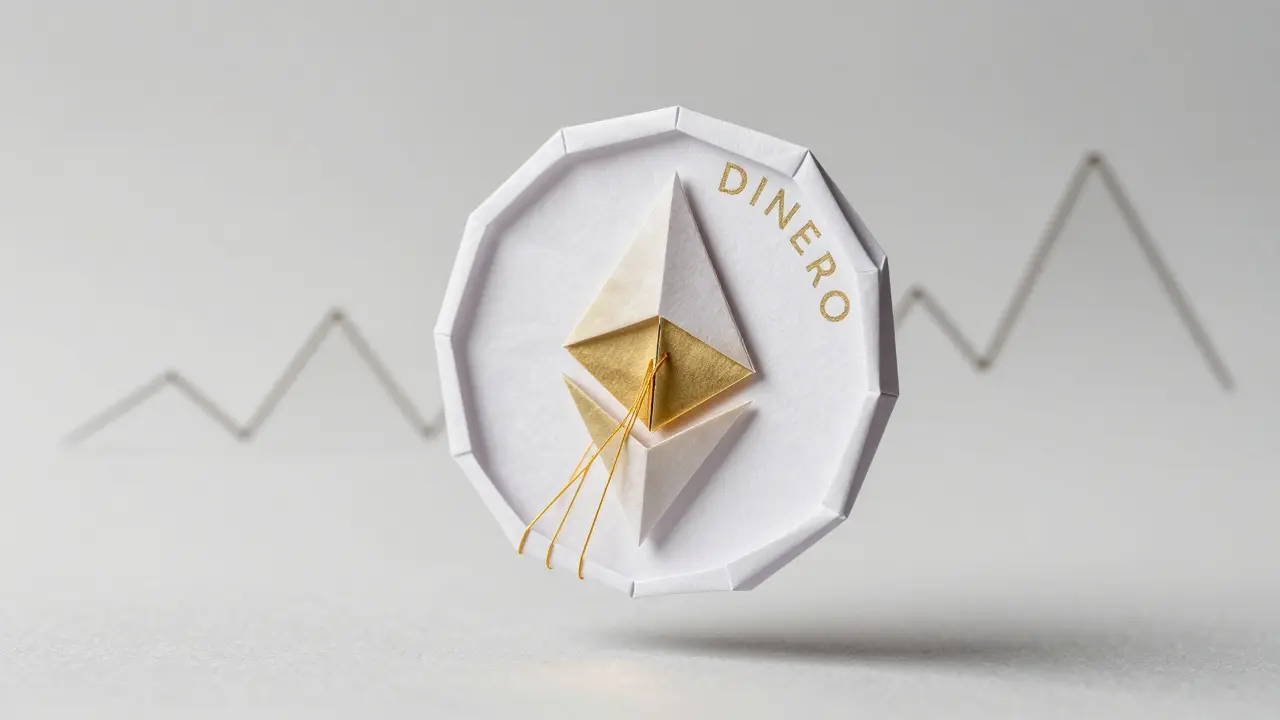
When you hear "Dinero" in the crypto world, you might assume it’s one coin. But it’s not. There are at least two completely different projects using the same name, and they serve totally different purposes. One is a stablecoin built for institutional DeFi users. The other is a privacy-focused mining coin with almost no trading activity. Confusion is common - and it’s costing people money. Let’s cut through the noise.
There Are Two Dineros - And They’re Not the Same
The name "Dinero" comes from the Spanish word for "money," which makes it a tempting pick for crypto projects. But that’s where the similarity ends. The two main versions are:
- DINERO - A stablecoin backed by ETH and pxETH, developed by Redacted Cartel
- DIN - A mineable cryptocurrency with anonymous transaction features, promoted at dinerocoin.org
They don’t share code, teams, or goals. Mixing them up is like thinking "Tesla" and "Tesla Energy" are the same thing. They’re related, but not interchangeable.
The Dinero Stablecoin (DINERO): Built for DeFi Yield
The more prominent Dinero project is the DINERO stablecoin, launched by Redacted Cartel a decentralized autonomous organization (DAO) known for building advanced DeFi infrastructure on Ethereum. Unlike USDT or USDC, DINERO isn’t just pegged to the dollar - it’s designed to earn yield while you hold it.
Here’s how it works:
- Each DINERO is backed by a mix of Ethereum (ETH) and pxETH - a liquid restaking token from Pirex Finance
- pxETH earns interest from Ethereum staking, and that yield is passed back to DINERO holders
- The protocol also holds USDC as a buffer to stabilize price during volatility
- It’s over-collateralized, meaning there’s more backing than the total supply of DINERO
This isn’t a simple stablecoin. It’s a yield-generating asset built for DeFi power users. If you’re staking ETH and want to earn more without moving your assets, DINERO gives you a way to lock up value and still generate returns.
As of February 2026, DINERO trades around $0.0081 - far below its intended $1 peg - due to low liquidity and bearish market sentiment. It’s not listed on major exchanges like Crypto.com or Binance, which limits access. But on decentralized platforms like Uniswap, it still sees consistent trading volume ($90K+ in 24 hours), mostly from DeFi traders looking to hedge or earn yield.
What Makes DINERO Different From Other Stablecoins?
Most stablecoins are either:
- Centralized (USDT, USDC) - backed by cash or reserves held by a company
- Over-collateralized crypto (DAI) - backed by crypto locked in smart contracts
DINERO takes a third path: yield-optimized collateral. It doesn’t just hold ETH - it holds ETH that’s already being staked (via pxETH). That means:
- No need to manually stake ETH yourself
- Yield is automatically generated
- Redacted Cartel’s governance system helps manage risk
This design makes DINERO a rare hybrid: a stablecoin that behaves like a yield-bearing asset. It’s not for casual holders. It’s for people who already understand DeFi and want to squeeze more value out of their ETH.

The Other Dinero: DIN - The Mining Coin
Then there’s DIN, a completely separate project with its own website: dinerocoin.org. This one claims to be "A New Digital Currency, Based On Bitcoin And Dash," promising anonymous, instant payments.
Here’s what we know about DIN:
- Current price: ~$0.00056535
- 24-hour price surge: +89.39%
- 24-hour trading volume: just $13.77
- Total supply: 100 million DIN (8.94 million in circulation)
The massive price spike looks impressive - until you see the volume. That’s a classic pump-and-dump signal. With trading volume under $15, it’s easy for a few wallets to move the price. There’s no real liquidity. No major exchange listings. No active development updates since 2023.
It’s positioned as a privacy coin, competing with Monero and Zcash. But those two have years of development, strong communities, and real adoption. DIN? It’s a low-volume token with no clear roadmap. If you’re looking for anonymous payments, DIN isn’t a practical option.
Dinero.xyz: The Yield Layer Behind the Scenes
Beyond the tokens, there’s another layer: Dinero.xyz a suite of DeFi tools designed to maximize yield for Ethereum-based assets, especially liquid restaking protocols.
This isn’t a coin. It’s infrastructure. Dinero.xyz helps users earn more from pxETH by optimizing how staking rewards are distributed. Think of it like a smart savings account that automatically reinvests your interest.
Why does this matter? Because pxETH is one of the highest-yielding Ethereum liquid staking tokens. If you’re holding ETH and want to maximize returns without giving up liquidity, Dinero.xyz’s tools are part of the ecosystem that makes that possible - even if you never directly touch DINERO.

What’s Next for Dinero?
Redacted Cartel has big plans for the DINERO stablecoin:
- Meta transactions: Pay gas fees in DINERO instead of ETH - reducing friction for users
- Private transactions: Use pxETH’s block space to anonymize transfers
- Order flow payments: Allow decentralized exchanges to pay users in DINERO for trade execution
If these features launch successfully, DINERO could become a core utility token within Redacted Cartel’s ecosystem - linking it to other assets like Btrfly and boosting its long-term value.
But here’s the reality: The stablecoin market is dominated by USDT and USDC. DAI is the only major decentralized competitor with real adoption. DINERO is still a niche product - powerful, but not yet mainstream.
Should You Buy Dinero?
It depends on what you want.
If you’re a DeFi user: DINERO might be worth exploring if you’re already using Ethereum staking and want to earn yield without moving your assets. But only if you’re comfortable with low liquidity and price instability. Don’t expect it to hit $1 anytime soon.
If you’re looking for privacy: Skip DIN. It’s not a serious player. Monero, Zcash, or even privacy-focused Bitcoin layers like Mimblewimble are better options.
If you’re a retail trader: Avoid both. The trading volumes are too thin. You won’t be able to exit easily. And with no exchange listings, you’re stuck on decentralized platforms with higher slippage.
Final Thoughts
Dinero isn’t one coin. It’s two very different projects - one with serious DeFi engineering behind it, the other a low-volume mining token with little traction. The stablecoin (DINERO) has real technical innovation and ties to a growing DeFi ecosystem. The mining coin (DIN) is a speculative gamble with no clear future.
If you’re serious about crypto, don’t just look at the name. Look at the tech, the team, the liquidity, and the use case. Otherwise, you’re chasing a name - not a value.
Is Dinero (DINERO) a good investment?
It depends. The DINERO stablecoin is designed for DeFi users who want yield from ETH-backed assets, not for casual investors. It’s not pegged to $1 and trades below that value due to low liquidity. It’s not a "get rich quick" asset. The DIN mining coin is speculative, with minimal trading volume and no clear roadmap. Neither is a safe bet for beginners.
Where can I buy Dinero (DINERO)?
DINERO is not listed on major exchanges like Binance, Coinbase, or Crypto.com. You can trade it on decentralized exchanges like Uniswap using ETH or USDC, but liquidity is low. Be cautious of slippage and high fees. The DIN mining coin is only available on small, obscure DEXs and carries high risk.
Is Dinero (DINERO) a stablecoin?
Yes - but not like USDT or USDC. The DINERO stablecoin is algorithmically backed by ETH and pxETH, and it’s designed to earn yield while maintaining a $1 peg. However, as of early 2026, it trades at $0.0081 due to low demand and market conditions. It’s a yield-bearing stablecoin, not a traditional one.
What’s the difference between DINERO and DIN?
DINERO is a DeFi stablecoin backed by Ethereum assets, developed by Redacted Cartel. DIN is a mineable cryptocurrency with privacy features, promoted on dinerocoin.org. They have no shared technology, team, or purpose. Confusing them is like mixing up Bitcoin and a meme coin with "Bitcoin" in the name.
Is Dinero (DINERO) associated with Ethereum?
Yes. The DINERO stablecoin is built on Ethereum and uses ETH and pxETH as collateral. It relies on Ethereum’s staking infrastructure and smart contracts. The Dinero.xyz yield tools also operate entirely on Ethereum. The DIN mining coin, however, is not on Ethereum - it runs on its own chain.



Ruby Ababio-Fernandez
DINERO is just a fancy way to say "I don't want to stake ETH myself." Meanwhile, DIN is a ghost town with a price chart that looks like a seizure.
Don't waste your time.
Jenn Estes
People still fall for this? The fact that two completely different projects use the same name is a red flag bigger than a Solana rug pull.
And yet here we are, 2026, and someone's still buying DIN because of an 89% spike.
Y'all are easy targets.
James Breithaupt
The real story here isn't the coins-it's the infrastructure. Dinero.xyz is quietly becoming the yield engine behind pxETH liquidity. It's not sexy, but it's foundational.
Redacted Cartel didn't build a stablecoin-they built a yield layer for institutional-grade DeFi. DINERO is just the interface.
Most retail traders don't get that. They see a $0.0081 price and panic. The real players see a 120% APR collateralized by restaked ETH and stay calm.
This is the future: stablecoins that don't just hold value-they compound it. And yeah, it's not for everyone. But if you're in DeFi and not using this, you're leaving money on the table.
Scott McCrossan
Oh great. Another "DeFi innovation" that only works if you already have $50k in ETH and know what pxETH is.
Meanwhile, DIN has a website that looks like it was built in 2017 and a 24h volume lower than my coffee budget.
Both are scams. One just has a whitepaper.
Jeremy Fisher
I've been holding DINERO since late 2025 and honestly? It's been a rollercoaster, but not in the way you think.
At first I thought it was garbage because it was trading at 1% of its peg-but then I dug into the collateral ratios and realized: it's not broken, it's just underappreciated.
The fact that it's backed by pxETH means every time Ethereum restaking yields go up, so does the underlying value of DINERO-even if the price doesn't reflect it yet.
And yeah, liquidity is low, but that's why I use Uniswap v3 with tight ranges. Slippage? Yeah, it's there, but if you're not trading more than $10k at once, you're fine.
Plus, the governance proposals around meta transactions are actually kind of brilliant. Imagine paying gas in DINERO while earning yield on it. That's not just innovation-that's elegance.
And DIN? Don't even get me started. That coin has more hype than substance. 89% pump on $13 in volume? That's not a coin, that's a TikTok ad.
Real DeFi doesn't need to scream. It just needs to work. And DINERO? It works. Quietly. Efficiently. Without a meme.
AJITH AERO
So you're telling me a coin called DINERO isn't even worth a dollar? And you call this innovation?
Meanwhile, in India, we have coins that actually move. This is why the West thinks crypto is a joke.
Angela Henderson
I read this whole thing and I'm still confused.
So one Dinero earns money just by existing, and the other one is like... a ghost coin?
Why do they both have the same name? Who thought that was a good idea?
Also, is pxETH like... a thing you can buy? I thought ETH was just ETH.
I just want to know which one to put my $200 in. Can someone just tell me which one to pick? I don't need the whole essay.
sruthi magesh
Of course the elite DeFi bros are hyping this. They want you to believe there's "real innovation" here.
Meanwhile, the real power is still in centralized stablecoins. This is just another way to extract fees from naive yield farmers.
DIN? Same thing. A decoy. A distraction. The system doesn't want you to see that both are traps.
They're not rivals. They're partners in a scheme to keep retail users chasing shadows.
Aileen Rothstein
This is actually one of the clearest breakdowns I've seen on Dinero.
It's wild how much confusion there is-two projects, same name, totally different goals.
I’ve been using DINERO as part of my DeFi stack for months now and it’s been surprisingly stable, even at $0.0081.
The yield from pxETH has been solid, and I love that I don’t have to manually restake.
And honestly? I’m not buying it as an investment-I’m using it as a tool.
If you’re in DeFi, this isn’t about speculation. It’s about efficiency.
And yeah, DIN? I’d avoid it like a phishing link.
But this post? It’s a public service. Thank you.
Jennifer Riddalls
I'm not a crypto expert but I read this and felt smarter
thank you for explaining the difference so clearly
I used to think Dinero was one thing
now I get it
and I'm not buying either one
but at least I won't get scammed
you did good
Kyle Tully
So you're telling me the "real" Dinero is basically a yield-bearing stablecoin that trades at 1% of its peg because no one cares?
And the other one is a meme coin with less volume than my cat's Twitch stream?
Bro, this isn't innovation. This is a graveyard with two headstones.
And you're calling this a guide?
Who wrote this? A PR agent for Redacted Cartel?
Because I'm starting to think this whole thing is a marketing stunt to get people to trade on Uniswap so they can collect fees.
And now I'm mad I read all of this.
Ian Plunkett
DINERO: 120% APY? No. 120% APY on collateral. That's not yield-that's leverage wrapped in a whitepaper.
DIN: 89% pump? No. 89% pump on $13 volume. That's not a coin-that's a statistical anomaly.
Both are symptoms of a broken system.
And yet here we are, 2026, still arguing about names instead of building.
How did we get here?
And why does it feel like we're all just chasing ghosts?
yogesh negi
Thank you for this clear breakdown! I've been confused for months and this finally makes sense.
For beginners like me, the key takeaway is: don't trust the name.
Always check the team, the code, the liquidity.
DINERO has real DeFi mechanics behind it, even if it's not popular yet.
DIN? Just a flash in the pan.
And Dinero.xyz? That's the hidden gem-infrastructure that most people overlook.
If you're serious about crypto, learn the difference early.
Thanks again for taking the time to explain this. It matters.
Nikki Howard
The assertion that DINERO is "designed to earn yield" is misleading. It does not earn yield-it redistributes yield from pxETH holders. This is not innovation; it is arbitrage.
Furthermore, the claim that it is "over-collateralized" is irrelevant if the underlying collateral (pxETH) is itself subject to slashing risk and protocol-level volatility.
And DIN? The 89% price surge is statistically impossible without market manipulation.
Both projects represent systemic failures in crypto governance and transparency.
Regulatory scrutiny is inevitable. Proceed with caution-or better yet, avoid entirely.
Sasha Wynnters
DINERO is the ghost of DeFi past-haunting wallets with phantom yield.
DIN is the ghost of DeFi future-dancing on graves with a grin and a pump.
Both are poems written in smart contracts.
One sings of efficiency, the other screams of entropy.
And we? We're just the audience, clapping for the wrong show.
Maybe the real coin is the one we're not looking at.
Or maybe we're all just paying gas to watch a funeral.