
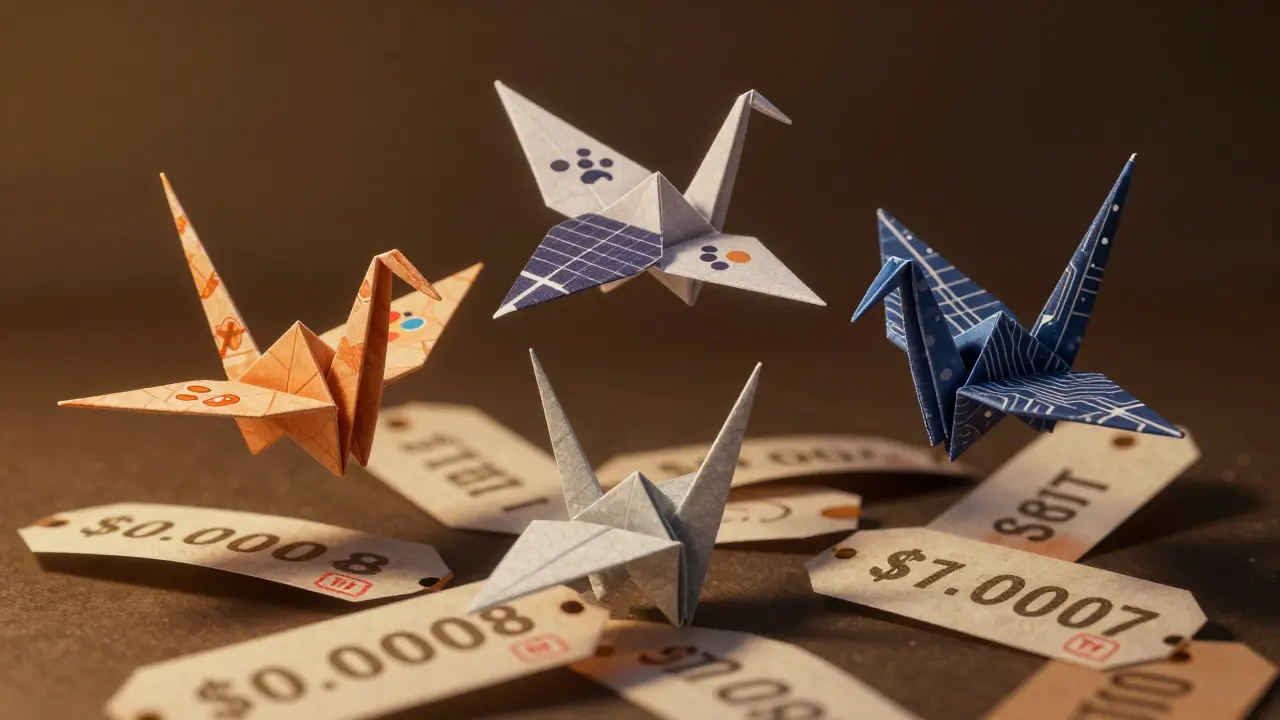
When you search for TITAN (TIT), you don’t get one project. You get three - and they have almost nothing in common. That’s not a glitch. It’s a systemic problem in crypto, and it’s costing people money. On January 25, 2026, one exchange listed TIT at $0.000808. Another listed it at $0.051013. Both called it TITAN. Which one is real? Neither. Or maybe all of them. Here’s what’s actually going on.
Three Different Coins, One Ticker Symbol
The TIT ticker doesn’t belong to a single project. It’s been reused by at least three unrelated crypto initiatives. Each has its own blockchain, tokenomics, and purpose. Confusion isn’t accidental - it’s common in low-liquidity markets where project teams exploit naming overlaps to attract attention.
The most documented version is Titans Tap. It’s a Telegram-based idle RPG game built on blockchain. Players collect divine powers from Greek mythology through simple tap mechanics. It’s not complex. You don’t need a wallet or technical knowledge. Just install Telegram, open the bot, and start tapping. That’s the appeal. But here’s the catch: it has an 80 billion token supply. That’s more than 100 times the total supply of Bitcoin. With that many tokens floating around, each one is worth almost nothing - currently around $0.0008. The market cap is about $24.8 million, but that’s misleading. Most of those tokens are locked in the game’s economy or held by early investors.
The second version is a DePIN token - short for Decentralized Physical Infrastructure Networks. This TITAN isn’t a game. It’s designed to fund real-world infrastructure like data centers, solar farms, and Bitcoin mining rigs. Holders earn passive income from revenue generated by these physical assets. The total supply here is fixed at 40 million tokens. That’s manageable. The price? Around $0.0007, with a market cap of roughly $28 million. But here’s the problem: there’s no public team, no clear roadmap, and no verified audits. The project claims to generate returns from Bitcoin mining and infrastructure investments, but no one can prove it.
The third variant, listed on CoinMarketCap, calls itself a Unified Ecosystem combining gaming, esports, and finance. It’s built on Binance Smart Chain, with a circulating supply of nearly 200 million tokens. The price hovers around $0.013. But trading volume? Just $4,120 in 24 hours. That’s not a market. That’s a whisper. For comparison, Axie Infinity’s daily volume is over $12 million. This version of TITAN has no clear use case beyond speculation. It’s a ghost coin.
Why the Confusion Matters
Imagine buying Apple stock, but getting Tesla instead. That’s what happens with TIT. You think you’re investing in a gaming project, but the exchange gives you a DePIN token. Or worse - you buy from a scam site that’s using the TIT name to trick you into sending funds to a fake wallet.
Exchanges are part of the problem. Binance, MEXC, and others list TIT without clarifying which project they’re supporting. LiveCoinWatch shows conflicting market caps - sometimes $24 million, sometimes $0. CoinGecko lists Titans Tap and DePIN TITAN as separate entries. CoinMarketCap mashes them together. There’s no standard. No regulation. No accountability.
Traders have learned to check the contract address before buying. For Titans Tap, it’s on Binance Smart Chain: 0x44d7f403b0451b991df1378827982c883c390719. For the DePIN version, it’s a different address entirely. But most new users don’t know to look. They see “TITAN” and click “Buy.” That’s how people lose money.
Who’s Behind These Projects?
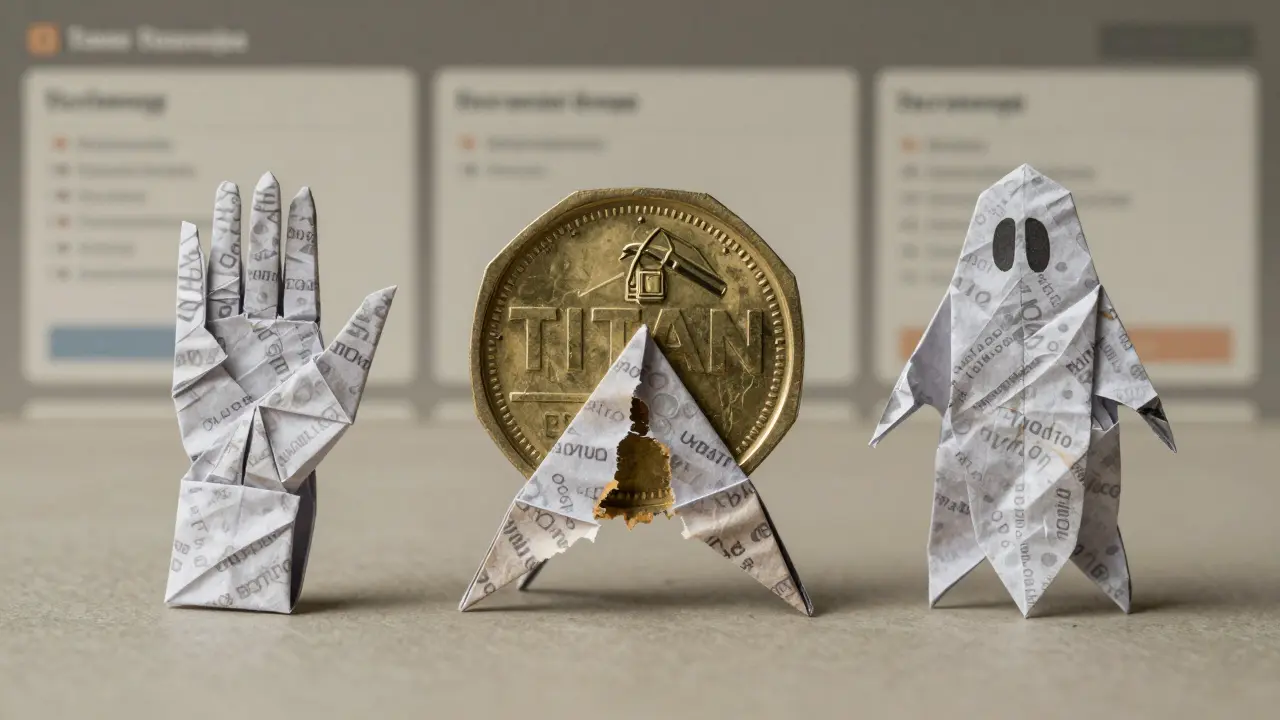
No one knows. Not really.
Titans Tap has a Telegram channel with 8,500 members. But the team is anonymous. Their GitHub has only three commits in six months. Their Medium blog last posted in January 2026 - a vague update about a “mainnet launch” with no technical details. The DePIN project? Zero public team members. No LinkedIn profiles. No interviews. Just a whitepaper written in broken English that talks about “revenue-sharing from infrastructure” without naming a single asset.
Compare that to Axie Infinity, which has a public team, quarterly reports, and a board of advisors. Or Render, the leading DePIN token, which partners with actual GPU providers and publishes audit results. TITAN projects have none of that. That’s not just risky - it’s a red flag.
Real User Experiences
Reddit threads like r/CryptoCurrency’s “TIT Scam Alert?” have 87 comments. 73% are negative. One user, u/CryptoWatcher456, wrote: “Lost $300 on Titans Tap after they changed their tokenomics without warning. 80B supply is a pump and dump waiting to happen.” That post got 342 upvotes.
Trustpilot gives Titans Tap a 1.2 out of 5 stars from 37 reviews. Common complaints: “Never earned what they promised,” “App crashes every 10 minutes,” “Customer support never replies.”
On CoinMarketCap, one user admitted: “Made 15% in 48 hours on TIT volatility. But I wouldn’t hold it. No idea where this is going.” That’s the pattern. Short-term gains. Long-term uncertainty.
Is It Worth Buying?
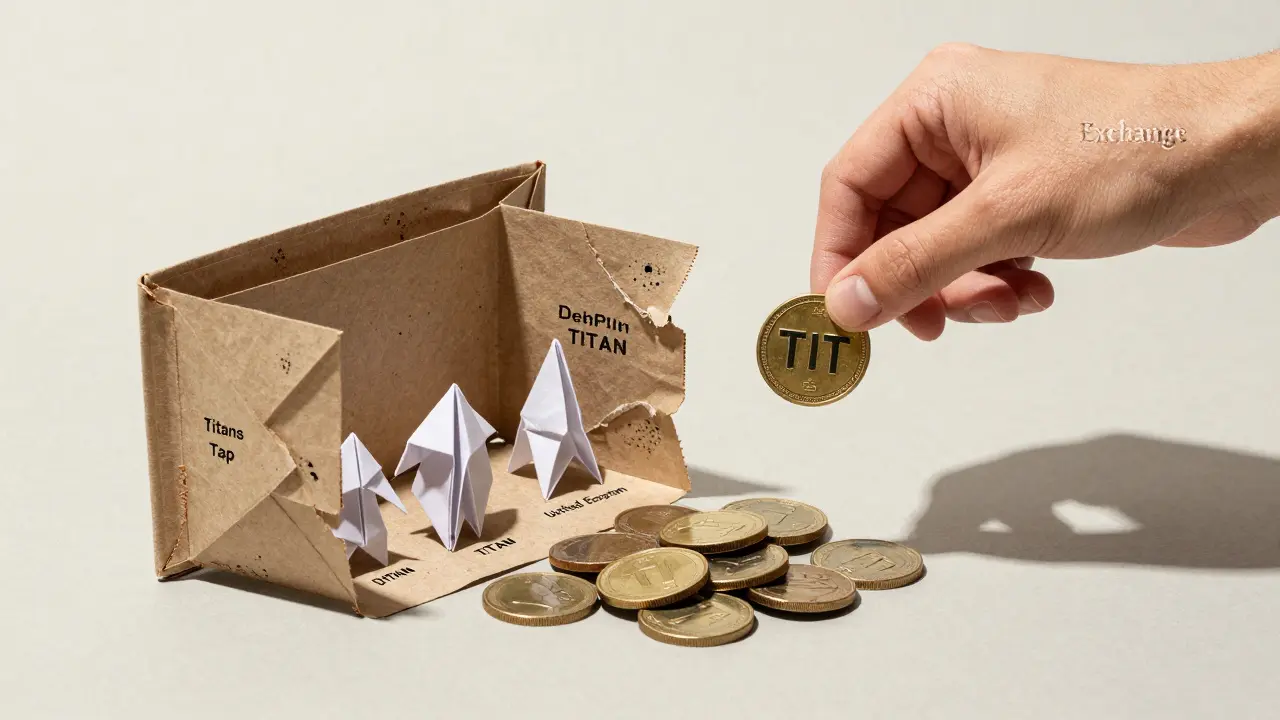
Let’s be blunt: if you’re looking for a long-term investment, avoid TITAN (TIT) entirely.
Titans Tap’s 80 billion supply means constant inflation. Even if the game gets popular, each token’s value will stay near zero. It’s designed for speculation, not sustainability. The DePIN version sounds smarter - backing real infrastructure sounds legit. But without verified assets, audits, or a public team, it’s just a promise on paper. The third version? It’s a ghost.
Even if you’re a trader looking for quick flips, the liquidity is too thin. A $4,000 daily volume means a single large buy or sell can swing the price 20% in minutes. That’s not trading. That’s gambling.
And then there’s the regulatory risk. The U.S. SEC warned in January 2026 about tokens with “ambiguous project identities.” If regulators step in, these TITAN variants could be classified as unregistered securities. That means exchanges delist them. Wallets freeze them. Your coins become worthless overnight.
What You Should Do Instead
If you like blockchain gaming, try Axie Infinity (AXS) or Gods Unchained (GODS). They have real players, verified teams, and transparent tokenomics. If you want exposure to DePIN, look at Render (RNDR) or Filecoin (FIL). Both have real infrastructure, public teams, and multi-million dollar market caps.
If you’re still curious about TITAN, do this: never invest more than you can afford to lose. Always check the contract address. Never buy based on price alone. And if you see “TITAN” on an exchange, look for the full project name - Titans Tap, DePIN TITAN, or Unified Ecosystem. If they don’t specify, walk away.
The crypto market is full of noise. TITAN (TIT) is one of its loudest distractions. Don’t let confusion cost you your money.
Is TITAN (TIT) a scam?
It’s not officially labeled a scam, but it has all the warning signs. Anonymous teams, no audits, inflated token supplies, and conflicting data across exchanges. Many users have lost money after projects changed rules without notice. Treat it as high-risk speculation, not investment.
Why does TITAN have so many different prices?
Because multiple unrelated projects use the same ticker symbol. One exchange lists Titans Tap at $0.0008, another lists a DePIN version at $0.0007, and a third lists a completely different token at $0.05. Without checking the contract address, you can’t know which one you’re buying. This is a known issue in crypto, and exchanges are slow to fix it.
Can I earn real money with Titans Tap?
You can earn small amounts of TIT tokens by playing, but the earning potential is unrealistic. Most users report earning less than $0.10 per day after hours of tapping. The game’s 80 billion token supply means each token is worth almost nothing. Even if you accumulate millions of tokens, converting them to cash is hard - few exchanges support it, and the price is unstable.
Is TITAN built on Ethereum or Binance Smart Chain?
The most common version, Titans Tap, runs on Binance Smart Chain (BSC) with contract address 0x44d7f403b0451b991df1378827982c883c390719. The DePIN version also uses BSC but has a different contract. Always verify the address before sending funds - never trust the token name alone.
Should I stake TITAN tokens?
Only if you understand the risks. The DePIN version claims a 14.7% APY from infrastructure revenue, but there’s no proof of those earnings. Staking means locking up your tokens - and if the project disappears, you lose them. There are safer staking options with verified projects like Polygon or Cosmos. Don’t stake TITAN unless you’re prepared to lose everything.
What’s the future of TITAN (TIT)?
The outlook is poor. Analysts from Delphi Digital and Messari give TIT variants a high risk of abandonment - over 87% chance of becoming inactive within 18 months. Without transparency, liquidity, or a real product, these projects rely on hype. Once the hype fades, so does the price. Don’t count on long-term value.


Deepu Verma
Man, I saw this TIT mess and just walked away. No clue which one was real, so I didn’t risk a dime. Better to miss a win than lose everything on a ghost coin.
Stay safe out there.
Abdulahi Oluwasegun Fagbayi
Crypto is just the Wild West with more charts and less sheriff.
Same ticker, three different ghosts. Who’s really in charge? No one.
That’s the point.
It’s not broken. It’s designed this way.
Margaret Roberts
They’re all scams. Don’t be fooled by the ‘DePIN’ buzzwords. That’s just Wall Street’s new way of saying ‘we have no assets but we have a whitepaper.’
SEC’s gonna come down hard on this. Mark my words.
And don’t even get me started on those Telegram bots - they’re all run by the same five guys in a basement in Manila.
Tselane Sebatane
Let me tell you something - this isn’t just confusion, this is exploitation on purpose. They know people are lazy. They know you’ll see ‘TITAN’ and think ‘oh cool, crypto game’ without checking the contract. That’s not a bug, that’s the business model.
And the worst part? It’s working.
People are still buying it. People are still losing money. And the exchanges? They’re making their cut either way.
It’s like a casino where the roulette wheel spins three different numbers at once and no one tells you which one you’re betting on.
Why do we keep falling for this? Because hope is cheaper than research.
And the saddest thing? We all know it’s rigged, but we still play because we think we’ll be the one who gets out before it crashes.
But here’s the truth - you won’t. You’ll be the one holding the bag when the lights go out.
And then you’ll come here and say ‘I didn’t know.’
But you did. You just didn’t care enough to look.
Wake up. Check the address. Always.
Or don’t. But don’t cry when it’s gone.
Jonny Lindva
Really appreciate this breakdown. I was about to dip into TIT because it looked cheap, but now I’m glad I paused.
Contract address check is non-negotiable now. Learned that the hard way with another fake token last year.
Thanks for keeping it real.
Jen Allanson
It is an egregious failure of market integrity that multiple uncorrelated entities may utilize identical ticker symbols without regulatory intervention. Such a practice constitutes a material misrepresentation to retail investors and should be subject to immediate enforcement action by the Securities and Exchange Commission. The absence of standardized nomenclature in digital asset markets is not merely an inconvenience - it is a systemic vulnerability that undermines the very foundation of informed capital allocation.
Harshal Parmar
Bro, I got into Titans Tap last month thinking it was gonna be my side hustle. Tapped for two weeks, made like 80 TIT tokens. Worth like 6 cents. Then they changed the reward system and now I get 10 tokens per hour instead of 50. And the app crashes every time I open it.
But hey, at least I got a cool badge for ‘Top Tapper Level 7’.
Still, I’m not mad. I just treat it like a free mobile game. No money in, no money out. If you’re looking to make cash, this ain’t it.
Just don’t stake it. Don’t buy more. And for god’s sake, don’t believe the ‘14.7% APY’ nonsense. That’s not DePIN, that’s a fairy tale written by someone who’s never seen a server.
Darrell Cole
You’re all missing the real story. This isn’t about confusion. It’s about control. The same group behind all three TIT variants. They use different names to avoid detection. The contract addresses? Fake. The mining rigs? Nonexistent. The ‘team’? A bot farm in Moldova.
And the exchanges? They’re complicit. They make money off every trade, regardless of legitimacy.
Anyone who buys TIT is a sucker. Period.
Stop pretending this is a market failure. It’s a coordinated fraud.
Dave Ellender
Good post. Clear, factual, no drama. Exactly what the crypto space needs more of.
Thanks for taking the time to untangle this mess.
george haris
I just checked my wallet - I bought TIT last week thinking it was the gaming one. Now I’m not even sure which one I got.
Anyone know how to check which contract I’m holding? I don’t want to lose it.
steven sun
bro tittan is sooo sus like why do they even let this on binance smh
just buy axie or rnrd and chill
Athena Mantle
OMG I just realized I’m holding the DePIN one 😭
And I thought I was being so smart investing in ‘real infrastructure’ 🤦♀️
Now I’m crying in my crypto hoodie. Why does this always happen to me?? 💔
Also who’s the genius who thought ‘TIT’ was a good ticker?? 😭🔥
carol johnson
It’s not just TIT. It’s EVERYTHING. TIT, TTT, TTTT, TITAN, TITANX, TITAN2.0 - it’s all the same people. They just change the name like a new season of a bad Netflix show.
And we keep watching. We’re all addicted to the drama.
It’s not crypto. It’s a soap opera with wallets.
Paru Somashekar
It is imperative that retail investors verify the contract address prior to any transaction involving tokens with ambiguous identifiers. The absence of regulatory oversight in this domain necessitates heightened personal diligence. I recommend cross-referencing token details via Etherscan or BscScan, and cross-checking with official project documentation. Failure to do so constitutes an unacceptable risk profile. This is not speculation - it is due diligence.
Steve Fennell
Really well-written piece. I’ve seen this happen with other tickers too - like ‘MATIC’ being used for fake tokens before Polygon got big.
One thing I’ve learned: if a project doesn’t have a clear, public team with LinkedIn profiles, walk away.
And if the whitepaper reads like it was written by Google Translate - run.
Thanks for keeping the community informed. This is what crypto needs more of: clarity, not hype.