

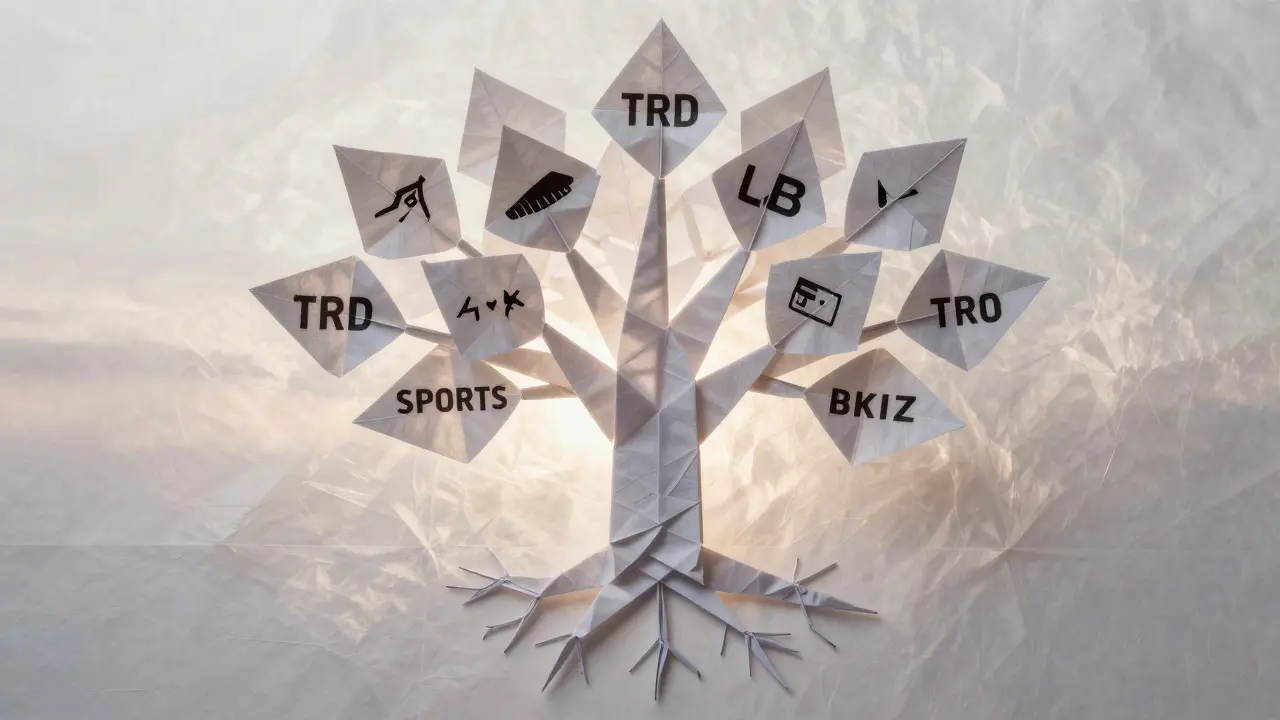
Triad (TRD) isn't just another crypto coin. It's the backbone of a real-world prediction market built on Solana, where people bet on outcomes - from sports results to political elections - and get paid automatically through smart contracts. If you've heard of platforms like Polymarket or Augur, Triad works similarly but with faster, cheaper transactions thanks to Solana’s blockchain. Unlike many tokens that exist only to speculate on price, TRD has clear, usable functions inside its own ecosystem.
What Exactly Is Triad (TRD)?
Triad (TRD) is the native token of the Triad platform, a decentralized prediction market. Think of it like a betting platform, but without a middleman. Instead of trusting a company to take your money and pay out winnings, everything runs on code. When you make a prediction - say, whether a new crypto project will hit $1 billion in market cap by June - your bet is locked into a smart contract. If you’re right, you get paid in TRD. If you’re wrong, you lose your stake. No delays. No disputes.
The TRD token powers this whole system. It’s used to place bets, claim winnings, vote on platform changes, and earn rewards by staking. It’s not just a currency - it’s the engine that keeps the platform running.
How Does Triad Work?
Here’s how it works in practice:
- You open the Triad app and pick a prediction market - like "Will the Fed cut interest rates before July 1?"
- You choose an outcome ("Yes" or "No") and stake TRD tokens on it.
- Other users do the same. The market pools all the bets.
- When the event happens (e.g., the Fed makes its decision), the smart contract automatically checks the result and pays out winners.
- Payouts are made in TRD, which you can then hold, trade, or stake again.
There’s no human reviewing bets. No customer support team. No withdrawal delays. It’s all handled by code on the Solana blockchain - which means transactions settle in under a second and cost less than a penny.
Why Is TRD Built on Solana?
Solana is one of the fastest and cheapest blockchains in use today. It can handle over 65,000 transactions per second with fees around $0.00025. That’s critical for prediction markets. Imagine trying to place 10,000 bets on a football game in real time - on Ethereum, that would cost hundreds of dollars in gas fees and take minutes. On Solana, it’s instant and nearly free.
Triad leverages Solana’s speed to allow users to trade prediction markets like stocks - entering and exiting positions quickly, reacting to news, and adjusting bets as events unfold. This makes Triad far more usable than older prediction platforms stuck on slower networks.

What Can You Do With TRD Tokens?
TRD isn’t just for betting. It has four main uses:
- Betting - Use TRD to place predictions on events across sports, crypto, politics, and pop culture.
- Governance - Hold TRD to vote on proposals that change how the platform works. Should new markets be added? Should fees change? Token holders decide.
- Staking - Lock up your TRD to help secure the network and earn a share of trading fees as rewards.
- Payouts - All winnings from prediction markets are paid out in TRD, creating constant demand for the token.
This multi-use design makes TRD more valuable than tokens that only serve one purpose. It’s not just a speculative asset - it’s a functional tool within a working system.
Current Price and Market Data (March 2026)
As of early 2026, TRD’s price varies across exchanges - a common issue for smaller tokens. Here’s what recent data shows:
| Metric | Value |
|---|---|
| Price (Coinbase) | $0.0952 |
| Price (CoinGecko) | $0.0352 |
| 24-Hour Trading Volume | $11,627 (CoinGecko) |
| Circulating Supply | 11,296,306 TRD |
| Total Supply | 17,634,336 TRD |
| All-Time High | $0.2952 (Dec 13, 2024) |
| All-Time Low | $0.02789 (Jul 25, 2025) |
| Market Cap | $448,898 (CoinGecko) |
| Token Holders | 4,410 |
These numbers show a volatile but active market. The price has swung from under $0.03 to over $0.09 in just a few months. Trading volume spiked 548% in one day, likely due to a major event like a high-profile prediction going live - maybe a U.S. election or a crypto ETF decision.
Keep in mind: price differences between exchanges aren’t errors. They happen because TRD trades against different pairs - some use USDT, others use SOL or ETH. The real value is in the ecosystem’s activity, not just the number on your screen.
Who Uses Triad and Why?
Triad attracts three main groups:
- DeFi enthusiasts - People who already use Solana for swaps, lending, or staking see Triad as a natural next step. It’s another way to earn yield, not just from interest, but from predicting real-world events.
- Forecasters and analysts - Traders, economists, and crypto analysts use Triad to monetize their insights. If you’re good at reading Fed policy or crypto trends, you can turn that knowledge into income.
- Speculators - Like any market, there are people who just want to profit from price swings. TRD’s volatility makes it attractive for short-term traders.
The fact that over 4,400 wallets hold TRD shows it’s not just a hype coin. Real people are using it, betting on outcomes, and voting on governance.
Is Triad a Good Investment?
That depends on what you’re looking for.
If you want a stable, low-risk asset - TRD isn’t it. It’s still a small, emerging project with a market cap under $500K. It’s not going to be in your retirement portfolio.
But if you believe in decentralized prediction markets - and think more people will use them to forecast events - then TRD has real potential. The platform solves a real problem: how to make betting on the future fair, transparent, and automated. And it does it on one of the most scalable blockchains.
The fact that TRD is used for staking, governance, and payouts means its value isn’t just tied to speculation. It’s tied to adoption. More users = more bets = more TRD needed = more demand.
What’s Next for Triad?
The team behind Triad is working on expanding the types of markets available. New categories are being added - like climate events, tech product launches, and even academic research outcomes. There are also talks of integrating with other Solana DeFi apps, so you could use TRD as collateral for loans or swap it directly in decentralized exchanges.
The biggest risk? Competition. Other prediction markets exist, and some have bigger budgets. But Triad’s edge is simplicity and speed. If it keeps improving the user experience and stays on Solana, it could become the go-to platform for fast, low-cost predictions.
Final Thoughts
Triad (TRD) isn’t a flash-in-the-pan meme coin. It’s a working tool in a growing niche: decentralized prediction markets. It’s not for everyone. If you don’t care about betting on events or voting on protocol changes, you probably won’t use it.
But if you’re interested in how blockchain can replace traditional systems - like bookmakers, polls, or surveys - then TRD is one of the most practical examples out there. It’s not just about price. It’s about utility. And right now, that utility is being used every day by real people.
Is Triad (TRD) a good long-term investment?
TRD isn’t a traditional long-term hold like Bitcoin or Ethereum. Its value is tied to the growth of the prediction market platform. If more people start using it to bet on events, the demand for TRD rises. But if adoption stalls, the price could drop. It’s best suited for those who understand the space and believe in decentralized forecasting.
Can I stake TRD to earn rewards?
Yes. Staking TRD allows you to earn a share of the platform’s trading fees. The more TRD you stake and the longer you lock it up, the higher your rewards. This helps secure the network and aligns token holders with the platform’s success.
Where can I buy TRD?
TRD is available on a few exchanges including Coinbase, Binance, and decentralized platforms like Jupiter Swap on Solana. Always check the trading pair - most use SOL, USDT, or ETH. Avoid buying from unknown or unverified sites.
Why are prices so different across exchanges?
TRD trades on multiple pairs (TRD/SOL, TRD/USDT, etc.) and has low liquidity overall. This causes price gaps between exchanges. One exchange might have a lot of buyers, driving the price up, while another has few trades, keeping it low. The most reliable price is the volume-weighted average across all markets.
Is Triad safe to use?
Yes - as long as you use the official platform. All bets are handled by audited smart contracts on Solana. No central authority controls your funds. But always double-check URLs, never share your private keys, and be aware that prediction markets carry financial risk - you can lose your entire stake.


jay baravkar
This is actually kinda fire 🚀 I’ve been betting on Fed moves on Triad for months and it’s wild how fast payouts hit. No more waiting 3 days like on other platforms. Solana’s the real MVP here.
Ian Thomas
So let me get this straight - you’re telling me people are using blockchain to predict whether a politician will tweet before breakfast? And we call this innovation? I’m not sure if I’m impressed or horrified.
Austin King
Love that this isn’t just another memecoin. Real utility > hype.
Bryanna Barnett
Okay but like… why is the price on CoinGecko so low? Like… are they just… not trying? 😅 I mean, if you’re not even *trying* to match Coinbase, maybe you’re not serious about this whole thing. Just sayin’.
Josh Moorcroft-Jones
Let’s be real - this whole thing is a house of cards. First off, Solana’s not ‘fast’ - it’s just *less* broken than Ethereum. And then you’ve got price discrepancies across exchanges because the liquidity is thinner than my grandma’s soup. And don’t even get me started on ‘governance’ - how many people actually vote? 0.2%? And you call that decentralized? Lol. Also, 4,410 holders? That’s not a community - that’s a Discord server with 3 bots and 2 people who still believe in Dogecoin.
Rachel Rowland
If you’re into prediction markets, this is one of the cleanest setups out there. No fluff. No middlemen. Just smart contracts doing what they’re supposed to. Start small. Stake some TRD. See how it feels. You might surprise yourself.
Bonnie Jenkins-Hodges
America invented democracy. Now we’re betting on it on blockchain? This is what happens when you let tech bros run everything. 🇺🇸🔥
Melissa Ritz
I read the whole thing. Honestly? I’m not convinced. The price volatility alone makes it feel like gambling with extra steps. And I don’t know - I just don’t trust code to replace human judgment. Too many edge cases.
Cerissa Kimball
The operational architecture of Triad leverages the Solana consensus mechanism to facilitate near-instantaneous transaction finality with negligible cost per operation thereby enabling a scalable infrastructure for decentralized forecasting applications which historically have been constrained by latency and fee volatility on alternative layer one networks
Basil Bacor
trid? like… triad? i thought it was a cult or sumthin 😅
Emily Pegg
I just don’t understand why anyone would risk their money on this. What if you’re wrong? What if you lose everything? What if your cat dies the day after you bet on the next president? 😭
Ethan Grace
I think… maybe… we’re all just trying to predict the future because we’re scared of not knowing. Maybe TRD isn’t about betting. Maybe it’s about… longing. For certainty. In a world that refuses to give it to us.
Jamie Hoyle
Oh wow. Another ‘utility token’ that’s just a thinly veiled pump. The ‘governance’ is a joke - it’s 90% whales voting on what to do next. And the staking rewards? You’re literally funding the devs’ Lamborghinis. This isn’t DeFi. It’s a Ponzi with better UI.
Jeffrey Dean
You know what’s ironic? The people who think this is ‘real utility’ are the same ones who still believe in DAOs. We’re not building the future. We’re just recreating Wall Street with emojis and gas fees.
Brian T
I read the article. I didn’t understand half of it. I think I’ll just stick to Bitcoin. At least I know what that is.
Nash Tree Service
The economic incentives embedded within the TRD tokenomics structure represent a non-trivial convergence of speculative demand and functional utility, particularly when contextualized within the broader paradigm of decentralized autonomous systems. However, one must acknowledge the inherent fragility of liquidity pools in low-cap assets, and the potential for systemic manipulation via concentrated whale positions.
Jane Darrah
I mean… I get it. People are excited. But let’s be honest - this is just another crypto project that’s gonna disappear in 6 months. I’ve seen this movie before. The team posts a whitepaper. The price pumps. Then they disappear. And we’re left with a wallet full of worthless tokens and a lifetime of regret. I’m not saying it won’t work. I’m just saying… I’ve been here before.
Denise Folituu
I don’t care how fast the blockchain is. If I can’t use it to bet on whether my ex will text me back, then what’s the point? 😒
jack carr
I staked 500 TRD last week. Got 12 TRD in rewards in 3 days. Not bad. Not life-changing. But… kinda satisfying. Like watching plants grow. Slow. Quiet. Real.
Eva Gupta
In India, we have a saying - 'जो बोएगा, वही काटेगा' - you reap what you sow. Here, you bet what you believe. I like that. Simple. Fair. No politics. Just truth.
Nancy Jewer
The token’s multi-faceted utility within the prediction market ecosystem creates a feedback loop of demand elasticity - staking incentivizes long-term holding, governance aligns incentives, and payout mechanisms ensure liquidity retention. This is a non-trivial architectural advantage over single-purpose tokens.
Ken Kemp
I tried to buy TRD on Jupiter but I think I sent it to the wrong wallet. I’m not tech savvy. I just want to bet on the Super Bowl. Can someone help? 😅
Julie Potter
I don’t know why people are so obsessed with this. It’s just a coin. It’s not going to save the world. And if you think it will… you’re either delusional or you’re the one selling it.