
When you're trading crypto, every percentage point in fees adds up. If you're using Bitget - one of the top 10 exchanges by volume - you're probably wondering if holding their native token, BGB, actually saves you money. The answer isn’t simple. It depends on how much you trade, where you live, and how you handle volatility.
What is BGB, and how does it work?
BGB is the utility token of Bitget, a crypto exchange founded in 2018 and headquartered in Singapore. Unlike some platforms that just use their token for hype, Bitget built BGB into the core of its system. You need BGB to unlock discounts, staking rewards, and access to premium features like copy trading.
It runs on both Ethereum (as an ERC-20 token) and BNB Chain, so you can move it easily between wallets and chains. The total supply is capped at 1 billion tokens, but that number keeps dropping. In early 2025, Bitget burned over 60 million BGB - worth more than $250 million at the time. That burn wasn’t just marketing. It was a deliberate move to reduce supply and increase scarcity. As of October 2025, the circulating supply was down to around 124 million tokens.
How much can you save with BGB?
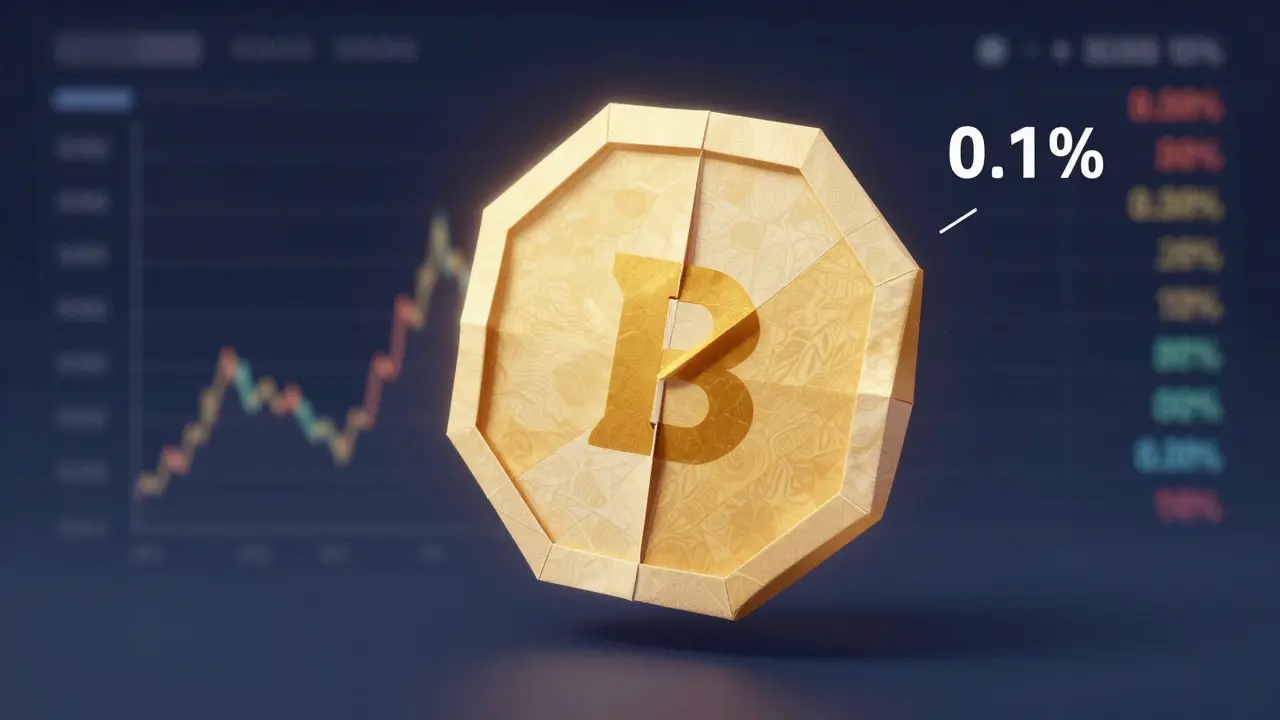
Bitget charges 0.1% for both maker and taker fees on spot trades. If you pay those fees in BGB, you get a 20% discount. That brings your effective rate down to 0.08%.
That sounds good - until you compare it to others. Binance’s BNB gives you a 25% discount, lowering fees to 0.075%. So technically, BNB saves you a little more. But here’s the catch: Binance requires you to hold at least 10 BNB (around $5,000) just to get that discount. Bitget? You only need 50 BGB (about $50 at current prices) to unlock the full 20% discount. No minimums. No tiers. Just hold and save.
And it gets better. On futures and perpetual swaps, BGB gives you a 25% fee discount - even better than spot. If you’re active in derivatives, that’s a real edge.
Copy trading and BGB: The real game-changer
Bitget’s biggest differentiator isn’t fees - it’s copy trading. Over 50,000 professional traders run strategies on the platform. You can follow them with one click. But if you hold BGB, you get priority access to top performers, early notifications on new strategies, and exclusive analytics tools.
One Reddit user, CryptoTrader87, reported earning 37% annually by copying top traders. Then they used BGB to pay fees - and boosted their net returns by another 2.1%. That’s not a fluke. It’s how the system is designed. The more BGB you hold, the more tools you unlock. VIP tiers start at 50 BGB and go up to 5,000 BGB, each unlocking better fee structures and higher withdrawal limits.

Security and regulation: What you can’t ignore
Bitget stores 95% of user funds in cold wallets and runs a $300 million user protection fund. That’s on par with Kraken and Coinbase. In September 2025, CertiK audited the platform and found no critical vulnerabilities.
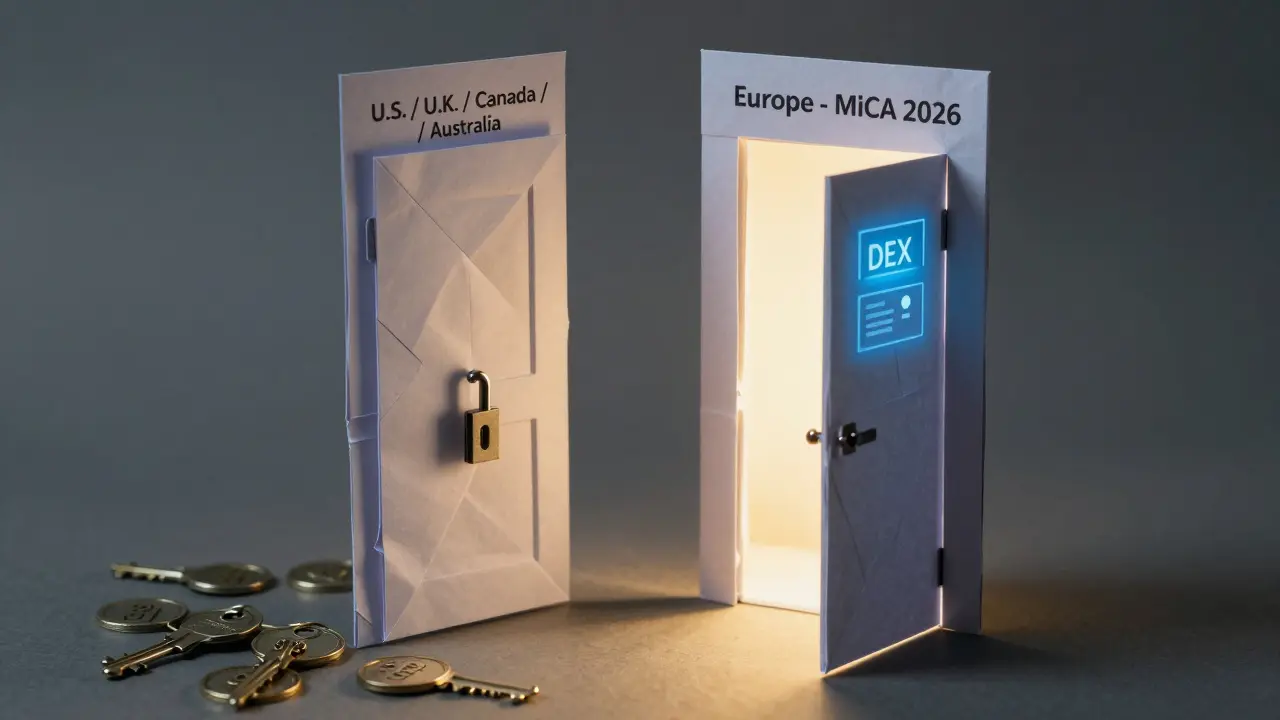
But here’s the problem: Bitget isn’t available everywhere. You can’t use it if you’re in the U.S., U.K., Canada, or Australia. The platform blocks IPs from those regions. Even if you sign up from abroad, using a VPN can trigger an account freeze. Users on Reddit have reported being locked out for weeks after accidentally logging in from a U.S. IP.
Bitget is registered in Lithuania and Poland, and it’s working toward full MiCA compliance by Q2 2026. That’s good news for European users. But for Americans, the door is closed. No exceptions.
Customer support and user experience
Bitget’s mobile app gets a 4.5/5 rating on Trustpilot. The interface is clean, the charts are responsive, and the copy trading dashboard is intuitive. But customer support? Not so much.
Over 23% of Reddit users in October 2025 complained about delayed withdrawals. One user waited 72 hours just to verify their identity - even though they held over 1,000 BGB. Trustpilot gives Bitget a 3.8/5 overall, but the KYC process scores just 2.9/5. API connection drops and withdrawal delays during high volatility are common complaints.
The 24/7 chatbot helps, but it can’t fix bank delays or compliance holds. If you’re trading large amounts, you’ll need human support - and that’s where Bitget falls short.
Is BGB a good investment?
BGB’s market cap hit $820 million in October 2025 - up 112% since January. That jump came after the token burn and growing adoption in Asia. Analysts are split. StealthEX.io predicts BGB could hit $12.50 by end of 2025. Kraken Intelligence says $8.92 is more realistic.
But here’s the risk: if BGB drops 20% in value, your fee discount disappears. One YouTube commenter lost money because BGB fell 22% in a month. Their $100 fee discount turned into a $22 loss on token value. That’s the paradox of utility tokens - you’re betting on price stability just to save on fees.
If you trade daily, hold BGB. It’s worth it. If you trade once a month? Maybe not. You’re better off paying fees in USDT and avoiding the volatility.
Who should use Bitget?
- Active traders in Asia - You’ll love the low fees, copy trading, and high liquidity.
- Derivatives traders - The 25% discount on perpetual swaps is unmatched.
- Users outside the U.S., U.K., Canada, and Australia - You have access to a top-tier platform with strong tools.
- U.S. or U.K. residents - Forget it. No workaround works long-term.
- Occasional traders - The volatility of BGB makes it risky just to save on fees.
- People who need fast customer support - You’ll be frustrated.
What’s next for BGB and Bitget?
Bitget’s roadmap is aggressive. By November 30, 2025, they’re launching a decentralized exchange (DEX) where BGB will be the main governance token. That means you’ll vote on new listings, fee changes, and platform upgrades - just by holding BGB.
They’re also integrating BGB into their new Perpetual Swap product with a 25% discount. If user growth keeps rising - and it has been, up 63% year-over-year - BGB’s demand will grow too.
But regulatory pressure is real. If Europe cracks down harder, or if Asian markets tighten rules, Bitget’s growth could stall. Right now, it’s riding the wave in Vietnam, Turkey, and Indonesia - where it holds over 14% of the market. That’s its strength. And its weakness.
Is BGB worth holding if I trade rarely?
Probably not. If you trade less than once a week, the 20% fee discount won’t outweigh the risk of BGB’s price dropping. You’re better off paying fees in stablecoins like USDT or USDC. BGB is designed for active users who benefit from compound savings over time.
Can I use Bitget if I live in the U.S.?
No. Bitget blocks U.S. IPs and freezes accounts if it detects American users. Even using a VPN won’t work long-term - many users report permanent bans after a few attempts. There’s no legal workaround. If you’re in the U.S., use Coinbase, Kraken, or Gemini instead.
How much BGB do I need to get the fee discount?
You don’t need a minimum amount to get the 20% discount. Just hold any amount of BGB in your Spot Wallet and select it as your fee payment method. However, to unlock VIP status (which gives better rates and higher withdrawal limits), you need at least 50 BGB (around $50).
Does BGB earn staking rewards?
Yes. Bitget offers staking for BGB with annual yields between 5% and 12%, depending on the lock-up period. Longer locks (90+ days) give higher returns. It’s one of the better staking options among exchange tokens, especially compared to Coinbase’s non-existent staking for its token.
Is Bitget safer than Binance or Coinbase?
Bitget’s security measures - cold storage, $300M protection fund, and CertiK audits - are on par with top exchanges. But Binance and Coinbase have been around longer, face stricter regulation, and have more proven track records in handling hacks and outages. Bitget is secure, but it’s still a rising player with less regulatory history.
What happens if BGB’s price crashes?
If BGB drops more than 20%, your fee discount becomes a net loss. For example, if you hold $1,000 worth of BGB and it falls 25%, you lose $250 in value - even if you saved $200 in fees. That’s why many traders only use BGB for fees if they believe the token will hold or grow over time. Don’t treat it like cash.


Colin Lethem
Honestly, if you're trading more than once a week, BGB is a no-brainer. The fee discount alone adds up faster than you think. I’ve been holding 100 BGB for six months and saved over $400 in fees. Plus, staking gives me another 8% annually. It’s like getting paid to trade.
Mae Young
Oh wow. So we’re supposed to believe that a token with zero intrinsic value - one that’s basically a ‘pay-to-play’ membership card - is a ‘smart investment’? Next you’ll tell me that the Starbucks loyalty card is a hedge against inflation. 🙄
Cheryl Fenner Brown
bgb is kinda sus tbh i tried to withdraw once and it took 3 days. the app looks slick but the backend feels like it’s held together with duct tape and hope 🤷♀️
Amanda Markwick
I appreciate how thoughtful this breakdown is. The real insight isn’t just about fees - it’s about alignment. If you’re active, BGB aligns your incentives with the platform’s success. You’re not just a user, you’re a stakeholder. That’s powerful. And yes, volatility is a risk - but so is staying on Binance and missing out on copy trading tools that actually work.
Kaitlyn Clark
I’m so done with people acting like Bitget is some shady sketchy site. It’s got more users in Southeast Asia than Binance does in the U.S. And yes, the support is slow - but so is Chase Bank’s. You want fast? Pay for a premium tier. 50 BGB gets you 24/7 priority. That’s not a bug, that’s a feature.
Deborah Robinson
For anyone new to this - don’t panic if BGB dips. The discount doesn’t disappear. You still save 20% even if the token’s down 30%. Just keep trading. The savings compound. I started with 10 BGB and now I hold 300. It’s not about speculating - it’s about optimizing.
christopher luke
I’ve been using Bitget since 2023. The copy trading feature changed my life. I followed one guy who made 140% in 3 months. I didn’t even touch the trades. Just hit follow. And with BGB fees? My net gain was 148%. Life hack: set up auto-staking too. It’s like free money.
Ryan Burk
lol. 'BGB is a good investment.' Sure. Just like MySpace stock was. This platform is built on a gamble - that regulators won’t catch up. They’re registered in Lithuania? That’s like saying you’re a 'real' bank because you have a mailbox in Delaware. Don’t be fooled.
Michelle Mitchell
i read this whole thing and still dont get why anyone would hold bgb. i mean, sure, you save a lil on fees, but what if the price crashes? you end up losing more than you saved. its like buying a gym membership just to save $2 on protein powder. not worth it.
Cory Derby
I’d like to offer a more structured perspective. The utility of BGB is not binary - it’s a function of trade frequency, holding duration, and risk tolerance. For the active trader with a 6+ month horizon, the combination of fee discounts, staking yields, and governance rights creates a positive expected value. For the occasional trader, stablecoin fee payments remain the rational choice. This is not a universal recommendation - it’s a conditional optimization.
Brian Lemke
I’ve been in crypto since 2017. I’ve used every major exchange. Bitget’s copy trading is hands-down the most intuitive I’ve ever seen. The analytics, the leaderboards, the risk filters - it’s all built for real people, not just degens. And yes, BGB makes it better. But the real win? The community. I’ve learned more from watching other traders on Bitget than I ever did from YouTube gurus.
Kristi Emens
I’m from the U.S. and I tried to use Bitget via VPN. Got flagged after 2 days. Account frozen. Took 11 days to get a response. They said I ‘violated terms of service.’ I didn’t even trade. Just logged in. I’m not mad - just disappointed. This isn’t a platform for Americans. Accept it.
Trenton White
I’ve held BGB since 2024. I don’t trade daily. I just keep it in my wallet. I’ve earned $180 in staking rewards so far. I’ve saved $92 in fees. My net gain? $88. And I didn’t lift a finger. That’s the quiet advantage. You don’t need to be an expert. Just hold.
Shannon Holliday
I live in Turkey. Bitget is my main exchange. The liquidity is insane. I can trade 100k USDT in seconds without slippage. BGB discounts? Yes. But the real magic? The local payment options. I can deposit via bank transfer, Papara, even crypto cards. No other exchange does this outside the U.S. and EU. Bitget gets the global market.
Jeremy buttoncollector
The tokenomics are fundamentally flawed. A deflationary token with no revenue-sharing mechanism is just a liquidity trap. You’re incentivizing holders to hoard, not participate. The burn is a placebo. Real value comes from fee redistribution - not supply manipulation. Bitget’s model is clever, but it’s not sustainable without on-chain governance. And even that’s just a band-aid.
Michael Teague
I don’t get why people are so excited. You’re basically paying for a discount with a volatile asset. If you’re trading small, just use USDT. If you’re trading big, you’re already getting better rates elsewhere. This whole thing feels like a marketing gimmick dressed up as innovation.
lori sims
I used to hate BGB. Thought it was just another pump. Then I started using it for staking + fees. Now I can’t imagine trading without it. The 25% futures discount is a game-changer. I’m not a day trader - I swing trade. But even then, the savings add up. And the community? So much more helpful than Binance’s bot-filled forums.
Michelle Xu
One thing missing from this analysis: the psychological impact of holding BGB. When you hold it, you feel more connected to the platform. You’re not just a customer - you’re part of the ecosystem. That changes behavior. You’re more likely to use the platform’s tools, engage with strategies, and stay long-term. That’s not quantifiable, but it’s real.
Megan Lavery
I’m a single mom who trades on the side. I started with 20 BGB. Now I have 150. I saved $300 last year in fees. I used to buy coffee every day. Now I buy crypto. Not because I’m rich - because I’m smart. BGB isn’t magic. It’s just math.
Mary Scott
BGB is a trap. They’re slowly turning the exchange into a pyramid. First you get a discount. Then you need BGB to access copy trading. Then you need BGB to vote. Then you need BGB to withdraw. Next thing you know, your entire portfolio is locked in their token. Wake up.
Reggie Fifty
If you’re in the U.S., stop pretending you can use this. You’re not clever. You’re not a hacker. You’re a liability. Bitget blocks U.S. users because they don’t want your legal headaches. Respect the rules. Or go to Kraken. Simple.