
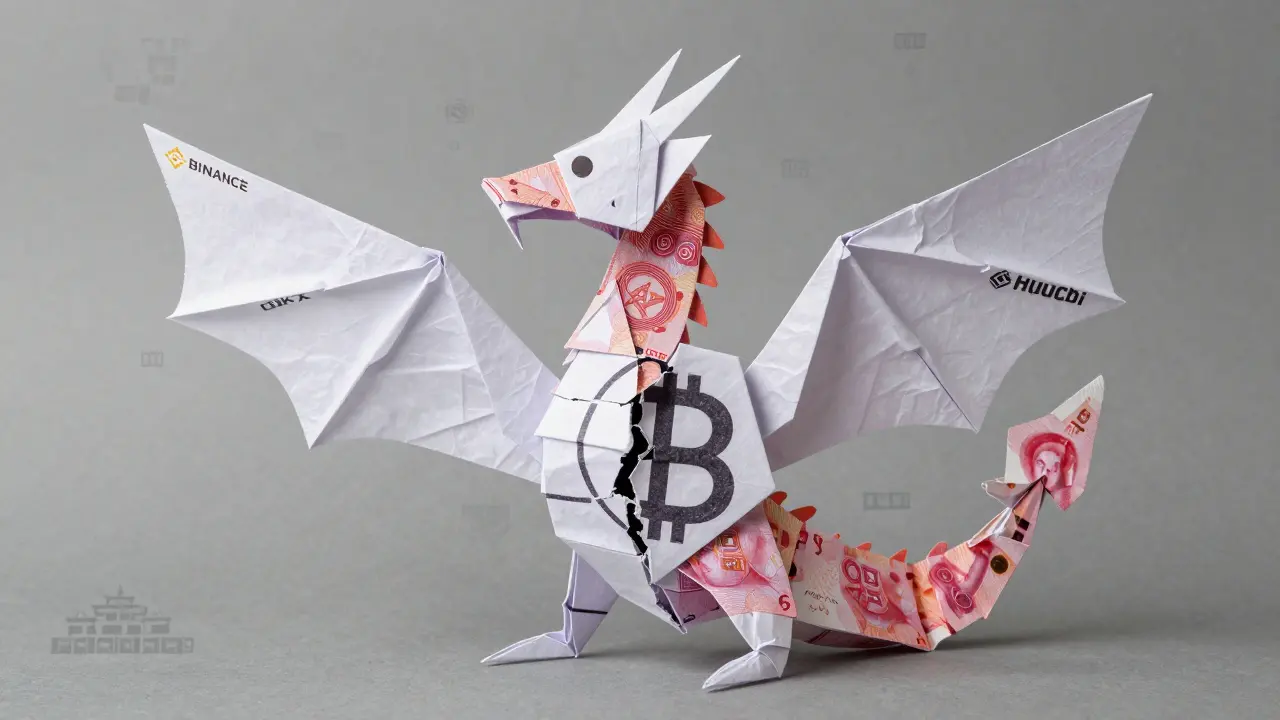
If you're a Chinese resident, any cryptocurrency exchange is off-limits. Not some. Not most. All. Since June 1, 2025, the People's Bank of China (PBOC) has made it illegal for anyone in China to use, trade, or even access any crypto platform - no exceptions. This isn't a gray area. It's a hard stop. Trying to use Binance, OKX, Coinbase, or any other exchange puts you at serious legal risk.
Why Every Exchange Is Banned - Not Just Some
It's easy to think, "Maybe I can use a foreign exchange if I'm careful." That thinking is dangerous. The 2025 ban doesn't just block trading. It bans all crypto-related activity. That includes:- Buying, selling, or holding Bitcoin, Ethereum, or any token
- Using decentralized exchanges (DEXs) like Uniswap or PancakeSwap
- Participating in peer-to-peer (P2P) trades
- Accessing crypto through mobile apps, websites, or API tools
- Even mining or staking - no matter where you do it
What Happens If You Try?
The penalties aren't theoretical. Chinese authorities have tools to catch you:- Bank accounts are monitored for transfers linked to crypto platforms
- Internet service providers block access to crypto exchange domains
- Mobile apps for crypto exchanges are removed from Chinese app stores
- Financial institutions must report any suspicious activity - even small transfers
- Assets linked to crypto trades can be seized without warning
Exchanges You Must Avoid - Even If They Say You Can Use Them
Some exchanges still have Chinese-speaking interfaces or support Mandarin. That doesn't mean it's legal. Here's the full list of platforms Chinese residents must avoid:- Binance - The world's largest exchange. Officially blocked since 2021. Still targeted by Chinese authorities.
- OKX - Originally founded in China. Completely banned since 2025.
- Huobi - A Chinese company that moved offshore. Still illegal for Chinese users.
- Kraken - U.S.-based, but still blocks Chinese IPs and accounts.
- Bitfinex - Known for high leverage. Also prohibited.
- KuCoin - Popular for altcoins. Actively blocked by Chinese firewalls.
- Gate.io - Still accessible via VPN? Illegal regardless.
- Bybit - Even though it markets itself as "global," it's banned in China.
- Coinbase - U.S.-regulated, but still off-limits for Chinese citizens.

Why China Banned It All - And Why It Won’t Change
China didn’t just ban crypto because it "doesn’t like it." The reasons are strategic and deeply tied to control:- Monetary sovereignty - The government fears losing control over money flows. Crypto bypasses the banking system.
- Capital flight - Crypto makes it easy to move money out of China illegally.
- AML risks - Criminals use crypto to launder money. The government wants to shut that down.
- CBDC replacement - China already has the digital yuan. It’s the only digital currency they want you to use.
What You Can Use Instead
If you need digital financial tools, stick to what’s legal:- Digital yuan (e-CNY) - Backed by the central bank. Works like a mobile wallet. No volatility. No risk.
- Alipay and WeChat Pay - The backbone of daily payments in China. Secure, fast, legal.
- Government bonds and bank wealth products - Offered by state banks. Low risk, regulated returns.
- Stock market investments - Through licensed brokers like China Securities Depository and Clearing Corporation (CSDC).
The Global Contrast - Why Other Countries Are Different
Compare China to other countries:- United States - Crypto exchanges are licensed and regulated. Coinbase and Kraken operate legally.
- European Union - MiCA regulations require exchanges to follow strict rules, but they’re allowed.
- Singapore - Offers a crypto regulatory sandbox. Many exchanges have regional HQs here.
- Japan - Licensed exchanges must follow strict KYC rules. Crypto is legal.
- El Salvador - Bitcoin is legal tender.
What About VPNs? Can I Just Hide My Location?
Using a VPN to access an exchange doesn’t make it legal. In fact, it makes things worse.- VPNs that bypass internet restrictions are already illegal under Chinese law.
- Authorities track VPN usage patterns. If you’re using one to access crypto, you’re flagged.
- Many VPN providers have shut down operations in China to avoid legal trouble.
- Even if you get in, your bank account may still be frozen.
Final Reality Check
If you’re in China, your options are simple:- Stay compliant - use the digital yuan and approved financial services.
- Leave the country - relocate to a jurisdiction where crypto is legal, then use exchanges there.
- Do nothing - avoid crypto entirely.
Any exchange you think you can use - even if it’s not blocked right now - is still illegal. The rules haven’t changed. And they won’t. Not until China decides to allow crypto again. And right now, that day looks nowhere in sight.
Can I still use Binance if I’m Chinese?
No. Binance has been blocked in China since 2021, and the 2025 ban makes it illegal for any Chinese resident to access it - even through a VPN. Using Binance now carries serious legal risks, including asset seizure and criminal charges.
Is OKX or Huobi legal for Chinese users?
No. Both OKX and Huobi were originally founded in China and still serve Mandarin-speaking users. But under the June 2025 ban, all Chinese residents are prohibited from using them. Even if you see their apps or websites, using them violates Chinese law.
What happens if I send money to a crypto exchange?
Your bank account will be flagged. The transaction may be frozen. Authorities can trace the funds to the exchange and seize any crypto holdings linked to you. You may also face fines or criminal investigation under China’s Anti-Money Laundering laws.
Can I mine cryptocurrency in China?
No. Mining has been banned since 2021, and the 2025 ban reinforces that prohibition. Any hardware used for mining can be confiscated. Even if you mine overseas, the income from it is still illegal to bring into China.
Is the digital yuan the same as Bitcoin?
No. The digital yuan is a central bank digital currency (CBDC) issued and controlled by the People’s Bank of China. Unlike Bitcoin, it’s not decentralized, not volatile, and not private. It’s designed to replace cash and prevent crypto use - not compete with it.




Jessica Carvajal montiel
Of course they banned it. The state doesn't want people owning anything that can't be tracked, taxed, or controlled. This isn't about financial stability - it's about power. They're terrified of decentralized systems because they can't manipulate them. The digital yuan? A surveillance tool wrapped in a shiny app. You think you're choosing convenience? You're choosing obedience.
And don't even get me started on how they're crushing innovation. Mining bans? Staking bans? They're not protecting citizens - they're protecting a failing economic model. Crypto was the escape hatch. Now they've welded the door shut.
Meanwhile, the rest of the world is building the future. China? Still stuck in 1984 with better Wi-Fi.
maya keta
Okay but like… the fact that they think they can just ‘ban’ crypto is so delusional. Blockchain is decentralized by design. You can’t un-invent the internet. You can only make life harder for your own people. And yet here we are - another authoritarian regime thinking they’re immune to tech evolution. 🤦♀️
Also, the digital yuan? That’s not money. That’s a loyalty card with a ledger. You’ll be able to buy rice, but only if you’ve been ‘good.’ No crypto? Fine. But also no freedom. Welcome to the future, where your spending habits are your personality test.
Curtis Dunnett-Jones
It is imperative to recognize that the People's Bank of China has enacted a policy grounded in macroeconomic prudence and national sovereignty. Cryptocurrencies, by their very nature, introduce systemic risks that undermine monetary policy transmission, capital control efficacy, and financial integrity. The prohibition is not merely regulatory - it is structural. To engage in crypto activity within China is to knowingly participate in a violation of sovereign legal order. Compliance is not optional. It is the foundation of civic responsibility.
Sean Logue
Man, I get why they did it. I really do. China’s got like 1.4 billion people. If even 1% of them started moving money out via crypto, it’d be chaos. Banks would collapse, exchange rates would tank, inflation would go nuclear. They had to shut it down.
But man… I feel bad for the young folks. They just want to invest, learn, maybe make a little side cash. Instead they get told ‘no’ and handed a digital yuan app that tracks how many times they bought baozi this month. Wild.
Carl Gaard
OMG I JUST READ THIS AND I’M SHAKING 😱
200k RMB fine?! 14 MONTHS IN JAIL?!
Like… I just wanna hold some BTC for fun. Is that too much to ask?? 😭
Also… why is everyone so scared of the digital yuan?? It’s just like Venmo but with more cameras. 🤔
Can we all just chill?? I’m crying now. 💔
bella gonzales
Ugh. So boring. Another ‘crypto is illegal’ essay. Can we talk about something fun? Like… my cat?
precious Ncube
If you're in China and still using crypto, you're not a victim - you're a liability. The state isn't being tyrannical; it's being responsible. You don't get to undermine national security because you think Bitcoin is ‘cool.’ Grow up. The digital yuan is the future. Get with it or get out.
Amita Pandey
The Chinese state's stance on cryptocurrency is not an act of repression, but rather an assertion of epistemic sovereignty. In a society where the collective welfare supersedes individual speculative desire, the prohibition of decentralized financial instruments is not merely logical - it is ethically imperative. The digital yuan, as a state-sanctioned instrument of monetary governance, represents the culmination of a civilizational project: order over chaos, control over volatility, harmony over anarchic individualism.
Tracy Peterson
They banned crypto because they’re scared - scared of losing control, scared of people getting rich outside their system, scared that their citizens might realize there’s another way. But here’s the thing: you can’t ban innovation forever. You can only delay it. And when you delay it, you don’t stop it - you just make sure your people are left behind.
One day, China will look back and realize they didn’t protect their economy - they trapped it. And the digital yuan? It’s not the future. It’s a cage with a pretty interface.
KingDesigners &Co
Let’s be real - if you’re Chinese and using crypto, you’re not ‘hacking the system.’ You’re just being reckless. The government isn’t evil - they’re trying to prevent a financial disaster. You think your 0.01 BTC is a big deal? It’s not. But if 10 million people think that way? That’s a run on the banking system. You don’t get to be a hero. You get to be a statistic.
Felicia Eriksson
I just feel sad for them. Imagine growing up thinking you can’t own anything digital that’s truly yours. Like, your phone? Yours. Your music? Yours. But your Bitcoin? Not yours. That’s… kind of heartbreaking.
aaron marp
For anyone thinking this is about ‘anti-tech’ - nope. It’s about control. The digital yuan isn’t a currency - it’s a governance tool. Every transaction is logged, tagged, and analyzed. No anonymity. No privacy. No autonomy. Crypto offered something they couldn’t tolerate: the ability to transact without permission.
So they took it away. Not because it’s dangerous - because it’s free.
Patrick Streeb
The People's Bank of China has implemented a policy that is both legally coherent and economically prudent. Cryptocurrency's inherent volatility, coupled with its capacity to circumvent capital controls, presents an unacceptable risk to financial stability. The prohibition of crypto-related activity within the People's Republic of China is therefore not only justified, but necessary for the preservation of macroeconomic equilibrium. The digital yuan, as a centrally issued digital currency, represents the optimal synthesis of technological advancement and state sovereignty.
Alyssa Herndon
I get it. I really do. I don’t judge. I just wish people had more choices. Not everyone wants to be watched. Not everyone wants to live in a system where every yuan spent tells a story. Maybe one day they’ll see that freedom isn’t chaos. Maybe.
Ifeanyi Uche
China ban crypto? Hah! You think they care about your money? They care about power. You think the digital yuan is safe? It’s just a new way to lock you down. I’ve seen African governments do the same thing - ban crypto so they can control the poor. China is just… more organized about it.
Jeff French
Interesting framework. The state’s move aligns with broader trends in sovereign digital currency adoption. But the irony? They’re banning the tool while building the infrastructure. The digital yuan is essentially a permissioned blockchain with a central authority. So they’re not anti-blockchain - they’re anti-decentralization. That’s a distinction worth noting.
Elana Vorspan
I just hope whoever’s reading this is okay. I know it’s easy to get angry about this stuff - but if you’re in China and you’re scared? You’re not alone. There are people out there who see you. Who understand. You don’t have to fight alone. Even if you can’t use crypto, you can still dream. And dreams? They’re not illegal.
Kenneth Genodiala
The notion that cryptocurrency could ever be permitted in a society with China’s governance model is a fallacy of Western liberal imagination. The state’s monopoly on monetary issuance is non-negotiable. To suggest otherwise is to misunderstand the very nature of the Chinese political economy. This is not repression - it is governance.
Michael Rozputniy
They’re not banning crypto because it’s dangerous - they’re banning it because they know it works. And if people start using it… they’ll realize the state isn’t infallible. And once that happens? The whole system cracks. So they crush it before it even gets started. Classic. I told my cousin this and he said ‘you’re paranoid.’ I said ‘no, I’m just paying attention.’
Danny Kim
So… let me get this straight. You can’t use crypto, but you can use a government app that knows exactly when you bought noodles, who you sent money to, and how much you saved last Tuesday? Sounds like a dream come true for the NSA. 🤡
Cathy Sunshine
How can anyone be this naive? Crypto is for criminals, tax evaders, and delusional millennials. The digital yuan is the only rational path forward. Anyone who defends crypto in this context is either ignorant or complicit. And frankly? I’m tired of your emotional whining about ‘freedom.’ You don’t get to have both.
Shannon Black
From a cross-cultural perspective, this policy reflects a deeply rooted philosophical divergence between Western individualism and East Asian collectivism. In the Chinese context, financial autonomy is subordinated to social harmony. The prohibition of crypto is not an infringement - it is an expression of cultural values. Understanding this requires moving beyond Western frameworks of liberty.
Richard Cooper
So… no crypto. Got it. Cool. I’m out.
Tanvi Atal
Why are people even arguing? It’s illegal. End of story. Stop making it a moral issue. It’s a law. Just like jaywalking. Nobody gets emotional about jaywalking.
Sony Sebastian
Let me break this down for you neos: crypto is a Ponzi scheme wrapped in blockchain jargon. The PBOC isn’t anti-tech - they’re anti-gullibility. The digital yuan is the only sane option. Anyone who thinks otherwise is either a scammer or a sucker. And you? You’re the sucker.
Mae Young
Oh, so now the state is the ‘protector’ of financial stability? Funny. They banned crypto because it threatened their monopoly… but they’re fine with a digital currency that tracks every transaction, freezes accounts on a whim, and denies access based on political alignment? That’s not protection. That’s control. And it’s uglier than any crypto scam.
Trenton White
It’s interesting how the same people who scream about ‘freedom’ in the West are the first to condemn China’s policies. But if you lived here, you’d understand: some freedoms aren’t worth the cost. Stability isn’t sexy. But it keeps the lights on.
Cheryl Fenner Brown
i mean… i get it. but what if i just wanna buy a little btc? like… for fun? not even to sell? just to see what it feels like? is that so wrong?? 😔
Michael Teague
Look, I’m not here to judge. But if you’re in China and using crypto, you’re asking for trouble. Plain and simple. The government doesn’t play around. They’ve got the tech, the laws, and the will. So don’t be dumb. Use the digital yuan. It’s boring. But it works.