
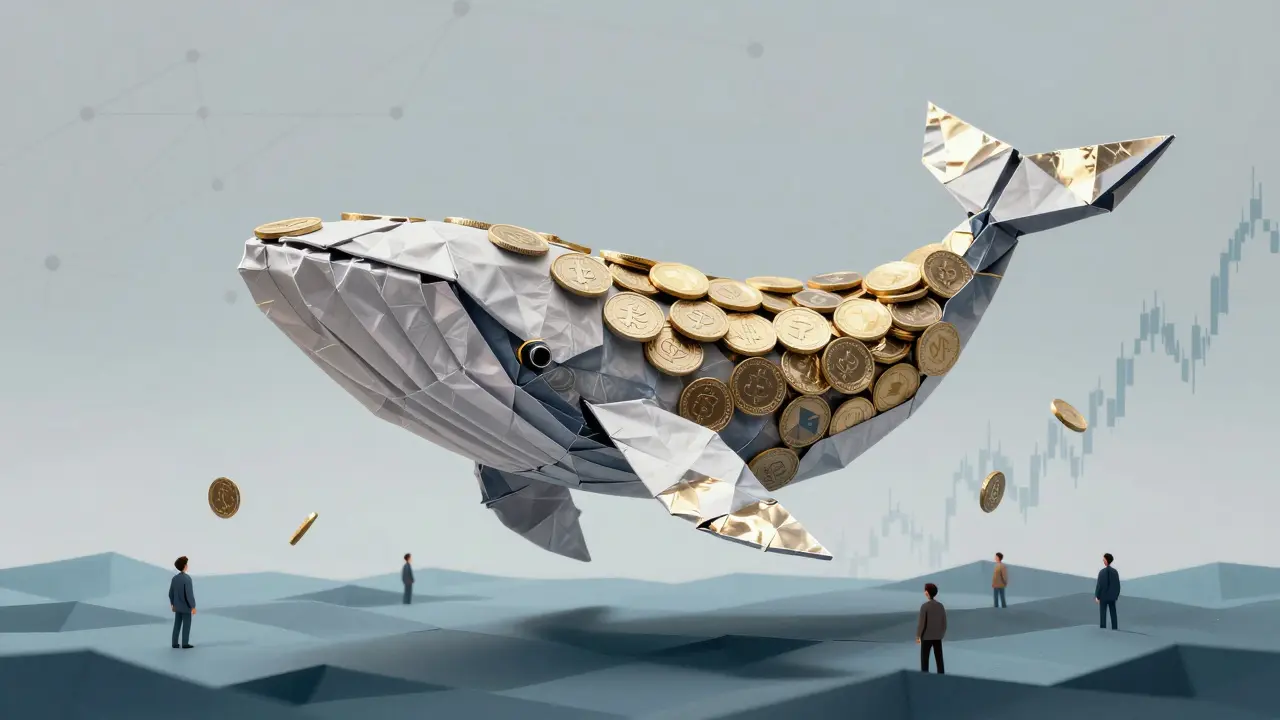
When a single wallet moves 10,000 ETH in one transaction, the price of Ethereum can drop 8% in minutes. This isn’t a glitch. It’s not a hack. It’s whale wallets at work. These aren’t just big accounts-they’re market-moving forces that shape price swings, trigger panic, and create opportunities few retail traders understand.
What Exactly Is a Whale Wallet?
A whale wallet is a cryptocurrency address holding so much of a coin that its actions can shift prices. There’s no universal number that defines a whale-it changes by coin. For Bitcoin, you generally need 1,000 BTC or more. For Ethereum, it’s 10,000 ETH. For smaller coins like Shiba Inu, holding 1 trillion tokens might be enough to qualify.These wallets aren’t magical. They’re just standard crypto addresses with massive balances. But their size gives them power. Think of it like a single person buying up 14% of all the flour in a town. If they suddenly start selling, prices crash. If they start hoarding, prices spike. That’s what happens in crypto markets.
According to Glassnode data from October 2025, just 2,000 Bitcoin wallets hold over 1,000 BTC each. That’s 0.01% of all Bitcoin addresses. Yet, together, they control over 14% of the entire Bitcoin supply. That’s not luck. That’s concentration.
How Whales Move the Market
Whales don’t need to sell everything at once. They don’t even need to sell at all. Just the threat of a sale can trigger fear.When a whale moves a large amount of crypto to an exchange, traders watch. Why? Because exchanges are where people sell. If a wallet holding 5,000 BTC suddenly sends 2,000 BTC to Binance, the market assumes a dump is coming. Sellers rush to get out before the price falls. Buyers hold back, waiting for lower prices. The result? A sharp drop.
On illiquid markets-coins with low trading volume-this effect is even stronger. A single whale transaction of 100,000 SOL can move the price of Solana by 15%. That’s because there aren’t enough buyers to absorb the sell order. The market gets overwhelmed. This is why altcoins under $1 billion in market cap are so vulnerable. Nansen data shows that in these coins, just 10 whale wallets often control over 40% of the total supply.
It’s not just selling. Accumulation matters too. When a whale quietly buys for weeks, it’s often a sign they see value. Some traders track these patterns. If a wallet has a history of buying before big rallies-like those that bought Bitcoin under $10,000 in 2020-they become "smart money" signals. Nansen’s analytics show these wallets generate 68% higher returns than average traders over a year.
Whales vs. Institutions: Different Players, Same Game
Not all whales are individuals. Many are institutions. Grayscale’s Bitcoin Trust held 643,337 BTC in November 2025. BlackRock’s spot Bitcoin ETF controlled 319,000 BTC. MicroStrategy owns 214,400 BTC. These aren’t people sitting at home watching charts. These are billion-dollar funds with legal structures, compliance teams, and trading desks.Institutional whales move differently. They don’t dump coins on Coinbase. They use structured products, over-the-counter (OTC) desks, and private swaps. Their goal isn’t to cause panic-it’s to accumulate or distribute without moving the market. But their impact is still huge. In Q2 2025, institutions made up 72% of all transactions over $100 million.
Individual whales, on the other hand, are more unpredictable. Some are early adopters who never sold. Others are traders who made a fortune and are now playing the long game. Some might be trying to manipulate. Others might just be rebalancing portfolios.
The Dark Side: Manipulation and Market Crashes
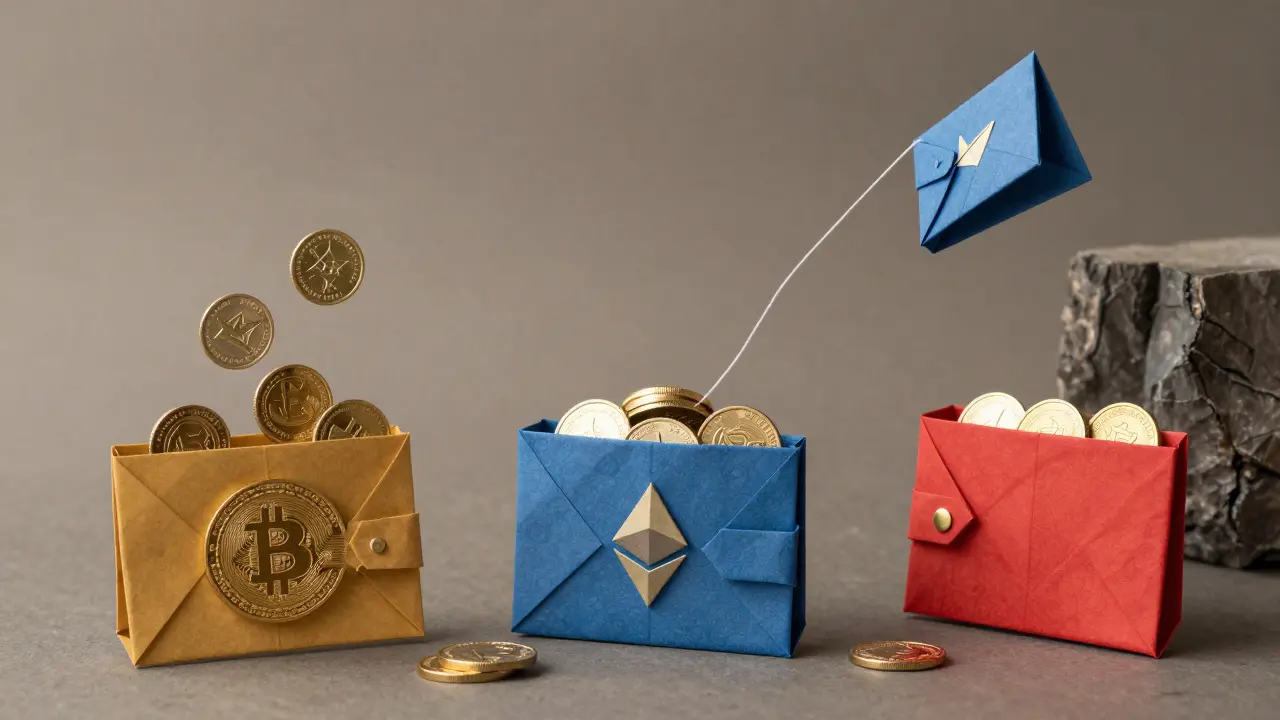
Whale activity isn’t always legal. The U.S. Securities and Exchange Commission (SEC) has fined exchanges for "wash trading" and "spoofing"-fake orders designed to trick the market into thinking there’s demand or supply.The most infamous example? The 2024 TerraUSD (UST) collapse. Three whale wallets dumped 85 million UST tokens in under 72 hours. That triggered a death spiral. UST lost its peg. LUNA crashed. $40 billion vanished. It wasn’t a bug. It was a coordinated attack enabled by extreme concentration.
Same thing happened with Luna. Three wallets controlled 38% of the supply. When they sold, there was no one left to buy. The market collapsed. These aren’t rare events. They’re systemic risks built into crypto’s structure.
Dr. Carol Alexander from the University of Sussex puts it bluntly: "Whales provide liquidity, but their concentration creates systemic risks that increase with market capitalization concentration."
Can You Track Whales? Yes-but It’s Hard
You can track whale movements. Tools like Whale Alert on Twitter show real-time notifications of large transactions. Nansen offers a "Smart Money Dashboard" that labels wallets as exchanges, funds, or known investors. Glassnode has public dashboards showing exchange netflows and wallet accumulation.But here’s the catch: not every big transaction means anything. About 32% of large movements are internal transfers-moving crypto between wallets the same entity owns. That’s not a sell. That’s just moving money around. A wallet might send 5,000 BTC from a cold storage vault to a hot wallet for easier access. No sale. No panic. But the public sees a big move and freaks out.
There’s also lag. Bitcoin transactions show up on public trackers in about 2.7 minutes. Ethereum takes 4.3 minutes. By then, the market may have already reacted. And false alerts are common. CryptoQuant’s testing found Whale Alert has an 18% false positive rate.
Successful whale tracking isn’t about reacting to one big transaction. It’s about spotting patterns over weeks. Is a wallet accumulating for 30 days? Is it moving funds from exchanges to cold storage? Is it consistently buying when prices dip? Those are signals. Single transactions? Noise.
What Retail Traders Should Do
Most retail traders lose money when whales move. A Reddit user lost $3,200 when a single wallet dumped 500 ETH on Uniswap, causing a 12% drop in three minutes. A Coincub survey found 63% of traders have suffered losses directly tied to whale activity.So what can you do?
- Don’t panic-sell on a big transaction. Wait. Check if it’s an exchange deposit or withdrawal. Look at the wallet’s history.
- Use free tools like Glassnode’s public dashboards. Learn what "exchange netflow" means. If coins are leaving exchanges, it’s often accumulation. If they’re entering, it’s often selling.
- Ignore alerts that don’t give context. A $5 million BTC transfer means nothing if it’s from one cold wallet to another.
- Focus on long-term trends, not short-term spikes. Whales play the long game. So should you.
- Never invest based on a single whale move. It’s gambling, not strategy.
According to Coinbase’s educational resources, you can learn to interpret basic whale metrics in 20-30 hours of study. You don’t need to pay $99/month for Nansen. Start with free data. Learn the patterns. Build your own watchlist of wallets that have moved the market before.
The Future: More Transparency, Less Power?
Regulation is catching up. The EU’s MiCA rules, effective since January 2025, require exchanges to report any transaction over €1 million. The U.S. still doesn’t have similar rules. But the SEC is actively filing charges against exchanges that enable manipulation.Technology is also changing the game. Projects like Aztec Network use zero-knowledge proofs to hide transaction amounts. If privacy improves, tracking whales gets harder. But so does manipulation.
On the flip side, analytics are getting smarter. Nansen’s Whale Intelligence 3.0 uses AI to predict whale accumulation 3-5 days before price moves. In Q3 2025, it correctly forecasted Bitcoin’s 37% rally. Elliptic projects that by 2027, 92% of whale transactions will be identifiable.
Will whales disappear? No. Michael Gronager, CEO of Chainalysis, says: "Whales will always exist in any market, but their impact will decrease as liquidity improves."
As more institutions enter, as spot ETFs grow, and as trading volume increases, the relative power of any single whale shrinks. Bitcoin’s market cap is over $1.2 trillion now. A 10,000 BTC move is 0.8% of supply-not enough to crash the market. But for a $500 million altcoin? One whale can still own half of it.
The lesson? Don’t fear whales. Understand them. Track them. But never let them dictate your decisions. Your portfolio shouldn’t be a reaction to someone else’s move. It should be built on your own research, your own strategy, and your own risk tolerance.
How much crypto do you need to be considered a whale?
There’s no fixed number-it depends on the cryptocurrency. For Bitcoin, 1,000 BTC or more is the common threshold. For Ethereum, it’s 10,000 ETH. For smaller coins like Solana or Shiba Inu, the amount is much lower because their total supply is smaller. Nansen defines whales as wallets holding at least 1% of a coin’s circulating supply.
Are whale transactions legal?
Yes, holding large amounts of crypto and making big transactions is legal. But using those transactions to manipulate the market-like spoofing, wash trading, or coordinated dumps-is illegal. The SEC has fined exchanges and entities for these tactics, especially when they trick retail traders into buying or selling based on false signals.
Can retail traders profit from whale activity?
Yes, but not by chasing every big move. The most successful traders use whale activity as a signal-not a trigger. If a wallet with a history of buying before rallies starts accumulating over weeks, it might be a sign to research the coin. If a whale moves a large amount to an exchange and the coin’s volume drops, it might signal a coming dump. It’s about context, timing, and pattern recognition, not reacting to alerts.
Why do whales hold so much crypto?
Many are early adopters who bought when prices were low and never sold. Others are institutions like Grayscale or MicroStrategy that hold crypto as a long-term asset. Some are hedge funds or family offices using crypto as part of a diversified portfolio. For most, it’s not about day trading-it’s about long-term value storage and strategic positioning.
Are whale wallets dangerous for the crypto market?
They’re a double-edged sword. On one hand, they provide liquidity and help stabilize prices during volatility. On the other, their concentration creates systemic risk. When a few wallets control a large portion of a coin’s supply, the market becomes vulnerable to manipulation or panic. The 2024 UST and Luna collapses show how dangerous this can be.
Final Thought: The Whale Is Not the Enemy
Whales aren’t villains. They’re just players with more capital. The real problem isn’t their existence-it’s the lack of transparency and the imbalance of information. Retail traders often see a big transaction and assume the worst. But without context, they’re flying blind.The solution isn’t to ban whales. It’s to level the playing field. Better data. Clearer signals. More education. As tools improve and regulations tighten, the market will become more resilient. Until then, your best defense is knowledge. Watch. Learn. Wait. And never let someone else’s move control your portfolio.



Bianca Martins
I've been tracking whale movements for over a year now. Most people panic when they see a big ETH transfer, but half the time it's just someone moving funds between their own wallets. I check Glassnode first. If exchange netflow is negative? That's accumulation. Positive? Might be a dump. Don't react. Observe.
alvin mislang
People still think crypto is decentralized? LOL. 0.01% of wallets control 14% of Bitcoin. That's not finance, that's feudalism. 🤡
Monty Burn
Whales are just mirrors of our own greed and fear. We built systems where size equals power and then act shocked when the powerful act powerfully. The market doesn't care about fairness. It only cares about liquidity and perception. We are the ones who gave them this power by chasing every alert and ignoring context. We made the monster.
Kenneth Mclaren
You think this is just about whales? Nah. This is the Fed's plan. They let these wallets accumulate so when the next crash comes, they can buy everything for pennies and then sell it back to us at 10x. The SEC? They're in on it. You think they'd let this go if it wasn't controlled? Wake up. This is a wealth transfer scheme disguised as innovation.
Alexandra Wright
Oh sweetie. You really thought retail traders had a fighting chance? Let me explain how this works: you're the bait. Whales are the sharks. And the exchanges? They're the ones selling you the fishing rod. You're not late to the party. You're the punchline.
Vernon Hughes
In India we call this khatarnak concentration. The market is a temple and whales are the priests. You don't question the priest. You learn the ritual. Watch the offerings. Wait for the bell. Then move with the crowd or stay still. Either way you survive.
Alison Hall
You don't need fancy tools. Just follow the cold wallets. If a whale hasn't moved in 2 years and suddenly sends 500 BTC to a new address? That's a signal. Not a panic. A signal. 🌱
Antonio Snoddy
You know what's really tragic? We think we're so smart because we track wallets and read Nansen dashboards like sacred texts. But we're just replacing Wall Street brokers with blockchain analysts. We still believe in the myth of the insider. The truth? No one knows what's coming. Not even the whales. They're just better at hiding their confusion than we are at hiding ours. We're all just guessing in the dark, holding our phones like prayer beads, hoping the next alert means salvation. And we call that investing.
Jake West
So you're telling me I need to spend 30 hours learning whale patterns just to not get wrecked by people who have 100x my money? That's not education. That's exploitation. Why don't we just ban whales? Too late? Then why are we still playing this rigged game?
Shawn Roberts
Bro just chill and HODL. Whales gonna whale. But if you believe in crypto you know the trend is up. One day all this drama will be a meme. And you'll be rich. 🚀
Gavin Hill
The real whale isn't the wallet with 10,000 ETH. It's the person who never trades. The one who bought at $100 and never looked back. They don't move markets. They outlast them.
SUMIT RAI
Whales? More like whales in a goldfish bowl. You think they control the market? Nah. The real power is in the memes. Dogecoin killed Bitcoin twice because people believed. Not wallets. Belief. 🐕
Andrea Stewart
I used to chase every Whale Alert tweet. Lost $12k in 3 months. Now I only look at wallets that have been active for over 5 years. If they're accumulating during a dip? I research the project. If they're silent? I stay quiet. Simple. No alerts. No drama.
Josh Seeto
Ah yes. The classic 'whales are smart money' narrative. Funny how that only works when they're buying. When they dump? Suddenly they're 'manipulating'. Double standard much?
surendra meena
I SAW THIS COMING!! I TOLD MY FRIENDS!! THE WHALES ARE GONNA CRASH THE MARKET!! THEY'RE USING AI TO PREDICT WHEN TO SELL!! THEY'RE CONNECTED TO THE FED!! THEY'RE USING LUNA 2.0 TO TRICK US!! I HAVE A SPREADSHEET!! I CAN PROVE IT!!
Khaitlynn Ashworth
Oh honey. You think whales are the problem? Sweetie. The real villains are the people who sell you Nansen subscriptions and call themselves 'crypto educators'. You paid $99/month to learn what Glassnode gives you for free? That's not investing. That's being scammed by a guy in a hoodie with a YouTube channel.
NIKHIL CHHOKAR
Whales are not evil. They are simply the result of a system that rewards early adoption. The real crime is that we let retail traders believe they can compete on the same level. It's like asking a child to race Usain Bolt and then blaming Bolt for winning.
Mike Pontillo
So you're saying I need to become a data scientist just to not lose money? Cool. I'll just keep my 5 BTC and watch Netflix. Someone else can be the whale.
Joydeep Malati Das
In traditional markets, large positions are disclosed. In crypto, they are hidden. The lack of transparency is the real issue. Regulation should not target whales. It should demand clarity. Transparency is the only equalizer.