

Before July 2025, anyone could run a crypto exchange in the Philippines without asking anyone’s permission. Now, if you’re offering crypto services to Filipinos - even from overseas - you need a license. The Securities and Exchange Commission (SEC) didn’t just tighten rules. They rebuilt the entire system.
Who Needs a License?
If your platform lets Filipinos buy, sell, trade, store, or transfer crypto, you’re a Crypto Asset Service Provider (CASP). That includes big names like Bybit, KuCoin, OKX, and Kraken. Even if your servers are in Singapore or the U.S., if you’re marketing to Filipinos or letting them use your app, you need to register with the SEC. There’s no loophole. No "I didn’t know" excuse. The SEC made it clear: no license, no access.The 5 Must-Have Requirements
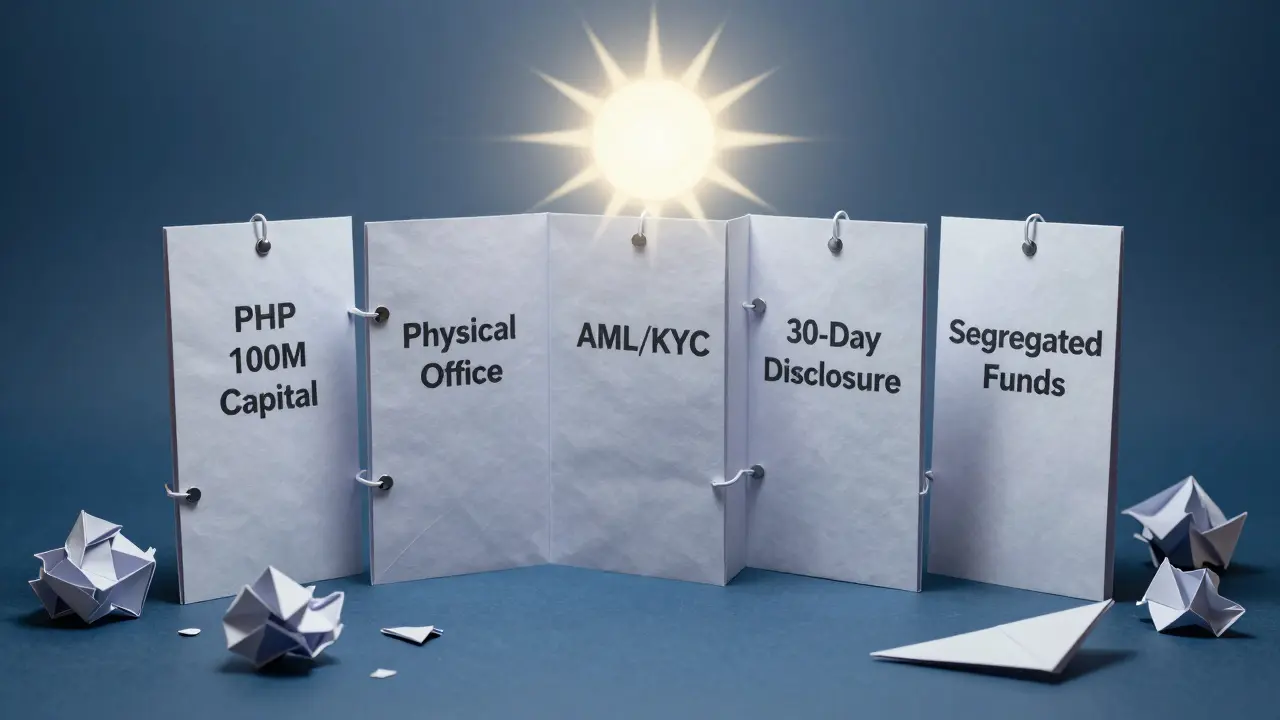
Getting licensed isn’t about filling out a form. It’s about proving you can handle real money, real people, and real risk. Here’s what the SEC demands:- Minimum Paid-Up Capital of PHP 100 Million - That’s about $1.8 million USD. And no, you can’t use Bitcoin or Ethereum to meet this. It has to be cash or Philippine peso-denominated assets. This isn’t a suggestion. It’s a hard wall. Smaller exchanges can’t just wing it.
- Physical Office in the Philippines - You need a real building, with a real address, staffed by real people. No PO boxes. No virtual offices. The SEC wants someone they can walk into and hold accountable.
- Full AML and KYC Systems - Every user must be verified. Every transaction tracked. Every suspicious activity reported to the Anti-Money Laundering Council. No exceptions. The system must be audited monthly.
- 30-Day Disclosure Window - Before you market any crypto asset, you must file a disclosure document with the SEC. It must be published on your website, app, and social media. You can’t say "this coin will 10x." You can’t promise returns. You can only state facts.
- Segregated Customer Funds - Your users’ crypto and fiat must sit in separate accounts. Not mixed with your company’s money. Not used for trading. Not lent out. If your exchange goes under, their assets stay safe.
What Happens If You Don’t Comply?
The SEC doesn’t warn twice. On August 1, 2025, they publicly named ten exchanges - including OKX, Bybit, and Kraken - for operating illegally. These platforms were still letting Filipinos deposit, trade, and withdraw. The SEC didn’t shut them down immediately. But they made it clear: stop serving Filipinos, or face consequences. The penalties are brutal:- PHP 50,000 to PHP 10 million per violation
- PHP 10,000 per day for ongoing violations
- Website blocking - like what happened with Binance in 2024
- Legal action against company officers
Who’s Already Licensed?
Some exchanges saw this coming. They moved fast. Youholder, Cex.io, BitGet, and Bigone are now registered. They’ve set up local offices, hired compliance teams, and updated their apps to show SEC-approved disclosures. These platforms now carry a seal of trust. Filipino users are shifting to them - not because they’re cheaper, but because they’re legal. Even major global players like Bybit have applied. They’re not just adapting. They’re betting on the Philippines as a long-term market. The message? Play by the rules, and you get access to 12.79 million users. Break them, and you get blocked.Why This Matters for Filipinos
Crypto adoption in the Philippines is growing fast. By 2026, over 10% of the population will be using crypto. That’s millions of people buying Bitcoin, trading tokens, earning interest, and sending remittances. But before 2025, they had no protection. Exchanges could vanish overnight. Funds could disappear. No one was watching. Now, if you use a licensed CASP, your money is safer. Your identity is protected. If something goes wrong, there’s a regulator who can investigate. The SEC isn’t trying to kill crypto. They’re trying to make it safe.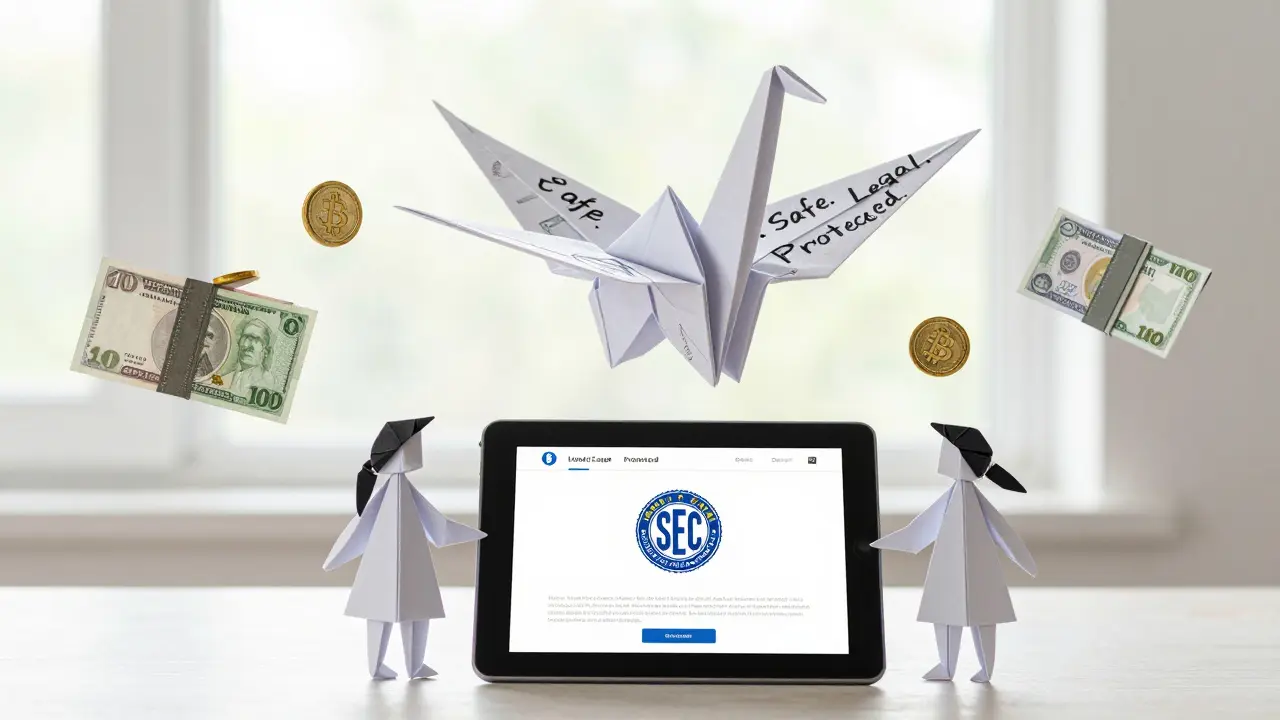
The Hidden Cost: Compliance Overhead
Licensing isn’t free. It’s expensive. Monthly reporting. AML audits. Legal teams. Local staff. Marketing reviews. All of it adds up. For small startups, this is impossible. For big players, it’s a cost of doing business. That’s the trade-off. The Philippines is creating a market where only serious operators survive. It’s not perfect. Some say it’s too strict. But it’s clear. No gray areas. No "maybe." If you want to serve Filipinos, you pay the price.What’s Next?
The SEC says this is just the beginning. They’re watching how licensed CASPs perform. They’re collecting data. They’re listening to feedback. Future updates could include:- More detailed reporting on crypto asset reserves
- Real-time transaction monitoring
- Minimum security standards (like cold storage requirements)
- Expanded oversight of crypto lending and staking services
Can I still trade crypto in the Philippines if my exchange isn’t licensed?
Yes, you can still buy and hold crypto. The SEC doesn’t ban crypto itself - only unlicensed platforms that serve Filipinos. You can use a licensed CASP, or hold crypto in your own wallet. But if you’re using an unlicensed exchange to trade, deposit, or withdraw, you’re doing so at your own risk. Your funds aren’t protected, and the platform could be blocked at any time.
Do I need a license if I’m just a crypto trader in the Philippines?
No. Individual traders don’t need a license. The rules only apply to businesses that provide services - like exchanges, wallets, or staking platforms. If you’re buying Bitcoin for yourself, selling it later, or using it to send money, you’re fine. The SEC targets platforms, not users.
What happens if a licensed CASP goes bankrupt?
Customer funds are legally required to be kept separate from company assets. If a licensed CASP fails, your crypto and pesos should still be recoverable. The SEC oversees this separation and can appoint a receiver to manage asset recovery. This is one of the biggest protections the new rules offer.
Can foreign companies apply for a CASP license?
Yes, but they must register as a domestic corporation in the Philippines. That means setting up a local legal entity, hiring local staff, and opening a physical office. You can’t apply as a foreign branch. You must incorporate locally. This is one of the biggest barriers for international exchanges.
Are NFTs and DeFi platforms covered under these rules?
Yes. If an NFT marketplace or DeFi protocol offers services to Filipinos - like trading, staking, lending, or exchanging crypto - it falls under the CASP definition. The SEC has not yet issued specific rules for DeFi, but it has made clear that any service acting as a financial intermediary must comply. This means many DeFi platforms are now reevaluating their presence in the Philippines.
How long does it take to get licensed?
The SEC says applications can take 3 to 6 months to process. This includes document review, background checks, office inspections, and AML system audits. There’s no fast-track option. If you’re planning to launch, start the process early. The PhiliFintech Innovation Office is the only point of contact.
Is there a list of approved CASPs?
Yes. The SEC publishes a list of licensed CASPs on its official website under the PhiliFintech Innovation Office section. Always check this list before using any crypto platform. If it’s not there, assume it’s not compliant. The SEC also issues public advisories when platforms are operating illegally.

nalini jeyapalan
This is long overdue. I've seen too many Filipinos lose everything because some offshore exchange just vanished. No more gambling with your life savings. If you're serious about crypto, you build real infrastructure. The SEC isn't being harsh - they're being responsible. Period.
Drago Fila
Honestly? This is the best thing that could've happened. I used to tell my cousins in Manila to avoid crypto because of the sketchy platforms. Now? I can actually recommend a few legit ones. It's not perfect, but it's a start. Finally, someone's treating this like real finance, not a meme contest.
Steven Lefebvre
I'm impressed by how they handled the transition. No sudden bans, no panic. Just clear deadlines, public naming, and consequences. That’s how regulation should work - transparent, consistent, and fair. The fact that even global players like Bybit are applying? That says everything. They see the market potential and they’re willing to play by the rules.
Christina Young
100 million PHP minimum capital? That's a joke. This isn't regulation - it's a cartel creation tool. Small players are dead before they start. The SEC isn't protecting users. They're protecting incumbents. And don't even get me started on the physical office requirement - that's 1990s thinking in a digital age.
jack carr
I'm just glad someone finally got serious. I used to work with a crypto startup in Manila... we had zero compliance. We thought we were being cool. We were just being reckless. This isn't about stifling innovation - it's about making sure innovation doesn't leave people broke. The SEC is doing the hard thing. Respect.
Eva Gupta
As someone from India, I see parallels here. Our own crypto rules are still messy, but the Philippines is showing how it's done right - clear, enforceable, and user-first. No sugarcoating. No loopholes. Just accountability. I hope other Asian markets take notes. This isn't about control - it's about dignity for users.
Nancy Jewer
The segregated funds requirement is the linchpin here. That’s not just compliance - that’s fiduciary responsibility. When you force exchanges to treat customer assets like trust assets, you’re not just regulating - you’re redefining the social contract of digital finance. This is foundational. This is structural. This is the future.
prasanna tripathy
I’ve been using crypto since 2017. I’ve lost money. I’ve had accounts frozen. I’ve seen friends get scammed. But now? I finally feel safe. I switched to Youholder last month. It’s not flashy. It doesn’t have 1000 coins. But I know my money’s safe. That’s worth more than any airdrop.
Bill Pommier
This is a textbook case of regulatory capture. The SEC has effectively created a monopoly for well-funded foreign corporations with deep pockets. The so-called 'protections' are just barriers to entry disguised as consumer safety. This is not innovation - it's institutionalized exclusion. And don't pretend otherwise.
Olivia Parsons
I work in fintech compliance. The 30-day disclosure window? That’s huge. Most platforms lie through their teeth about tokenomics. Forcing them to publish facts? No hype? No promises? That’s revolutionary. This isn’t just regulation - it’s a cultural shift in how crypto is communicated.
Nick Greening
So let me get this straight - you can’t trade on an unlicensed platform, but you can hold crypto in your wallet? So the state is okay with you owning digital gold, but not with you trading it? That’s not regulation. That’s psychological control. You’re not protecting people. You’re infantilizing them.
Issack Vaid
The physical office requirement is brilliant. Not because it's efficient - but because it's human. You can't hide behind a server farm if someone can walk into your office and ask for your CEO. That’s accountability. That’s dignity. That’s what separates real business from gambling dens. The SEC gets it.
Shawn Warren
The penalties are severe but necessary. A platform that ignores this isn't just breaking rules - they're betraying trust. When users lose money, it's not just financial. It's emotional. It's family. It's dignity. The SEC isn't being harsh. They're being human.
Jesse VanDerPol
I've been using crypto for remittances. My mom sends money home every month. Before this, I had no idea if the platform was legit. Now? I can show her the SEC license. That's peace of mind. That's real value. This isn't about control - it's about connection.
jay baravkar
This is the future. No more "trust us". No more "we’re decentralized so we can’t be regulated". Real money needs real oversight. And guess what? People are ready for it. I’ve seen the shift. Users are leaving sketchy apps and moving to licensed ones. They’re not dumb. They just want to feel safe.
Austin King
The fact that the SEC didn't ban crypto outright? That's wisdom. They didn't panic. They didn't overreact. They built a system that lets innovation survive - but only if it's responsible. That's leadership.
Bryanna Barnett
I mean… the 100 mil PHP thing is kinda insane right? Like… you gotta be a bank to even apply? But then again… maybe that’s the point. Crypto’s not a side hustle anymore. It’s infrastructure. And infrastructure needs real bones. Just saying.
Cerissa Kimball
The segregated funds requirement is the most important part of this entire framework. Without it, everything else is theater. When user assets are legally separate from corporate assets, you create a firewall against collapse. That’s not just policy - that’s financial architecture. This is a model for the world.
Nash Tree Service
I just want to say… I used to think this was overreach. But then I saw what happened to that one guy in Cebu. He lost everything. His kids’ tuition. His mother’s medical fund. All because he trusted a platform that had no accountability. The SEC didn’t create this problem. They’re just trying to fix it. And honestly? I’m grateful.
Jane Darrah
I’ve been reading about this for weeks. And honestly? I’m torn. On one hand, I get it. People are getting scammed left and right. On the other hand… this feels like a power grab. The SEC is now the gatekeeper of crypto in the Philippines. Who’s watching them? What if they get corrupted? What if they become the very thing they’re trying to stop? It’s a slippery slope. And I’m not sure we’re ready for it.
Denise Folituu
I lost my life savings on an unlicensed exchange. I didn’t even know it was illegal. I thought I was being smart. I was just naive. Now I use a licensed platform. My money’s safe. I sleep better. And I’m not angry at the SEC. I’m thankful. They didn’t ask for my permission. They didn’t apologize. They just did what had to be done. And for that? I owe them.