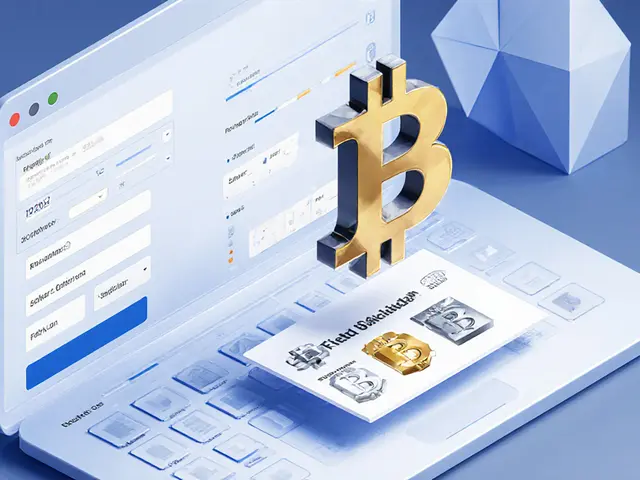

High yields are the honey pot that draws liquidity providers into decentralized finance. But when a platform promises 1000% APR, your first instinct should be skepticism, not excitement. EmiSwap is a cross-chain automated market maker (AMM) operating primarily on the Polygon network, positioning itself as a high-reward alternative to giants like Uniswap and PancakeSwap. It claims to be the "first community governed decentralized exchange with non-fungible token mechanics," but does it deliver on the promise of superior returns without the usual risks of early-stage DeFi protocols?
If you are considering adding liquidity to EmiSwap, you need to understand exactly where those rewards come from and what the connection is to its parent entity, Emirex. This review breaks down the mechanics, the economics, and the red flags you need to check before connecting your MetaMask.
What Is EmiSwap and How Does It Work?
EmiSwap is a decentralized exchange (DEX) that uses an automated market maker model to facilitate token swaps and liquidity provision. Unlike centralized exchanges where you trade against an order book, EmiSwap relies on liquidity pools. When you deposit two tokens into a pool, you receive LP (Liquidity Provider) tokens in return. These LP tokens act as your receipt, proving your share of the pool.
The core workflow is straightforward but requires attention to detail:
- Connect Wallet: The platform supports popular wallets like MetaMask and Fortmatic. You must ensure your wallet is set to the Polygon network to interact with the protocol.
- Add Liquidity: Navigate to the 'Add Liquidity' tab and select a pair. Upon confirmation, you receive LP tokens automatically.
- Stake for Rewards: Go to the 'Farming' tab and stake your LP tokens. This is where you start earning the native $ESW token through daily distributions.
The platform operates on a standard constant product formula ($x * y = k$), which means you are exposed to impermanent loss just like on any other AMM. However, EmiSwap differentiates itself by layering multiple reward streams on top of standard trading fees.
The Reward Structure: Where Does the Yield Come From?
EmiSwap’s main selling point is its aggressive incentive structure. Here is how the money flows to you:
- Trading Fee Share: You earn 0.2% of the total trading volume in your specific pool. This is the "organic" revenue generated by users swapping tokens.
- Farming Yields: By staking LP tokens, you can access farming opportunities with advertised APYs reaching up to 1000%. These yields are paid in $ESW tokens.
- Airdrop Program: A specialized program offers a 365% APR specifically for Polygon liquidity providers. This includes a daily 1% return plus additional staking rewards. Note: You must maintain your position until the first airdrop distribution to remain eligible.
Let's put these numbers in perspective. Major established DEXs like Uniswap typically charge swap fees ranging from 0.01% to 1%, with most standard pools at 0.3%. While EmiSwap’s 0.2% fee share is competitive, the massive difference lies in the farmable APY. Uniswap V3 has moved away from high fixed APYs to concentrate liquidity efficiency, whereas EmiSwap still relies on high token emissions to attract volume.
| Feature | EmiSwap | Uniswap (V3) | PancakeSwap |
|---|---|---|---|
| Primary Network | Polygon (Cross-chain capability mentioned) | Ethereum, Arbitrum, Optimism | BSC, Ethereum, Arbitrum |
| Standard Swap Fee | 0.2% (LP share) | 0.05% - 1% (Variable) | 0.25% (Standard) |
| Max Advertised Farm APY | Up to 1000% | Varies widely (often lower, efficiency-based) | Varies (typically 5-50%) |
| Regulatory Backing | Linked to Emirex (Estonian License) | Decentralized Protocol | Decentralized Protocol |
| Total Value Locked (TVL) | Not publicly verified on major trackers | > $4 Billion | > $1 Billion |

The Emirex Connection: Credibility or Red Flag?
One unique aspect of EmiSwap is its association with Emirex, a centralized cryptocurrency exchange registered in Estonia. Emirex has been active since 2019 and holds licenses for virtual currency wallet services and fiat-to-crypto exchange services issued by the Estonian Police and Border Authority (License No. FVT000400).
Does this mean EmiSwap is regulated? Not exactly. EmiSwap operates as a decentralized protocol without traditional KYC requirements. However, the link to a licensed entity adds a layer of corporate credibility that many pure-play DeFi projects lack. It suggests the team behind the code has experience in compliant financial services. Yet, investors should remember that a license for a centralized wallet does not automatically guarantee the safety of a separate smart contract protocol. Always verify if the specific EmiSwap contracts have been audited by independent firms, as current documentation mentions security auditing but lacks specific audit reports or firm names.
Risk Assessment: Why High APRs Are Dangerous
In the world of DeFi, if an opportunity looks too good to be true, it usually is. The 1000% APY offered by EmiSwap is a classic sign of an early-stage platform trying to bootstrap liquidity. Here is why you should tread carefully:
- Token Inflation: High yields are often paid in the project’s own token ($ESW). If the token price drops faster than you accrue rewards, your real yield could be negative. Check the total supply and vesting schedule of $ESW to see how much inflation is coming.
- Lack of Public Data: As of mid-2026, EmiSwap does not appear prominently on major tracking platforms like CoinGecko or DeFiLlama with substantial TVL data. This makes it hard to gauge real user adoption. Low TVL means higher slippage and less reliable price discovery.
- Smart Contract Risk: Without detailed public audit reports from reputable firms (like OpenZeppelin or Trail of Bits), you are trusting the code blindly. Any bug could lead to lost funds.
- Impermanent Loss: Since it’s an AMM, if the price ratio of your paired tokens changes significantly, you may end up with fewer dollars than if you had just held the tokens in your wallet.

User Experience and Community Sentiment
Currently, user feedback on EmiSwap is sparse. There are no substantial reviews on major platforms like Trustpilot or deep-dive threads in prominent Reddit crypto communities. This silence is both a warning and an opportunity. It means there isn’t a history of complaints to read, but it also means there isn’t a track record of reliability to trust.
From a technical standpoint, the interface follows standard DEX conventions. If you have used Uniswap or SushiSwap, you will feel at home. The integration of NFT mechanics for governance is an interesting theoretical addition, claiming to offer more nuanced voting rights or identity features, but implementation details are currently vague. Until more users engage with these features, they remain a marketing hook rather than a functional utility.
Should You Use EmiSwap?
It depends on your risk tolerance. If you are a conservative investor looking for stable, predictable yields, stick to blue-chip DEXs like Uniswap or Aave. Their liquidity is deep, their audits are public, and their tokenomics are transparent.
However, if you are a DeFi degenerate willing to take on high risk for potentially high reward, EmiSwap might fit your portfolio allocation. Here is a strategy if you decide to proceed:
- Start Small: Allocate only 1-5% of your DeFi portfolio to EmiSwap.
- Monitor $ESW Price: Track the token’s performance closely. If the price crashes, your high APY becomes irrelevant.
- Check Audit Reports: Visit the official website and look for links to third-party audit PDFs. If they aren’t public, ask in their Discord or Telegram.
- Use Hardware Wallets: For larger positions, consider using a hardware wallet connected via MetaMask to reduce phishing risks.
EmiSwap is an ambitious project with strong backing from the Emirex team. But in crypto, ambition doesn’t pay bills-liquidity and trust do. Keep your eyes open, do your due diligence, and never invest more than you can afford to lose.
Is EmiSwap safe to use?
EmiSwap has undergone security auditing and is linked to the licensed exchange Emirex, which adds some credibility. However, as a newer DEX with limited public user reviews and unverified TVL data, it carries higher smart contract and token inflation risks than established platforms like Uniswap. Always conduct your own due diligence.
Which blockchain does EmiSwap operate on?
EmiSwap is currently available on the Polygon network. It describes itself as a cross-chain AMM, but Polygon is the primary environment for its liquidity pools and airdrop programs. Ensure your wallet is configured for the Polygon network before interacting.
How do I earn rewards on EmiSwap?
You earn rewards by adding liquidity to a pool to receive LP tokens, then staking those LP tokens in the farming section. You earn a share of trading fees (0.2% of volume) and $ESW tokens from farming incentives, which can reach up to 1000% APY depending on the pool.
What is the relationship between EmiSwap and Emirex?
EmiSwap appears to be developed by the same team behind Emirex, a centralized exchange registered in Estonia. While Emirex holds regulatory licenses for wallet and exchange services, EmiSwap operates as a decentralized protocol without KYC, though the shared team provides a layer of institutional background.
Are there hidden fees on EmiSwap?
The visible trading fee is 0.2% of volume, shared with LPs. However, you should account for gas fees on the Polygon network (which are low) and potential exit fees if the protocol introduces them later. Always check the transaction preview in your wallet before confirming.