

Trying to trade crypto in South Korea is a completely different experience than using a global platform. While many countries are still figuring out how to handle digital assets, South Korea has already built a massive regulatory wall. If you're looking to get started, you'll quickly realize that anonymity is dead here. From mandatory bank partnerships to strict identity checks, the system is designed to track every single won that enters the market.
The Core of Korean Crypto Regulation
The entire system runs on the Special Financial Information Act is a comprehensive legal framework that came into effect on March 25, 2021, to combat money laundering and ensure financial transparency in the virtual asset market. This law shifted the market from a "wild west" era to a highly controlled environment overseen by the KoFIU (Korea Financial Intelligence Unit), which operates under the Financial Services Commission (FSC).
To operate legally, any platform must be a licensed VASP (Virtual Asset Service Provider). This isn't just a simple registration; it requires a rigorous ISMS-P (Personal Information & Information Security Management System) certification. For an exchange, maintaining this certification can cost over 500 million KRW annually, which is why you only see a few giant players dominating the scene rather than hundreds of small startups.
The "Big Four" and the Real-Name System
If you want to trade with Korean Won (KRW), you basically have four choices. As of late 2024, Upbit, Bithumb, Coinone, and Korbit are the only major exchanges with full regulatory approval. These four platforms handle over 95% of all domestic volume because they have the one thing others don't: a domestic bank partnership.
This is where the Real-Name Verification system comes in. You cannot simply deposit money into an exchange. Your exchange account must be linked to a verified bank account at a partner institution-like KB Kookmin Bank, Shinhan Bank, or NH Nonghyup Bank-and the names on both accounts must match exactly. If you try to use a third-party account to fund your trades, the system will flag and block the transaction instantly.
| Feature | Licensed Korean Exchanges | Global Exchanges (e.g., Binance) |
|---|---|---|
| Identity Verification | Real-name bank account link (Mandatory) | Government ID / Email (Standard KYC) |
| Asset Security | Min. 70% in cold storage + Insurance | Varies by platform (SAFU/Internal) |
| Fiat Support | Native KRW support via partner banks | P2P or Third-party gateways |
| Asset Variety | Strictly curated (200-300 coins) | Extensive (600+ coins) |

Security Standards and Investor Protection
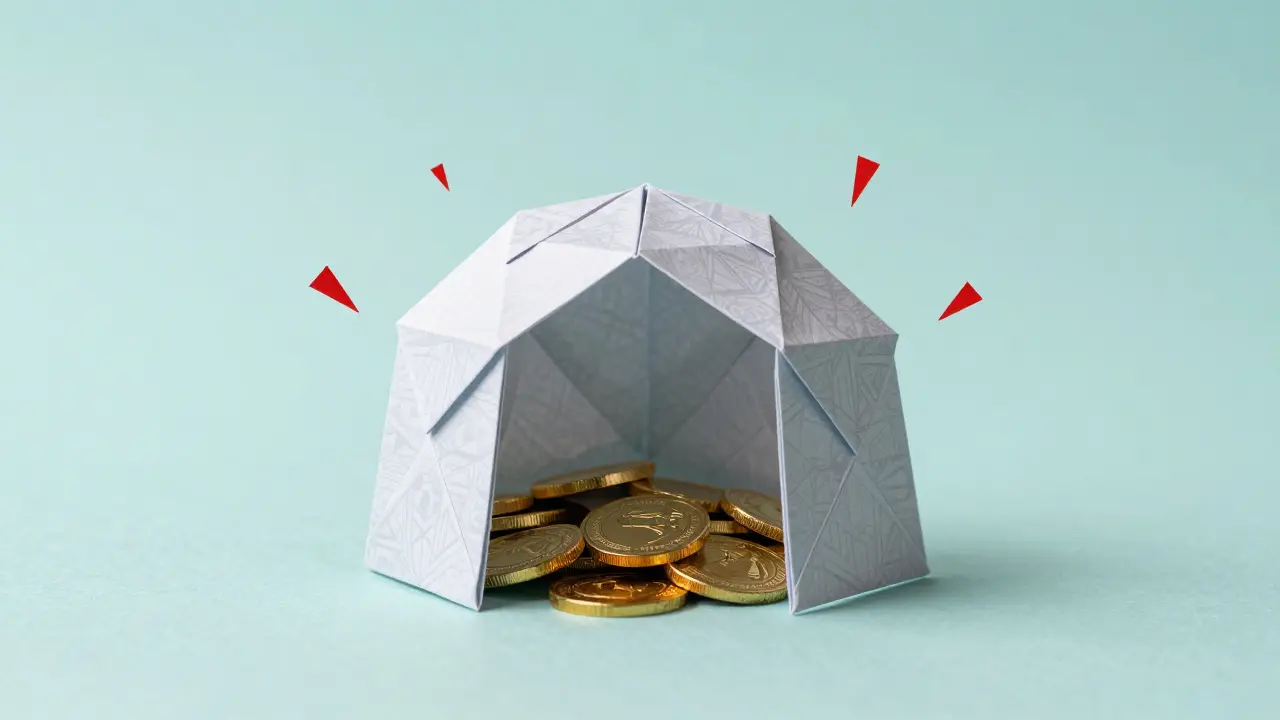
The silver lining of all these restrictions is that Korean exchanges are incredibly safe. The FSC requires exchanges to carry cyber insurance of at least 1 billion KRW. Furthermore, the 70% cold storage mandate ensures that the vast majority of user funds are kept offline, away from hackers. This has resulted in a remarkably clean track record for the licensed platforms compared to the billions lost in global exchange hacks over the last few years.
For the average trader, this means you don't have to worry about the exchange suddenly vanishing or being wiped out by a breach. However, this security comes at the cost of flexibility. You'll find that many promising new altcoins never make it onto Korean platforms because the vetting process for new listings is grueling. If you're chasing the latest micro-cap gem, you'll likely find the limited selection on Upbit or Bithumb frustrating.
Navigating the Onboarding Process
Getting set up as a trader in Korea is a multi-step journey that usually takes a few weeks. You can't just sign up and start buying. You'll need to go through Level 3 identity verification, which involves submitting your government ID, linking your bank account, and sometimes participating in a video call to prove you are who you say you are.
- App Installation: Download a licensed app (Upbit and Bithumb are the most popular).
- KYC Submission: Upload your valid Korean ID and complete the biometric face scan.
- Bank Linking: Connect the specific bank account required by that exchange (e.g., Upbit requires K-Bank).
- Funding: Deposit KRW via the linked account. Remember, credit cards and international wires are strictly prohibited.

The Financial Impact: Taxes and Legalities
Trading isn't just about the buy and sell buttons; it's about what happens at the end of the year. Starting from the 2025 tax year, South Korea has implemented a 20% capital gains tax on cryptocurrency profits that exceed 2.5 million KRW annually. This is a significant shift that forces traders to keep much more detailed records of their cost basis and exit prices.
Beyond taxes, the government is also tightening the screws on stablecoins. New rules require full reserve backing and monthly audits for assets like Tether (USDT) and USD Coin (USDC). If you are using these for hedging or moving funds, be aware that the FSC is monitoring these flows more closely than ever to prevent capital flight.
Common Pitfalls and Challenges
Many international users or expats in Korea struggle with "IP blocking." Some domestic financial institutions and exchanges implement strict geo-fencing, making it hard to access certain DeFi protocols or global platforms. If you try to bypass these with a VPN, you risk having your account frozen during a routine AML check.
Another common headache is the "Kimchi Premium." Because of the restrictions on moving money in and out of the country and the high local demand, crypto prices in Korea are often higher than on global exchanges. While this can be an opportunity for arbitrage, the strict bank transfer rules make it nearly impossible for individuals to execute these trades without triggering a red flag with the tax authorities.
Can I use a foreign bank account to trade on Korean exchanges?
No. To trade in KRW on licensed Korean exchanges, you must have a verified domestic bank account that matches your government-issued identification. International wire transfers are not permitted for funding these accounts.
Is it legal to use unlicensed exchanges in South Korea?
While using one might not land you in jail, the government has forced over 200 unlicensed exchanges to shut down since 2021. Using an unlicensed platform means you have zero investor protection, no insurance, and your funds are at high risk.
How much of my crypto profit do I have to pay in taxes?
Starting in 2025, you are required to pay a 20% capital gains tax on any profits that exceed the annual threshold of 2.5 million KRW.
Why are there so few coins available on Upbit compared to Binance?
Korean exchanges follow strict listing guidelines to protect consumers. Each asset must undergo a rigorous review process to ensure it isn't a scam or high-risk project, which results in a smaller but safer selection of coins.
What is the ISMS-P certification?
ISMS-P stands for Personal Information & Information Security Management System. It is a mandatory certification required by the Korea Internet & Security Agency (KISA) that ensures an exchange has the technical and administrative safeguards to protect user data and funds.



Prachi Bhadarge
Imagine thinking a 20% tax is the only thing to worry about when you're dealing with the Kimchi Premium. Just lovely. 🙄
Adam Mann
This is actually a really great way to look at things because it helps us understand how different cultures approach the same technology, and even though the rules seem super strict, it's kind of inspiring to see a country actually trying to protect its citizens from the wild swings of the crypto market, and I think if we can learn from their security standards, maybe the rest of the world will stop losing billions to those terrible hacks that happen every other week on unregulated platforms where you just hope your money is still there when you wake up in the morning!
Shannon Kelly Smith
The security mandates are absolutely top-tier! 🚀 Keeping 70% in cold storage is the gold standard for any serious operation. Let's all push for this globally! 🌍💎
Trudy Morse
Control is just an illusion of safety. The state trades liberty for stability.
Alex Long
Boring. Same old regs.
Andrew Southgate
It's worth noting for those of you who aren't familiar with ISMS-P that the certification isn't just a checkbox; it's an incredibly grueling process that ensures the data pipeline is actually secure from end-to-end, which is why the barrier to entry is so high and why we only see these few giants like Upbit dominating the landscape, though it does unfortunately stifle the kind of organic innovation you see in less regulated hubs like Dubai or Singapore.
Shantal Sanjur
Oh please, "investor protection" is just a code word for "we want to know exactly where every cent is so we can seize it." 🙄 They're probably using the ISMS-P data to build a social credit system while we're all distracted by the "safety" of cold storage. It's all a giant game of chess and we're the pawns.
Kim Smith
I've always felt that the way Korea handles this is just so fascinatting because they embrace the tech but hate the risk, and its like they are tryin to put a leash on a hurricane, which honestly is a bit poetic if you think about it, though i did try to use a vpn once and it was such a mess with the login screens that i just gave up and decided to stick to my local apps because life is too short to fight with a firewall for ten hours just to trade some random altcoin that will probably crash anyway
Ian Chait
Typical globalist shill post. The FSC is clearly just a front for the central banks to keep the fiat hegemony alive while they cook the books on the Kimchi prem. Total scam. The liquidity providrs are just wash-trading to keep the retail suckers in the game. Absolute joke.
nathan jones
Pretty standard stuff for East Asia.
Nishant Goyal
Fair trade-off for security.
Abhinav Chaubey
The level of discipline required for these regulations is something the West could actually learn from if they weren't so obsessed with the myth of total anonymity.
Mark Pfeifer
The bank linking part is a huge hurdle for anyone not born there.
Kevin Lư
Honestly, who even cares about the 2.5 million limit? Most people are just gambling anyway, but it's cute that they think a tax will stop the degens. 😅
Tracy Sperandio
The sheer audacity of the FSC to demand such rigorous certification is actually quite refreshing! It clears the garbage out of the ecosystem and leaves only the titans. It's a brutal but efficient way to ensure quality control in a market that's usually just a casino for the gullible!
Gillian Kent
I think its lavely how they try to make it safe even if the procces is a bit slow for some people
Mike Kempenich
It's a bit restrictive, but the peace of mind regarding hacks is a strong selling point.
Sean Douglas
The absolute agony of waiting weeks just to onboard is a tragedy of modern bureaucracy! I can practically feel the bureaucratic gears grinding my soul into dust just thinking about those video calls!
Keri Pommerenk
totally agree with the safety part
Robert Preston
For those struggling with the IP blocking, just remember that the risks of a VPN usually outweigh the benefits when it comes to AML checks. It's better to stay compliant than to have your assets frozen indefinitely.
Karen Mogollon Gutierrez
The sheer audacity of implementing a 20% tax is simply appalling! One must wonder if the government intends to bankrupt every single retail trader in the peninsula!
Michelle Stanish
Too many rules.
Jeff Barlett
Wait, people actually like the "Big Four"? They're basically just banks with a crypto skin at this point. Where's the decentralization?
Chintu Parikh
I am in complete agreement that the transition from a "wild west" era to a regulated environment is a necessary step for the long-term viability of digital assets in South Korea!
Vicky Duffala
It's all about finding a balance between the freedom of the blockchain and the protection of the individual. Korea is just the first one to really try to map out the boundaries. It's an experiment in real-time!
Yuhan Mo
The arbitrage opportunity with the Kimchi Premium is essentially a liquidity trap for those who don't understand the regulatory friction involved.
siddharth narula
It is a moral imperative that we cease this glorification of anonymity, as it only serves the nefarious. 😇
Ankit Sindhu
If anyone is feeling overwhelmed by the KYC process, just take it one step at a time. It's a lot of paperwork, but it's the only way to do it safely.
Gaurav Undirwade
It is utterly disgraceful that some people still believe using unlicensed exchanges is a viable option in this day and age. You are essentially throwing your money into a void.
Evan Iacoboni
Why does the government care about the 2.5 million limit specifically?