
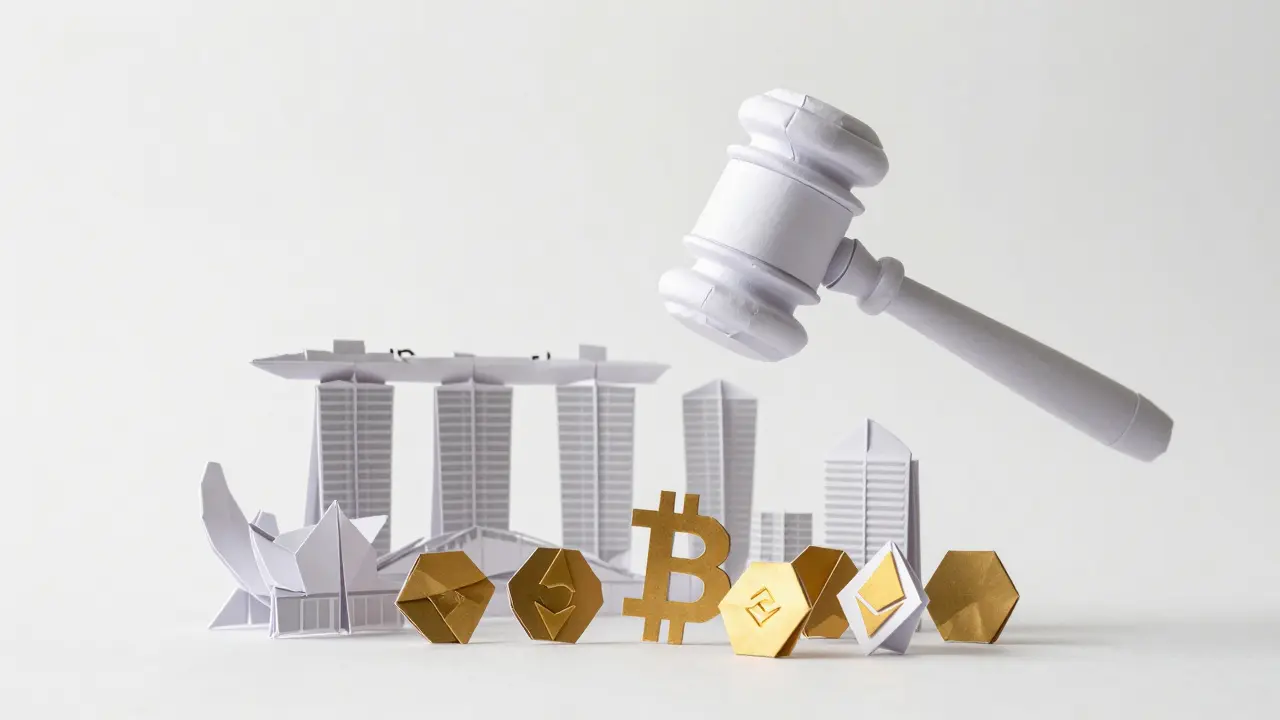
Think Singapore is still the "wild west" paradise for crypto startups? Think again. The Monetary Authority of Singapore is the central bank and financial regulatory authority of Singapore, and they've just slammed the door shut on easy entries. If you're running a digital asset business from a Singapore office, it doesn't matter if your customers are in New York or London-the law now follows you. The era of "regulatory arbitrage," where firms used a Singapore address for prestige while ignoring the rules, is officially over.
The New Reality of DTSP Licensing
Under the Financial Services and Markets Act 2022 (FSMA), the government created a specific category for Digital Token Service Providers (DTSPs). Essentially, if you provide any service involving digital tokens while operating from Singapore, you need a license. But here is the catch: as of June 2025, MAS has effectively paused the issuance of new licenses.
They aren't saying "no" forever, but they are saying "almost certainly no." Licenses are now granted only in extremely limited cases. Why the sudden shift? MAS is terrified of money laundering and terrorism financing. They've realized that regulating a company that serves people globally from a local office is nearly impossible without total control. By tightening the screws, they're prioritizing the city-state's reputation as a clean financial hub over the growth of the crypto sector.
The "No Mercy" Compliance Deadline
Most regulatory shifts come with a grace period. Not this one. MAS set a hard deadline of June 30, 2025. Companies had a tiny window-sometimes just four weeks-to get their house in order or face the music. For those who missed the mark, the penalties are brutal: fines up to SGD 200,000 and even potential jail time for executives. This wasn't a gentle nudge; it was a regulatory ambush that forced many international firms to pack their bags and leave the jurisdiction entirely.
| Requirement | Specific Value/Detail | Purpose |
|---|---|---|
| Compliance Officer | Must be based in Singapore | Local accountability |
| Audits | Mandatory annual independent audit | Financial transparency |
| Capital Thresholds | Minimum capital requirements apply | Operational solvency |
| Travel Rule | Required for transfers > SGD 1,500 | Prevent anonymous transfers |

The High Cost of Playing by the Rules
Getting a license isn't just about filling out forms; it's an expensive operational overhaul. For starters, you need a qualified Singapore-based compliance officer. These aren't entry-level roles; industry surveys show these experts command salaries between SGD 150,000 and 250,000 a year. If you're a small startup, that single hire could eat your entire seed round.
Then there is the Travel Rule, implemented through Notice PSN02. This requires platforms to collect and exchange sender and receiver data (names, IDs, account numbers) for any transaction over SGD 1,500. Implementing the software to handle this isn't cheap-estimates range from SGD 50,000 to 200,000 depending on how many trades you process. When you add up the audits and the legal fees, some firms are seeing their operational costs jump by 25% to 40%.
Consumer Protection: No More Easy Credit
MAS isn't just looking at the companies; they're looking at how you treat your users. Since September 2024, new rules have banned high-risk practices. For example, you can no longer allow customers to buy crypto using credit cards. They also require mandatory suitability assessments. This means you can't just let anyone sign up and trade volatile assets; you have to prove the customer actually understands the risk they're taking.
For Stablecoins, the rules are even tighter. The November 2023 framework ensures a "high degree of value stability." This is all part of a broader strategy to separate "serious" institutional players from the speculative noise.

Singapore vs. The World
If you compare Singapore to the UAE or Switzerland, the difference is night and day. While those regions are still rolling out the red carpet for crypto firms, Singapore has rolled out the police tape. This has led to a massive brain drain. LinkedIn data showed a 37% drop in crypto job postings in early 2025. Many believe this will permanently damage Singapore's role in the global ecosystem.
However, MAS is playing the long game. They'd rather have 20 elite, fully compliant firms than 200 "grey area" businesses that might cause a financial scandal. They are betting that high-quality regulation will actually attract more institutional capital in the long run, even if it kills the startup vibe in the short term.
Can I run a crypto business in Singapore if I only serve overseas clients?
No. Under Section 137 of the FSMA, MAS has extraterritorial reach. If you are a Singapore corporation or an individual operating from within the country, you must have a DTSP license, regardless of where your users or servers are located.
What happens if I operate without a DTSP license?
The consequences are severe. You face fines up to SGD 200,000, potential imprisonment for the directors, and a mandatory order to stop all operations immediately.
Is it still possible to get a new crypto license from MAS?
It is extremely difficult. MAS has stated they will generally not issue new licenses except in "extremely limited circumstances," usually reserved for firms with elite compliance infrastructure and strong operational justification.
What is the Travel Rule threshold in Singapore?
The Travel Rule applies to transactions exceeding SGD 1,500. For these transfers, platforms must exchange identifying information about both the sender and the receiver.
Are credit card purchases of crypto banned?
Yes. As part of the consumer protection updates from September 2024, MAS prohibits the use of credit cards for cryptocurrency purchases to protect retail investors from high-interest debt.
What to do next
If you're already operating in Singapore, your first move is a gap analysis. Compare your current AML/CFT protocols against the Notice PSN02 requirements. If you don't have a locally based compliance officer, you're in the danger zone. Your only options are to either invest heavily in the required infrastructure or migrate your operational base to a more permissive jurisdiction like the UAE before the regulators knock on your door.




Prachi Bhadarge
Oh look, another "financial hub" pretending to be innovative while just being a glorified police state for money. 🙄 Typical MAS behavior.
Shantal Sanjur
Follow the money, people! This isn't about "money laundering" or some fake morality. This is a coordinated effort by the global elite to crush decentralized finance before it actually replaces their dusty old banking systems. They want total control over every single satoshi, and Singapore is just the testing ground for the new digital panopticon. Wake up! They're probably using this "Travel Rule" to build a database of every crypto user to target us later. It's all a giant shell game to push us toward CBDCs so they can turn off your wallet if you say something they don't like. Absolutely sinister stuff.
Andrew Southgate
While the transition is certainly abrupt, it is worth noting that for the long-term survival of the industry, clear guardrails are actually a blessing in disguise. If you look at the history of financial markets, the sectors that survive the longest are those that eventually integrate with existing regulatory frameworks rather than fighting them to the death. I've seen many startups try to skirt the rules only to be wiped out by a single lawsuit, so having a high bar for entry like the DTSP license might actually filter out the scams and leave us with a more robust, institutional-grade ecosystem. It's definitely a pain for the small guys right now, but the increased legitimacy will likely bring in pension funds and massive insurance capital that would never have touched crypto in a "wild west" environment. Keep your heads up, find a way to comply, or pivot your base of operations-there are still plenty of opportunities if you're flexible.
Trudy Morse
Regulation is just the ego of the state trying to organize the chaos of human greed.
Joshua Salwen
OMG this is literally a massacre of innovation!! How can they just drop a four week deadline?! It's absolute madness, a total car crash of a policy!! My god the DRAMA of these poor founders packing their bags in a rush lol!!
Mike Kempenich
It's a tough break for the startups, but maybe this forces the industry to actually grow up. Let's hope the UAE can pick up the slack for a bit.
Abhinav Chaubey
Singapore's attempts at regulation are cute, but they'll never match the sheer scale and strategic brilliance of how India handles its digital infrastructure. They are just terrified of losing their tiny bit of relevance.
Ian Chait
Total psyop. The FSMA is just a front for the WEF to implement a global credit score system via the Travel Rule. The "compliance officers" are basically just informants for the central bank's secret police. Absolute bollocks if you ask me.
Shannon Kelly Smith
Time to pivot! 🚀 Those who adapt fastest win the game. Just keep grinding and find a jurisdiction that actually wants you! 💪✨
Mark Pfeifer
It's important to respect the laws of the land, even if they feel restrictive. No one should be operating a financial business in the shadows.
Gaurav Undirwade
It is a moral imperative that these firms are held accountable. Those who sought to profit from the anonymity of digital assets should not complain when the light of law is finally cast upon them.
Nishant Goyal
Fair enough. Just move to Dubai.
Sandeep Bhoir
Sarcasm aside, MAS is just doing what every other central bank is doing. They just happen to be more honest about how much they hate the sector.
Sean Mitchell
This entire regulatory framework is a tedious exercise in bureaucracy that achieves nothing but the enrichment of compliance consultants. Truly an exhausting read.
Thomas Jewett
Its honestly a joke that these companies thought they could just hide in Singapore and ignore the rules of a decent society while they make millions from the air. This is exactly why we need strong nations that put their own laws above some fake digital utopia and dont let these fly-by-night operations run wild in the streets!! Totally out of hand!!
nathan jones
Just happened to see a few buddies move their ops to the UAE last month. Definitely the move right now.
Yuhan Mo
The implementation of the Travel Rule via Notice PSN02 essentially mandates a high level of KYC/AML friction, which significantly impacts the UX of the on-ramping process.
Gillian Kent
I thin k it's sad that so many peopel are losing there jobs over this. Hope they find new work soon.
Keri Pommerenk
stay strong everyone. just take it one step at a time and get the paperwork done
Sean Douglas
A regulatory ambush?! The phrasing is just so deliciously sinister! I can practically feel the panic of the CEOs sweating through their linen suits as they realize their little tax haven just turned into a prison!
Vicky Duffala
Let's see this as a catalyst for a more mindful approach to finance! 🌟 When we strip away the greed, we find a way to coexist with rules that protect the vulnerable. Embrace the change! 😊
Chintu Parikh
I believe it is quite commendable that the Monetary Authority of Singapore is taking such decisive action to ensure the integrity of the financial system. We should all strive to support these standards to foster a global environment of trust and stability.
Saurav Bhattarai
Oh, how quaint. Singapore thinks they're the gold standard of regulation. Please, the arrogance of these city-state bureaucrats is simply breathtaking. Truly a masterclass in pretension.
Kevin Lư
Glad they're finally stopping people from using credit cards to gamble on magic internet coins. It's about time someone had the guts to actually protect people from their own stupidity.