

You type Multi.io a cryptocurrency trading platform claiming to offer low fees and high leverage into your browser, expecting to find a sleek interface for trading Bitcoin or Ethereum. Instead, you hit a wall of silence. No reviews on Reddit. No mention in major financial news. No regulatory filings. Just a website that looks suspiciously like a legitimate exchange.
If you are reading this, you probably want to know one thing: Is Multi.io safe? The short answer, based on all available data as of August 2026, is no. In fact, the evidence suggests it is likely a fraudulent operation designed to mimic established platforms.
The Silence Speaks Volumes
In the world of cryptocurrency, transparency is currency. Legitimate exchanges don’t hide. They publish their security audits, list their regulatory licenses, and engage with their communities. When you look at industry leaders like Coinbase a publicly traded US-based crypto exchange known for strict compliance or Kraken a veteran exchange operating since 2011 with strong security records, you find mountains of information. You can see their fee structures down to the decimal point. You can read about their cold storage protocols. You can even find their customer support contact details.
Now, try doing that for Multi.io. It’s impossible. There is no verifiable corporate entity behind it. There is no physical address listed in business registries. There are no independent security audits published by firms like CertiK or Hacken. This absence isn’t just an oversight; it’s a red flag waving in slow motion.
| Feature | Multi.io | Gate.io (Real) | Coinbase (Real) |
|---|---|---|---|
| Regulatory Status | Unknown / None Found | Licensed in multiple jurisdictions | Publicly traded (NASDAQ), SEC registered |
| Security Audits | None Publicly Available | Regular third-party audits | Frequent bug bounties and audits |
| User Reviews | Non-existent on Trustpilot/Reddit | Mixed but abundant | Abundant, generally positive for ease of use |
| Corporate Entity | Unverifiable | Budapest Financial Technology Ltd | Coinbase Global, Inc. |
| Fee Transparency | Vague or Hidden | Clear maker/taker fees (e.g., 0.025% - 0.075%) | Clear spread-based and flat fees |
The Gate.io Connection: A Case of Mistaken Identity?
Here is where things get tricky. Have you heard of Gate.io a major global exchange offering over 1,000 cryptocurrencies and high leverage trading? It’s a real, operational platform that has been around since 2013. It offers exactly what scammers often promise: access to obscure altcoins, high leverage trading (up to 100x), and a complex but functional interface.
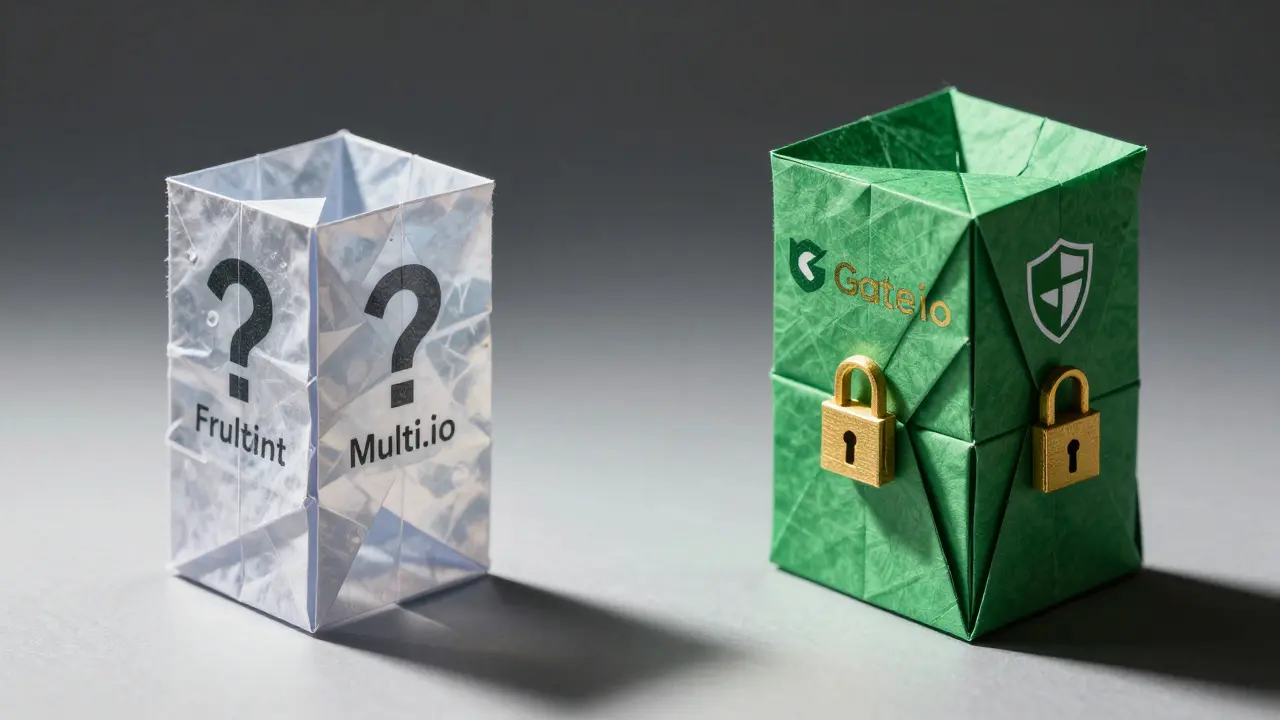
Scammers love to piggyback on success. By choosing the name "Multi.io," the operators are likely banking on confusion. Users searching for "multi-currency" exchanges or misremembering "Gate.io" might stumble onto this site. This is a classic tactic used by fake exchanges. They mimic the branding, the color schemes, and even the user interface of trusted platforms to lower your guard.
Look closely at the domain registration. If you check the WHOIS data for multi.io, you will likely find it was registered recently, perhaps within the last year or two. Compare that to gate.io, which has a long history. Legitimate businesses protect their brand names aggressively. If Multi.io were a serious competitor, they would have faced legal action from larger entities long ago. The fact that they haven’t suggests they are either too small to matter or, more likely, hiding in plain sight as a phishing operation.
Common Tactics of Fake Crypto Exchanges
To understand why Multi.io is dangerous, you need to know how these scams work. The California Department of Financial Protection and Innovation (DFPI) maintains a Crypto Scam Tracker a public database listing fraudulent crypto companies and specific complaint types that highlights common patterns. Here is what you should watch out for:
- Unrealistic Returns: Promises of guaranteed daily profits or unusually high yields without risk. If it sounds too good to be true, it is.
- Pressure to Deposit: Customer support agents who push you to deposit more money quickly, often via wire transfer or direct crypto payment, rather than using secure credit card processors.
- Lack of Withdrawal Options: You can deposit easily, but when you try to withdraw, you are told you need to pay a "tax," a "verification fee," or wait for an indefinite period.
- Fake News Feeds: The platform may display fake news articles or price charts that don’t match real-world market data to encourage panic selling or buying.
TechForing, a cybersecurity resource, notes that fake exchanges often use "common tactics" to defraud users, including mimicking legitimate platforms. Multi.io fits this profile perfectly. It lacks the substance of a real exchange but wears the costume well enough to fool the uninitiated.
What Makes a Crypto Exchange Legitimate?
Not every new exchange is a scam, but every scam poses as a new exchange. How do you tell the difference? Look for these concrete markers of legitimacy:
- Regulatory Licenses: Does the exchange hold licenses in reputable jurisdictions? For example, Kraken holds a BitLicense in New York. Coinbase is registered with the SEC. These aren’t just badges; they mean the company is subject to regular audits and consumer protection laws.
- Proof of Reserves: Since the collapse of FTX, the industry standard has become transparent proof of reserves. Legitimate exchanges publish cryptographic proofs showing they actually hold the assets they claim to. Can Multi.io show you theirs? Probably not.
- Community Presence: Go to Reddit, Twitter, or Telegram. Are real users discussing their experiences? Even controversial exchanges have passionate communities. Multi.io has none. Silence is deafening.
- Clear Fee Structure: Real exchanges list their fees clearly. For instance, NinjaPromo’s review of margin trading exchanges specifies exact fees like 0.025% for makers. If Multi.io’s fees are hidden or change arbitrarily, run.

Safer Alternatives for Trading
If you are looking for a place to trade crypto, there are plenty of verified options that prioritize your safety. Depending on your needs, here are some better choices:
- For Beginners: Coinbase offers a simple interface and strong regulatory backing. It’s perfect if you just want to buy Bitcoin or Ethereum without worrying about complex charts.
- For Advanced Traders: Binance the largest crypto exchange by volume, offering extensive tools and low fees provides deep liquidity and advanced trading features. While it faces regulatory hurdles in some regions, its infrastructure is robust.
- For Altcoin Hunters: KuCoin an exchange known for listing a wide variety of smaller cryptocurrencies is a solid choice if you want exposure to newer tokens, though always do your own research on the coins themselves.
- For Privacy Focus: Kraken remains a top pick for those who value security and privacy, with a long track record of never being hacked.
Each of these platforms has detailed reviews on sites like NerdWallet and Coincub. They have clear terms of service, responsive support teams, and, most importantly, a reputation to uphold.
Protecting Yourself in 2026
The crypto landscape in 2026 is more regulated than ever before. Governments worldwide are cracking down on unregistered exchanges. This means that sticking to compliant platforms is not just smart-it’s essential.
Before you deposit a single dollar into any platform, ask yourself these questions:
- Can I find the company’s legal registration number online?
- Are there independent reviews from sources other than the exchange itself?
- Does the exchange use two-factor authentication (2FA) and offer hardware wallet integration?
- Is the withdrawal process straightforward and free of hidden fees?
If the answer to any of these is "no" or "I don't know," keep your money in your own self-custody wallet. Platforms like Ledger a manufacturer of hardware wallets for securing cryptocurrency offline or Trezor another popular hardware wallet brand for cold storage allow you to hold your assets securely without relying on a third party.
Remember, in crypto, you are your own bank. But that also means you are responsible for your own security. Don’t let a flashy website trick you into handing over your keys. Stick to the pros, verify everything, and stay skeptical.
Is Multi.io a scam?
Based on current evidence, Multi.io appears to be a fraudulent platform. It lacks regulatory licenses, has no verifiable corporate entity, and is absent from all major exchange rankings and security audits. Its similarity to Gate.io suggests it may be an imposter site designed to steal funds.
What is the difference between Multi.io and Gate.io?
Gate.io is a legitimate, long-standing cryptocurrency exchange founded in 2013 with thousands of users and regulatory compliance in various regions. Multi.io is an unverified platform with no public history, likely created to mimic Gate.io or confuse users seeking multi-asset trading options.
How can I verify if a crypto exchange is legitimate?
Check for regulatory licenses (like SEC registration or EU MiCA compliance), look for independent security audits, search for user reviews on trusted forums like Reddit, and verify the company's legal registration details. Legitimate exchanges are transparent about their fees and security measures.
Are there any safe alternatives to Multi.io?
Yes, several reputable exchanges exist. For beginners, Coinbase is highly recommended. For advanced traders, Binance and Kraken offer robust features. For those interested in many altcoins, KuCoin and the real Gate.io are viable options. Always ensure you are on the official website of these platforms.
What should I do if I already deposited money into Multi.io?
If you suspect fraud, immediately contact your bank or credit card issuer to dispute the transaction. Report the incident to your local financial regulator (such as the DFPI in California or the FCA in the UK). Change passwords for any accounts linked to the email used on the platform and enable two-factor authentication everywhere.