
You probably saw a video or an ad promising you free money. Maybe it was back in 2021, maybe it’s a resurfaced post today. The promise is always the same: claim your share of the OKFLY, also known as Okex Fly, and watch it multiply. It sounds too good to be true because it is. If you are holding these tokens in your wallet right now, wondering why they aren't worth anything, or trying to figure out if you missed a trick, this article cuts through the noise. We’re going to look at what OKFLY actually is, why the airdrop happened, and most importantly, why you should likely ignore it.
The short answer? OKFLY is a classic example of a "zombie" airdrop token. It had a massive distribution campaign years ago, but it never gained real utility, exchange listings, or market value. Holding it today is like holding a coupon for a store that closed down four years ago.
What Is OKFLY and Where Did It Come From?
To understand why OKFLY has no value, we have to look at its origins. This token didn't launch with a groundbreaking technology or a famous team. It launched with marketing. In October 2021, during the peak of the cryptocurrency bull run, a project called OKFLY (often marketed as Okex Fly to confuse people into thinking it was related to the major exchange OKX, formerly OKEx) ran a massive airdrop campaign.
The campaign was hosted on CoinMarketCap, a trusted platform for crypto data. They offered participants up to 30 million OKFLY tokens for completing simple tasks. These tasks usually included watching YouTube videos, joining Telegram groups, following social media accounts, and referring friends. The goal wasn't to build a community; it was to generate hype and create a large number of holders quickly.
OKFLY is an ERC-20 token built on the Ethereum blockchain. Its contract address is 0x02f093513b7872cdfc518e51ed67f88f0e469592. Being an ERC-20 token means it lives on the Ethereum network, just like USDT or UNI. However, unlike those established tokens, OKFLY has no underlying protocol, no decentralized application (dApp), and no clear purpose other than speculation.
A key red flag from day one was the supply. The total maximum supply of OKFLY is 1 quadrillion tokens (1,000,000,000,000,000). To put that in perspective, Bitcoin has 21 million. Ethereum has around 120 million. When a token has a supply measured in quadrillions, each individual token must be worth fractions of a penny to even reach a modest market cap. This structure is designed to make users feel rich on paper-"I have 30 million tokens!"-while the actual value remains negligible.
The Reality of the OKFLY Airdrop Campaign
Airdrops are a legitimate marketing tool in crypto. Projects use them to distribute governance tokens to early adopters or to reward users of their platform. However, the OKFLY airdrop followed a different pattern, often associated with low-effort projects.
- No Utility Requirement: You didn't need to use a product to get OKFLY. You just needed to perform social media actions.
- Viral Mechanics: The primary way to increase your allocation was by referring others. This created a pyramid-like structure where the focus was on recruitment, not product adoption.
- Brand Confusion: By using the name "Okex Fly," the project leveraged the reputation of OKEx (now OKX), one of the world's largest crypto exchanges. There is no official affiliation between OKX and OKFLY. This is a common tactic to gain instant trust from inexperienced investors.
If you participated in 2021, you likely spent hours clicking links and sharing posts. The psychological hook was the fear of missing out (FOMO). But without a working product behind the token, that engagement died as soon as the initial hype faded.
Why OKFLY Has No Market Value Today
This is the question everyone asks: "If I have millions of OKFLY, why can't I sell them?" The answer lies in liquidity and exchange listings.
For a cryptocurrency to have a price, there must be buyers and sellers meeting on an exchange. As of mid-2026, OKFLY is not listed on any major centralized exchange (CEX) like Binance, Coinbase, or Kraken. It is also not actively traded on major decentralized exchanges (DEXs) like Uniswap or PancakeSwap.
| Feature | OKFLY (Okex Fly) | Successful Project (e.g., Arbitrum) |
|---|---|---|
| Exchange Listings | None (Unlisted) | Listed on Binance, Coinbase, etc. |
| Utility | None (Speculative only) | Governance, Gas Fees, Staking |
| Supply Model | 1 Quadrillion (Inflationary) | Fairly Distributed (Capped) |
| Team Transparency | Anonymous/Obscure | Public Team with Track Record |
| Last Trade Price | $0.000000000061 (Dec 2023) | Active Daily Volume |
The last recorded trade for OKFLY occurred on December 9, 2023. The price was approximately $0.000000000061. That is less than one ten-billionth of a dollar. Even if you held the maximum possible amount, the total value would be pennies. The lack of trading volume means there is zero liquidity. You cannot simply swap OKFLY for ETH or USDT on Uniswap because there is no pool of funds waiting to buy it.
CoinCarp and other tracking platforms explicitly note that OKFLY has failed to meet listing requirements for any reputable exchange. This usually happens for three reasons:
- Lack of Demand: Traders don't want the token.
- Regulatory Risks: Exchanges avoid tokens with ambiguous legal status or potential scam associations.
- Project Abandonment: The development team stopped working on the project after the airdrop hype died down.

Is OKFLY a Scam?
In the crypto world, the line between a "failed project" and a "scam" can be blurry. Technically, OKFLY isn't a phishing scam that steals your private keys. You didn't lose money directly participating in the airdrop (unless you paid for gas fees to claim it, which some variants required). However, it exhibits many characteristics of a "rug pull" in spirit.
A rug pull typically involves developers abandoning a project and taking the liquidity. In OKFLY's case, the developers distributed the tokens widely but never built the promised infrastructure. They took the attention and the viral marketing value, then disappeared. This is sometimes called a "soft rug."
Furthermore, the use of the name "Okex Fly" is deceptive. It implies an endorsement or partnership with OKX, which does not exist. Misleading branding is a hallmark of fraudulent schemes. While you may not have lost capital, you lost time and opportunity cost. Every hour spent promoting OKFLY was an hour not spent learning about legitimate blockchain technologies or investing in projects with real fundamentals.
What Should You Do With Your OKFLY Tokens?
If you still see OKFLY in your MetaMask or Trust Wallet, here is the practical advice:
Do nothing. Seriously. Don't try to trade it. Don't send it to anyone claiming they will buy it. Sending tokens costs gas fees on the Ethereum network, and since the token is worthless, you would be paying real money (ETH) to move fake money (OKFLY).
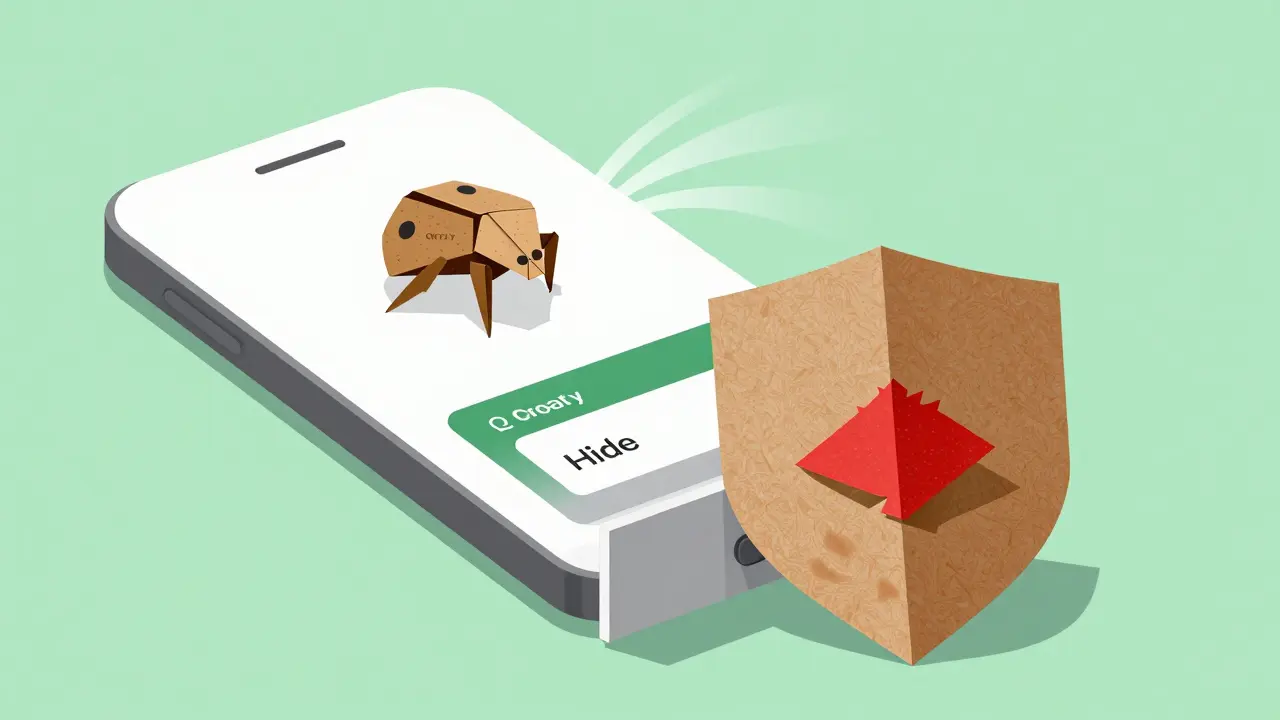
You can hide the token in your wallet interface so it doesn't clutter your view. Most wallets allow you to remove custom tokens from the display list. This doesn't delete them from the blockchain-they will remain there forever-but it cleans up your user experience.
If someone contacts you via DM on Telegram, Twitter, or Discord saying they represent the "OKFLY Team" and offer to help you convert your tokens, block them immediately. These are secondary scams targeting people who are confused about why their tokens have no value. They will ask for an upfront fee or your seed phrase, both of which will result in total loss of your other assets.
Lessons Learned: How to Spot Future Bad Airdrops
The OKFLY story is a cautionary tale. As we move further into 2026, airdrops are still happening, but the landscape has matured. Here is how to distinguish between a valuable airdrop and a waste of time:
- Check the Supply: If the total supply is in the trillions or quadrillions, be skeptical. High supply often dilutes value to near zero.
- Verify the Team: Legitimate projects have public teams with LinkedIn profiles and past work history. Anonymous teams are high-risk.
- Look for Utility: Does the token do something? Governance? Staking rewards? Access to a service? If the only reason to hold it is to sell it later, it's speculative junk.
- Ignore Brand Impersonation: If a token uses part of a famous brand's name (like "Okex," "Binance," "Coinbase"), it is almost certainly unofficial and risky.
- Exchange Presence: Check if the token is listed on CoinGecko or CoinMarketCap with verified trading pairs. If it's only on obscure sites, stay away.
The crypto market rewards patience and research. It punishes greed and haste. OKFLY was a test of discipline for many users. Passing the test meant ignoring the hype. Failing it meant chasing a ghost.
Final Thoughts on OKFLY
OKFLY serves as a historical footnote in the 2021 crypto boom. It demonstrated how easily viral marketing could distribute tokens without creating value. Today, it stands as a reminder that not every token in your wallet is an asset. Some are just digital dust.
Focus your energy on projects with transparent teams, clear roadmaps, and active communities. The next big opportunity won't come from a random airdrop with a quadrillion supply. It will come from solving real problems on the blockchain. Keep your eyes open, your skepticism higher, and your portfolio clean.
Is OKFLY affiliated with OKX (formerly OKEx)?
No. OKFLY is not affiliated with OKX. The name "Okex Fly" was used deceptively to borrow credibility from the major exchange. OKX has never endorsed, listed, or partnered with the OKFLY project.
Can I sell my OKFLY tokens?
Practically, no. OKFLY is not listed on any major exchange, and there is no liquidity on decentralized exchanges. Any attempt to sell it privately carries extreme risk of fraud. The token has effectively no market value.
Why is the OKFLY supply so high?
The 1 quadrillion supply is a psychological tactic. It allows promoters to give users millions of tokens, making them feel wealthy on paper. However, because the supply is so vast, the price per token must be infinitesimally small to maintain any reasonable market cap, resulting in zero actual value.
Is OKFLY a scam?
While it may not be a direct theft scam, it is considered a "soft rug" or failed project. It used misleading branding and viral marketing to distribute tokens without building any useful product or securing exchange listings. Investors should treat it as a loss.
Should I participate in new OKFLY airdrops?
Absolutely not. Any new claims of OKFLY airdrops are likely attempts to phish for personal information or promote dead tokens. Avoid interacting with any contracts or websites related to OKFLY to protect your wallet security.