
Imagine logging into your favorite cryptocurrency exchange only to find the site completely inaccessible. For thousands of users in Thailand, this wasn't a hypothetical scenario-it was reality starting in mid-2025. The Thai government executed one of the most aggressive regulatory crackdowns in Southeast Asia, effectively banning foreign peer-to-peer (P2P) crypto platforms that lacked local licenses. If you are holding assets on these platforms or planning to trade in the region, understanding this shift is critical for protecting your capital.
The ban wasn't just about restricting access; it was a comprehensive overhaul of how digital assets are handled within the country. By targeting unlicensed entities, the Thai Securities and Exchange Commission (SEC) aimed to curb money laundering and online fraud. But for everyday investors, the move meant sudden account freezes, withdrawal hurdles, and a forced migration to domestic exchanges. Let’s break down exactly what happened, who was affected, and where things stand now in 2026.
The Regulatory Hammer: Why Thailand Cracked Down
To understand the ban, you have to look at the problem Thailand was trying to solve. In the years leading up to 2025, the country saw a surge in crypto-related scams and money laundering activities. Criminals were using foreign platforms that operated outside Thai jurisdiction to move illicit funds quickly. These platforms didn’t follow local Anti-Money Laundering (AML) rules, making it nearly impossible for authorities to track suspicious transactions.
Pornanong Budsaratragoon, Secretary-General of the Thai SEC, made the government’s position clear: the primary goal was to minimize damage from online crimes. The argument was simple-if you want to operate in Thailand, you must play by Thai rules. This included obtaining a license under the Digital Asset Business Act.
The legal framework shifted dramatically in April 2025. On April 8, the Thai Cabinet approved amendments to laws targeting crypto fraud. Just five days later, on April 13, two Royal Decrees came into effect:
- Royal Decree No. 2 on Digital Asset Businesses: Mandated that any foreign crypto platform targeting Thai users must obtain a license from the SEC.
- Royal Decree No. 2 on Technology Crimes: Granted the Ministry of Digital Economy and Society (MDES) the power to block access to unlicensed platforms without needing court approval first.
This second decree was a game-changer. Previously, blocking websites required lengthy legal processes. Now, the MDES could act swiftly, cutting off internet access to banned sites almost instantly. This streamlined enforcement allowed the government to respond rapidly to emerging threats but also raised concerns about due process among some legal experts.
Who Got Blocked? The Five Major Exchanges
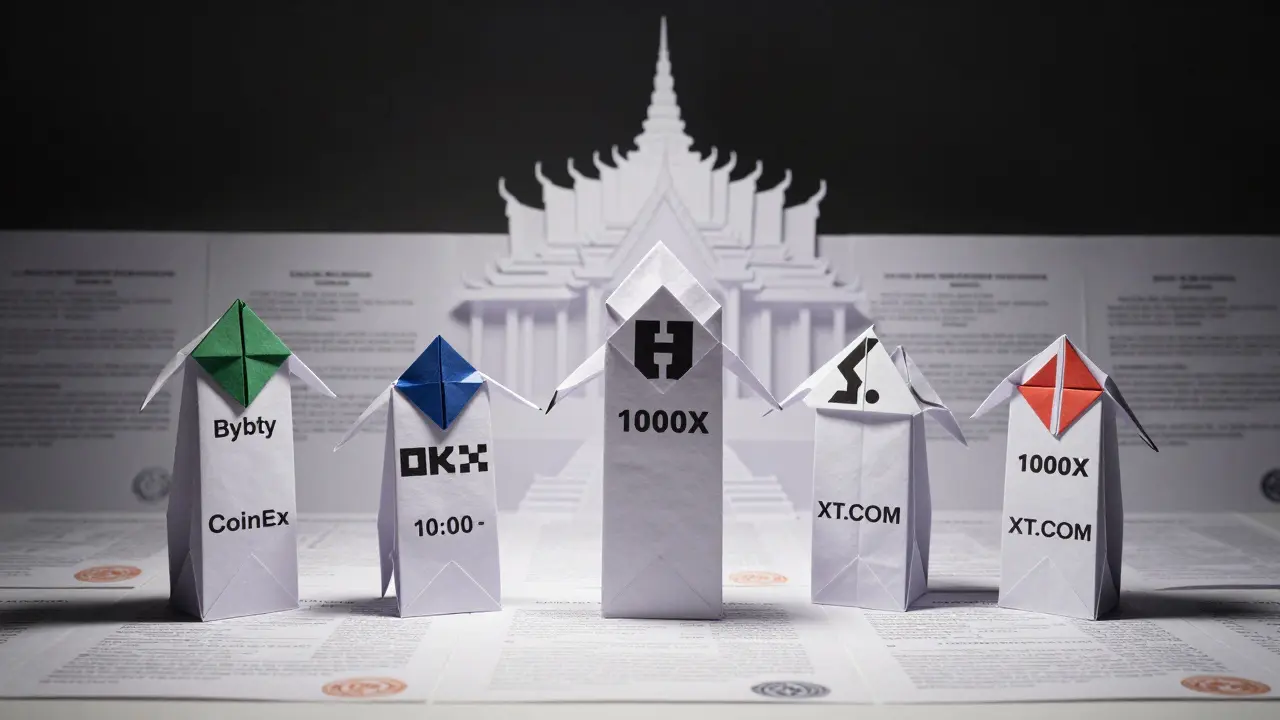
The SEC didn’t leave room for ambiguity. On May 29, 2025, they announced a list of five major cryptocurrency exchanges that would be blocked nationwide. These platforms were identified as operating illegally without proper licensing and serving as conduits for illegal activities.
| Platform Name | Type | Status Before Ban | Reason for Ban |
|---|---|---|---|
| Bybit | Crypto Exchange | Popular among retail traders | No Thai SEC license; targeted for P2P operations |
| OKX | Crypto Exchange | Major global player | Operating without local authorization |
| CoinEx | Crypto Exchange | Alternative trading platform | Lack of compliance with Thai regulations |
| 1000X | Derivatives Platform | Niche derivatives trading | Unlicensed operation |
| XT.COM | Crypto Exchange | Community-focused exchange | Non-compliance with Digital Asset Business Law |
The actual blocking took place on June 28, 2025. Users had roughly one month to withdraw their assets or transfer them to compliant exchanges. Many found this timeline insufficient, especially those with large holdings or complex withdrawal histories. Social media erupted with complaints as users struggled to move funds before the deadline.
Penalties for Violators: It’s Not Just About Blocking
The Thai government didn’t stop at blocking websites. They introduced severe penalties to deter operators and users alike. Under the new framework, running an unlicensed foreign P2P crypto platform can result in:
- Up to three years in prison
- Fines of up to 300,000 baht (approximately $8,700 USD)
- Both penalties applied simultaneously
These penalties apply not just to platform operators but also extend to traditional financial institutions. Banks, telecom companies, and even social media platforms now share responsibility for preventing cybercrime. If a bank allows its infrastructure to be used for scams without implementing preventive measures, it can be held legally liable for damages caused. This joint liability model forces banks to scrutinize crypto-related transactions more closely, often leading to frozen accounts or rejected transfers if suspicious activity is detected.
Impact on Cross-Border Payments and Business
While the ban protected consumers from scams, it created significant friction for legitimate business operations. International companies doing business with Thai partners suddenly faced hurdles in sending payments. Previously, businesses might have used platforms like Bybit or OKX to settle invoices quickly. Now, all digital asset transactions must occur on locally licensed platforms.
This means international businesses cannot send funds directly to Thai counterparts without using a regulated domestic intermediary. The result? Increased compliance overhead, higher transaction costs, and delays. Navigating multiple sets of AML/KYC rules across borders became a logistical nightmare for many firms. Some reported payment delays of several days, which disrupted cash flows and strained relationships.
Experts noted that this approach particularly impacted sectors reliant on fast cross-border settlements, such as e-commerce and freelance services. The requirement to route everything through local exchanges added layers of bureaucracy that simply didn’t exist before.

The Flip Side: Domestic Innovation Thrives
It’s important to note that Thailand didn’t shut down crypto entirely. Instead, they redirected innovation inward. While foreign platforms were blocked, the government continued supporting domestic blockchain development. In fact, Thailand positioned itself as a hub for controlled crypto innovation.
In May 2025, just weeks after announcing the bans, Thailand revealed plans to issue "G Tokens"-digital asset tokens backed by government bonds. Approximately 5 billion baht ($150 million) worth of these tokens were planned as part of public debt issuance. This move signaled confidence in blockchain technology while maintaining strict oversight.
Additionally, the country explored building a blockchain-based trading platform for securities firms and considered launching a stablecoin backed by government bonds. These initiatives show that Thailand wants to harness blockchain’s benefits without sacrificing regulatory control. For local developers and fintech startups, this opened new opportunities to build solutions tailored to Thai regulations.
What Should You Do Now?
If you’re currently holding assets on any of the banned platforms, you likely already know the drill. But for future reference, here’s what you should keep in mind:
- Migrate Early: Don’t wait for announcements. Move your assets to licensed Thai exchanges like Bitkub or SATO Pro well ahead of potential regulatory changes.
- Verify Licensing: Always check if a platform holds a valid license from the Thai SEC. The SEC maintains a public list of authorized digital asset service providers.
- Diversify Storage: Consider using self-custody wallets for long-term holdings. This reduces reliance on centralized exchanges that may face regulatory risks.
- Monitor News: Stay updated on regulatory developments. The Thai SEC frequently updates its guidelines, and missing a notice could cost you dearly.
For international businesses, explore alternative payment methods that comply with Thai regulations. Working with local financial intermediaries or using fiat-based settlement options may reduce friction.
Is crypto still legal in Thailand in 2026?
Yes, cryptocurrency remains legal in Thailand, but it is not considered legal tender. It is classified as a 'digital asset' under Thai law. Trading is only permitted through locally licensed and regulated exchanges. Foreign platforms without licenses are banned.
Which crypto exchanges were banned in Thailand?
The following exchanges were blocked on June 28, 2025: Bybit, OKX, CoinEx, 1000X, and XT.COM. These platforms were deemed unlicensed and non-compliant with Thai regulations.
Can I still use Binance in Thailand?
Binance operates in Thailand through its local entity, Binance TH, which holds a license from the Thai SEC. However, the global version of Binance is restricted. Users must ensure they are accessing the licensed local platform.
What happens if I trade on an unlicensed platform?
Trading on unlicensed platforms carries significant risks. Your assets may be frozen or lost if the platform is blocked. Additionally, you could face legal consequences, including fines or imprisonment, depending on the nature of your activities.
How does this affect cross-border payments?
Cross-border crypto payments are now more complex. International businesses must use locally licensed Thai exchanges to send or receive funds. This adds compliance steps and potential delays compared to direct peer-to-peer transfers.
Are there any Thai-licensed exchanges I can use?
Yes, several exchanges hold licenses from the Thai SEC, including Bitkub, SATO Pro, and Binance TH. These platforms comply with local regulations and offer secure trading environments for Thai residents.
Will other countries follow Thailand’s example?
Many regulators in Southeast Asia are watching Thailand’s approach closely. If the ban successfully reduces crime without stifling innovation, other countries may adopt similar measures. However, each nation will tailor policies to its own economic context.
What are G Tokens?
G Tokens are digital asset tokens issued by the Thai government as part of public debt. Backed by government bonds, they represent an experiment in combining blockchain technology with traditional finance. Approximately 5 billion baht worth were planned for issuance in 2025.
Can I appeal if my account was frozen?
If your account was frozen due to regulatory actions, you should contact the platform first. If unresolved, you may need to seek legal advice. The Thai SEC provides guidance on dispute resolution, but outcomes vary based on individual circumstances.
How do I verify if an exchange is licensed?
Visit the official website of the Thai Securities and Exchange Commission (SEC). They maintain a publicly accessible list of all licensed digital asset service providers. Always double-check before depositing funds.