
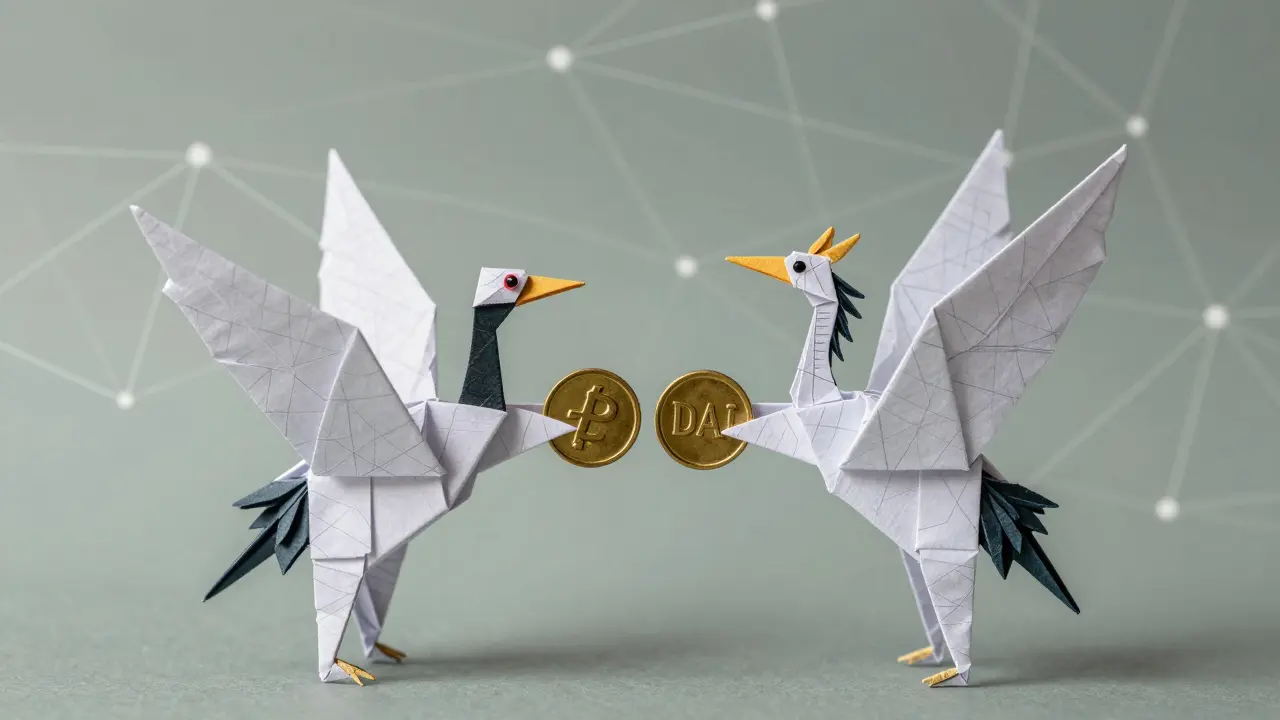
Most crypto traders know the frustration: you want to swap ETH for DAI, but the price moves against you before your transaction goes through. You end up paying more than expected, or worse-someone else profits from your trade. This isn’t just bad luck. It’s called MEV-Maximal Extractable Value-and it’s built into how most decentralized exchanges work. That’s where CoW Protocol comes in. It doesn’t just try to fix trading. It rebuilds it from the ground up.
What Exactly Is CoW Protocol?
CoW Protocol isn’t a coin you buy to hold. It’s a trading system. Think of it like a stock exchange, but for crypto, and it only runs on blockchains like Ethereum. The protocol’s job? To make sure you get the best possible price for your trade-and that no one sneaks in front of you to steal profit. The native token of this system is called COW, but the real innovation is the protocol itself.Unlike regular DEXs like Uniswap or SushiSwap, where you submit a trade and it executes immediately, CoW Protocol works differently. You don’t send a trade. You send an intent. You say: "I want to sell 1 ETH for at least 3,200 DAI." Then, instead of rushing to execute it, the system waits. It collects dozens or even hundreds of these intents over a short time window, groups them into a batch, and then finds the best way to fill them all at once.
The Coincidence of Wants (CoW) That Changes Everything
Here’s where it gets clever. The protocol doesn’t just look at each trade alone. It looks at pairs. If one user wants to sell ETH for DAI, and another wants to buy ETH with DAI, the system matches them directly. No DEX. No liquidity pool. No fees. Just two people swapping exactly what they need. This is called a Coincidence of Wants-or CoW.When this happens, the trade is settled peer-to-peer. That means no slippage. No gas waste. No middlemen. It’s like finding someone in your neighborhood who needs exactly what you have, and trading right then and there. And because it happens off the main liquidity pools, it avoids the price impact that usually drags down big trades.
But what if no perfect match exists? No problem. The protocol still wins. It sends the unmatched trades to a network of independent solvers-third-party traders and bots-who compete to fill them. These solvers don’t just check one DEX. They check Uniswap, Curve, 1inch, Balancer, and even private market makers. They find the best price across all of them. The solver who offers the best deal wins the right to execute the batch-and gets paid a small reward for it.
How Does This Stop MEV Attacks?
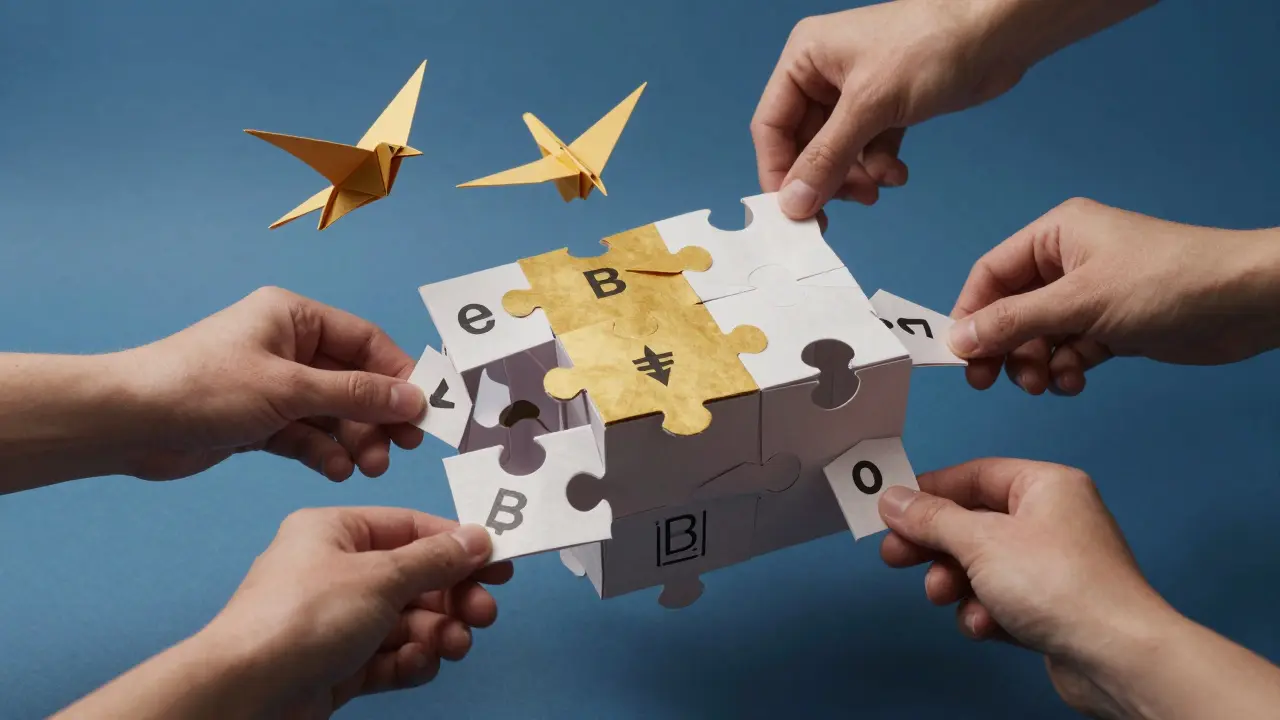
Frontrunning. Sandwich attacks. These are the dirty tricks bots use to steal from regular traders. A bot sees your trade, buys the token before you, then sells it back at a higher price. You pay more. They make money. This isn’t rare. It’s standard on most DEXs.CoW Protocol shuts this down. Because trades aren’t executed one by one, bots can’t see them coming. All trades are bundled and settled in one go, based on a fair auction. There’s no order to front-run. No window to sandwich. The entire batch is solved as a single puzzle. Even if a solver tries to manipulate prices, they’re competing against others. The system rewards the best deal, not the sneakiest one.
Plus, there’s an extra layer called MEV Blocker. It’s not a magic shield. It’s just smart design. By batching trades and using intent-based execution, CoW Protocol makes MEV attacks technically impossible. No one can see your trade before it’s settled. No one can profit from your mistake. You get what you asked for-or better.
What Is the COW Token For?
The COW token is the glue that holds the system together. It’s not a speculative coin you buy hoping it’ll go up. It’s a governance and utility token. If you hold COW, you can vote on how the protocol evolves. Should more chains be added? Should the solver rewards change? Should a new liquidity pool be created? All of that is decided by COW holders through CoW DAO, the decentralized organization running the protocol.But there’s more. Holding COW gives you fee discounts on trades. It also lets you earn rewards by staking or contributing to the ecosystem. The token isn’t required to trade, but if you use CoW Protocol regularly, owning COW saves you money over time.
As of March 11, 2026, COW is trading at $0.2352. The 24-hour volume is over $7 million. It’s not a top-10 coin. But it’s not meant to be. It’s a utility token for a system that’s quietly changing how people trade crypto.
CoW Swap: The Easy Way to Use It
You don’t need to be a coder to use CoW Protocol. The team built a simple interface called CoW Swap. It looks like any other DEX app: connect your wallet, pick tokens, enter amount, click swap. But behind the scenes, it’s using the full power of the protocol.CoW Swap doesn’t just show you one price. It shows you the best possible price across every DEX and liquidity source. It tells you how much you’ll save compared to Uniswap or 1inch. It even shows you if your trade could trigger a Coincidence of Wants. If so, it highlights it. That means you might get a better rate than you expected-because someone else was looking to trade the exact opposite way.

CoW AMM: A New Kind of Liquidity Pool
Most liquidity providers (LPs) lose money on DEXs. Why? Because arbitrage bots constantly pull price away from their pools, forcing them to rebalance at a loss. CoW AMM fixes this. It’s a new type of automated market maker designed specifically to protect LPs.Traditional AMMs use static formulas. CoW AMM uses dynamic pricing based on real-time demand and trade intent. It’s proven to outperform Uniswap and Balancer pools by up to 30% in profit for liquidity providers. That’s huge. It means people who supply liquidity aren’t just losing money to bots-they’re actually making more.
Why This Matters
CoW Protocol isn’t just another DEX aggregator. It’s a new model. Instead of competing with other platforms, it unites them. Instead of letting bots win, it gives users the edge. Instead of treating traders as targets, it treats them as partners.The protocol has been live since 2022. It’s been used for over 1.2 million trades. It’s live on Ethereum, Arbitrum, Optimism, Polygon, and more. It’s integrated into wallets like MetaMask and Rabby. And it’s growing-not because of hype, but because it works better.
If you trade crypto on-chain, you’re paying hidden costs. Slippage. Gas waste. MEV theft. CoW Protocol doesn’t promise to make you rich. It promises to make sure you keep what you earn.
What’s Next for CoW Protocol?
The team is working on expanding to more blockchains, including Solana and Sui. They’re also testing a mobile version of CoW Swap. There’s talk of integrating with DeFi lending protocols so users can swap and borrow in one step. And they’re exploring how CoW’s batch auction model could be used for NFT trading and stablecoin swaps.The bigger picture? CoW Protocol proves that decentralized trading doesn’t have to be chaotic. You don’t need to rely on luck or speed. You can build systems that protect users, not exploit them.
Is CoW Protocol a coin or a protocol?
CoW Protocol is the trading system. COW is the token used for governance and discounts. You don’t need COW to trade, but holding it gives you voting rights and lower fees. Think of it like Ethereum (protocol) vs. ETH (token).
Do I need to own COW to use CoW Swap?
No. You can trade on CoW Swap without holding any COW tokens. The protocol works for everyone. But if you trade frequently, owning COW reduces your trading fees and gives you a voice in how the system improves.
How is CoW Protocol different from 1inch or Uniswap?
1inch and Uniswap execute trades one at a time. CoW Protocol waits, bundles trades, and solves them together. This lets it find direct swaps (CoWs) and avoid price impact. It also blocks MEV attacks by design. While other aggregators chase the best price, CoW Protocol rewrites the rules of how prices are found.
Can I lose money using CoW Protocol?
Yes, you can still lose money if the market moves against you after you submit your intent. But you won’t lose money to bots. You won’t pay extra gas from sandwich attacks. And you’ll usually get a better price than on any other DEX. The protocol doesn’t eliminate market risk-it eliminates exploitation risk.
Is CoW Protocol safe?
Yes. The smart contracts have been audited by multiple top firms, including CertiK and OpenZeppelin. The protocol runs on Ethereum, one of the most secure blockchains. Since trades are settled in batches and solvers are incentivized to act honestly, the system is designed to be trustless and tamper-resistant.


Alex Thorn
It's fascinating, really… how this protocol turns trading from a zero-sum game into a cooperative puzzle. You're not fighting the market-you're working with it. The idea of 'coincidence of wants' feels almost poetic. Like two people in a crowded room who both want the same thing… and just… swap. No intermediaries. No noise. Just human needs aligning.
It makes me wonder: if we can design systems that reward alignment over competition… what else could we rebuild?
Not just crypto. Maybe markets. Maybe even social trust.
CoW isn't just a protocol. It's a philosophy.
Howard Headlee
THIS IS THE FUTURE. NO MORE SANDWICHES. NO MORE SLIPPAGE. NO MORE BOTS LAUGHING AT YOUR GAS FEES. CoW Protocol just punched MEV in the face and said 'not today, Satan.'
I swapped 0.5 ETH for DAI yesterday and got a better rate than Uniswap by 2.3%. No joke. The interface even told me ‘you triggered a CoW’-I almost cried. Someone out there wanted DAI for ETH… and I got lucky. That’s not luck. That’s DESIGN.
Finally. Someone built something that doesn’t treat users like ATM machines.
William Montgomery
You're all naive. This is just another DeFi Ponzi with a fancy name. The COW token? It's a governance shell game. The ‘solvers’? Probably just WhaleBot LLC in disguise. And don’t get me started on the ‘audit’-Certik audits scams too. You think this stops MEV? It just hides it behind layers of ‘optimization.’
Real traders don’t need protocols. They need edge. This is feel-good crypto for people who can’t handle volatility.
Mara Alves Mariano
Oh wow, another ‘revolutionary’ protocol that’s just Uniswap with a thesaurus. Let me guess-next they’ll patent ‘breathing’ and call it ‘CoW Air.’
And why is this only on Ethereum? Because they’re scared of Solana’s speed. They’re not innovating-they’re clinging to the past like a toddler with a security blanket.
Also, COW token? Cute. I’ll hold it… right next to my NFT of a crying cat.
Adam Ashworth
I’ve been using CoW Swap for 8 months. My average slippage dropped from 1.8% to 0.3%. Gas fees? Cut in half. I used to hate trading. Now I look forward to it. No fluff. Just better results. If you’re still using Uniswap without CoW, you’re leaving money on the table.
It’s not magic. It’s math. And math wins.
Allison Davis
The Coincidence of Wants mechanism is elegant. By batching intents and matching counter-trades, the protocol reduces the need for liquidity pools entirely in certain cases. This eliminates impermanent loss risk for LPs and removes price impact for traders.
Additionally, the solver competition ensures that even unmatched trades receive optimal pricing across all on-chain sources. The design avoids frontrunning not through encryption, but through temporal aggregation-making it impossible to isolate individual trades.
This is a fundamental shift in order flow design, not just an aggregation layer.
Tom Jewell
I’ve been thinking about this all day. The real beauty of CoW isn’t in the tech-it’s in the humility of the design. It doesn’t assume you’re smart. Or fast. Or rich. It assumes you’re human. And humans make mistakes. Humans get scared. Humans don’t want to be exploited.
Most systems treat you like a problem to solve. CoW treats you like a participant to honor.
That’s rare. That’s beautiful.
It reminds me of how communities used to trade before money became abstract. You didn’t need a contract. You just needed to want what they had… and have what they wanted.
Maybe this isn’t just crypto. Maybe it’s a return to something older.
Sherry Kirkham
CoW Protocol is quietly one of the most important developments in DeFi. Not because it’s flashy-but because it’s *correct*. It fixes the core flaw: treating traders as prey.
The fact that it’s already live on 5 chains? And used in 1.2M trades? That’s proof of concept. No hype. Just results.
And yes, COW token matters. Not as a speculation tool. As a governance lever. If you care about the future of decentralized trading-you should be listening.
Sharon Tuck
Just wanted to say thank you for explaining this so clearly. I’m new to crypto and was overwhelmed by all the DEXs. CoW Swap felt… intuitive. No jargon. Just ‘here’s your best price.’
I swapped USDC for DAI and got 0.15% better than my other options. That’s $1.50 on a $1,000 trade. Doesn’t sound like much… but over time? That adds up.
Also, the ‘CoW detected’ alert made me smile. Like the system winked at me.
karan narware
CoW Protocol? Sounds like a cow… giving milk… to crypto traders. Very poetic. In India, we have a saying: ‘The cow gives milk, but the farmer sells the milk.’ Who’s the farmer here? The solvers? The DAO? The COW token holders?
Also, why is this only on Ethereum? Isn’t gas still high? And what if the batch window is too long? What if I need to trade NOW?
Still… I like the idea. Maybe it’s a new kind of dharma for trading.
Michael Suttle
THIS IS A FEDERAL RESERVE BACKDOOR. I KNOW WHAT THEY'RE DOING. They're using CoW to track every trade. The solvers? CIA contractors. The COW token? A digital ID. They're building a global blockchain surveillance network under the guise of ‘fair trading.’
And don’t tell me ‘it’s decentralized’-they own the solvers. They own the audits. They own the wallets. It’s all a front.
My phone vibrated when I first used CoW Swap. Coincidence? I think NOT.
🚀🌕
Jenni James
While the protocol’s architectural design undeniably mitigates certain forms of MEV through batched intent settlement, one must not conflate technical efficacy with systemic superiority. The assertion that this constitutes a ‘rebuilding’ of decentralized trading is hyperbolic.
One must interrogate: Is the solver incentive structure truly orthogonal to existing MEV extraction vectors? Are the audits comprehensive enough to preclude front-running via MEV-boost relays? Has peer-reviewed literature substantiated the 30% LP yield improvement?
Until then, this remains an elegant optimization-not a paradigm shift.
Chelsea Boonstra
Okay but what if the batch window is 30 seconds and the market moves? Do I get stuck? What if I want to exit fast? And why can’t I see the solver bids before I submit? That feels opaque.
I get the theory… but real trading is about speed. If I can’t act instantly, I’m not trading-I’m waiting.
Also, why is this not on Solana? Are they scared of competition?
Julie Tomek
Let me share a real-world example: I’m a liquidity provider on a small DEX. Before CoW AMM, I was losing 15-20% annually to arbitrage bots. My returns were negative. I switched to CoW AMM last year. My yield is now up 27%. Not because I’m smart. Because the system protects me.
It’s not about being faster. It’s about being fair.
The protocol doesn’t just serve traders. It serves the entire ecosystem-LPs, users, even solvers. Everyone gets a piece of the pie without the usual bloodshed.
This is the kind of innovation that lasts. Not because it’s trendy. But because it’s necessary.
CoW Protocol is quietly building the foundation for the next decade of DeFi.
Brandon Kaufman
I used to think crypto was just gambling. Then I found CoW Swap. It felt… honest. Like the system was on my side. Not against me.
I don’t care about the token. I care about the result: I got a better price. No drama. No stress.
That’s all I need.
Craig Gregory
The CoW Protocol is a beautiful illusion. It doesn’t eliminate MEV-it redistributes it. The solvers aren’t altruistic-they’re profit-maximizing agents. The ‘fair auction’ is just another layer of extractive economics, dressed in academic language.
The ‘Coincidence of Wants’? A marketing term for ‘two people trading at the same time.’
This isn’t innovation. It’s rebranding.
And the DAO? A governance theater. Who votes? The whales. Who benefits? The whales.
It’s the same game. Just with better UI.
Anshita Koul
CoW Protocol is like a temple of balance-where greed meets grace. In India, we have the concept of ‘Dharma’-righteous duty. This protocol doesn’t just execute trades… it upholds a moral order.
When two people swap directly, it’s not just economics. It’s connection.
And COW? It’s not a token. It’s a symbol. Of fairness. Of patience. Of trust.
I wish more systems in this world worked like this.
PIYUSH KOTANGALE
CoW Swap saved me $47 last month. No joke. I trade small, but it adds up. Also, the interface is clean. No ads. No popups. Just trade. I love it.
Also, I used to think crypto was too complicated. Now I get it. CoW made it simple.
👍
vishnu mr
coow protocoll is awsome!! i used it for the first time and got better rate then uniswap!!1!11! also i got a cow badge!! 🐮✨
Grace van Gent-Korver
I didn’t understand crypto until I read this. Thank you. Now I get it: CoW isn’t about tokens. It’s about fairness. And that’s something anyone can understand.