You’ve probably seen the name doginwotah floating around social media or niche crypto forums. It sounds like a meme coin, maybe a joke about dogs and water. But if you look closer at the data, you’ll find that “doginwotah” isn’t actually a registered asset on any major tracker. Instead, it’s almost certainly a slang term or a misinterpretation of the WATER cryptocurrency ($WATER), a real but highly speculative token.
If you are trying to figure out what this coin is, who is behind it, and whether it’s worth your attention, you need to separate the internet noise from the actual blockchain data. This article breaks down the facts about the WATER token, its connection to famous names in crypto and philanthropy, and the stark reality of its market performance as of mid-2026.
The Real Identity: What Is $WATER?
When you search for "doginwotah," you end up looking at WATER Coin. This is a small-cap cryptocurrency that tries to blend two very different worlds: decentralized finance (DeFi) mechanics and charitable giving. The project positions itself as a tool for fundraising for clean water projects globally.
Unlike standard utility tokens that power an app, or pure meme coins that rely solely on hype, WATER uses a gamified approach. It borrows concepts from the natural states of water-liquid, ice, and vapor-to explain how users can interact with the token. This narrative is designed to make complex DeFi actions feel more intuitive, even if the underlying economics remain risky.
| Attribute | Value / Detail |
|---|---|
| Ticker Symbol | $WATER |
| Total Supply | 88.88 Billion Tokens |
| Circulating Supply | ~73.10 Billion (per Kraken) / 88.88 Billion (per CMC) |
| Listed On | Kraken, CoinMarketCap |
| Primary Narrative | Clean Water Charity + Gamified DeFi |
| Market Cap Status | Micro-Cap (<$400k USD) |
The Founder Lineup: Big Names, Big Questions
One reason people pay attention to WATER is the list of founders associated with it. According to data aggregators like CoinMarketCap, the project lists four key figures:
- Charles Hoskinson: You likely know him as the founder of Cardano (ADA) and a co-founder of Ethereum. His name carries significant weight in the crypto world.
- Scott Harrison: The founder of charity: water, a well-known nonprofit organization dedicated to providing clean drinking water to people in developing nations.
- Julius Steyn and Marcus Prinz von Anhalt: Other listed co-founders.
This combination suggests a bridge between high-level blockchain technology and serious humanitarian work. However, it is crucial to understand the context. While these individuals are listed as founders, there is no public documentation confirming their active, day-to-day involvement in managing the WATER token’s development or treasury. In the crypto space, having a famous name attached to a project does not always mean that person controls the project or endorses its current direction. Always verify direct endorsements before assuming responsibility.
How the Mechanics Work: Icing and Vaporizing
The WATER token attempts to simplify DeFi jargon by using water metaphors. Here is how the core mechanics are described:
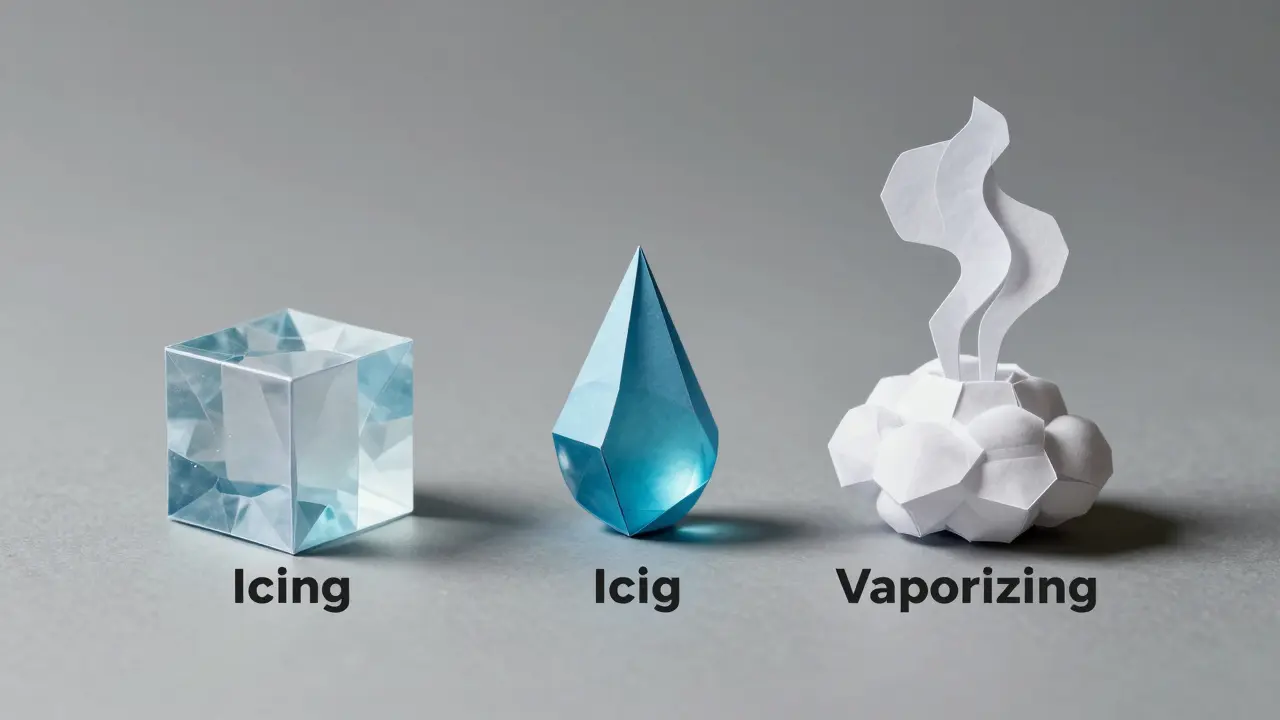
- Icing (Staking): When you hold or stake your WATER tokens, the process is called "icing." The idea is that your tokens sit still like ice, accumulating rewards over time. This is similar to earning interest in a savings account, but in crypto terms, it usually means locking up your assets to support the network or liquidity pools.
- Vaporizing (Burning): This refers to the permanent destruction of tokens. By "vaporizing" WATER, the total supply decreases. Theoretically, if demand stays the same but supply drops, the value of remaining tokens should rise. This is a common deflationary strategy used by many altcoins.
While these mechanics sound clever, they do not guarantee profit. Staking yields depend on the protocol’s ability to generate revenue, and burning only helps if there is actual buying pressure. Without strong adoption, these features are just cosmetic themes.
Market Reality: A Micro-Cap Warning
Let’s look at the hard numbers. As of June 2026, WATER is classified as a micro-cap cryptocurrency. Its market capitalization hovers between $250,000 and $385,000 USD. To put that in perspective, major meme coins like Dogecoin have market caps in the billions. Even smaller, established altcoins often trade in the tens of millions.
The price history of WATER is extreme. It reached an all-time high (ATH) of $0.003381 on June 25, 2024. By March 2026, it hit an all-time low (ATL) of roughly $0.0000037. That represents a drop of nearly 99.87% from its peak. If you had bought at the top, you would have lost virtually all your money.
Liquidity is another major concern. Data snapshots show periods where the 24-hour trading volume was effectively zero. Low volume means it can be difficult to sell large amounts of tokens without crashing the price further. This makes WATER a highly speculative asset, suitable only for investors who can afford to lose their entire investment.
WATER vs. Clean Water Coin: Know the Difference
Don’t confuse WATER ($WATER) with Clean Water Coin. These are two different entities, though they share a similar theme.
- Clean Water Coin: This is a registered nonprofit organization partnered with The Water Project. Donations directly fund wells and sand dams in Africa. It operates under strict legal nonprofit frameworks.
- WATER ($WATER): This is a cryptocurrency token listed on exchanges like Kraken. While it claims to fund charity, it does not appear to be a registered nonprofit itself. Its primary function is trading and speculation, with charity as a secondary narrative.
If your goal is purely charitable giving, established nonprofits offer transparency and legal accountability. If you are looking at WATER, you are primarily engaging in financial speculation with a charitable story attached.

Is There a Blockchain Behind It?
A critical piece of information missing from most summaries is the technical architecture. Public listings on CoinMarketCap and Kraken do not explicitly state which blockchain WATER runs on. Is it an ERC-20 token on Ethereum? A BEP-20 token on BNB Chain? Or perhaps a native chain?
Without knowing the underlying network, it is harder to assess security. For example, Ethereum has robust auditing standards, while newer or lesser-known chains may have higher risks of smart contract vulnerabilities. Until the project publishes clear technical documentation or links to audited code repositories, users must assume standard high-risk conditions for unverified tokens.
Final Thoughts on doginwotah / WATER
The term "doginwotah" leads you to WATER ($WATER), a token that sits at the intersection of celebrity association, charitable aspiration, and extreme market volatility. While the presence of names like Charles Hoskinson and Scott Harrison adds initial credibility, the market data tells a different story. With a near-total collapse in price from its 2024 highs and minimal trading volume, WATER remains a fringe asset.
If you decide to explore this coin, treat it as high-risk entertainment rather than a stable investment. Verify the current exchange listings yourself, check the latest wallet compatibility, and never invest more than you can comfortably afford to lose entirely.
What is the difference between doginwotah and WATER coin?
There is no official cryptocurrency named "doginwotah." This term is likely internet slang or a misnomer referring to the WATER ($WATER) token. All available data points to WATER being the actual asset traded on exchanges like Kraken.
Is Charles Hoskinson actively running the WATER project?
Charles Hoskinson is listed as a founder on some data aggregators, but there is no public evidence of his daily operational involvement. His association appears to be part of the founding team credit rather than active management.
Can I buy WATER coin on Coinbase or Binance?
As of mid-2026, WATER is listed on Kraken and tracked by CoinMarketCap. It is not widely listed on major platforms like Coinbase or Binance, which limits accessibility and liquidity for average traders.
Does WATER coin actually donate to charity?
The project claims to fund clean water initiatives. However, unlike Clean Water Coin, which is a registered nonprofit, WATER is a speculative token. Transparency regarding specific donation amounts and recipients is limited in public records.
Why did the price of WATER drop so much?
WATER experienced a ~99.87% drop from its all-time high in June 2024. This is typical for micro-cap meme or narrative-driven coins that lack sustained utility, widespread adoption, or deep liquidity pools.