
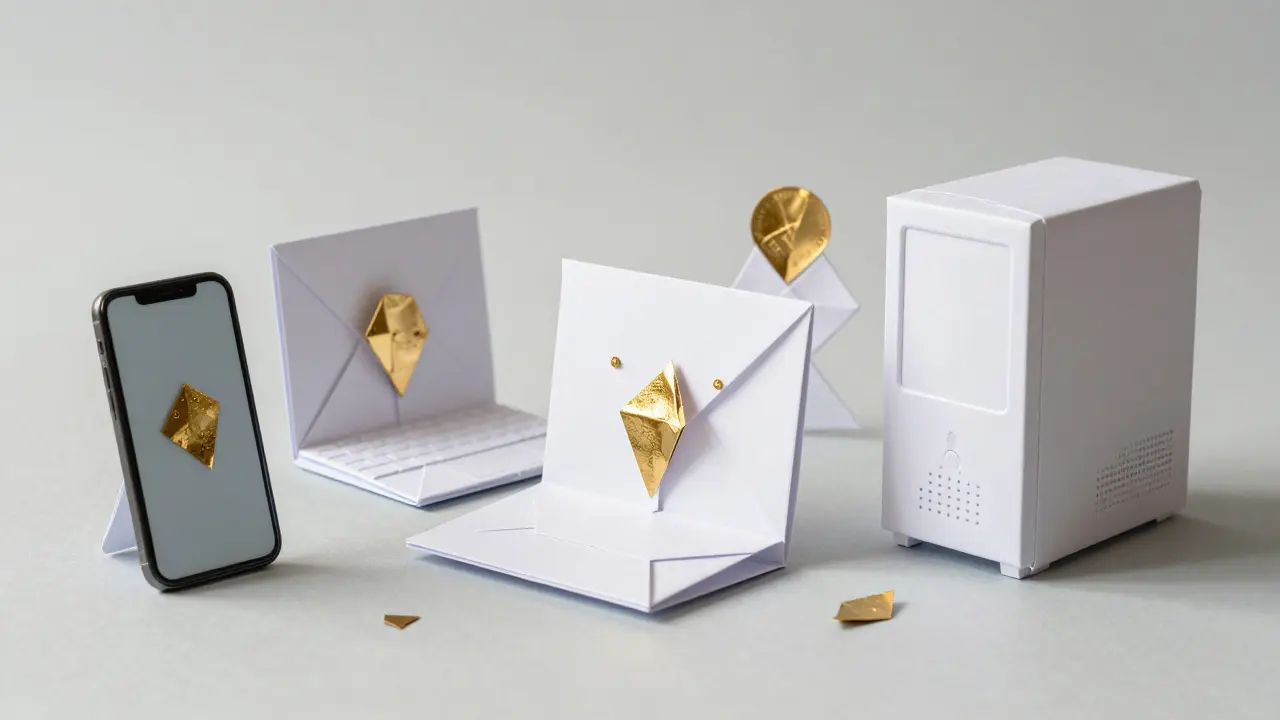
Imagine if you could mine Bitcoin, but instead of spending thousands on industrial cooling systems and massive ASIC rigs, you just used your laptop or a smartphone. That's the core hook behind Ore (ORE) is a unique cryptocurrency protocol built on the Solana blockchain that brings back the fairness of Proof-of-Work mining to a high-speed, modern network. It basically attempts to bridge the gap between Bitcoin's original "fair launch" ethos and Solana's blistering transaction speeds.
How ORE Actually Works
Most tokens on Solana are minted all at once or distributed via staking. ORE flips the script. It is the first token on the Solana blockchain to implement a mining mechanism. While Solana itself uses Proof-of-Stake to keep the network running, ORE adds a layer of Proof-of-Work (PoW) for its own distribution. This means that instead of venture capitalists getting a huge chunk of the supply before the public, users actually have to put in computational effort to "find" the coins.
The brilliance (or madness) of ORE is its accessibility. Unlike Bitcoin, which has become an arms race of hardware, ORE is designed to be mined on standard consumer electronics. Whether you're using a MacBook, an Android phone, or a dusty old PC, you can participate. This removes the barrier to entry, making the process of earning new coins a community activity rather than an industrial operation.
The Tokenomics: Supply and Scarcity
One of the most debated aspects of ORE is its supply. Because it's designed as a digital store of value, scarcity is built into its DNA. The project follows a capped-supply model, meaning there is a hard limit on how many coins will ever exist. According to the protocol's design, tokens are issued at a rate of roughly one token per minute.
However, if you look at different data aggregators, you'll see some confusing numbers. Some sources point to a 5 million token cap with no pre-mine, while others suggest a 21 million cap-a clear nod to Bitcoin's maximum supply. Regardless of the final number, the long-term goal is clear: the entire supply is projected to be fully mined by the year 2064. This slow bleed of supply into the market is intended to create long-term value through scarcity.
| Feature | Ore (ORE) | Bitcoin (BTC) |
|---|---|---|
| Network | Solana (SPL Token) | Independent Blockchain |
| Hardware Req. | Low (Laptops/Phones) | High (ASIC Miners) |
| Transaction Speed | Very High | Moderate/Low |
| Distribution | Democratic Mining | Industrial Mining |
The Meme Factor vs. Real Utility
If you spend any time on Twitter (X), you'll notice ORE has a very specific vibe. It uses a minimalist pixel-art aesthetic-think of a simple white pixelated circle representing a raw mineral. This places ORE in the interesting intersection of a "meme coin" and a serious financial experiment. It doesn't have complex utility like governance rights or a decentralized app (dApp) ecosystem at launch. Instead, its value is driven by community ownership and the psychological appeal of "mining" something rare.
Is it just a meme? In many ways, yes. It rides the wave of interest in mining-themed tokens. But beneath the surface, it's a technical experiment in how to distribute a token fairly on a high-performance chain without relying on a centralized seed round. For many holders, the "utility" is the membership in a community that values the original spirit of crypto: permissionless access and trustless creation.
Market Performance and the Risks
Investing in ORE is not for the faint of heart. Like many early-stage Solana projects, it has experienced extreme volatility. At one point, the token hit significant peaks, but data from CoinGecko shows it has traded as much as 99% below its all-time high. This is typical for low-liquidity altcoins that experience a massive surge of hype followed by a "risk-off" period where investors pull their money out.
The current market sentiment is often categorized as "extreme fear" during downturns. Because ORE doesn't have a massive corporate backing or a complex product roadmap, its price is heavily influenced by community sentiment and the overall health of the Solana Ecosystem. If people stop mining or stop talking about it on social media, the liquidity can dry up quickly, making it harder to sell large amounts of the coin without crashing the price further.

How to Get Involved with ORE
If you're looking to get your hands on some ORE, you have two main paths. The first is the "hard way": mining it. By using a compatible miner on your device, you can contribute computational power to the network and earn tokens as they are issued. This is the most aligned way to participate, as you're actively helping the project's distribution model.
The second path is the "easy way": trading. ORE is available on various decentralized exchanges (DEXs) on Solana. If you use a wallet like Phantom, you can swap other Solana-based assets for ORE. Just be sure to verify the contract address (oreoU2P8bN6jkk3jbaiVxYnG1dCXcYxwhwyK9jSybcp) to avoid buying fake scam tokens, which are rampant in the Solana space.
The Bottom Line on ORE
ORE is essentially a social and technical experiment. It proves that you can have the distribution fairness of a Proof-of-Work coin without the environmental and financial baggage of industrial mining. While it lacks the deep utility of a platform like Ethereum, it offers a nostalgic return to the "early days" of crypto where anyone with a computer could be a pioneer.
However, the lack of a clear "problem-solving" mission means it remains a high-risk asset. Whether it becomes a permanent digital store of value or remains a fascinating footnote in Solana's history depends entirely on whether the community can transition from "meme hype" to sustainable long-term demand.
Can I really mine ORE on my phone?
Yes, that is one of the main selling points of ORE. Unlike Bitcoin, which requires specialized hardware (ASICs), ORE's algorithm is designed to be accessible on standard consumer devices like smartphones and laptops, allowing for a more democratic distribution.
Is ORE a Proof-of-Stake or Proof-of-Work coin?
It's a hybrid. ORE runs on the Solana blockchain, which uses Proof-of-Stake for network security and consensus. However, the ORE token itself uses a Proof-of-Work mechanism for its issuance (mining), making it a PoW token living inside a PoS environment.
What is the total supply of ORE?
There is some conflicting data across platforms. Some sources cite a cap of 5 million tokens, while others mention 21 million. What is certain is that it has a capped-supply model and is designed to be fully mined by 2064.
Where can I buy ORE tokens?
ORE is primarily traded on Solana-based decentralized exchanges (DEXs). You can use a Solana wallet like Phantom to trade for it, provided you use the correct contract address to avoid scams.
Does ORE have any real-world utility?
Currently, ORE does not have built-in utility like governance or service payments. Its primary value proposition is as a community-driven digital store of value and a social experiment in fair token distribution.

Carroll Foster
Oh great, another "revolutionary" asset with zero utility besides the sheer dopamine hit of seeing a pixelated rock on a screen. The total lack of an actual use-case is just peak crypto ergonomics at this point. I'm sure the algorithmic distribution is totally fair and not just a way to gamify a slow-bleed liquidity trap. Absolutely brilliant way to burn through phone batteries for a token that's basically a digital pet rock with a ticking clock to 2064.
Lela Singh
This is an absolute game-changer! Imagine the thrill of turning your old Android into a tiny gold mine. Pure magic for anyone wanting to dive into the crypto pool without breaking the bank!
Artavius Edmond
I'm digging the vibe here. It's kind of cool how it brings back that early internet feeling where everyone had a fair shot. Let's just keep things chill and see where this experiment goes.
Amanda Faust
The supply discrepancy is just bad data management from the trackers not a flaw in the protocol itself. If you actually read the source code you'd see the emission rate is fixed regardless of what CoinGecko says
Will Dixon
i tried minin on my old phone but it just got real hot lol. maybe thats normal for this stuff
Prasanna Shembekar
my phone almost exploded trying to mine this omg i cant even handle the stress right now
Jessie Tayaban
Omg right!! My phone was literalye a toaster for ten mins!! I thot it was gonna blow up in my face haha but honestly its kinda exicting to see the numbers go up even if its just a tiny bit!!
Rebecca Violette
i just lost so much money on this coin and im actually shakeing right now why does this always happen to me its so unfair
Scott Fenton
One must exercise extreme caution when engaging with assets of such high volatility. It is imperative to only allocate capital that one is prepared to lose entirely in such speculative endeavors.
Lane Montgomery
Which miner app are you using?
EDOZIEM MICHAEL
money is just a shared illusion anyway so mining digital rocks is just a poetic way of spending our time until the end of the cycle
Stanly Hayes
This is exactly why we need more of this stuff in the US market! Get rid of the suits and let the actual people mine the coins! It's about time someone disrupted the VC stranglehold on these launches!
Agnessa Dale
I really believe the community will find a way to create some amazing utility for this in the future. Staying positive!
Mikayla Murphy
It's really interesting to see how different cultures are reacting to the idea of 'democratic mining.' It feels like a global social experiment in trust.
logan bates
Typical Solana project. Hype it up, dump it on the retail buyers, and leave a bunch of pixels. Only a fool believes in this garbage.