
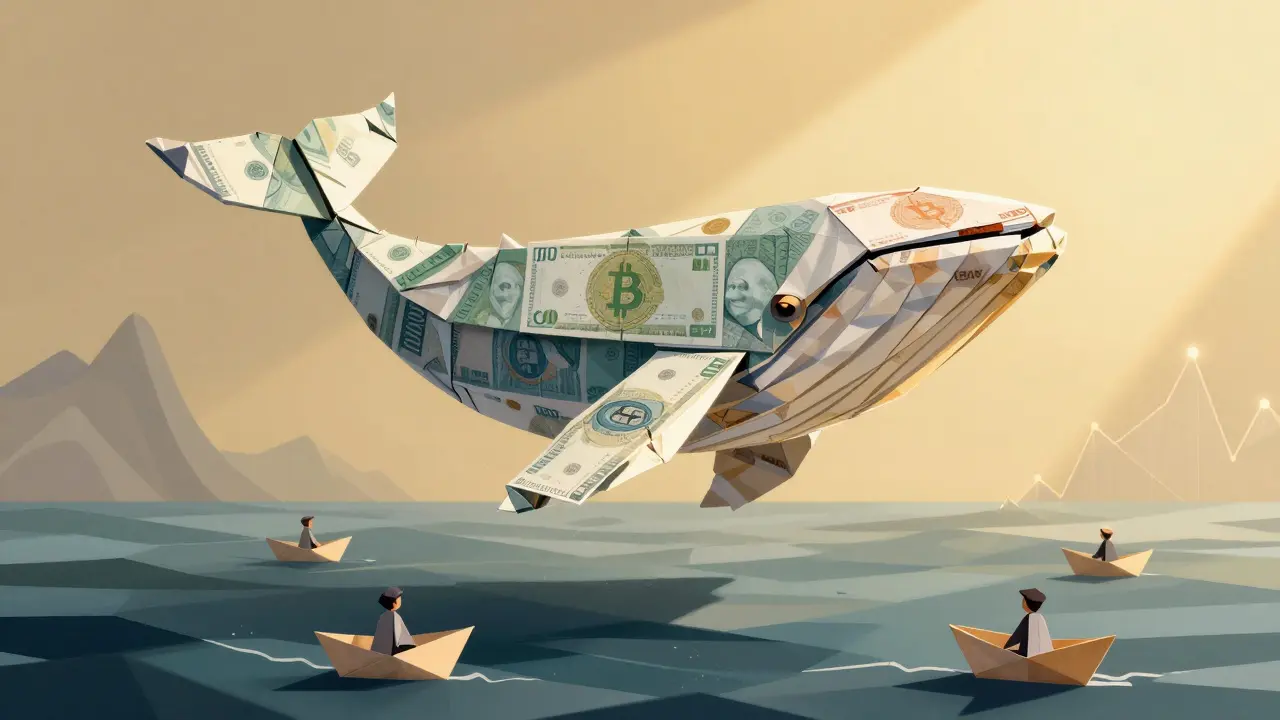
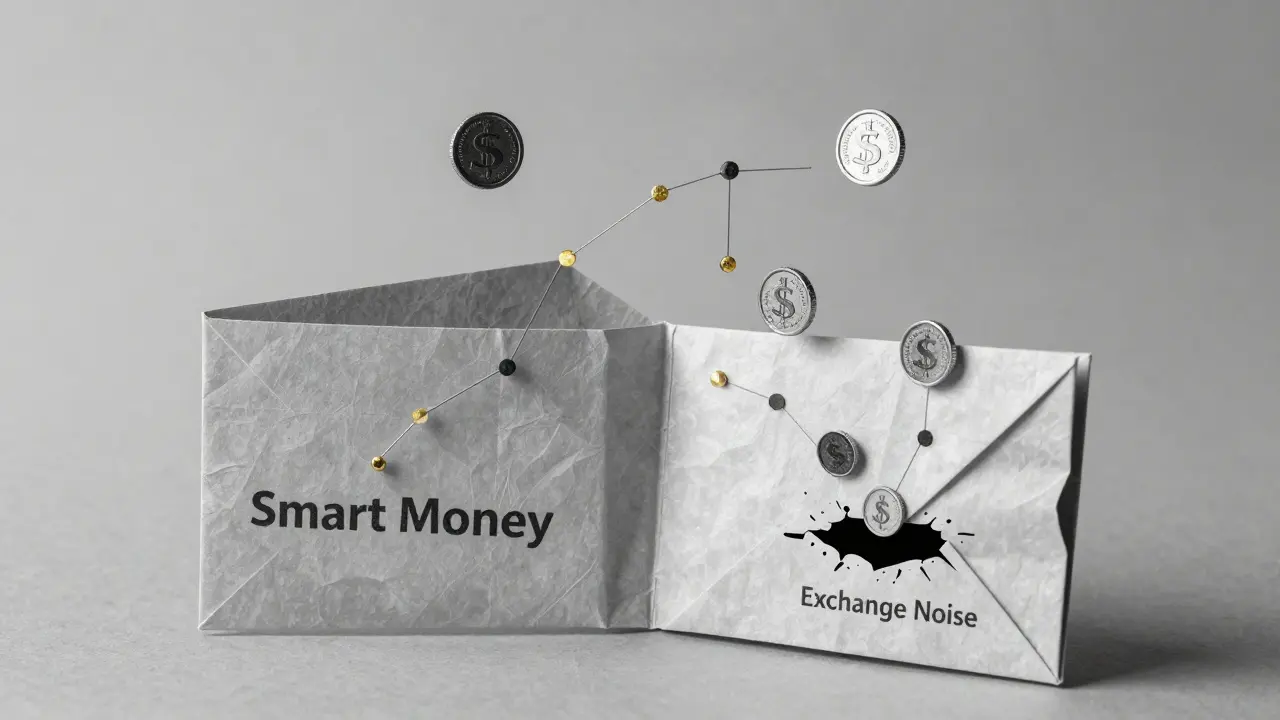
When you hear the word "whale" in cryptocurrency, don't picture an ocean giant. You're thinking about someone who holds so much Bitcoin, Ethereum, or another coin that a single move can shake the market. This is whale watching-the practice of tracking these massive wallets to guess what the market might do next. It’s not magic. It’s data. And it’s something thousands of traders use daily to make decisions. Whale watching isn’t new. The term started popping up around 2013 when Bitcoin began drawing serious attention. Back then, a few wallets held most of the supply. If one of them sold even 100 BTC, prices would drop. Today, the rules haven’t changed-just the tools. Now, we have platforms that alert us in real time when a wallet moves $1 million or more. But here’s the catch: not every big move means a price crash or surge. Most of the time, it’s just an exchange moving coins around. So what actually makes a whale? There’s no single answer. For Bitcoin, most analysts agree that holding 1,000 BTC or more qualifies you as a whale. At today’s prices, that’s about $65 million. But for smaller coins, it’s different. A wallet holding 1% of a coin’s total supply can be a whale if that coin only has $100 million in circulation. That’s why whale watching looks different for Bitcoin than it does for a new altcoin. The tools you use matter a lot. Free services like Whale Alert send out Twitter alerts every time a wallet transfers over $1 million across 15 major cryptocurrencies. It’s simple. You see a notification: "12,000 ETH moved from Wallet X to Wallet Y." But what does that mean? Is it a sale? A swap? A custody move? Without context, you’re guessing. That’s why serious traders don’t rely on alerts alone. Advanced platforms like Nansen and Glassnode go deeper. They don’t just show transactions-they label wallets. Is this a hedge fund? An exchange cold wallet? A DAO treasury? Nansen uses machine learning to analyze patterns across 15 blockchains, processing over 4 terabytes of data every day. Glassnode tracks long-term holder behavior and supply distribution. Together, they help answer the real question: Is this whale accumulating or distributing? Let’s say you notice a wallet that hasn’t moved in six months suddenly sends out 800 BTC. That’s a red flag. But if you check its history, you see it’s a wallet labeled as "Coinbase Custody" and it’s moving coins between cold storage and hot wallets. That’s routine. No big deal. But if it’s a wallet labeled "Smart Money" that’s been quietly buying for weeks, then you’ve got something. That’s the kind of insight premium tools give you. The biggest problem with whale watching? Noise. About 60-70% of large transactions come from exchanges. They’re just moving coins to balance reserves, pay out withdrawals, or rebalance custody. If you react to every alert, you’ll get burned. One Reddit user tracked a wallet that moved 1,200 BTC over 14 days. The price rose 22%. But they only knew it was meaningful because they checked the wallet’s history-it hadn’t moved in over a year. That’s the key: look at the pattern, not the single transaction. Whale watching works best in low-liquidity markets. If a coin has a $200 million market cap, a $10 million buy can push the price up 10%. But if you’re watching Bitcoin, which trades $30 billion a day, even $100 million in movement barely registers. That’s why many traders focus on altcoins with market caps under $500 million. That’s where whales still have real power. Some traders combine whale data with technical indicators. One trader on TradingView shared a strategy: only act when whale accumulation happens alongside an RSI below 35. That combo gave them a 63% win rate over 12 months. It’s not about the whale alone. It’s about the context. There’s also a growing debate about whether whale watching still works. Five years ago, a single whale could move markets. Now, institutions hold 37% of all crypto trading volume. That means big moves are often done by funds, not individuals. The University of Cambridge found that whale watching’s effectiveness has a half-life of 12-18 months. Markets adapt. Patterns change. What worked in 2022 doesn’t work the same in 2026. Nansen’s latest tool, "Smart Money," tries to fix this. It uses AI to detect accumulation patterns 72 hours before price moves with 82% accuracy. It doesn’t just show transactions-it looks at how wallets behave over time. Is this wallet buying during dips? Holding through volatility? That’s the future: behavioral analysis, not just transaction alerts. You don’t need a PhD to start. Beginners can begin with Etherscan or BscScan. Type in a wallet address. Look at its history. How many transactions? How big? Is it mostly sending to exchanges? That’s a sign of selling. Is it accumulating over weeks? That’s a sign of buying. Spend 5-7 hours learning how to read these. Then, if you want more, try Nansen’s free tier. It’s not perfect, but it shows you what’s possible. The biggest mistake? Thinking whale watching is a crystal ball. It’s not. It’s a clue. A signal. One piece of a puzzle that also includes volume, news, and technical indicators. The CFA Institute found whale movements predicted 68% of bullish reversals in Ethereum-but generated false signals 41% of the time in bearish markets. That’s why professionals use it as a secondary tool, not a primary one. Regulators are watching too. In March 2024, the SEC said whale tracking platforms don’t give investment advice if they only show raw data. But if they say, "This whale is buying, so you should too," that’s a different story. That’s advice. And that’s regulated. So should you watch whales? Yes-if you’re smart about it. Don’t chase every alert. Don’t assume every big move is a signal. Look for patterns. Check wallet labels. Compare with exchange inflows. Wait for confirmation. Whale watching isn’t about predicting the future. It’s about spotting when someone with more money than you is acting-and asking why. The market doesn’t move because whales decide. It moves because people react to what whales do. Your job isn’t to follow them. It’s to understand them.
How Whale Watching Works in Practice
Whale watching starts with public blockchain data. Every transaction on Bitcoin, Ethereum, Solana, or other public chains is recorded permanently. You can see every transfer, every wallet address, every timestamp. That’s the foundation. Beginners often start with blockchain explorers. For Ethereum, that’s Etherscan. For Binance Smart Chain, it’s BscScan. These sites show you a wallet’s entire history. You can see how much a wallet holds, when it last moved coins, and who it sent funds to. If a wallet suddenly sends 5,000 ETH to an exchange, that’s a red flag. But if it’s sent 10 similar transfers in the last year? Probably just routine. Advanced users use analytics platforms. Nansen, for example, doesn’t just show addresses-it labels them. It knows which wallets belong to Coinbase, Kraken, or a DeFi protocol. It even identifies wallets that behave like hedge funds. This labeling is done using machine learning. The system looks at transaction patterns: frequency, size, timing, and destination. A wallet that sends 100 BTC every time Bitcoin dips 5%? That’s likely a trend-following fund. Whale Alert is another tool. It’s free, simple, and sends real-time notifications via Twitter and email. You can set thresholds: get alerts for any transfer over $1 million in Bitcoin, Ethereum, or Solana. But again, context is missing. A $5 million transfer from a wallet labeled "Binance Cold Storage" is not the same as one from a wallet that hasn’t moved in 3 years. The real skill is cross-referencing. If you see a whale buying Bitcoin, check the exchange inflow data. Are more coins flowing into exchanges? That suggests selling pressure is building. Are coins flowing out? That suggests accumulation. Combine that with on-chain whale moves, and you get a clearer picture.Free vs. Premium Whale Watching Tools
| Feature | Whale Alert (Free) | Nansen (Premium) | Glassnode (Premium) | |---------|------------------|------------------|---------------------| | Real-time alerts | Yes | Yes | Yes | | Wallet labeling | No | Yes (Smart Money) | Partial | | Cross-chain tracking | 12 coins | 15+ chains | 6 chains | | Historical data | No | 5+ years | 8+ years | | Price prediction models | No | AI-driven patterns | Macro indicators | | Subscription cost | Free | $99/month | $149/month | | Best for | Beginners | Professionals | Institutional traders | Whale Alert is great for getting started. It’s simple. You get alerts. You see big moves. But you can’t tell if it’s meaningful. Nansen gives you context. You can see if a wallet is a known exchange, a DeFi protocol, or a private fund. You can track how a wallet behaves over time. That’s where the edge comes from. Glassnode is different. It doesn’t track wallets. It tracks supply. How much Bitcoin is held by long-term holders? How much is moving on exchanges? This helps you see market sentiment from a macro level.Why Whale Watching Fails More Than It Succeeds
Many people think whale watching is a shortcut to profits. It’s not. Here’s why it often fails:- Exchange movements dominate: 60-70% of large transactions are exchanges moving coins between wallets. Not trading. Not betting. Just moving.
- Confirmation bias: Traders see a whale buy and assume the price will rise. But whales also sell. And sometimes, they sell to create fake signals.
- Delayed reactions: Whale moves can happen days before price changes. If you act too early, you get stopped out.
- Market adaptation: As more people watch whales, whales change their behavior. They split large trades into smaller ones. They use privacy layers. They move through decentralized swaps.
How to Start Whale Watching Today
If you want to start whale watching, here’s a simple path:- Choose one coin to focus on. Bitcoin is easiest. It has the clearest wallet history.
- Go to Blockchain.com Explorer and search for a known whale wallet. Try 1A1zP1eP5QGefi2DMPTfTL5SLmv7DivfNa (Satoshi’s first wallet). Look at its history.
- Check how often it moves. What’s the average size? Does it send to exchanges? To other wallets?
- Sign up for Whale Alert on Twitter. Watch the alerts for a week. Don’t trade. Just observe.
- After a week, go to Nansen’s free tier. Compare the wallet labels. See if you can spot which ones are exchanges.
- Start tracking one wallet. Note when it moves. Wait 24-72 hours. See if the price moves. Write down what you see.
What Experts Say About Whale Watching
Alex Svanevik, CEO of Nansen, says tracking smart money gives traders a 15-20% edge in predicting short-term moves. But he also warns: "Not all whales are equal. Some are institutions. Some are bots. Some are just exchanges. You have to filter. Dr. Linda Jeng, former head of blockchain at Circle, says whale watching creates confirmation bias. "Many large transactions are routine. They’re not bets. They’re operations. If you treat them like signals, you’ll lose money." The University of Cambridge’s 2024 research found that whale watching’s effectiveness declines over time. What worked in 2021 doesn’t work as well in 2026. Markets adapt. Whales adapt. Tools adapt. You have to adapt too.
Future of Whale Watching
The next wave of whale watching isn’t just about tracking wallets. It’s about understanding behavior. Nansen’s Smart Money tool uses AI to detect accumulation patterns before prices move. Uniswap’s upcoming V4 upgrade will include native whale tracking for liquidity pools. That means you’ll be able to see when a whale adds or removes liquidity-not just sends coins. Gartner predicts whale watching will stay relevant for 5-7 more years. But JP Morgan thinks whale influence will drop below 5% by 2028 as institutional trading grows. That’s the future: fewer whales, more funds. Less drama. More data. The bottom line? Whale watching isn’t dead. It’s evolving. The best traders aren’t chasing alerts. They’re learning patterns. They’re waiting. They’re combining signals. And they’re not fooled by noise.Common Myths About Whale Watching
- Myth: If a whale buys, the price will go up.
Truth: Whales buy for many reasons-tax events, portfolio rebalancing, custody moves. Not all buys are bullish. - Myth: Whale watching works for Bitcoin.
Truth: Bitcoin is too liquid. A $100 million move barely moves the needle. Whale watching works better on altcoins under $500 million market cap. - Myth: You need expensive tools.
Truth: You can start for free. Use Etherscan. Watch Whale Alert. Learn the patterns. - Myth: Whales control the market.
Truth: Whales influence, but they don’t control. The market is now driven by institutions, ETFs, and algorithmic trading.
Final Takeaway
Whale watching isn’t a get-rich-quick trick. It’s a skill. Like reading candlestick charts or understanding volume. It takes time. It takes patience. And it only works when you combine it with other data. Don’t watch whales to predict the market. Watch them to understand the market. The rest? That’s up to you.What is considered a crypto whale?
A crypto whale is typically someone who holds enough of a cryptocurrency to influence its price. For Bitcoin, that’s usually 1,000 BTC or more-around $65 million at current prices. For smaller coins, it’s often 1% or more of the total supply. The exact threshold varies by coin, because a whale in a $100 million market cap coin is much smaller than one in a $100 billion market like Bitcoin.
Is whale watching reliable for making trading decisions?
Whale watching can be useful, but it’s not reliable on its own. Studies show it correctly predicts bullish reversals about 68% of the time in Ethereum, but generates false signals in 41% of bearish cases. Most large transactions come from exchanges moving coins-not trading. Always combine whale data with technical indicators, volume, and market context. Treat it as a clue, not a command.
Can I track whales for free?
Yes. Whale Alert offers free real-time alerts for transfers over $1 million across 15 cryptocurrencies. Blockchain explorers like Etherscan and BscScan let you view wallet histories for free. You can also use Nansen’s free tier to see basic wallet labels. The key is learning how to interpret the data-not just seeing alerts.
Why do whales move large amounts of crypto?
Whales move crypto for many reasons: rebalancing portfolios, paying taxes, moving funds between exchanges and cold storage, or responding to market conditions. Many large transfers are routine operations-not trading signals. For example, exchanges move coins daily to manage liquidity. A single transaction doesn’t tell you intent. You need to look at the wallet’s history over time.
Do whale watching tools work on all blockchains?
No. Whale watching only works on public blockchains like Bitcoin, Ethereum, Solana, and BSC, where transactions are visible. Privacy coins like Monero and Zcash hide transaction details, making tracking impossible. Also, tools vary in coverage. Whale Alert tracks 15 coins. Nansen covers 15+ chains. But even then, some wallets are hard to label accurately.

Basil Bacor
whale watchin? more like whale *fairy tales* lmao. you think some dude with 1000 btc is gonna crash the market? nah bruh. that’s just some guy movin coins to his new wallet. i’ve seen it a hundred times. chill out.
Emily Pegg
I just can't believe people still fall for this 🤦♀️ I mean, like... come ON. Every time I see a 'whale alert' I just laugh. It's always Coinbase moving coins between cold and hot wallets. I swear, half these alerts are just... routine bookkeeping. 🙄
Ethan Grace
There’s a deeper metaphysical layer here, you know? The whale isn’t just a wallet. It’s a symbol. A mirror. A reflection of our collective greed and fear. When we obsess over a single transaction, we’re not tracking money-we’re tracking our own insecurities. The blockchain doesn’t lie... but we sure do. We project meaning onto randomness. Is it accumulation? Or just a man moving his socks from the laundry room to the dryer?
Brian T
Honestly? This whole post feels like someone trying to sell a course. 'Whale watching'-yeah right. Most of these alerts are noise. Exchanges move coins every 5 minutes. You don’t need Nansen. You need a brain. And maybe a nap.
Nash Tree Service
The ontological implications of tracking decentralized financial actors through immutable public ledgers present a fascinating paradox: the very transparency that enables surveillance also renders the data statistically insignificant due to systemic noise. One must therefore question whether the pursuit of predictive insight through transactional archaeology constitutes epistemic overreach-or merely a modern-day form of divination.
Drago Fila
Love this breakdown! Seriously, if you're new, start with Etherscan. Just type in a wallet and scroll. Look for patterns. Don’t chase alerts. I started watching one wallet for 3 weeks-no trades. Then one day, it sent 200 ETH to a DeFi protocol. Two days later, the price jumped. Not because of the whale. Because I was paying attention. You don’t need fancy tools. Just patience.
Austin King
Whale watching works if you treat it like a weather vane-not a forecast.
Bryanna Barnett
I mean, the fact that you're even talking about 'whales' like they're some mystical force... it's so 2021. The market's institutional now. That 1000 BTC? Probably a BlackRock ETF rebalance. Stop romanticizing crypto like it's still the wild west.
Josh Moorcroft-Jones
Okay, let’s break this down, because there’s a lot of misinformation here-first, Whale Alert’s $1M threshold? Arbitrary. Why not $500K? Why not $2M? Second, Nansen’s labeling? Half of it is guesswork based on transaction frequency, which ignores that a single wallet can have multiple purposes-like a hedge fund using a wallet for both trading and staking. Third, Glassnode’s long-term holder data? It doesn’t account for multi-sig wallets, which account for 30% of BTC supply. And fourth-wait, I’m gonna need a spreadsheet. This whole thing is a house of cards built on cherry-picked data points.
Melissa Ritz
I read this whole thing. And I’m just… bored. Like, I get it. Big wallets move. So what? The market’s driven by sentiment, news, macro. Not some guy in Delaware moving 50 ETH. I’ve seen this ‘strategy’ fail 7 times in a row. It’s not a tool. It’s a distraction.
Cerissa Kimball
Whale watching is a useful heuristic when combined with on chain volume analysis and exchange net flow metrics but one must be cautious of false signals as the majority of large transactions originate from custodial entities and not speculative actors the data is noisy and requires filtering through behavioral patterns over time rather than single point events
James Burke
Honestly, I think this is one of the clearest guides I’ve seen. You don’t need to be a pro. Just pick one coin. Watch one wallet. Don’t trade. Just observe. I did that for 2 weeks. Learned more than all my trading courses combined. Seriously, try it. It’s not magic. It’s just paying attention.
Bill Pommier
This is textbook manipulation. Whale alerts are engineered to create FOMO. Every time you see a 'whale buy,' it’s followed by a pump-and-dump. The same wallets that 'accumulate' are the ones that dump 48 hours later. You’re being played. And you’re paying for the privilege.
Olivia Parsons
I started with Whale Alert. Then I checked Etherscan. Then I looked at exchange inflows. Now I only act when all three align. It’s not perfect-but it’s better than guessing. Keep it simple.
Issack Vaid
Ah yes, the classic 'whale watching' delusion. In America, we worship data like it’s divine. In India, we know: the market doesn’t care about your charts. It cares about who’s hungry. And the real whales? They’re not on Nansen. They’re in Dubai, Singapore, and Zurich. And they’re laughing at you right now.
Datta Yadav
You say whale watching is evolving? It’s dying. Every time someone publishes a 'guide' like this, the whales adapt. They split trades. They use mixers. They route through DEXs. The data you’re using? It’s obsolete. You’re chasing ghosts. And you’re paying $99/month to do it. The only thing you’re tracking is your own desperation.
Lydia Meier
The CFA Institute study cited here has been widely criticized for cherry-picking Ethereum data while ignoring Bitcoin’s liquidity dynamics. Furthermore, the 68% success rate is based on a sample size of 17 events over 6 months. This is not a statistically significant methodology. I suggest you revisit the original paper before quoting it as gospel.
Bonnie Jenkins-Hodges
USA. We built the internet. We built crypto. And now we got these ‘whale watchers’ acting like they’re NASA scientists. 🇺🇸 Just buy the dip. Sell the rip. That’s the real strategy. 🚀💎
Jamie Hoyle
Whale watching? More like whale *dancing*. They spin, they fake, they bait. Then they vanish. I’ve watched 12 wallets for 6 months. Only 2 ever moved meaningfully. The rest? Just noise. And you’re paying $149/month to hear static. You’re not a trader. You’re a data janitor.
Jeffrey Dean
The real question isn’t whether whales move the market. It’s whether we’ve become addicted to the illusion of control. We want to believe someone out there knows something we don’t. So we chase their moves. But the truth? The market doesn’t care about wallets. It cares about fear. And fear doesn’t leave a trail on the blockchain.
Eva Gupta
I’m from India, and we don’t have fancy tools here. But we have patience. I watch one wallet. I don’t trade. I just wait. Sometimes nothing happens. Sometimes it moves. And when it does? I check if the whole market is quiet. If yes? Then I listen. Not because I’m smart. Because I’m slow. And that’s my edge.
Ken Kemp
I been usin Nansen free tier for 3 months. Not perfect. But I seen a wallet labeled 'Smart Money' move 300 ETH right before the last rally. Took me 2 days to confirm it wasnt an exchange. But when I did? I got in. No fancy math. Just patience. You dont need to be a genius. Just consistent.
Steven Lefebvre
Whale watching isn’t about predicting. It’s about noticing. The market is a living thing. And whales? They’re the heartbeat. You don’t need to know the rhythm. Just feel when it skips.
Leah Dallaire
They say whales move the market. But what if they’re not real? What if it’s all AI bots? What if the ‘whale alerts’ are just deepfakes generated by hedge funds to trigger retail traders? I’ve seen wallets that move exactly every 72 hours. On the dot. Coincidence? Or a programmed trap? I’m not buying the story anymore.
prasanna tripathy
I just check Etherscan. Look at the wallet history. If it’s been quiet for months and then moves? That’s the one. No alerts. No tools. Just me. And my phone. And a cup of chai. Sometimes the simplest things work best.
Jonathan Chretien
Whale watching is like astrology. You see patterns because you want to. But the truth? The market’s just chaos with a fancy UI. You wanna make money? Learn candlesticks. Learn volume. Learn psychology. Not some guy’s wallet history. 🙃