
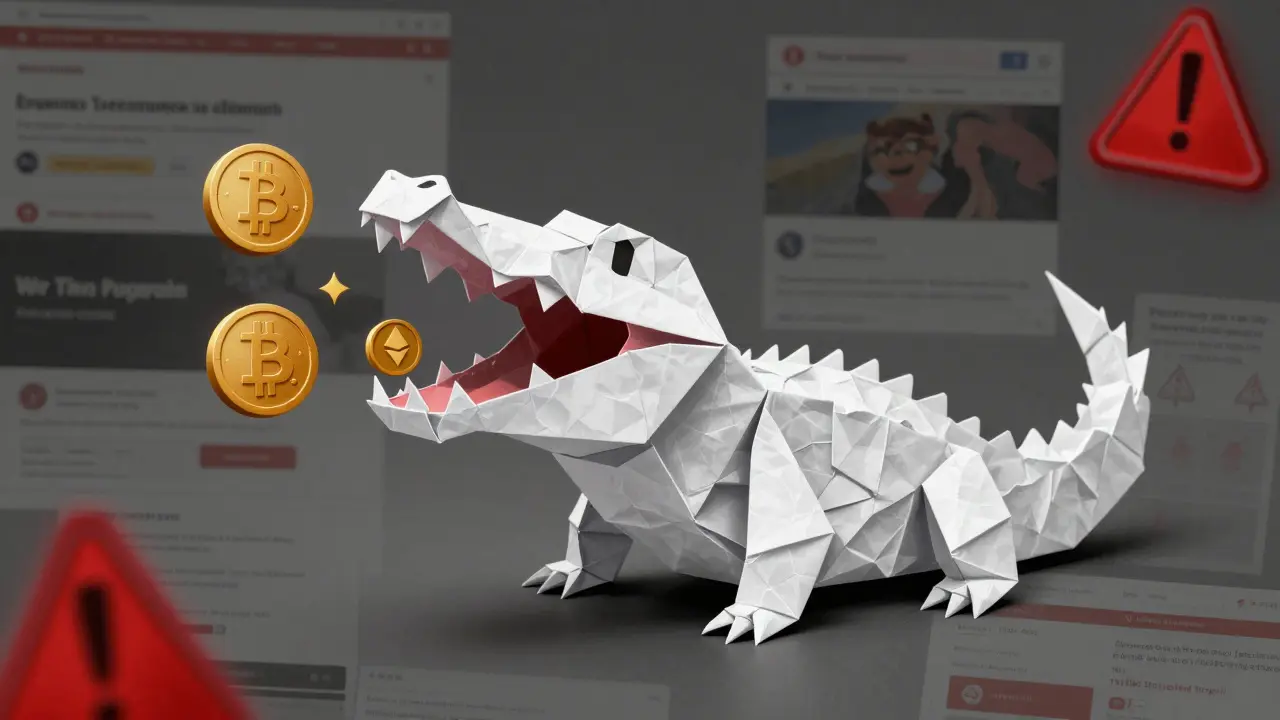
There’s no verified information about an exchange called Alligator Crypto Exchange. No official website, no registered business details, no user reviews on trusted platforms like Trustpilot or CoinMarketCap, and no mention in any major crypto news outlets. If you’ve seen ads, social media posts, or YouTube videos pushing Alligator as a new trading platform, be extremely careful. This isn’t just a lack of information-it’s a red flag.
Why You Can’t Find Anything About Alligator Crypto Exchange
Legitimate crypto exchanges don’t disappear from the internet. They have public registration records, audit reports, customer support teams, and social media accounts with real engagement. Binance, Kraken, Coinbase-they all have years of public history. Even smaller, niche exchanges like Bitrue or KuCoin have clear documentation, team profiles, and regulatory licenses.
Alligator doesn’t. Not even a trace. That’s not because it’s "too new." It’s because it likely doesn’t exist as a real, operational business. Many fake exchanges use names that sound technical or exotic-Alligator, DragonTrade, CryptoWolf-to appear legitimate. They copy website layouts from real platforms, use stock images of smiling traders, and promise impossible returns: "Earn 20% weekly!" or "Zero fees forever!"
How Fake Crypto Exchanges Trick You
Scammers don’t need to be clever. They just need you to act fast. Here’s how it works:
- You see a pop-up ad or TikTok video claiming Alligator is "the next Binance."
- You click the link. The site looks professional-clean design, real-looking charts, even fake "live trading" feeds.
- You deposit $500, $1,000, or more in Bitcoin or Ethereum.
- Within hours, the site disappears. Your funds vanish. The customer support email bounces. The social media accounts go silent.
This happened to over 12,000 people in 2024, according to the FBI’s Internet Crime Complaint Center. The average loss? $7,800. And most victims didn’t even realize they were scammed until it was too late.
What a Real Crypto Exchange Should Look Like
If you’re looking to trade crypto safely, here’s what you should demand from any platform:
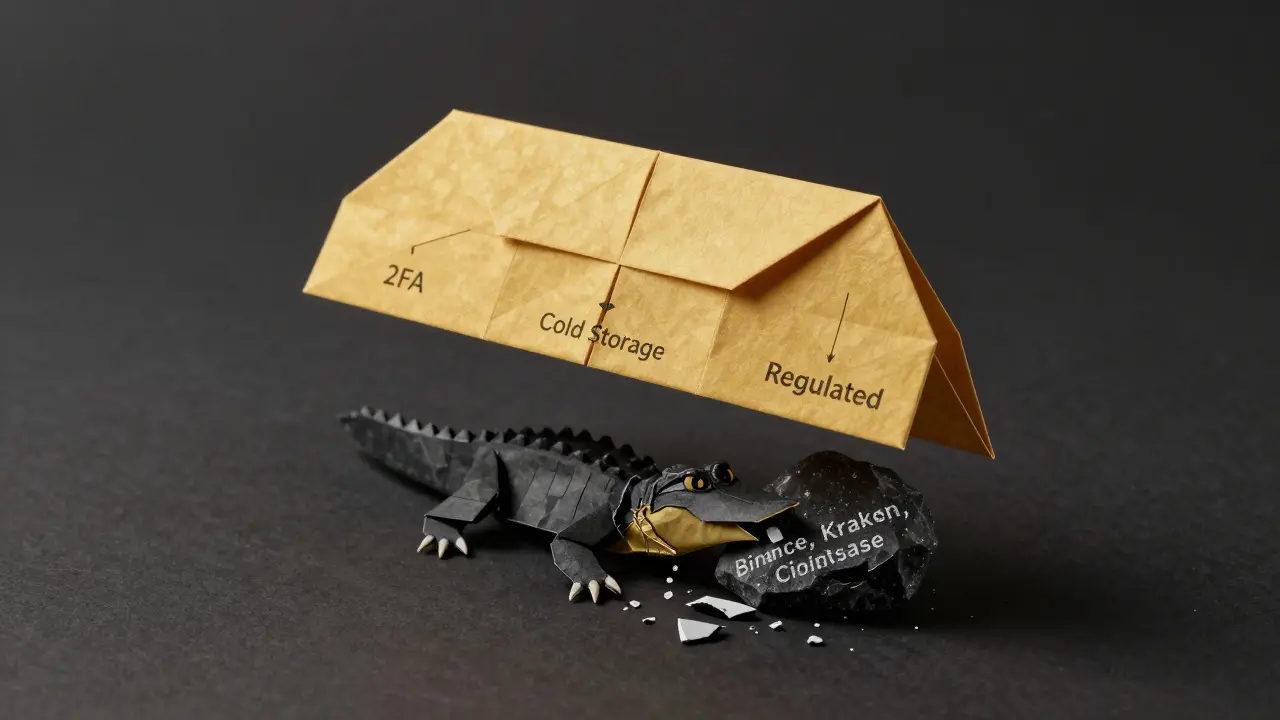
- Two-factor authentication (2FA)-not just SMS, but authenticator apps like Google Authenticator or Authy.
- Cold storage-at least 95% of user funds stored offline, away from hackers.
- Regular security audits-published reports from firms like CertiK or PeckShield.
- Regulatory compliance-licenses from authorities like the SEC, FCA, or FINMA.
- Transparent team-real names, LinkedIn profiles, and physical office addresses.
- Clear fee structure-no hidden charges, no surprise withdrawal fees.
Any exchange that hides this information isn’t just untrustworthy-it’s dangerous. And if Alligator doesn’t show you any of this, it’s not a platform. It’s a trap.
What to Do If You Already Deposited Funds
If you’ve sent money to Alligator or any unknown exchange:
- Stop immediately. Don’t deposit more. Don’t try to "recover" your funds by paying another "recovery service." Those are scams too.
- Document everything. Save screenshots, transaction IDs, emails, and links. Even if the site is gone, your records matter.
- Report it. File a complaint with the IC3 (internetcrime.gov) and your local financial regulator. In the U.S., contact the FTC. In the EU, contact your national cybercrime unit.
- Warn others. Post your experience on Reddit’s r/CryptoCurrency, Trustpilot, or CryptoScamDB. One report might stop someone else from losing their life savings.
Recovering stolen crypto is nearly impossible. Blockchain transactions are irreversible. But reporting helps authorities track patterns and shut down operations before they hit more people.

Safe Alternatives to Alligator
If you want to trade crypto securely, stick with platforms that have proven track records:
- Coinbase-U.S.-regulated, insured custodial wallets, easy for beginners.
- Kraken-strong security, low fees, supports 200+ cryptocurrencies.
- Bitstamp-operating since 2011, headquartered in Europe, audited annually.
- Binance-largest exchange by volume, but only use the official .com site. Watch out for fake domains.
These exchanges don’t promise miracle returns. They don’t use flashy influencers to sell themselves. They make money by charging fair fees and keeping your money safe. That’s the real business model.
Final Warning: If It Sounds Too Good to Be True, It Is
There’s no secret platform hiding out there that gives you better rates, lower fees, and higher security than the big names. Crypto isn’t a lottery. It’s a market. And the only way to win is by playing it smart.
Alligator Crypto Exchange doesn’t exist as a legitimate service. Any version of it you find online is a scam. Don’t click. Don’t deposit. Don’t even entertain the idea. Your money-and your peace of mind-is worth more than the hype.
Is Alligator Crypto Exchange real?
No, Alligator Crypto Exchange is not real. There are no official records, verified websites, regulatory licenses, or user reviews that confirm its existence. All references to it are likely part of a scam operation designed to steal cryptocurrency deposits.
Why can’t I find reviews or a website for Alligator?
Legitimate crypto exchanges are easy to find. They have public domains, social media, press coverage, and customer support. The complete absence of these signs for Alligator is a major red flag. Scammers avoid leaving traces so they can disappear after stealing funds.
How do I know if a crypto exchange is safe?
Check for: two-factor authentication (2FA), cold storage of funds, published security audits, regulatory licenses, a real team with public profiles, and transparent fees. If any of these are missing, walk away. Reputable exchanges like Coinbase and Kraken make this information easy to find.
Can I recover my money if I sent it to Alligator?
Recovering crypto sent to a scam exchange is extremely rare. Blockchain transactions are irreversible. Your best move is to report the fraud to authorities like the FBI’s IC3 or your local cybercrime unit. Keep all records-transaction IDs, screenshots, emails-but don’t pay anyone claiming they can recover your funds. That’s a second scam.
What should I do if I saw an ad for Alligator Crypto Exchange?
Don’t click the link. Don’t enter any personal or wallet information. Report the ad to the platform it appeared on (Facebook, YouTube, TikTok). Share your experience with others to prevent more people from falling for the same scam. Scammers rely on silence and secrecy-your warning could save someone else.


Michael Jones
Alligator Crypto Exchange is a complete scam-no legitimate business operates without a website, regulatory filings, or any traceable history. If you’re seeing ads for it, you’re being targeted. Always verify exchanges through CoinMarketCap or CoinGecko before depositing a single cent.
Telleen Anderson-Lozano
I’ve seen this pattern so many times-it’s not even clever anymore. Fake names, fake charts, fake testimonials. They use ‘Alligator’ because it sounds exotic and dangerous, like it’s ‘wild’ and ‘profitable.’ But real finance isn’t wild-it’s disciplined. And if they’re not registered with FINMA or the SEC? They’re not finance. They’re theater. And you’re the audience they’re draining.
Also, the fact that they don’t even have a privacy policy? That’s not negligence. That’s malice.
Shaun Beckford
Let me be blunt: Alligator Crypto Exchange isn’t a scam-it’s a predator with a website template and a TikTok budget. These guys don’t want your money. They want your trust. And once you hand it over? Poof. Like a magician who stole your wallet and then vanished into a puff of smoke made of NFTs and lies.
And the worst part? They’re not even original. ‘DragonTrade’ last month. ‘CryptoWolf’ two months before. Now ‘Alligator.’ What’s next? ‘VampireBat Exchange’? Please. I’m not even surprised anymore.
Chris Evans
This isn’t just about fraud-it’s about epistemological collapse. We’ve entered an era where trust is algorithmically manufactured. The illusion of legitimacy is now a product. Alligator doesn’t exist because it doesn’t need to. It only needs to appear. And in the post-truth economy, appearance is the only ontology that matters. The blockchain is immutable, but perception? That’s malleable. And they’ve weaponized it.
We’re not losing money. We’re losing the ability to discern truth in a system designed to dissolve it.
Pat G
Why are we even talking about this? America has real problems-border security, inflation, education. But we’re spending time on some fake crypto exchange named after a reptile? This is why the world thinks we’re dumb. If you can’t tell a scam from a real exchange, maybe you shouldn’t be trading at all. Get a job. Save your money. Stop falling for internet snake oil.
Alexandra Heller
It’s not just Alligator. It’s the entire culture of crypto that enables this. The obsession with ‘getting rich quick.’ The worship of anonymous founders. The belief that if it’s decentralized, it’s automatically moral. No. Decentralization doesn’t mean ‘lawless.’ It means ‘unregulated’-and that’s a vacuum filled by predators. Alligator is just the latest symptom of a deeper sickness: the glorification of greed disguised as innovation.
And yet, people still say ‘it’s just crypto.’ No. It’s human nature. And we’re failing it.
myrna stovel
Thank you for this post. I’ve seen so many people-friends, even family-get sucked into these scams. Please, if you’re reading this and you’re thinking about depositing into something that sounds too good to be true? Stop. Breathe. Google it. Look for audits. Look for team members with real LinkedIn profiles. If you can’t find them, walk away.
You’re not late to the party. You’re avoiding the trap. And that’s smart. That’s brave. That’s worth more than any 20% weekly return.
Hannah Campbell
Oh my god another ‘review’ of a fake exchange 😭 I’m literally crying laughing. Next they’ll be selling ‘T-Rex Wallets’ that eat your private keys and poops out 10x returns 🤡
Why do people still fall for this? Did we all forget the 2018 ICO graveyard? Or is it just that FOMO is stronger than trauma?
Bryan Muñoz
ALLIGATOR IS A CIA OPERATION TO TRACK CRYPTO USERS 😈 THEY USE THE NAME BECAUSE ALLIGATORS LIVE IN SWAMPS AND SWAMPS = DARK WEB 😱
THEY’RE NOT EVEN A SCAM-THEY’RE A COVER FOR SURVEILLANCE. THEY WANT YOUR WALLET ADDRESSES TO BUILD A GLOBAL DEBT MATRIX. THEY’RE ALREADY IN YOUR PHONE. DON’T CLICK. DON’T BREATHE. JUST SHUT DOWN YOUR DEVICE.
PS: I KNOW THIS BECAUSE I WORKED FOR THE NSA BEFORE I QUIT TO LIVE OFF GRID IN ALASKA. THEY’RE WATCHING THIS THREAD RIGHT NOW.
Rod Petrik
Why do you think no one can find Alligator? Because it doesn't exist on the surface web. It's only accessible via Tor. And the real ones? They're run by the same people behind the Silk Road. This is a honeypot to collect wallet addresses for mass blockchain analysis. The FBI knows. The DEA knows. But they're letting it run to build cases. You're not the victim. You're the data point.
Don't report it. Just stop using crypto. It's all a trap.
Sarah Baker
I want to believe in crypto. I really do. But scams like this make it so hard. I lost my savings once to a fake exchange. It took me two years to get back on my feet. I’m not mad-I’m just careful now. If you’re new to this? Start with Coinbase. Learn. Watch. Listen. Don’t chase dreams. Build a foundation.
You’ve got this. And you’re not alone.
Pramod Sharma
Scams exist everywhere. But crypto makes them easy to hide. Always check: domain age, SSL certificate, team LinkedIn, audit reports. If any one is missing? Walk away. Simple.
Anthony Ventresque
What’s interesting is how these scams evolve. Five years ago, they used fake YouTube influencers. Now they use AI-generated voices and deepfake videos. Alligator might not be real, but the algorithm that promotes it? That’s real. And it’s getting smarter.
How do we fight back? Education. Community. Reporting. But mostly-slowing down. If you feel urgency? That’s the scam talking.
Anna Gringhuis
Someone posted a TikTok ad for Alligator yesterday. I reported it. The account had 200K followers. All bots. The comments were all AI-generated: ‘I made $50k in 3 days!’ ‘This changed my life!’
It’s not even funny anymore. It’s terrifying. We need to start treating social media ads like telemarketers. Block. Report. Don’t engage. Even a like helps them.
Christina Shrader
My cousin lost $12k to something called ‘DragonTrade.’ He still thinks he’ll get it back. I don’t have the heart to tell him it’s gone. Just… be careful out there. And if you’re unsure? Ask someone who’s been around longer. We’ve all been there.
Kelly Post
I’ve been researching crypto scams for a year now. The most dangerous ones aren’t the obvious ones-they’re the ones that copy real platforms perfectly. Alligator’s site? Probably cloned from Binance’s 2020 layout. Even the ‘live trading’ feed is a looped video. They’re not lazy. They’re surgical.
Always check the URL. Binance.com ≠ binance-safety.com. And never trust a ‘support’ chat that doesn’t require 2FA to respond.
Tony Loneman
Wait wait wait-what if Alligator IS real and everyone else is lying? What if Coinbase and Kraken are controlled by the Fed to suppress decentralized finance? What if this whole post is a psyop to make people trust centralized exchanges? I’ve been reading Satoshi’s original whitepaper and…
...I’m not even kidding. The government owns all the blockchain data. Alligator is the only true alternative. You’re being manipulated.
Chris O'Carroll
Another ‘educational’ post about a scam no one’s ever heard of. Like, congrats. You wrote a 1000-word essay on something that doesn’t exist. Did you get paid for this? Are you affiliated with Coinbase? Just asking.
Liza Tait-Bailey
i saw this on tiktok and was like hmmmm maybe? but then i googled it and nothing came up so i just closed the tab lol
also i think the guy who made the ad used my dog’s face in the thumbnail?? 🐶