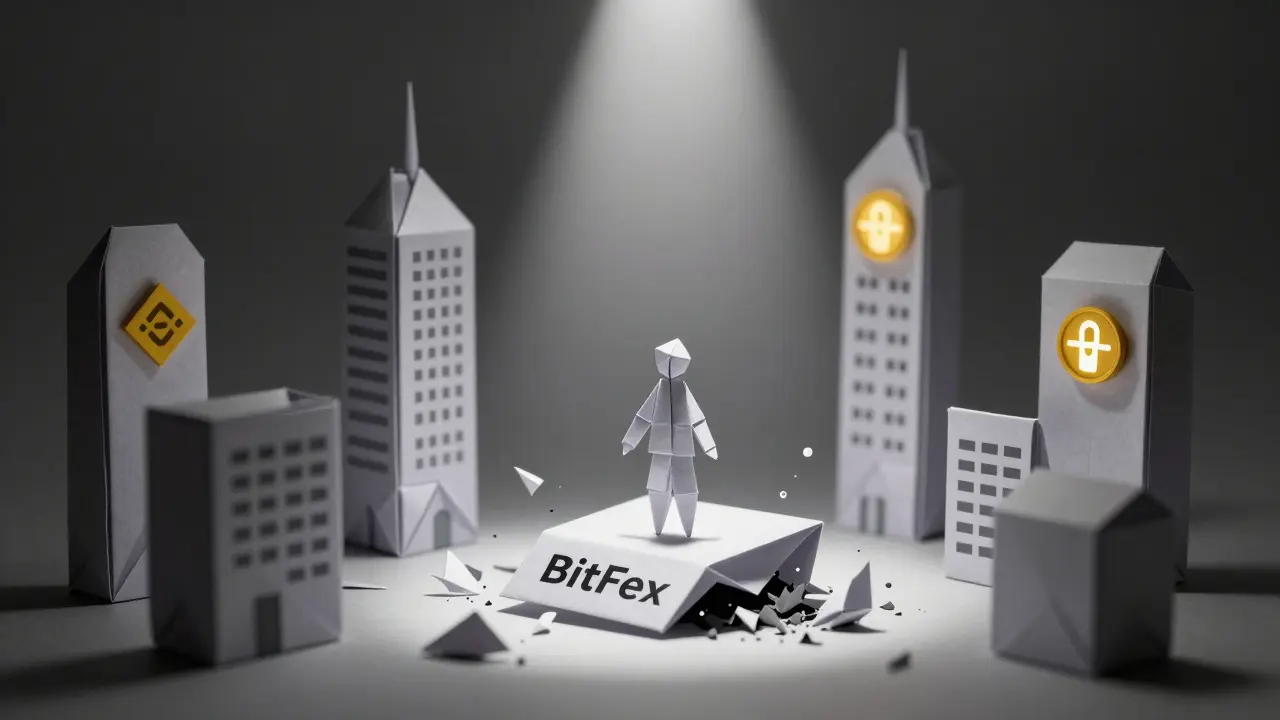

If you’re looking for a crypto exchange that doesn’t require ID verification, you might have come across BitFex. It promises anonymity, low fees, and easy sign-up - no documents, no waiting, just deposit and trade. Sounds tempting, right? But here’s the truth: BitFex isn’t what it claims to be. Behind the simple interface and bold marketing lies a platform flagged by regulators, haunted by user complaints, and missing almost every safety feature you’d expect from a legitimate exchange.
What Is BitFex, Really?
BitFex is a crypto exchange that launched in 2018, targeting users in Eastern Europe who want to avoid KYC (Know Your Customer) checks. Unlike Binance, Coinbase, or even Kraken, BitFex doesn’t ask for your passport or utility bill when you sign up. You just need an email. That’s its main selling point: privacy without paperwork. But privacy isn’t the same as safety. Legitimate exchanges like Bitfinex or Kuna offer privacy features within legal boundaries - they comply with anti-money laundering rules, keep funds insured, and have clear ownership. BitFex does none of that. There’s no public information about who runs it. No registered headquarters. No audit reports. No customer service phone number. Just a website and a promise.The Anonymity Trap
BitFex advertises itself as “fully anonymous.” That sounds great until you try to withdraw your money. Multiple users report the same pattern: you deposit funds - say, 500 EUR via bank transfer - your balance updates, and you feel confident. Then, when you try to cash out, suddenly you’re asked for ID. Documents you were never told you’d need. Your account gets frozen. Support goes silent. This isn’t a glitch. It’s a known scam tactic. The UK Financial Conduct Authority (FCA) added domains linked to BitFex to its official list of scam crypto platforms in September 2025. The FCA warns that these sites lure users with “no KYC” promises, then block withdrawals once funds are deposited. That’s not privacy - it’s a trap. Reddit user CryptoWatcher2025 posted in October 2025: “Deposited 500 EUR. Account credited. Couldn’t withdraw. Support didn’t reply for three weeks.” That’s not an outlier. On Trustpilot, BitFex has 12 reviews with an average rating of 1.8 out of 5. Most say the same thing: “Funds frozen,” “Verification appeared out of nowhere,” “No response.”No Security, No Transparency
Reputable exchanges publish their security measures: cold storage, multi-signature wallets, insurance funds, penetration tests. BitFex doesn’t mention any. Zero. Not a single detail on their website. In 2025, CryptoSecurity Labs analyzed 17 anonymous exchanges like BitFex. All shared the same red flags: no public ownership, no security documentation, no responsive support. The conclusion? They’re designed to disappear. When users start asking tough questions, the platform shuts down or changes domains. The website h5.bitexchange.org - linked to BitFex - was flagged by the FCA as part of a fraudulent network. Compare that to Bitfinex, which, despite a major hack in 2016, repaid all affected customers using its reserve fund. Bitfinex has a track record of accountability. BitFex has zero.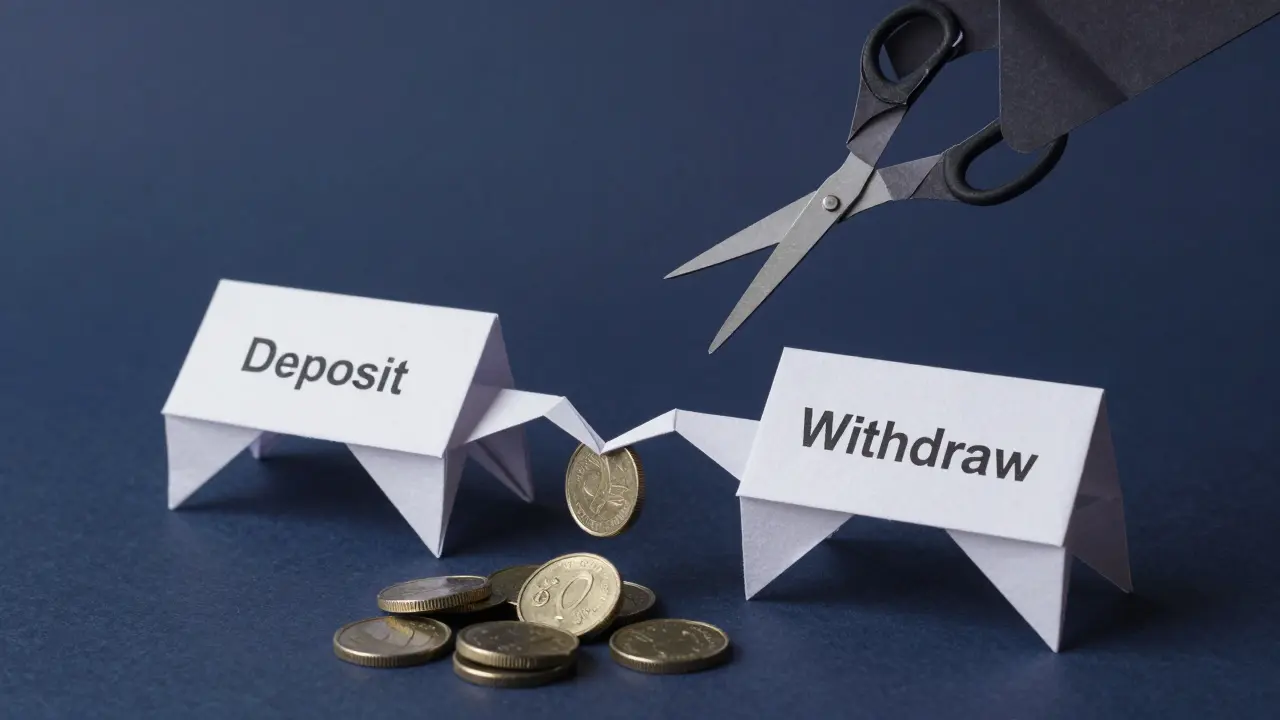
Fees? They’re Not What You Think
BitFex claims “low fees.” But here’s the catch: they don’t publish their fee schedule anywhere. No trading fees. No withdrawal fees. No deposit fees. Just silence. That’s not transparency - it’s evasion. Legitimate exchanges list every fee clearly: Binance, for example, shows maker/taker fees, withdrawal limits, and network charges upfront. BitFex leaves you guessing. That means hidden fees could be hiding in plain sight. And if you’re not sure how much you’re paying, you’re not in control.What You Can’t Do on BitFex
Even if you ignore the safety risks, BitFex is functionally useless for anyone beyond a beginner. - No mobile app. You’re stuck on a browser. - No advanced trading tools. No stop-loss, no limit orders, no margin trading. - No API access. You can’t automate trades or connect to portfolio trackers. - No charting tools. No candlestick patterns, no indicators. - No customer support channels. No live chat, no email response, no phone. It’s like buying a car with no brakes and no steering wheel - it might roll forward, but you can’t control it.Why People Still Use It (And Why They Regret It)
The only people still signing up for BitFex are those who don’t know better. Often, they’re new to crypto and heard “no KYC” and assumed it meant “easy and safe.” Chainalysis’ 2025 user behavior study found that users who avoid KYC are 3x more likely to lose funds to scams. They’re targeted by platforms like BitFex because they’re less likely to research the platform’s reputation or check regulatory warnings. And once they deposit, they’re stuck. According to the Blockchain Transparency Institute’s database, only 29% of users who reported withdrawal issues with BitFex ever got their money back. The rest? Gone.