

When you hear "BitTrade" and think of a crypto exchange, you might picture a simple, low-fee platform perfect for beginners. But here’s the truth: BitTrade isn’t a safe or reliable place to trade cryptocurrencies - not even close. It looks clean on the surface, claims zero trading fees, and targets Japanese users with JPY support. But behind that polished interface lies a platform with no regulation, no transparency, and serious red flags that could cost you your money.
What Is BitTrade?
BitTrade is a cryptocurrency exchange based in Japan, launched in 2016. It operates under bittrade.co.jp and focuses exclusively on the Japanese market. Unlike global giants like Binance or Coinbase, it doesn’t support USD, EUR, or other currencies - only Japanese Yen (JPY). It offers spot trading for Bitcoin, Ethereum, and about 19 other coins, with 21 trading pairs total. That sounds fine, right? But here’s where it falls apart: BitTrade is not licensed or regulated by Japan’s Financial Services Agency (FSA).
That’s not a small detail. Japan has some of the strictest crypto rules in the world. Since 2017, all exchanges operating legally there must be FSA-licensed. This means they must hold enough capital, use cold storage for most funds, undergo regular audits, and follow strict KYC rules. BitTrade doesn’t do any of this. There’s no public record of it applying for a license. No audits. No disclosures. Just silence.
Zero Fees? That’s a Red Flag
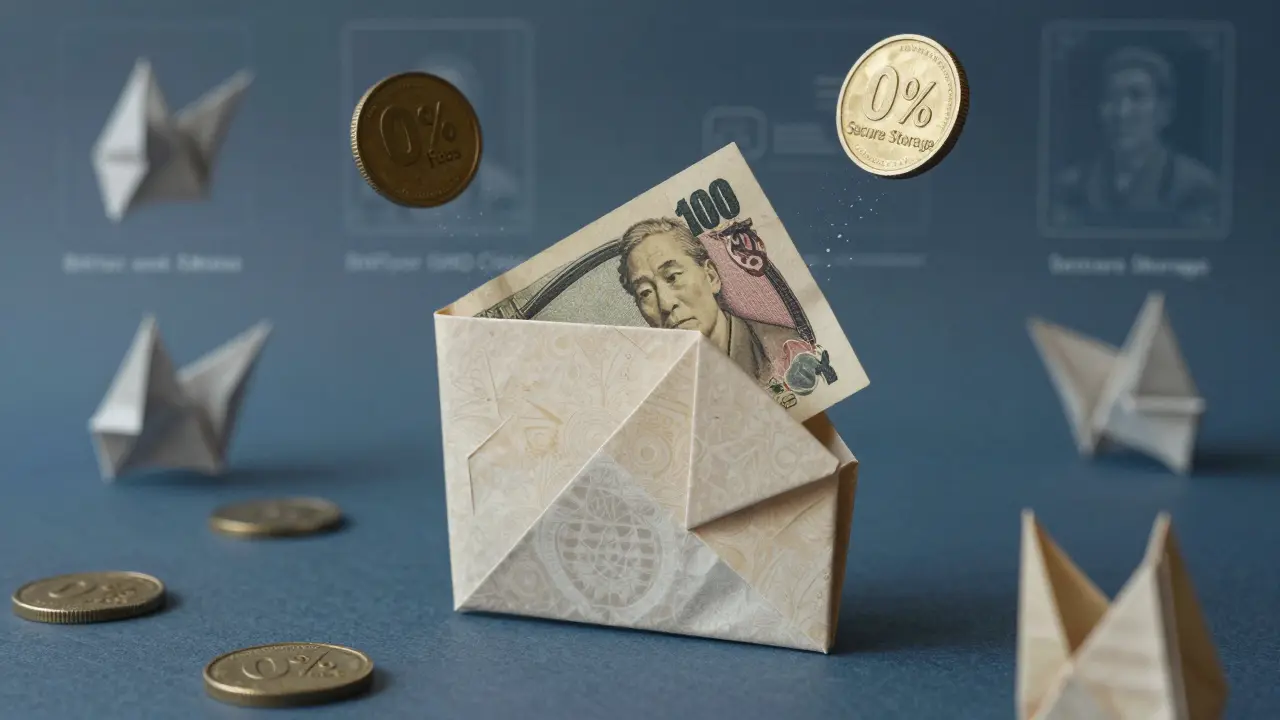
BitTrade claims 0.00% taker and maker fees. Sounds amazing. But in crypto, if something seems too good to be true, it usually is. Legitimate exchanges need to make money somehow - whether through withdrawal fees, spread markups, or premium services. BitTrade doesn’t list any of these either. FxVerify and Cashback Forex both question whether these "zero fees" are real or just a lure.
Think about it: how does a company pay for servers, staff, security, and customer support if it charges nothing? The answer? It probably doesn’t. Or worse - it’s using your deposits to fund something else. This pattern is classic among scam platforms that disappear after collecting enough user funds.
Traffic and Engagement: A Ghost Platform
According to SimilarWeb data from Q1 2024, BitTrade gets only about 3,105 visits per month. That’s less than 1% of what even smaller licensed Japanese exchanges like BitFlyer or GMO Coin get. And here’s the kicker: 99% of that traffic comes from organic search - meaning almost no one is referring users there. That’s not a sign of popularity. It’s a sign of obscurity.
Even worse, users aren’t staying. The bounce rate is 47%, meaning nearly half the people who land on the site leave immediately. The average visit lasts just 21.15 seconds. That’s not enough time to read a single page. Most likely, users are either confused by the interface, blocked by security warnings, or realizing something’s off and getting out fast.
Security? There’s No Proof
Every reputable exchange publishes details about its security: how much crypto is stored in cold wallets, whether funds are insured, if they use multi-sig, or have third-party audits. BitTrade? Nothing. Zero. Not a single line of information.
Compare that to BitFlyer, which stores over 95% of user funds offline and is audited annually. Or Kraken, which carries $250 million in insurance. BitTrade doesn’t even hint at these practices. That’s not just poor transparency - it’s a major risk. If the exchange gets hacked, or if the owners walk away, your Bitcoin is gone. No insurance. No recourse.
A Documented Withdrawal Scam
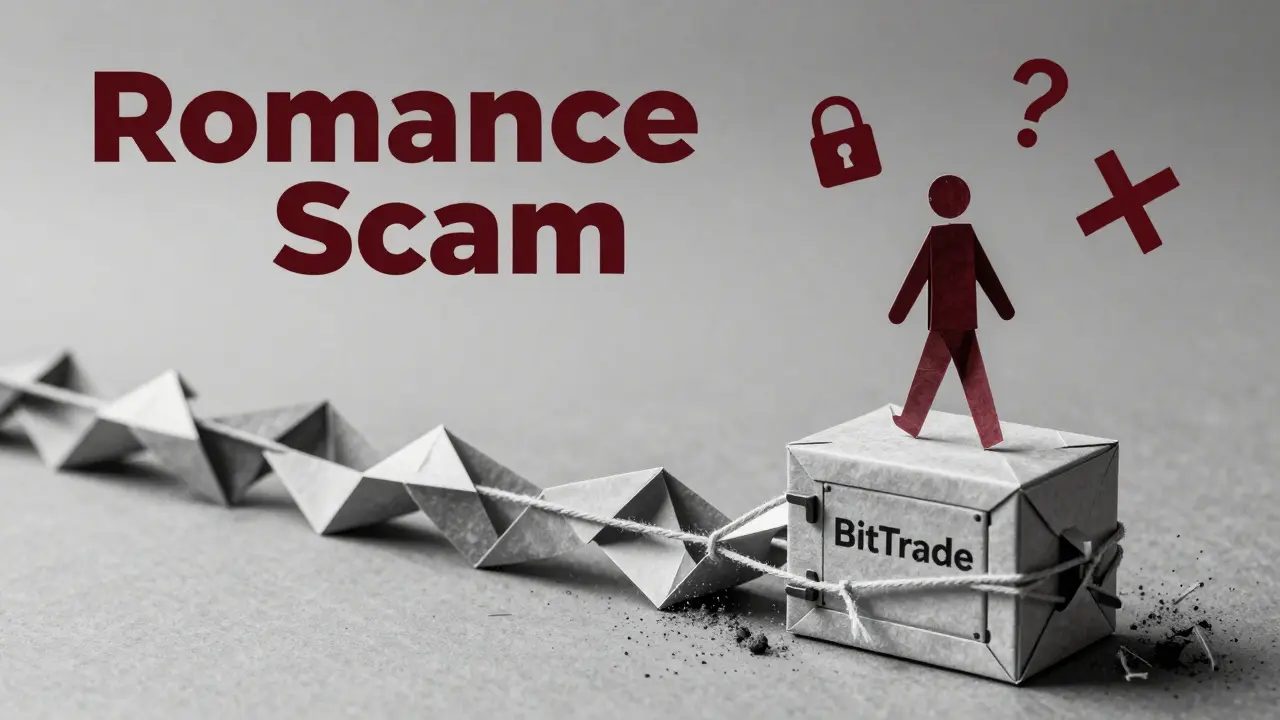
The most disturbing evidence comes from a user report on Forex.wikibit.com dated June 17, 2024. The user, "Greentea5931," says they were contacted on Tinder, moved to Line and Instagram, and then convinced to deposit money into BitTrade. They were promised high returns. When they tried to withdraw, the platform froze their account. No response. No explanation. Just silence.
This isn’t an isolated glitch. This is a textbook romance scam using BitTrade as the front. The platform doesn’t appear to have safeguards against this kind of fraud. No user verification checks. No fraud monitoring. No way to report suspicious activity. If you’re being cold-called by strangers on dating apps and told to "invest" on BitTrade - run. Don’t look back.
Confusion with Other Scams
There’s another platform called "Bit Trade" or "Bitbon System" that promises 72% to 228% returns through "liquidity staking." That’s not a real investment. That’s a Ponzi scheme. And because the names are so similar, scammers are likely using "BitTrade" to confuse people. Google "BitTrade" and you’ll see links to both the real site and scammy clones. If you’re not 100% sure you’re on bittrade.co.jp, you’re probably on a phishing site.
Why Japanese Users Should Still Avoid It
You might think: "I’m Japanese. BitTrade supports JPY. It’s local. It should be safe." But Japan has 23 FSA-licensed exchanges. BitFlyer, GMO Coin, and Liquid are all regulated, audited, and have millions in user deposits. They’re stable. They’re safe. BitTrade? It’s not even on the FSA’s official list.
After the 2018 CoinCheck hack - where $530 million in NEM was stolen - Japan cracked down hard. Exchanges now must follow strict rules. BitTrade ignores them all. That’s not a loophole. It’s a danger zone.
What You’re Really Getting
BitTrade offers:
- A Japanese-language interface
- Zero claimed trading fees
- 21 trading pairs
- JPY deposits and withdrawals
But what you’re not getting:
- Regulatory protection
- Secure fund storage
- Customer support that works
- Transparency about fees or security
- Any guarantee your money will be there when you need it
For a few dollars in fees, you can use a licensed exchange that protects you. Why risk everything on a platform that doesn’t even acknowledge it has a responsibility to you?
Alternatives That Actually Work
If you’re in Japan and want to trade crypto safely:
- BitFlyer - FSA-licensed, supports JPY, over 1.2 million monthly visits
- GMO Coin - FSA-licensed, strong security, reliable withdrawals
- Liquid - FSA-licensed, supports margin trading and more coins
All of these are regulated, audited, and have proven track records. None of them promise "zero fees" or hide behind silence. They don’t need to. They’re trusted.
Final Verdict: Don’t Use BitTrade
BitTrade isn’t just risky - it’s dangerous. It lacks regulation, hides its security practices, shows signs of being used in scams, and has almost no user base. Even if the zero-fee claim is true, the cost of using it isn’t money - it’s your entire crypto portfolio.
If you’re looking for a simple, low-cost exchange in Japan, there are dozens of safe, licensed options. There’s no reason to gamble with BitTrade. Your money deserves better than a ghost platform with no accountability.
Is BitTrade regulated by the Japanese Financial Services Agency (FSA)?
No, BitTrade is not regulated by Japan’s Financial Services Agency. As of 2024, it does not appear on the FSA’s official list of licensed cryptocurrency exchanges. This means it operates without legal oversight, and user funds are not protected under Japanese law.
Can I withdraw my funds from BitTrade safely?
There is documented evidence of users being unable to withdraw funds from BitTrade. One user reported being locked out after being scammed via a romance scheme that directed them to the platform. Withdrawal issues are not addressed publicly, and there is no customer support transparency. Withdrawing funds from BitTrade carries a high risk of loss.
Why does BitTrade claim 0.00% trading fees?
Claiming zero fees is likely a marketing tactic to attract users, especially those unfamiliar with how exchanges make money. Legitimate exchanges cover costs through withdrawal fees, spreads, or premium services. BitTrade’s lack of any disclosed revenue model raises suspicion that hidden fees, fund misuse, or outright fraud may be involved.
Is BitTrade safe for beginners?
No. BitTrade is not safe for beginners or anyone. It lacks regulatory protection, has no public security disclosures, and has been linked to scam operations. Beginners should use FSA-licensed exchanges like BitFlyer or GMO Coin, which offer clear rules, customer support, and fund protection.
Does BitTrade support English or other languages?
No. BitTrade is designed exclusively for Japanese-speaking users. There is no English interface, no multilingual support, and no documentation in other languages. This limits its accessibility and suggests it targets only a narrow, potentially vulnerable audience.
What are the risks of using BitTrade compared to Binance or Coinbase?
Binance and Coinbase are regulated in multiple jurisdictions, use cold storage, carry insurance, and have millions of users with verified withdrawal histories. BitTrade has none of these. It operates without oversight, has minimal traffic, and has been tied to fraud. Using BitTrade instead of these platforms is like storing cash under your mattress instead of in a bank.



krista muzer
so like... i just deposited like $500 on this thing because my tinder match said it was "the future of finance"? lol. i thought it was a joke at first but then she sent me screenshots and i fell for it. now i can't log in and the site says "maintenance" for 3 weeks. i feel so dumb. why does this keep happening?
Lindsey Elliott
zero fees?? 😂 bro, if it's too good to be true, it's a rug pull. i've seen this movie before. the interface looks clean because they spent $200 on a fiverr template. the real cost is your life savings. don't be the guy who says "i should've checked the FSA list" after it's gone.
Claire Sannen
thank you for writing this. i've been trying to warn my cousin in Tokyo about this exact platform. she's convinced because it's "local" and "supports JPY." i showed her the FSA list and she still said "but it looks professional." this post nails every red flag. please share this with more people.
blake blackner
bittrade?? lolololololol. you people are so gullible. i saw a tiktok ad for it last week. "earn 200% in 7 days!!" and the guy had a gold chain and a lamborghini in the background. it's not even a scam - it's a parody of a scam. they're not even trying anymore. just delete your account and move on. use coinbase. it's not that hard.
Gaurav Mathur
no regulation = no safety. period. if your money isn't protected by law, it's not yours. this isn't crypto. this is casino. and the house always wins. i don't need data. i need common sense. don't touch it.
John Doyle
my buddy got scammed through bittrade last year. he was on instagram, met a girl who "worked at the exchange," sent her 12 btc. she vanished. he still posts on forums asking if anyone knows how to get it back. he doesn't get it. it's gone. forever. don't be him.
Elizabeth Choe
the fact that they're targeting japanese users with jpy-only access is the most predatory thing about this. they know most people there don't speak english, can't compare to global exchanges, and trust local-looking sites. it's exploitation dressed up as innovation. i'm so mad.
Crystal McCoun
the traffic stats alone are terrifying. 3,105 visits/month? that's less than a medium-sized blog. and 47% bounce rate? people are leaving because they see the security warnings or realize there's no about page, no team, no phone number. this isn't a startup. this is a phishing site with a domain name.
Benjamin Andrew
let me be clear: any exchange that does not publish its cold wallet addresses, does not disclose insurance coverage, and does not list its regulatory status is not an exchange. it is a front. a front for money laundering, for exit scams, for data harvesting. the fact that this platform exists and still has users is a failure of education, not just regulation.
Tammy Chew
zero fees is the bait. the real fee is your sanity. i used to think crypto was about freedom until i saw people lose everything because they trusted a site with no contact info and a .co.jp domain. it's not about geography. it's about accountability. if they won't tell you how they protect your money, they're not protecting it. they're stealing it.
SAKTHIVEL A
the structural deficiencies of BitTrade are not merely operational but ontological. one cannot derive epistemic certainty from an entity that eschews regulatory compliance, obfuscates its revenue model, and exhibits negligible market penetration. the platform's operational architecture is predicated on a fallacy of perceived legitimacy, wherein superficial localization (JPY interface) substitutes for institutional veracity. the absence of FSA licensure is not an oversight - it is the defining feature of its fraudulent ontology. to engage with such a system is to participate in a self-referential paradox of financial nihilism.
Andrea Atzori
the romance scam angle is the most chilling part. this isn't just an unregulated exchange - it's a tool used by predators. someone met on tinder, moved to line, then instagram, then convinced to invest? that's not crypto. that's human trafficking with blockchain branding. the platform doesn't even pretend to have fraud detection. they're complicit. they know. and they don't care.
kelvin joseph-kanyin
you can do better. seriously. bitflyer has a 24/7 support line. gmo coin lets you withdraw in 10 minutes. liquid has margin trading. you don't need zero fees. you need peace of mind. your money deserves a home that answers the phone. stop chasing free money. chase safety.
Michelle Cochran
people say "but what if it's legit?" - then why doesn't it have a twitter? a linkedin? a press release? a press conference? why does every single user testimonial come from a forum with 3 posts? because it's not real. it's a ghost. and ghosts don't pay back debts. they just haunt your bank account.
Peggi shabaaz
i'm just here to say i almost signed up because the design looked nice. then i checked the domain registration. registered in 2016? but no public records? no team page? no blog since 2020? yeah. i closed the tab. i didn't even need the fsa list. the silence screamed louder than any warning.
Kaz Selbie
let me break this down like you're 5: 1. no license = illegal. 2. no transparency = scam. 3. zero fees = impossible. 4. low traffic = no users. 5. romance scams = predators. 6. similar names = confusion. 7. you're not special. you're not the exception. you're the next victim. stop.
Keturah Hudson
as a japanese american, i'm so sad this is happening. we have amazing, regulated exchanges here. bittrade is exploiting cultural trust. if you're japanese, please use bitflyer. if you're not, don't even click. this isn't about crypto. it's about protecting communities from predators who know your language.
Ace Crystal
if you're reading this and thinking "i'll try it with a small amount" - you're already lost. the first deposit is never the problem. it's the second. then the third. then the "emergency loan" from your cousin. then the crypto loan. then the regret. don't start the spiral. walk away.
Brittany Meadows
so bittrade is basically the crypto version of a pyramid scheme that uses japanese cultural trust as its marketing strategy? brilliant. who's the CEO? a guy named "taro" who also runs a fake bitcoin mining farm in osaka? i'm not surprised. the real scam? that people still fall for this in 2024.
Joe Osowski
as an american who lived in tokyo for 5 years - this is disgusting. they're targeting the elderly, the non-english speakers, the people who trust their local government. this isn't capitalism. this is colonialism with a website. if you're from japan, please, please, please use bitflyer. it's not expensive. it's not hard. it's safe.
Grace Mugambi
we talk about crypto as if it's a revolution. but what's revolutionary is not the tech - it's the responsibility. the platforms that protect users, that answer questions, that admit mistakes. bittrade does none of that. it's not a platform. it's a void. and in a void, nothing survives.
Beth Trittschuh
the silence is the loudest warning. no security info? no contact? no audits? no team photos? no press? just a clean interface and "zero fees." that's not innovation. that's a trap. if you have to guess whether it's safe… it's not.
Elijah Young
the real tragedy? this could've been a great exchange. they had the right market, the right language, the right timing. but instead of building trust, they chose to hide. and now, no one trusts them. not even the scammers who use them.
monique mannino
my mom got scammed on this last year. she's 72. she thought it was a bank. i had to explain what crypto was. then i had to explain why this wasn't real. now she doesn't trust any online service. that's the real cost. not the money. the loss of trust.
Santosh kumar
i'm not a crypto expert, but i know this: if you can't find info on who runs it, don't use it. i checked the whois. domain registered anonymously. no phone. no address. just a website. that's not a company. that's a ghost. i'm glad someone called this out.
Christopher Wardle
the question isn't whether bittrade is dangerous. it's whether we're still surprised when it is. we've seen this pattern 100 times. shiny site. zero fees. no regulation. then silence. we keep falling for it. maybe the problem isn't the platform. maybe it's us.
Robbi Hess
the economic theory of asymmetric information applies here with brutal clarity. the platform possesses superior knowledge regarding its operational integrity - knowledge it deliberately withholds. users, operating under the illusion of transparency, engage in transactions based on incomplete data. this is not market inefficiency - it is predation. the regulatory vacuum is not a loophole. it is a weapon.
Peggi shabaaz
just deleted my account. i had $200 in there. didn't even try to withdraw. i'm not risking more. if they won't answer emails, they won't answer calls. i'm done.
Elizabeth Choe
that’s the smartest thing you could’ve done. i wish more people would just walk away instead of trying to "get their money back." it’s already gone. the only win is not losing more.
Brittany Meadows
they'll probably delete this thread soon. i can already feel it. "maintenance mode" incoming. lol. the ghosts are coming for the comments.
John Doyle
if you're reading this and thinking "maybe i'll try it with $50" - you're already the next victim. walk away. now.