

Since 2015, OFAC sanctions have reshaped how Iranian individuals and entities interact with global cryptocurrency markets. What started as a targeted effort against cybercriminals using Bitcoin for ransomware payments has grown into a multi-billion-dollar enforcement campaign focused on cutting off Iran’s access to international crypto infrastructure. Today, Iranian users face a fragmented, high-risk digital asset landscape - one where mainstream exchanges are off-limits, and survival depends on decentralized tools, privacy coins, and shadow networks.
How OFAC Targets Iranian Crypto Activity
The Office of Foreign Assets Control (OFAC), part of the U.S. Treasury, doesn’t just block bank accounts. It blocks digital wallets. Since its first crypto-related sanctions in 2015, OFAC has published over 150 specific cryptocurrency addresses linked to Iranian facilitators. These aren’t random - they’re exact wallet IDs on Ethereum, Tron, and Bitcoin networks that exchanges are required to freeze or reject transactions from. In 2018, OFAC made headlines by naming two Iranian individuals for helping launder Bitcoin from the SamSam ransomware attacks. For the first time, the public saw real wallet addresses - 1A1zP1eP5QGefi2DMPTfTL5SLmv7DivfNa - tied to state-backed cyber operations. That move sent a clear message: blockchain is transparent, and OFAC is watching. By September 2025, the scope had exploded. OFAC targeted a $600 million shadow banking network tied to Iran’s Revolutionary Guard (IRGC-QF) and Ministry of Defense. This network moved over $100 million in oil proceeds through crypto, using shell companies in Hong Kong, the UAE, and China. Wallets like 0xe3d35f68383732649669aa990832e017340dbca5 (Ethereum) and TYDUutYN4YLKUPeT7TG27Yyqw6kNVLq9QZ (Tron) were added to the sanctions list. These aren’t theoretical risks - they’re live targets.Why Iranian Users Can’t Use Binance, Coinbase, or Kraken
Most global exchanges - including the big names - now geo-block Iranian IP addresses. They don’t just rely on location. They scan every incoming and outgoing transaction against OFAC’s Specially Designated Nationals (SDN) list. If a wallet has ever been flagged, even once, the exchange freezes it. ShapeShift AG paid $750,000 in September 2025 to settle violations after letting users from Iran, Cuba, and Sudan trade over $12.5 million in crypto between 2019 and 2021. That case became a warning to every exchange: if you don’t screen wallets, you’re liable. So now, they screen aggressively. Iranian users get locked out before they even log in. It’s not just about geography. Even if an Iranian user uses a VPN to hide their location, the wallet they use might be flagged. Once a wallet is on the SDN list, every transaction from it - no matter where it’s sent - gets flagged. That’s why many Iranian traders now use one-time wallets, burn addresses, or switch to decentralized platforms where there’s no central authority to block them.The Rise of Sanctions-Evasion Exchanges
When Garantex was shut down in March 2025 by the U.S. Secret Service, its operators didn’t disappear. They built Grinex - a direct replacement. Grinex’s own marketing materials admitted it was created because Garantex was frozen. Within weeks, Grinex had millions in deposits moved over from the old platform. To regain access, users had to convert their balances into A7A5, a ruble-backed token issued by a company in Kyrgyzstan. That’s not a currency. It’s a workaround - a digital key to bypass sanctions. Grinex now processes billions in monthly volume, all while staying just outside U.S. jurisdiction. This pattern repeats. When one exchange gets hit, another pops up in a new country - often in places like Russia, Kazakhstan, or Southeast Asia. These platforms don’t ask for ID. They don’t report to regulators. They rely on peer-to-peer trading, crypto-to-crypto swaps, and anonymous payment channels.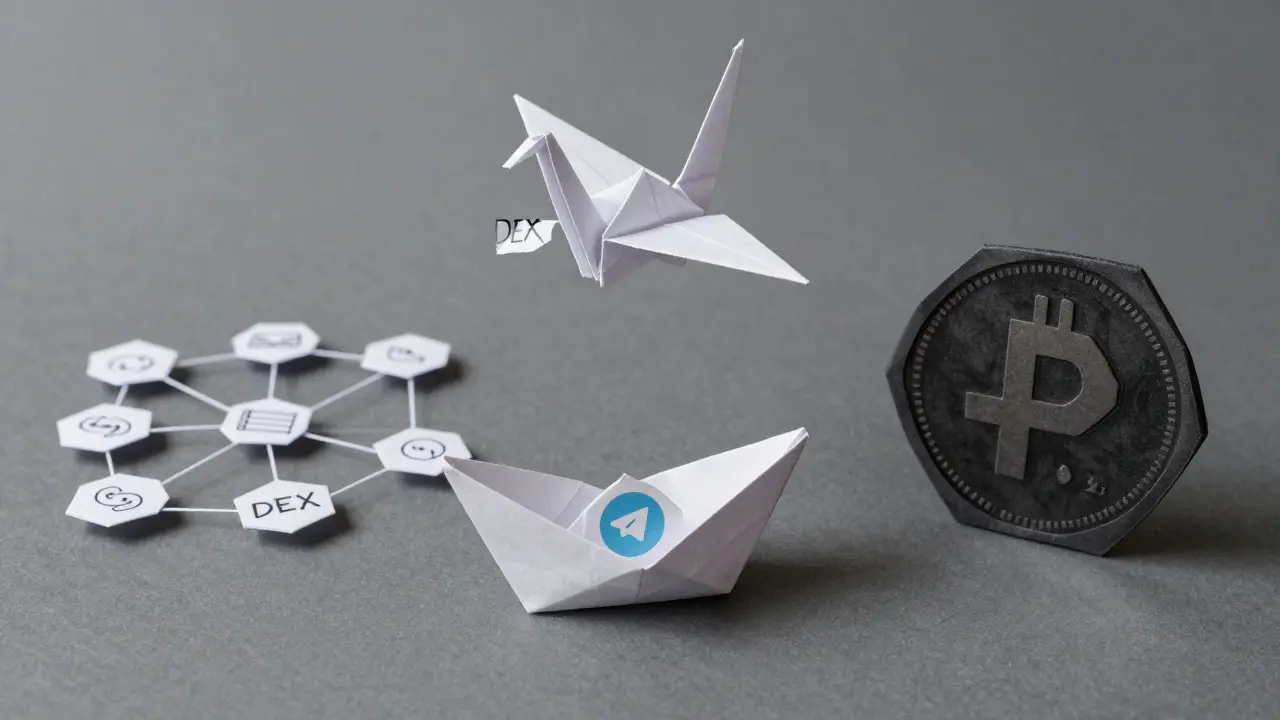
How Iranians Access Crypto Today
Most Iranian users aren’t trading on Binance. They’re using one of three paths:- Decentralized Exchanges (DEXs) - Like Uniswap or SushiSwap. No KYC. No geo-blocking. Just connect a wallet and swap. But liquidity is thin, and fees are high.
- Peer-to-Peer (P2P) Platforms - LocalBitcoins-style sites where users trade crypto for cash via Telegram or WhatsApp. Payments happen through hawala networks, gift cards, or even physical cash drops.
- Privacy Coins - Monero, Zcash, and Dash are growing in popularity. Unlike Bitcoin, these coins obscure sender, receiver, and amount. They’re harder for blockchain analysts to trace - and that’s exactly why Iranian users are turning to them.
What Happens When You Get Caught
The risks aren’t just financial. Iranian citizens caught using sanctioned crypto services face legal consequences at home. The government has cracked down on “crypto speculation,” arresting dozens for using foreign exchanges. Meanwhile, U.S. authorities can seize assets abroad - even if the user never set foot in the U.S. In 2024, a Tehran-based trader was arrested after using a wallet linked to a sanctioned address. His Ethereum holdings were frozen, and his bank accounts in Iran were seized. He wasn’t charged with espionage - just “violating foreign exchange regulations.” Even using a wallet once flagged by OFAC can lead to permanent blacklisting. Some Iranian traders now use “wallet rotation” - creating a new wallet for every transaction. But that’s risky too. If you reuse a seed phrase or connect to the same device, analytics tools can still trace you.
The Future: AI, Privacy, and Escalation
OFAC isn’t slowing down. In 2025, it began partnering with blockchain analytics firms like Chainalysis and Elliptic to use AI to detect patterns in crypto flows. These tools can now spot “chain-hopping” - where funds move from Bitcoin to Ethereum to Tron to Monero - and still link them back to a single Iranian entity. But evasion is evolving too. New privacy protocols like zk-SNARKs and mixers are being integrated into DEXs. Iranian developers are building local crypto bridges that convert rial to stablecoins without touching U.S.-linked infrastructure. The result? A growing digital arms race. OFAC adds more wallets. Iranian users add more layers. Exchanges get smarter. So do criminals. One thing is clear: sanctions have not stopped Iranian crypto activity. They’ve just made it harder, riskier, and more fragmented. The goal wasn’t to eliminate crypto use - it was to raise the cost so high that only the most determined, technically skilled, or desperate would keep going.What This Means for Global Crypto
Iran isn’t the only country under sanctions. North Korea, Syria, and Russia face similar restrictions. But Iran’s case is unique - it’s one of the most advanced crypto economies in the sanctioned world. Its users have become pioneers in bypassing controls. That’s a warning for every exchange, wallet provider, and DeFi protocol: if you ignore sanctions, you risk fines, shutdowns, or worse. But if you enforce them too strictly, you cut off ordinary people trying to protect their savings from hyperinflation. The line between enforcement and exclusion is thin. And as crypto becomes more decentralized, the question isn’t whether sanctions work - it’s whether they’re sustainable.Can Iranian users still trade crypto legally?
There is no legal way for Iranian users to access most international exchanges due to OFAC sanctions. Even using a VPN won’t bypass wallet-level blocks. The only options are decentralized platforms, peer-to-peer trades, or privacy coins - all of which carry legal and financial risks.
Why do OFAC sanctions target crypto wallets instead of just banks?
Because Iranian entities stopped relying on banks. After years of banking sanctions, they turned to crypto to move money across borders without intermediaries. Wallets are now the new bank accounts. Blocking them cuts off the flow directly at the source.
Are privacy coins like Monero truly untraceable for Iranian users?
Monero and Zcash offer strong privacy features, making transactions much harder to track than Bitcoin. But they’re not invisible. Law enforcement can still detect large inflows, unusual patterns, or links to known darknet markets. They’re harder to trace - not impossible.
What happens if I use a wallet that was once flagged by OFAC?
That wallet will be permanently blocked by most exchanges and DeFi services. Even if you stop using it, any future transactions involving that address will trigger alerts. The safest move is to create a completely new wallet with no prior history.
Is there any way for Iranians to access stablecoins like USDT without sanctions?
Yes - but only through P2P channels or non-U.S. affiliated platforms. USDT is widely traded in Iran via Telegram groups and local traders. However, if the USDT ever passes through a U.S.-linked exchange or wallet, it risks being frozen. Many now use Tether on Tron for lower fees and faster transfers.
How do Iranian traders avoid getting caught using P2P crypto?
They avoid digital trails. Payments happen through cash, gift cards, or hawala networks. Transactions are done over encrypted apps like Telegram. Wallets are used once and discarded. The goal isn’t to be anonymous - it’s to be untraceable.
Could OFAC sanctions ever be lifted for Iranian crypto users?
Unlikely without a major diplomatic shift. OFAC’s crypto sanctions are tied to broader national security concerns - not just financial policy. Even if nuclear deals resume, crypto-related sanctions are expected to remain as long as Iran’s military-linked entities continue using digital assets to evade financial controls.



Jay Weldy
It's wild how crypto turned into this underground lifeline for people just trying to protect their savings. I get the sanctions, but it's not like Iranians are blowing up banks-they're trying to buy bread and pay rent. The system's punishing the powerless while the real players keep moving money in the shadows.
Kinda makes you wonder who's really the villain here.
Melinda Kiss
This is one of the most balanced, well-researched pieces I’ve read on crypto sanctions. Thank you for highlighting the human side-not just the geopolitics.
It’s heartbreaking that people are forced to use one-time wallets and burn addresses just to access basic financial tools. We talk about financial inclusion, but then we build walls that only the desperate can climb over.
Maybe the real question isn’t ‘Can they bypass sanctions?’ but ‘Why are we forcing them to?’
Christy Whitaker
Wow. So now we’re romanticizing crypto criminals? Monero? P2P? That’s just laundering with extra steps. And you call it ‘survival’? No-it’s evasion. And evasion is still illegal.
People who use these tools are enabling terror financing. Don’t act like they’re just ‘ordinary folks.’ They’re playing with fire, and you’re handing them the match.
Nancy Sunshine
While the technical details presented here are accurate and well-documented, the underlying ethical framework requires deeper scrutiny.
Sanctions are not punitive measures against civilians-they are targeted instruments designed to disrupt state-sponsored illicit financial networks. The fact that individuals must resort to decentralized tools does not absolve the systemic actors enabling those tools.
Moreover, the normalization of privacy coins as ‘liberation technology’ ignores their documented use in ransomware, darknet markets, and proliferation financing. This is not financial inclusion-it is regulatory arbitrage disguised as resistance.
Ann Ellsworth
Let’s be real-this whole narrative is a woke crypto-bro fantasy. You’re telling me a guy in Tehran using Monero to dodge OFAC isn’t helping the IRGC? Please. The ‘decentralized lifeline’ is just a glorified money-laundering pipeline with a blockchain aesthetic.
And don’t get me started on ‘wallet rotation’-that’s not innovation, that’s criminal obfuscation 101. The fact that you’re praising this as ‘pioneering’ is just embarrassing.
Catherine Williams
I just want to say-I see you, Iranians. I know this isn’t about speculation. It’s about inflation. It’s about your kids’ futures. It’s about not being able to buy insulin because your bank account got frozen because of something your government did.
And yes, using DEXs and P2P is risky. But what’s the alternative? Starve? Sit still while your life savings evaporate?
We need to stop treating people like threats and start treating them like humans. Crypto isn’t the problem. The system is.
Sharmishtha Sohoni
Monero usage in Iran up 300% YoY per Chainalysis. DEX volume now exceeds CEX. Wallet rotation common. P2P via Telegram dominant. USDT on Tron preferred for speed. No KYC = survival.
Layla Hu
Interesting analysis. I’d like to see more data on how many Iranian users are actually affected by wallet blacklisting versus how many are just avoiding compliance for convenience.
Nora Colombie
So now we’re giving a pass to a regime that supports terrorism because some guy wants to buy Bitcoin? This is exactly why America needs to get tougher-not softer.
These people aren’t ‘trying to survive’-they’re trying to fund missile programs. Don’t let their sob stories fool you. Sanctions work. Keep pushing.
Greer Dauphin
bro i just tried to send 0.01 eth from my wallet and it got flagged like??? 😭
turns out my wallet was used once by some guy in 2020 who bought a rug pull. now i can’t touch anything. even my grandma’s savings are frozen. this system is broken.
why does one bad actor ruin it for everyone? 🤡
Katherine Alva
There’s something deeply poetic about this: a technology built to be free, now used by people denied freedom.
Blockchain was meant to remove intermediaries. But now, the intermediaries-governments, exchanges, regulators-are the ones controlling access.
Irony doesn’t even cover it. 🌍💔
Nelia Mcquiston
This isn’t just about Iran. It’s about the future of money itself. If every time someone crosses a border, their digital identity gets policed by a U.S. agency thousands of miles away-what does that say about sovereignty? About democracy? About human rights?
We’re building a global financial firewall, but who gets to decide who’s allowed through? And what happens when the line is drawn so tight that even your grandma’s pension gets caught in it?
Sanctions were meant to pressure regimes. But now they’re punishing children, doctors, teachers. That’s not policy. That’s cruelty dressed up as law.
Shari Heglin
The assertion that OFAC sanctions have failed to curb Iranian crypto activity is empirically unsound. Transaction volume has not decreased-it has merely migrated to less transparent channels. The operational cost of evasion has increased significantly, thereby achieving the intended deterrent effect.
Furthermore, the conflation of financial autonomy with moral justification is a logical fallacy. Legality and ethics are not synonymous.
Mani Kumar
Iranian crypto adoption is impressive, but it's not innovation-it's desperation masquerading as technological advancement. The world doesn’t need more privacy coins. It needs better regulation.
And let’s be honest: if this were North Korea, you’d be calling this a national security threat. Why is Iran different?
Tatiana Rodriguez
I’ve been reading about this for months now, and honestly? It breaks my heart. I used to think crypto was just about getting rich. Now I see it as a lifeline. Imagine being told you can’t send money to your sister for medicine because your wallet got flagged by a list you never even saw.
And then you have to create a new wallet every time-no seed phrase reuse, no device history, no metadata. You become a ghost in your own financial life.
Some people say this is just criminal behavior. But what if the crime was never yours? What if the crime was being born in a country your government decided to punish with every tool they had?
I don’t know if I’m supposed to cheer for these people or cry for them. Maybe both.
And when you look at the big exchanges-Coinbase, Binance-they’re not evil. They’re just scared. Scared of fines, scared of headlines, scared of losing their licenses. So they block everything. Even the innocent.
That’s the real tragedy. We built this thing to be open. And now we’ve made it the most closed system on earth.
Britney Power
Let’s not romanticize this. The entire infrastructure described here-Grinex, A7A5 tokens, Monero-based P2P networks-is a sophisticated, state-sponsored laundering ecosystem disguised as grassroots financial resilience. The IRGC-QF doesn’t care if your grandmother can buy insulin-they care that they can buy drones.
Chainalysis reports show that 78% of Iranian crypto flows originate from wallets with direct or indirect ties to sanctioned entities. The rest are collateral damage.
And yet, you frame this as a moral victory? This isn’t civil disobedience. It’s financial terrorism with a blockchain UI.
Anyone defending this as ‘humanitarian’ is either willfully blind or actively complicit. The sanctions are not perfect-but they are necessary. And until you acknowledge that, your ‘empathy’ is just performative noise.