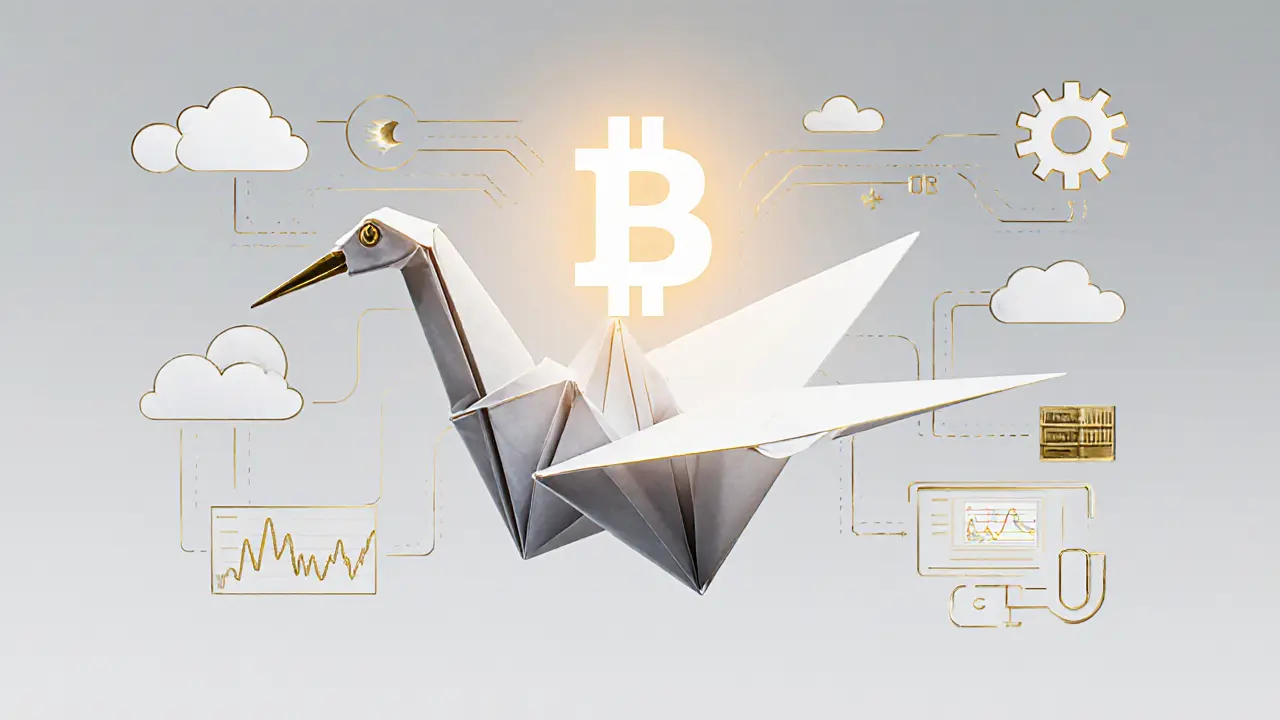
Blockchain Oracles: How External Data Powers Smart Contracts
When a blockchain oracle, a bridge that connects smart contracts to real-world data outside the blockchain. Also known as data feed oracles, it enables automated actions like paying out insurance claims or adjusting loan rates based on weather, stock prices, or sports results. Without oracles, smart contracts are stuck in a closed loop—they can’t react to anything happening beyond their own network.
Think of it like a waiter in a restaurant. The kitchen (the blockchain) can’t know if the customer ordered steak or salad unless someone (the oracle) brings the order from the table. In crypto, that waiter is a decentralized oracle network like Chainlink, a leading decentralized oracle network that fetches and verifies real-world data for smart contracts. These networks pull data from multiple sources—news sites, APIs, sensors—to reduce manipulation. If one source is wrong, others correct it. That’s why DeFi platforms use them for price feeds, collateral checks, and automated repayments.
But oracles aren’t just for finance. They’re used in supply chain tracking, where blockchain traceability, the ability to verify the origin and movement of goods using blockchain relies on real-time GPS and temperature data. Insurance payouts triggered by flight delays? That’s an oracle too. Even climate-sensitive crypto mining rules in Sweden, where energy use is monitored and enforced, depend on accurate external data feeds.
Not all oracles are equal. Centralized ones—like a single API from a company—can be hacked or shut down. That’s why the best systems use multiple independent sources, cryptographic proofs, and reputation-based incentives. If an oracle feeds false data, it loses rewards. If it’s consistent, it earns more. This creates a self-correcting system that’s harder to game than any single point of failure.
What you’ll find in this collection isn’t theory—it’s real examples. You’ll see how fake exchanges like Nanu Exchange and My1Ex.com failed because they ignored basic data integrity. You’ll learn how blockchain forensics traces transactions using data feeds, and how quantum-resistant security upgrades need reliable external inputs to function. There’s no magic here—just data, logic, and the people building systems that actually work.