
Remittance Cost Calculator
How Much Do You Want to Send?
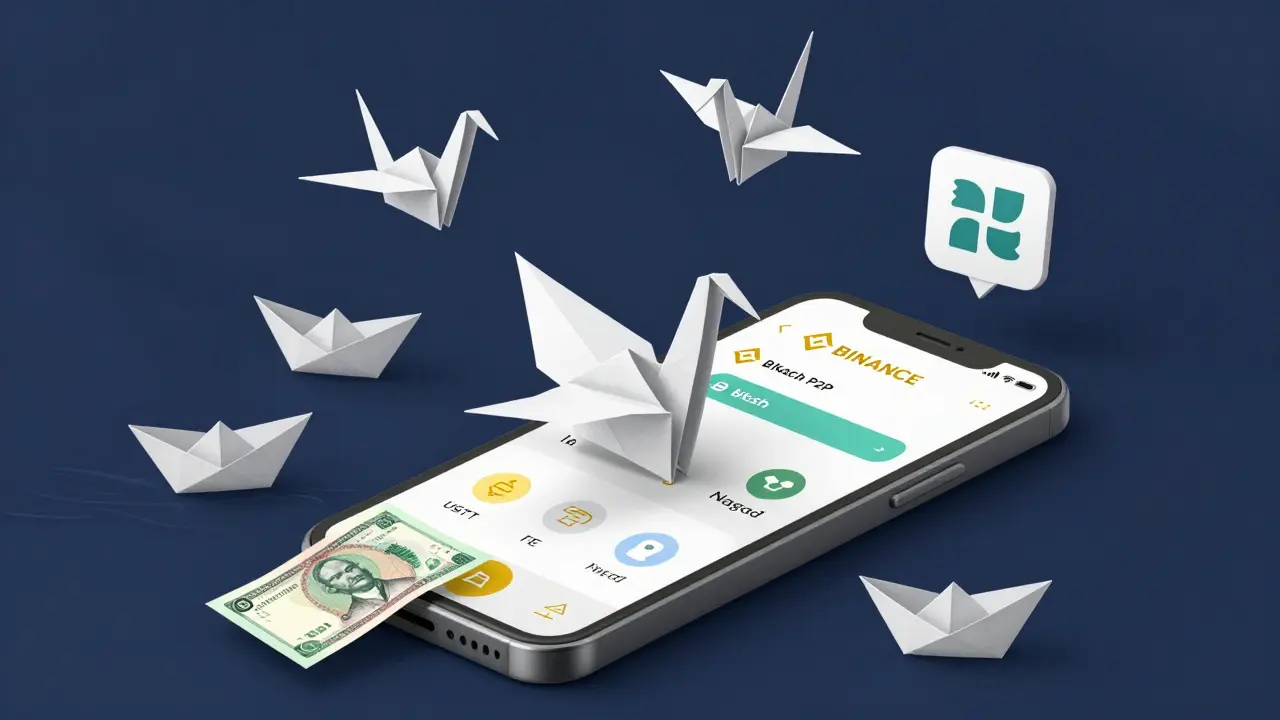
Despite being officially banned by Bangladesh Bank since 2014, peer-to-peer (P2P) crypto trading is thriving in Bangladesh. Over 3.5 million people - about 2.1% of the population - are actively trading cryptocurrencies, mostly to send money home from abroad. The reason? Traditional remittance services charge 3% to 8% in fees. P2P crypto trades, using mobile money apps like bKash and Nagad, cost as little as 0.5% to 2%. That’s a massive savings for families relying on overseas income.
How P2P Crypto Trading Actually Works in Bangladesh
Most traders use Binance’s P2P platform, which handles about 68% of all crypto trades in the country. Here’s how it works: You find a buyer or seller on Binance who accepts bKash or Nagad. You lock your cryptocurrency - usually USDT - into an escrow account. Then you send the equivalent amount in Bangladeshi taka through your mobile banking app. Once the seller confirms receipt, Binance releases the crypto to you. The whole process takes under 10 minutes on average.The system is built for speed and trust. Escrow protection means neither party can cheat - the platform holds the crypto until payment clears. Over 99.6% of these trades complete successfully, even though Bangladesh’s telecom regulator blocked Binance’s website back in 2018. Users still access it via mobile apps or third-party links. The app doesn’t need to be downloaded from Google Play; many users sideload the APK directly.
The Three Main Ways People Trade Crypto in Bangladesh
There are three ways people trade crypto here, each with different risks and rewards:- Exchange-based P2P (Binance, Bybit, KuCoin): This is the most popular method. Binance leads with 73% of the market. It supports 18 payment methods, but 61% of trades use bKash, 29% use Nagad, and only 10% use bank transfers. Spreads are low - usually 1.2% to 3.5% above market price.
- Informal agent networks: These are local traders who act as middlemen. They meet you in person or take payments over bKash and hand over crypto in cash or digital form. Spreads are higher - 4% to 8% - but they offer instant cash. There are over 12,000 registered agents in Dhaka alone. The problem? No protection. If they disappear after you pay, you have no recourse.
- Decentralized exchanges (DEX) like PancakeSwap: Used by only 8% of traders because it’s harder. You need MetaMask, some BNB for gas fees (around $0.15 per trade), and knowledge of blockchain addresses. But it’s anonymous. No KYC. No records. Ideal for advanced users who want privacy.
Why Mobile Money Is the Secret Weapon
Bangladesh has one of the highest mobile money adoption rates in the world. bKash has 72.5 million active users. Nagad has 45 million. That’s more than the entire banking population. This infrastructure makes P2P crypto possible.Traditional banks in Bangladesh are monitored by Bangladesh Bank. Any foreign currency transfer without approval is illegal. But mobile money apps like bKash aren’t classified as banks. They’re seen as payment platforms. So when you send ৳50,000 via bKash to a crypto seller, the transaction doesn’t trigger the same red flags as a bank wire. Traders exploit this loophole daily.
But it’s not foolproof. Nagad often blocks transactions over ৳50,000, thinking it’s fraud. bKash sometimes rejects payments under ৳10,000 if the sender hasn’t verified their identity properly. Users have learned to use the "Send Money" function instead of "Cash In" to avoid these blocks. Still, about 22% of small transactions fail.
Who’s Trading Crypto - And Why
The typical crypto trader in Bangladesh is under 35, lives in Dhaka, Chittagong, or Sylhet, and works overseas. About 54% are sending remittances home. One user in Chittagong saved $217 on a $5,000 transfer to Dubai - that’s real money for a family. Others trade for investment, hoping to buy Bitcoin or Ethereum and sell later when prices rise.But the market isn’t just about money. It’s about access. Many young people here have no way to invest internationally. Stock markets? Blocked. PayPal? Not available. Crypto is the only open door. That’s why 8,200 new Bangladeshi users sign up on Binance every day.
The Risks: Fraud, Delays, and Legal Danger
The biggest risk isn’t price drops - it’s scams. About 63% of negative reviews mention fraud. One trader lost ৳250,000 ($2,300) when an agent reversed the bKash payment after receiving Bitcoin. No one got arrested. No one was punished. That’s the problem: there’s no legal system to help you.Even on Binance P2P, disputes can take hours. One user waited 14 hours for support to release his BTC after a seller refused to pay. During Eid holidays, mobile money systems crash. Transaction times jump from 8 minutes to 47 minutes. If you’re sending money to family for rent or medical bills, that delay can be catastrophic.
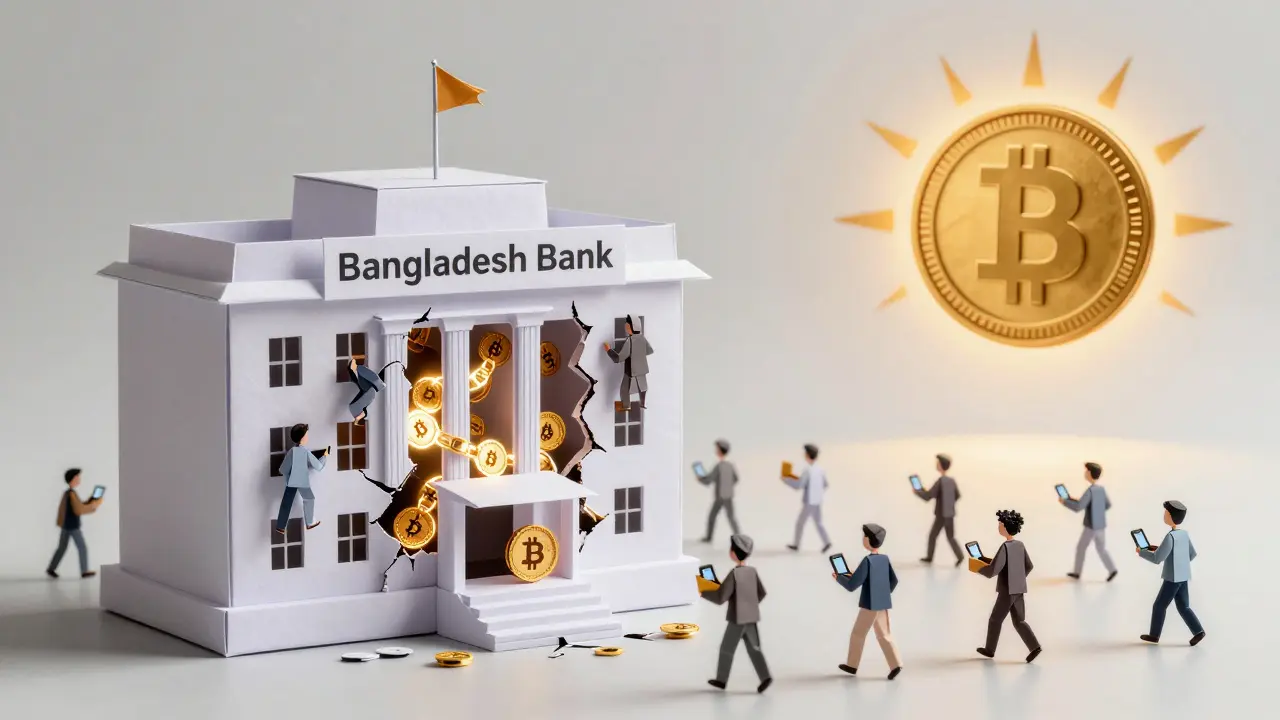
And then there’s the law. In 2022, 17 people in Dhaka were arrested under Section 411 of the Penal Code - "possessing stolen property" - just for holding crypto. In 2024, Bangladesh Bank froze 1,842 bank accounts linked to mobile money transfers over ৳50,000. Police raided crypto trading hubs in Dhaka and Chittagong, seizing equipment worth ৳32 million. There’s no guarantee you won’t be next.
What You Need to Get Started
If you’re new, here’s what you actually need:- A smartphone with Android 7.0 or higher (most users still run older devices, but 4GB RAM helps).
- A verified bKash or Nagad account. You’ll need your NID card and a phone number registered under your name.
- A Binance account. Sign up using the app, not the website. Complete KYC - it’s mandatory for trades over $1,000.
- Learn how to use the P2P interface. Search for sellers offering USDT with bKash as payment. Sort by lowest price and highest trade volume.
- Start small. First trades are usually ৳7,500 to ৳15,000. Don’t risk more than you can afford to lose.
The learning curve is about 17.5 hours for beginners. Most need help with KYC. Use the "Crypto BD Guide" Telegram channel - it has 47,000 members who track and blacklist fake agents. They’ve flagged 217 scammers since 2023.
What’s Next? The Government Is Watching
Bangladesh Bank has been working on a digital currency - a central bank digital currency (CBDC) - since 2022. A pilot is running in 12 districts with 500,000 users. Results come out in Q3 2025. If it works, the government might legalize digital payments - but only if they control them.In February 2025, they formed a 12-member Crypto Asset Task Force, led by Bangladesh Bank’s deputy governor. Their job? Decide whether to ban crypto completely or regulate it. Industry experts think they’ll go halfway: allow blockchain tech for remittances and business, but keep speculative trading illegal.
For now, P2P trading is a quiet rebellion. It’s not about revolution. It’s about survival. People are using crypto not to get rich, but to get by. They’re bypassing broken systems with tools that work - even if they’re not legal.
That’s the real story behind P2P crypto in Bangladesh. It’s not a trend. It’s a necessity.
Is P2P crypto trading legal in Bangladesh?
No, it’s not legal. Bangladesh Bank has banned cryptocurrency transactions since 2014 under the Foreign Exchange Regulation Act. Any conversion of Bangladeshi taka to crypto without approval is considered illegal. However, enforcement is inconsistent. Thousands trade daily without being caught, especially using mobile money apps that aren’t classified as banks.
Can I use bKash or Nagad to buy Bitcoin?
Yes, but only through P2P platforms like Binance. You can’t buy Bitcoin directly from bKash or Nagad. You find a seller on Binance who accepts bKash or Nagad payments. You send the money through the app, then the seller releases the Bitcoin from escrow. About 61% of all crypto trades in Bangladesh use bKash.
What’s the safest way to trade crypto in Bangladesh?
Binance P2P is the safest option. It uses escrow protection, has dispute resolution, and supports local payment methods. Avoid informal agents who ask for cash or don’t use the platform’s chat system. Always verify the seller’s trade history and completion rate. Never pay outside the platform - if you do, you lose all protection.
Why do people use USDT instead of Bitcoin in Bangladesh?
USDT (Tether) is pegged to the US dollar, so its value stays stable. Bitcoin’s price swings too much for everyday use. People use USDT to send remittances because they know exactly how much taka they’ll get. Over 72% of all crypto trades in Bangladesh involve USDT.
What happens if I get caught trading crypto?
There’s no clear punishment, but arrests have happened. In 2022, 17 traders in Dhaka were arrested under "possessing stolen property" laws. Accounts linked to large mobile money transfers have been frozen. Most traders avoid detection by keeping trades under ৳50,000 and using bKash/Nagad instead of banks. But if you’re flagged, you could face legal trouble - even if you didn’t commit fraud.
Will crypto become legal in Bangladesh soon?
Not soon - but it might change. Bangladesh Bank is testing a digital currency (CBDC) and has formed a task force to recommend crypto regulations by December 2025. Experts think the government will allow blockchain for remittances and business, but ban speculative trading. If the CBDC works, they might create a legal path for regulated crypto platforms - but only under their control.
Can I use MetaMask to trade crypto in Bangladesh?
Yes, but only if you’re technically skilled. MetaMask connects to PancakeSwap on the Binance Smart Chain, letting you swap tokens without a central exchange. You need BNB for gas fees and a good understanding of wallet addresses. It’s anonymous and avoids KYC, but 32% of trades fail due to network congestion. Only 8% of users use this method because it’s hard for beginners.


Anselmo Buffet
This is the kind of grassroots innovation that governments can't stop. People aren't trying to break the system-they're just trying to feed their families. The fact that mobile money became the loophole is brilliant in its simplicity.
PRECIOUS EGWABOR
Let me guess-next they’ll ban smartphones. Or maybe just bKash. The irony is that the same government that can’t provide reliable banking wants to control digital money. Power doesn’t want competition. It wants monopoly.
Caroline Fletcher
So the government bans crypto but doesn’t ban the 72 million people using bKash? That’s not enforcement. That’s laziness. They’re too busy chasing ghosts to notice the real revolution happening in plain sight.
Heath OBrien
People are risking jail for this? I hope they’re all ready to go to prison. You don’t just ignore laws because they’re inconvenient. This isn’t freedom-it’s recklessness.
Toni Marucco
The structural brilliance here lies in the convergence of financial exclusion, mobile infrastructure, and decentralized trust mechanisms. The state’s regulatory failure has inadvertently catalyzed a decentralized financial democracy that outperforms formal institutions in efficiency, accessibility, and resilience.
Kathryn Flanagan
I just want to say how amazing it is that people are finding ways to help each other even when the system is stacked against them. Imagine being thousands of miles away from your family, working hard, and then losing 8% of your paycheck just to send them money. Now imagine cutting that down to 1%. That’s not just smart-it’s human. People aren’t trading crypto because they want to be traders. They’re trading because they love their families and refuse to let bureaucracy steal their hard-earned money.
Nicholas Ethan
99.6% success rate? That’s statistically impossible without systemic fraud. The real number is probably closer to 85%. The platform is a glorified middleman. You think escrow protects you? It just delays the inevitable when someone gets arrested and the whole system collapses.
Lynne Kuper
You’re telling me 8,200 people sign up daily and no one’s getting caught? Please. The government isn’t blind. They’re waiting. They’re watching. They’re building their CBDC so they can track every single transaction. This isn’t rebellion-it’s a countdown.
Lloyd Cooke
The real question isn’t whether crypto is legal-it’s whether humanity can be regulated. If people need a tool to survive, they will build it, share it, and use it-even if the state calls it crime. This is the quiet evolution of economic self-determination. No manifesto. No protest. Just 3.5 million people doing what they have to do.
Albert Chau
So you’re glorifying lawbreaking because it’s convenient? That’s not innovation. That’s entitlement. If you can’t use the system, maybe you shouldn’t be in it. This isn’t a revolution-it’s a tax evasion scheme dressed up as solidarity.
Madison Surface
I just can’t stop thinking about the woman in Sylhet who waited 14 hours for her BTC to be released during Eid. Her kid needed medicine. That’s not a trade. That’s a life on hold because of a system that doesn’t care. We talk about crypto like it’s tech-but it’s really about dignity.
Tiffany M
I love how people say 'it's illegal' like that's the end of the story. But guess what? The law doesn't stop hunger. It doesn't stop parents from crying because their child can't go to school. This isn't about crypto. It's about people refusing to be powerless. And honestly? I'm rooting for them.
Eunice Chook
USDT dominance at 72%? That’s not adoption-it’s hedging. People aren’t investing. They’re storing value in a currency that won’t vanish overnight. This isn’t crypto culture. It’s survival math.
Lois Glavin
The fact that users learned to use 'Send Money' instead of 'Cash In' to avoid blocks? That’s pure ingenuity. No one taught them. They just figured it out because they had to. That’s the real story here-not the tech, not the law. It’s the human will to adapt.
Abhishek Bansal
You call this innovation? I call it a house of cards. One crackdown, one app ban, one bank freeze, and the whole thing crumbles. And then what? Back to 8% fees? No thanks. I’d rather pay the fee than risk prison.
Bridget Suhr
I think what’s really cool is how people are using Telegram to blacklist scammers. That’s community-driven safety. No government. No corporation. Just people looking out for each other. That’s the future right there.
Jessica Petry
Of course it’s thriving. People love breaking rules when they think they’re smart enough to get away with it. But let’s be real-this isn’t a movement. It’s a temporary glitch in the system. And glitches get patched.
Taylor Fallon
I just want to say how deeply moved I am by this. Imagine being told you can’t send money to your mother because the bank says so-but you have a phone, a network, and a will to care. That’s not finance. That’s love coded into a digital transaction. Every time someone uses bKash to send ৳15,000 for medicine, they’re not trading crypto. They’re trading hope. And no law can ban that. Not really. Not in the heart.
Joey Cacace
I am truly impressed by the ingenuity and resilience demonstrated by the Bangladeshi populace in navigating an archaic regulatory framework through the adoption of decentralized financial technologies. The integration of mobile payment platforms as intermediaries for peer-to-peer transactions represents a paradigm shift in financial inclusion, particularly in regions where traditional banking infrastructure is both inaccessible and administratively obstructive.
Anselmo Buffet
The one thing no one talks about? The 22% of small transactions that fail. That’s not a bug. That’s the system pushing back. Every time someone loses ৳5,000 because bKash blocked it, they’re paying the real tax-the tax of living in a country that won’t let you survive.